ApeSwap (Polygon) Crypto Exchange Review: What You Need to Know in 2026
 Feb, 15 2026
When you're looking for a decentralized exchange that works on Polygon, ApeSwap is one of the names that comes up. But is it actually worth using in 2026? Unlike big names like Uniswap or PancakeSwap, ApeSwap doesn't have millions in daily volume - especially on Polygon. In fact, recent data shows just under $5,000 traded in 24 hours on Polygon alone. That’s not nothing, but it’s also not a sign of widespread adoption. So what’s the real story behind ApeSwap on Polygon?
What Is ApeSwap?
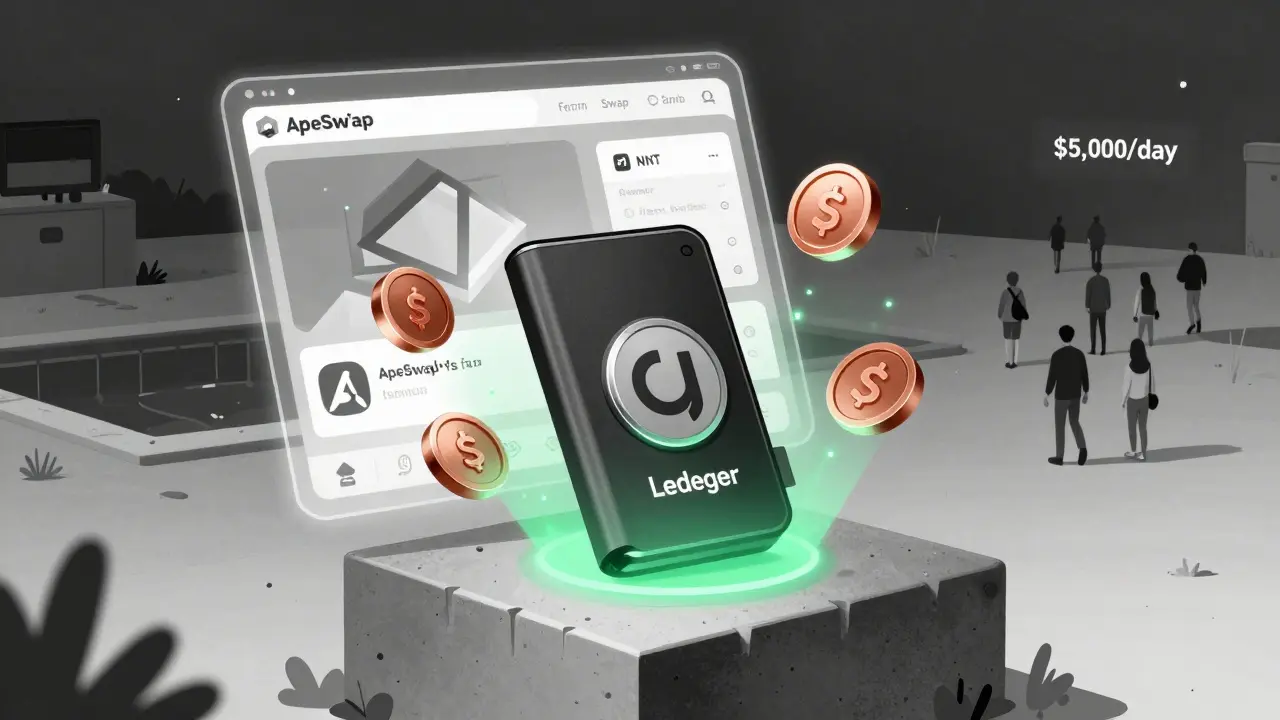
ApeSwap isn’t just a swap tool. It’s a full DeFi hub built by the DeFi Apes team, designed to let users trade, stake, farm, and even buy NFTs - all from one place. It runs across multiple blockchains: Ethereum, Binance Smart Chain, and Polygon. On Polygon, it functions as an automated market maker (AMM), meaning there are no order books. Instead, trades happen directly from liquidity pools. You connect your wallet - like MetaMask, WalletConnect, Ledger, or Trezor - and swap tokens instantly.
The platform’s design is meant to be simple. You pick a token pair, approve the transaction, and swap. No sign-ups. No KYC. That’s the whole point of a DEX. But unlike some other DEXs, ApeSwap adds extra layers: an NFT marketplace, yield farming pools, and staking options. If you want to earn passive income while holding tokens, ApeSwap gives you ways to do it without leaving the platform.
How Does ApeSwap Work on Polygon?
Polygon was chosen because it’s fast and cheap. Ethereum fees can be brutal, especially during spikes. Polygon cuts transaction costs by over 90% and confirms trades in under two seconds. ApeSwap leverages that to offer a smoother experience for users who don’t want to wait or pay $10 just to swap a few dollars worth of tokens.
But here’s the catch: liquidity on Polygon is thin. While Uniswap on Ethereum might have $500 million in daily volume, and PancakeSwap on BSC hits over $200 million, ApeSwap’s Polygon volume sits at around $5,000. That means slippage can be high. If you’re trying to trade a less popular token, you might end up getting a worse price than expected. For major pairs like WMATIC/USDC or APE/USDC, it’s fine. For smaller tokens? Proceed with caution.
Another thing to know: ApeSwap doesn’t control your funds. Your wallet holds everything. That’s good for security - no centralized server to hack - but bad if you mess up. Send tokens to the wrong address? No recovery. Forget your seed phrase? Gone forever. This isn’t a bank. It’s code.
Features You Can Actually Use
- Token Swapping: Swap over 1,000 tokens across chains. You can trade from Polygon to BSC directly through cross-chain bridges built into the interface.
- Yield Farming: Stake LP tokens to earn APE, the native token. Pools vary in APY. Some offer 10%, others over 50% - but high APY usually means high risk.
- Staking: Lock APE tokens to earn more APE. There are different lock-up periods: 7 days, 30 days, 90 days. Longer lock = higher rewards.
- NFT Marketplace: Buy, sell, or list NFTs. It’s not as big as OpenSea, but it’s integrated. You can use it to trade ApeSwap-themed collectibles or tokens from other projects.
- Wallet Support: Works with Ledger, Trezor, MetaMask, WalletConnect, and Binance Web3 Wallet. Hardware wallet users will appreciate the direct integration.
The interface is clean. No clutter. No confusing menus. If you’ve used PancakeSwap before, you’ll feel right at home. The main downside? The documentation is minimal. There’s no detailed guide on how to navigate liquidity pools or understand impermanent loss. You’re expected to already know DeFi basics.

Security and Trust
ApeSwap has been around since 2020. It’s not new. But it’s also not audited by top-tier firms like CertiK or Hacken. The team hasn’t published audit reports publicly. That’s a red flag for serious users. Without audits, there’s no third-party proof that the smart contracts are safe from bugs or exploits.
That said, there haven’t been any major hacks or exploits tied directly to ApeSwap. No funds lost. No critical vulnerabilities reported. But absence of news isn’t proof of safety. You’re trusting code that hasn’t been thoroughly vetted.
Wallet integrations help. Using a hardware wallet like Ledger means your private keys never touch your device. That’s a smart move. If you’re trading large amounts, always use one. Never rely on MetaMask alone for big trades.
How It Stacks Up Against the Competition
Let’s compare ApeSwap (Polygon) to two major rivals:
| Feature | ApeSwap (Polygon) | Uniswap (Ethereum) | PancakeSwap (BSC) |
|---|---|---|---|
| 24h Trading Volume | $4,899 | $1.2B | $180M |
| Supported Chains | 3 (Ethereum, BSC, Polygon) | 1 (Ethereum) | 1 (BSC) |
| Liquidity Depth | Low on Polygon | Very High | Very High |
| Fees | ~0.2% swap fee + gas | ~0.3% + high gas | ~0.2% + low gas |
| NFT Marketplace | Yes | No | Yes |
| Staking/Yield Farming | Yes | Yes (via third parties) | Yes |
| User Ratings (Coinbase) | 4.2/5 (34 reviews) | N/A | N/A |
Uniswap dominates on Ethereum, but its fees make it impractical for small trades. PancakeSwap is the go-to on BSC, with deep liquidity and active farming. ApeSwap on Polygon? It’s the underdog. It doesn’t have the volume. It doesn’t have the audits. But it does have cross-chain flexibility and a clean, all-in-one interface.
Who Is ApeSwap (Polygon) For?
If you’re a beginner, ApeSwap on Polygon is manageable - if you already understand how DEXs work. It’s not the place to learn DeFi from scratch. But if you’ve swapped tokens before and want a low-cost way to trade on Polygon, it’s a solid option.
It’s best for:
- Users who already hold APE or Polygon-based tokens
- People who want to farm or stake without jumping between platforms
- Those who like NFTs and want a built-in marketplace
- Traders who value cross-chain access and don’t mind lower liquidity
It’s not for:
- Large traders needing tight spreads
- Users who require audited smart contracts
- People looking for the safest or most popular DEX
Final Verdict
ApeSwap on Polygon isn’t the biggest, fastest, or most secure DEX out there. But it’s not trying to be. It’s carving out a niche: a simple, multi-feature DeFi hub that works across chains, with a focus on usability over scale.
On Polygon, its low volume means you’ll likely face slippage and limited token options. But if you’re trading smaller amounts, using hardware wallets, and want to farm, stake, and collect NFTs all in one place - it’s worth a try.
The real test? Watch the volume. If Polygon adoption grows, and ApeSwap adds more liquidity, this could become a go-to for Polygon users. Right now? It’s a quiet player with potential. Not a powerhouse. But not a ghost either.
Is ApeSwap safe to use on Polygon?
ApeSwap hasn’t been hacked, and it supports hardware wallets like Ledger and Trezor, which adds a layer of security. But there are no public smart contract audits from top firms like CertiK or SlowMist. That means you’re trusting code that hasn’t been independently verified. Use small amounts at first, and never send funds you can’t afford to lose.
Why is ApeSwap’s trading volume so low on Polygon?
Most trading activity on ApeSwap happens on Binance Smart Chain, where liquidity is deeper and users are more active. Polygon’s lower fees attract users, but ApeSwap hasn’t built enough incentive - like high APY pools or big token rewards - to draw in large traders. Until liquidity grows, expect thin order books and higher slippage.
Can I use ApeSwap without a wallet?
No. ApeSwap is a decentralized exchange, so you need a crypto wallet to connect. Popular options include MetaMask, WalletConnect, Ledger, and Trezor. You can’t sign up with an email or phone number. Everything is wallet-based.
Does ApeSwap charge fees?
Yes. ApeSwap charges a 0.2% swap fee on every trade. This goes to liquidity providers. On Polygon, gas fees are usually under $0.10. On Ethereum, they can spike to $5 or more. So while the platform fee is low, network fees can vary.
How do I start farming on ApeSwap Polygon?
First, buy two tokens in a pair (like WMATIC and USDC). Then go to the Liquidity section, add them as a pair to create LP tokens. Stake those LP tokens in a farming pool. You’ll start earning APE rewards. Always check the APY and pool duration before staking - some pools have high rewards but high risk.
Is ApeSwap better than PancakeSwap on Polygon?
PancakeSwap doesn’t officially run on Polygon. It’s built for Binance Smart Chain. ApeSwap is one of the few DEXs that actually supports Polygon natively. So if you’re on Polygon, ApeSwap is your only real alternative to Uniswap V3 (which has high fees). ApeSwap’s advantage is its NFT marketplace and cross-chain tools - but PancakeSwap has far more liquidity on its native chain.
jennifer jean
February 16, 2026 AT 22:47Geet Kulkarni
February 17, 2026 AT 20:46andy donnachie
February 19, 2026 AT 02:22Alex Williams
February 21, 2026 AT 01:42Sarah Shergold
February 22, 2026 AT 22:47Lisa Parker
February 23, 2026 AT 07:18JJ White
February 24, 2026 AT 07:16Nicole Stewart
February 24, 2026 AT 20:07Alan Enfield
February 26, 2026 AT 09:04kieron reid
February 26, 2026 AT 14:16Avantika Mann
February 26, 2026 AT 22:08Tarun Krishnakumar
February 27, 2026 AT 01:41george chehwane
February 27, 2026 AT 22:25Rajib Hossaim
February 28, 2026 AT 13:50