Are Crypto Payments Allowed in India? What You Need to Know in 2026
 Mar, 11 2026
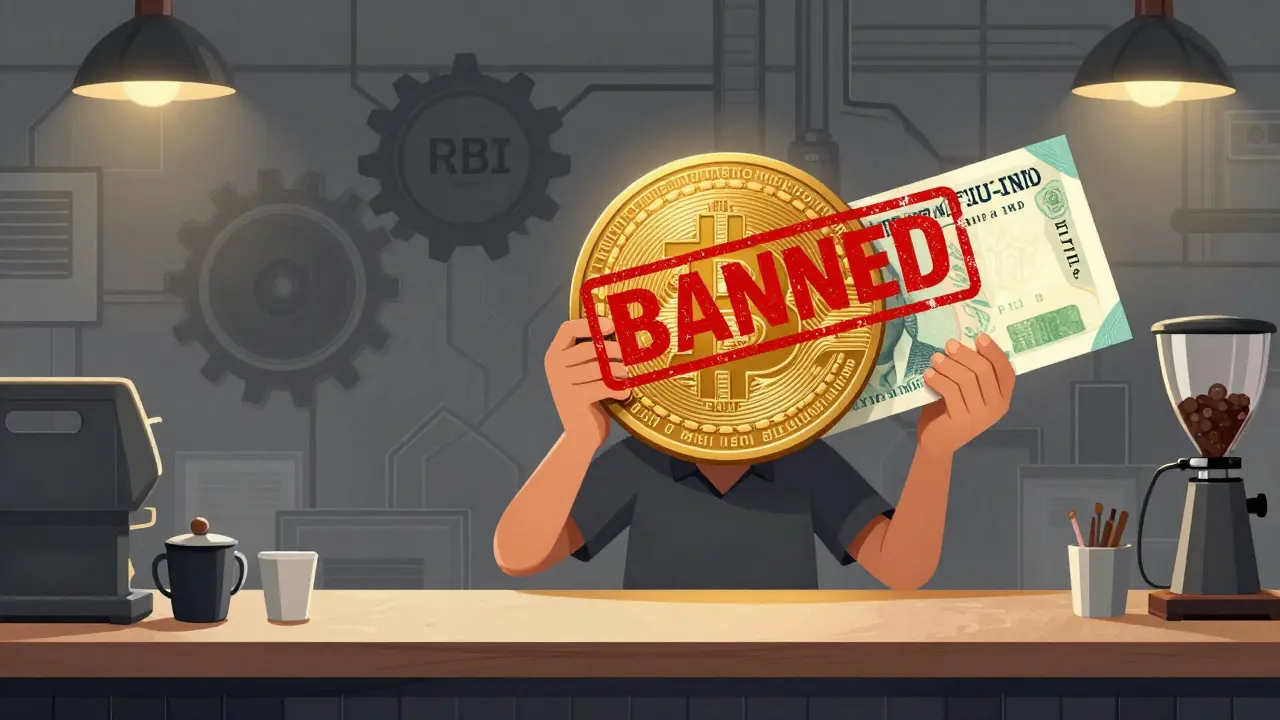
Can you use Bitcoin or Ethereum to pay for your coffee in India? The short answer is no. As of 2026, using cryptocurrencies like Bitcoin, Ethereum, or Solana to buy goods or services is explicitly banned in India. This isn’t a gray area - it’s a clear legal restriction. But here’s the twist: you can still buy, sell, and hold those same coins without breaking the law. The Indian government didn’t ban crypto. It banned its use as money.
Why Can’t You Pay With Crypto in India?
India doesn’t treat cryptocurrencies as legal tender. That means they can’t replace the Indian Rupee (INR) in any transaction. The Reserve Bank of India (RBI) has been clear: only the rupee is valid for payments. Even if a shop accepts Bitcoin, it’s technically illegal. The government’s stance is simple - if you want to pay for something, use rupees. Period.
This isn’t about distrust in the technology. It’s about control. The government fears that if crypto became a common payment method, it could undermine monetary policy, make tax collection harder, and open doors for money laundering. That’s why they drew a hard line: you can own crypto, but you can’t spend it like cash.
What Can You Legally Do With Crypto in India?
While you can’t use crypto to pay for groceries, you can still trade it. Buying Bitcoin on CoinDCX, selling Ethereum on WazirX, or holding Solana in a wallet is completely legal. The key distinction is between payment and investment. The law treats crypto as a Virtual Digital Asset (VDA), not currency. That means it’s taxed like property - not like income from a job.
Here’s what’s allowed:
- Buying and selling cryptocurrencies on registered exchanges
- Holding crypto in personal wallets (even foreign ones)
- Trading on FIU-IND registered platforms (like Binance and Bybit, which now comply)
- Using crypto as a long-term investment asset
But if you try to pay your electric bill with Dogecoin? That’s a violation. Same if you run a business that accepts crypto as payment. Even if the customer and merchant both agree, the law says no.
How Is Crypto Taxed in India?
Taxes are where the government makes its stance crystal clear. Since 2022, crypto gains are taxed at a flat 30%, with no deductions allowed - not even for losses. If you bought Bitcoin for ₹5 lakh and sold it for ₹8 lakh, you owe ₹90,000 in tax on the ₹3 lakh profit. No offsetting. No loss carryforwards. Just 30%.
There’s also a 1% Tax Deducted at Source (TDS) on every crypto trade over ₹50,000. That means every time you sell, the exchange automatically withholds 1% of your sale amount and sends it to the government. And if you pay platform fees - like trading or staking fees - an 18% GST applies. That’s right: you pay tax on the tax.
And if you don’t report? The Income Tax Department now cross-checks data from exchanges. If you don’t file Schedule VDA in your ITR-2 or ITR-3, you risk notices, penalties, or even having your entire tax return rejected.

Who’s Watching Crypto in India?
It’s not just the tax department. Multiple agencies are involved:
- Reserve Bank of India (RBI): Still warns that crypto is risky and unstable. They’re focused on rolling out their own digital rupee - a state-backed alternative.
- Ministry of Finance: Set the 30% tax rule and drafted a bill to ban private crypto. That bill hasn’t passed yet, but it’s still on the table.
- FIU-IND: The Financial Intelligence Unit has fined major exchanges like Binance ₹18.8 crore and Bybit ₹9.27 crore for failing to report transactions. Both now comply and are registered.
- SEBI: Has suggested crypto trading should be regulated like securities, hinting at a more open future - but only if it’s under strict oversight.
The lack of a single regulator creates confusion. One agency says crypto is dangerous. Another says it’s an asset class. The result? A patchwork of rules that traders must navigate carefully.
What About the Digital Rupee?
The government isn’t trying to kill crypto - it’s trying to replace it. The Reserve Bank of India launched its Central Bank Digital Currency (CBDC), called the digital rupee, in late 2022. Unlike Bitcoin, the digital rupee is legal tender. It’s backed by the RBI. It can be used to pay for anything - just like cash.
It’s faster than UPI, works offline, and leaves a full audit trail. The government’s goal? To give people the benefits of digital money - speed, accessibility, low fees - without the risks of decentralization. If the digital rupee takes off, it could make private crypto irrelevant for payments.
Already, pilot programs are testing the digital rupee for government salaries, cross-border trade, and retail payments. It’s not widely adopted yet, but it’s growing. And that’s the real story: India isn’t fighting crypto. It’s building something better.

What Happens If You Try to Use Crypto as Payment?
Most people won’t get arrested. But businesses that accept crypto for goods or services risk serious consequences:
- Income tax notices for unreported revenue
- FIU-IND investigations for violating PMLA
- Fines or suspension of business licenses
- Bank account freezes if linked to unregistered crypto activity
Even if you’re just helping a friend pay for something with crypto - say, sending ETH to cover rent - you’re technically violating the law. Enforcement isn’t widespread yet, but it’s getting stricter. The government is building systems to track every transaction above ₹50,000. Ignorance won’t protect you.
Is There Any Way Around the Ban?
No. Not legally. Some try using peer-to-peer (P2P) platforms to convert crypto to INR, then use that money to pay bills. But that’s still a two-step workaround - and it’s not legal if the intent is to bypass the payment ban. The government doesn’t care how you get to rupees. If the end result is using crypto to pay for something, it’s still prohibited.
Even foreign crypto debit cards - like those from Crypto.com or BitPay - won’t work in India. The banking system blocks transactions tied to crypto payments. So if you try to swipe a card linked to Bitcoin, it’ll be declined.
What’s Next for Crypto in India?
The next few years will decide crypto’s fate. Will the government pass a law banning private crypto entirely? Or will it loosen restrictions and allow regulated crypto payments?
Right now, the signs point toward the digital rupee. The RBI is expanding its pilot programs. State banks are integrating it into apps. Retailers are testing it. And the tax system is already built around crypto as an investment - not a currency.
For now, the message is clear: crypto is an asset, not a payment tool. If you want to trade, go ahead. But if you want to use it to buy something? Stick to rupees.
Can I use Bitcoin to pay for online services in India?
No. Using Bitcoin or any cryptocurrency to pay for online services - whether it’s a subscription, a software license, or a digital product - is illegal in India. The law treats crypto as a digital asset, not money. Even if the service provider accepts it, the transaction violates the ban on crypto payments. You could face tax notices or investigations from FIU-IND.
Is buying Bitcoin legal in India?
Yes. Buying, selling, and holding Bitcoin and other cryptocurrencies is legal in India. You can use registered exchanges like CoinDCX, WazirX, or FIU-IND-compliant international platforms. But you must report all gains and pay 30% tax on profits. You also need to pay 1% TDS on trades over ₹50,000 and include crypto transactions in your income tax return using Schedule VDA.
Why does India tax crypto at 30%?
The 30% tax rate was introduced in 2022 to discourage speculative trading and ensure crypto profits are taxed at a high rate, similar to gambling or lottery winnings. The government wanted to treat crypto gains as a high-risk asset class, not a normal investment. No deductions are allowed - not even for losses - making it one of the highest crypto tax rates in the world.
Can I send crypto to someone in India as a gift?
Yes, but it’s still taxable. If you gift crypto to someone in India, the recipient must report it as income under "income from other sources" and pay 30% tax on its market value at the time of receipt. There’s no gift tax exemption for crypto. The sender doesn’t pay tax, but the receiver does. Always keep records of the transaction value and date.
Will the digital rupee replace Bitcoin in India?
For payments, yes - eventually. The digital rupee is designed to be India’s official digital currency. It’s faster than UPI, works offline, and is fully traceable. The government is pushing it for everyday use, from paying bills to buying groceries. Bitcoin, on the other hand, is stuck as an investment asset. It won’t be banned, but it won’t be used for payments either. The digital rupee is the future; Bitcoin is the past.
What happens if I don’t report my crypto trades?
The Income Tax Department now receives transaction data directly from exchanges. If you don’t report your crypto gains, you’ll likely get a notice. Penalties can include fines up to 200% of unpaid tax, interest charges, and even prosecution for tax evasion. Your tax return may be invalidated. In severe cases, FIU-IND may investigate for money laundering under the PMLA Act.
Can Indian banks block crypto transactions?
Yes. Banks are prohibited from facilitating crypto transactions under RBI guidelines. If you try to use your bank account to fund a crypto exchange, the transaction may be blocked. Some users use UPI or third-party wallets to bypass this, but it’s risky. Banks are also required to report suspicious activity to FIU-IND, so large crypto-linked transfers are monitored.
Is staking crypto legal in India?
Yes, but the rewards are taxable. Earning interest or rewards from staking crypto is considered income and taxed at 30%. The platform may deduct 1% TDS if the reward exceeds ₹50,000 in a year. You must report staking income under "income from other sources" in your ITR. There’s no special exemption - it’s treated the same as trading gains.