Banking Access for Crypto Traders by Country: A 2026 Guide to Restrictions and Friendly Jurisdictions
 May, 20 2026
You can hold Bitcoin in your wallet, but can you actually move it into a bank account without getting flagged? For millions of traders, this is the single biggest hurdle. The gap between owning digital assets and accessing traditional banking services has never been wider. As of mid-2026, the global landscape is sharply divided. Some nations offer seamless integration, while others have erected near-impossible barriers.
This isn't just about convenience; it's about survival for your trading strategy. If your bank closes your account because they detect a transfer from an exchange, you lose more than just a transaction-you lose liquidity and potentially your financial history. With new Basel Committee on Banking Supervision (BCBS) rules taking effect in January 2026, the stakes are higher than ever. Let’s look at where you can actually bank today, where you’re blocked, and what the new regulations mean for your wallet.
The New Reality: BCBS Rules and Risk Weighting
To understand why your local bank might be rejecting your crypto-related deposits, you need to look at the Basel Committee on Banking Supervision (BCBS). In December 2022, they introduced prudential treatment rules for cryptoasset exposures, which were revised in July 2024 with an implementation date of January 2026. These rules fundamentally change how banks view risk.
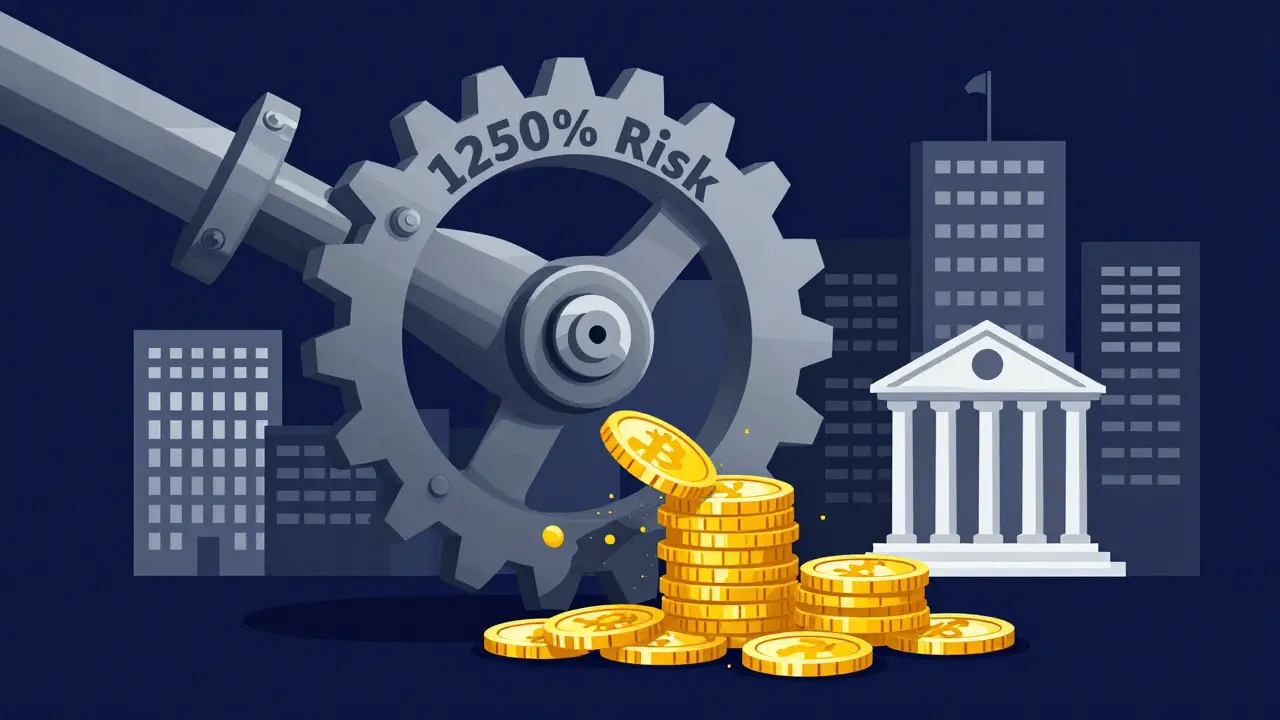
Under these new standards, unbacked cryptoassets face a 1,250% risk-weighting. What does that mean for you? It means that for every $100 of crypto exposure a bank holds or facilitates, they must set aside $1,250 in capital reserves. This effectively prohibits most traditional banks from servicing these assets because it destroys their profitability. Dr. Agustin Carstens, General Manager of the Bank for International Settlements, stated in March 2025 that this framework will likely restrict banking access for unbacked cryptoassets significantly.
However, not all jurisdictions are applying this uniformly. Switzerland’s FINMA allows for 800% risk-weighting for certain tokenized assets, maintaining a competitive advantage. Meanwhile, Singapore’s Monetary Authority (MAS) has implemented the strictest interpretation, sticking to the full 1,250%. If you are operating in a jurisdiction that follows the strict BCBS guidelines, expect traditional banks to become increasingly hostile toward direct crypto transactions unless you are a fully licensed entity.
Countries with the Best Banking Access
If you are looking for stability and ease of use, some countries have built frameworks that protect both the trader and the bank. These jurisdictions offer clear licensing paths, which give banks the confidence to serve crypto businesses and individuals.
| Country | Regulatory Body | Banking Success Rate | Key Requirement |
|---|---|---|---|
| Liechtenstein | FMA | 92% | TVTG License ($15k-$25k) |
| Bermuda | BMA | 89% | DABA Registration |
| Germany | BaFin | 82% | Financial Instrument Classification |
| Switzerland | FINMA | 87% | VASP License |
| Panama | MNCF | 81% | Digital Assets Law Compliance |
Liechtenstein stands out as the global leader with a 90.66/100 crypto-friendly score. Its Token and Trusted Technology Service Provider Act (TVTG), effective since 2020, guarantees banking access through Article 12 provisions if you are registered with the Financial Market Authority (FMA). While the license costs between $15,000 and $25,000, 92% of these entities secure banking relationships quickly.
Germany has emerged as a European powerhouse. By classifying cryptocurrencies as 'financial instruments' under BaFin regulation, Germany enables institutional investors to access crypto assets through traditional banking channels. According to the Bundesbank's 2024 Financial Stability Report, 68% of major German banks now offer crypto custody services. User experiences reflect this; one trader reported securing a business account with Solaris Bank after four months and 17 applications, resulting in full Euro banking integration with no transaction limits.
Countries with Severe Restrictions
On the other end of the spectrum, several countries actively prevent banking access for crypto traders. In these regions, using traditional banks for crypto transactions can lead to immediate account closures and legal penalties.
- Nigeria: The Central Bank of Nigeria (CBN) issued Circular BSD/FID/DIR/GEN/LAB/01/001 in 2017, prohibiting all Nigerian banks from facilitating cryptocurrency transactions. This was reinforced in February 2021 with warnings of 'stiff penalties.' Despite having an estimated 20 million crypto users, 97% report severe banking access issues. Traders are forced to use Peer-to-Peer (P2P) markets, often paying 15-20% premiums to convert fiat to crypto.
- Tanzania: While ownership is not explicitly banned, the Bank of Tanzania states that the Tanzanian shilling remains the sole legal tender. Banks are advised against facilitating crypto transactions, creating a hostile environment for any formal banking relationship.
- Egypt and Algeria: Both countries show high rates of banking rejection (92% and 89% respectively). Local regulations treat crypto transactions as illegal or highly suspicious, leading to frequent freezes on accounts linked to exchanges like Binance.
In Nigeria, for example, user 'NaijaCryptoKing' reported that despite a clean banking history, all 11 major Nigerian banks closed his accounts after detecting Binance transfers. This forces traders into the informal economy, increasing risk and cost.
The Middle Ground: Ambiguous Frameworks
A significant portion of the world falls into a gray area. Approximately 47% of countries maintain ambiguous or restrictive policies according to the Atlantic Council's Cryptocurrency Regulation Tracker. These jurisdictions don't ban crypto outright, but they don't provide clear guidance to banks either.
The Netherlands mandates registration with the Dutch Central Bank (DNB). As of June 2025, there were 54 registered entities. However, banking access remains limited to only 31% of applicants due to stringent Anti-Money Laundering (AML) and Counter-Financing of Terrorism (CFT) requirements. The process is slow and expensive, with many traders finding that obtaining a license doesn't guarantee a bank account.
Seychelles offers minimal regulatory oversight through its Financial Services Authority (FSA). This attracted major exchanges like Binance in 2021. Yet, banking access is challenging. Only 42% of crypto businesses secure traditional banking relationships here. The instability is real; former FTX CFOs revealed that despite FSA licensing, banking relationships required constant renegotiation, with 78% of fiat channels terminating unexpectedly during peak stress periods.
Practical Steps for Securing Banking Access
If you are trying to navigate this landscape, preparation is key. The average time to secure banking access ranges from 2-4 weeks in Liechtenstein to 6-8 months in the United States. Here is what you need to do:
- Obtain Regulatory Licensing: In friendly jurisdictions, a license is your ticket. For example, Malta’s Virtual Financial Assets (VFA) license costs €35,000-€50,000 but gives you credibility with banks like Trust Bank Malta.
- Prepare AML/CFT Documentation: 47% of rejections are due to insufficient AML documentation. You need robust compliance certifications and clear business continuity plans.
- Hire Specialized Legal Help: 78% of successful applicants engage specialized crypto legal firms. These firms charge $15,000-$30,000 in setup fees but drastically reduce the learning curve, which typically takes 8-12 weeks for inexperienced traders.
- Choose the Right Bank: Traditional banks are moving away from crypto. Consider neobanks like Revolut or Nexo, which capture 32% of the market, or specialized crypto-native banks like Anchorage Digital and Kraken Bank.
Be aware that mismatched business descriptions cause 29% of rejections. If you say you are a "trader" but your application looks like a "exchange," banks will reject you. Be specific and consistent in your documentation.
Market Impact and Future Outlook
Banking access directly correlates with crypto adoption. The top 10 banking-access-friendly countries experienced 4.7x higher on-chain transaction volumes than the bottom 10 in 2025, representing $2.3 trillion versus $490 billion. This gap is widening.
Dr. Philipp Sandner warned in May 2025 that the banking access gap between regulated and unregulated crypto entities will widen significantly post-2026. We are seeing a polarization of the market. By 2027, 'crypto-ready' jurisdictions (currently 35% of countries) will offer seamless integration, while 'restricted' jurisdictions (47%) will maintain significant barriers. This could fragment the global crypto market into distinct regional ecosystems, making cross-border trading more complex and expensive for those in restricted zones.
The global market for crypto banking services is projected to reach $18.7 billion by 2027. Institutional demand is driving this growth, with 58% of Fortune 500 companies now utilizing crypto banking services for treasury management. If you are a retail trader, you may find yourself increasingly pushed toward P2P solutions or decentralized finance (DeFi) protocols as traditional banking doors close in your region.
Why did my bank close my account after I used a crypto exchange?
Banks are under pressure from new Basel Committee on Banking Supervision (BCBS) rules to manage risk associated with cryptoassets. Many banks interpret any link to crypto as high-risk due to potential money laundering concerns or regulatory uncertainty. Even if you are compliant, the bank's internal risk models may flag your account for closure to avoid potential fines or capital reserve requirements.
Which country has the best banking access for crypto traders in 2026?
Liechtenstein currently leads with a 92% banking success rate for licensed entities, thanks to its Blockchain Act (TVTG). Germany and Switzerland also offer strong access, with 82% and 87% success rates respectively, provided you have the necessary licenses from BaFin or FINMA.
What are the BCBS risk-weighting rules for crypto?
The BCBS rules, effective January 2026, require banks to hold 1,250% capital reserves for unbacked cryptoassets. This means for every $100 of exposure, a bank needs $1,250 in capital. This makes it economically unviable for most traditional banks to service unbacked crypto transactions, though some jurisdictions like Switzerland allow lower weightings (800%) for certain tokenized assets.
Can I get a bank account for crypto trading in Nigeria?
No. The Central Bank of Nigeria (CBN) has prohibited all Nigerian banks from facilitating cryptocurrency transactions since 2017. Traders in Nigeria are forced to use Peer-to-Peer (P2P) platforms, which often come with high premiums (15-20%) and increased security risks.
How much does it cost to get a crypto-friendly bank account?
Costs vary by jurisdiction. In Liechtenstein, the TVTG license costs $15,000-$25,000. In Malta, a VFA license costs €35,000-€50,000. Additionally, 78% of successful applicants hire specialized legal firms, adding $15,000-$30,000 to the setup cost. However, these costs are often offset by the ability to access cheaper fiat on-ramps and larger trading volumes.
Are neobanks better than traditional banks for crypto traders?
Often yes. Neobanks like Revolut and Nexo capture 32% of the crypto banking market and are generally more flexible than traditional banks. They are less bound by legacy systems and older risk models. However, they still operate under national regulations, so their availability depends heavily on your country of residence.