Blockchain Content Monetization Models: A Creator’s Guide to Direct Revenue in 2026
 May, 12 2026
Imagine writing an article or creating a digital artwork and keeping 90% of the revenue instead of handing over half to a platform. For years, traditional platforms have acted as gatekeepers, taking significant cuts and controlling access to audiences. But blockchain content monetization is a system that allows creators to earn revenue directly from their audience using decentralized ledger technology, bypassing traditional intermediaries. This model isn't just a niche experiment anymore; it's a rapidly growing sector valued at USD 499.52 million in 2024, projected to hit USD 659.32 million in 2025.
The shift is driven by creators who are tired of policy-driven demonetization and opaque fee structures. By leveraging tools like Non-Fungible Tokens (NFTs) and smart contracts, you can build a direct relationship with your fans. This guide breaks down how these models work, the specific technologies powering them, and why they might be the future of your income stream.
How Blockchain Changes the Revenue Equation
In the traditional web (Web2), you rely on ads, sponsorships, or platform subscriptions. Platforms like Patreon or YouTube take a cut, often ranging from 5% to 30%, and they hold the keys to your account. If they change their algorithm or policies overnight, your income can vanish. Blockchain changes this dynamic by removing the middleman.
Instead of renting an audience, you own the connection. When a fan buys content from you via blockchain, that transaction is recorded on a public ledger. No one can reverse it, and no platform can arbitrarily freeze your funds. The core advantage here is direct creator-audience relationships. You get paid instantly, and you keep more of what you earn. For example, Layer 2 solutions like Base Chain allow artists to retain up to 90% of their earnings, compared to the steep cuts seen on traditional marketplaces.
Key Monetization Models Explained
There isn't just one way to make money on the blockchain. Different models suit different types of content and audiences. Here are the most effective approaches currently in use:
- NFT Royalties: You mint a unique digital asset-like an avatar, piece of art, or exclusive video. When someone buys it, you get paid. More importantly, if they resell it later, smart contracts ensure you receive a percentage of that secondary sale automatically. This creates passive income from initial sales.
- Social Tokens: Platforms like Friend.tech allow fans to buy tokens representing their support for you. These tokens can grant access to private chats, events, or future discounts. Top creators on Friend.tech have earned between $1-$2 million monthly from transaction fees alone since August 2023.
- Gated Content: You require ownership of a specific NFT to unlock premium articles, videos, or community forums. TIME Magazine used this strategy and saw a 30% boost in premium content engagement and a 22% increase in digital revenue quarter-over-quarter.
- Micropayments: Instead of high-ticket items, you accept tiny payments for individual pieces of content. Blockchain makes this viable because transaction fees are near zero on networks like Polygon, where costs drop below $0.01 per transaction.
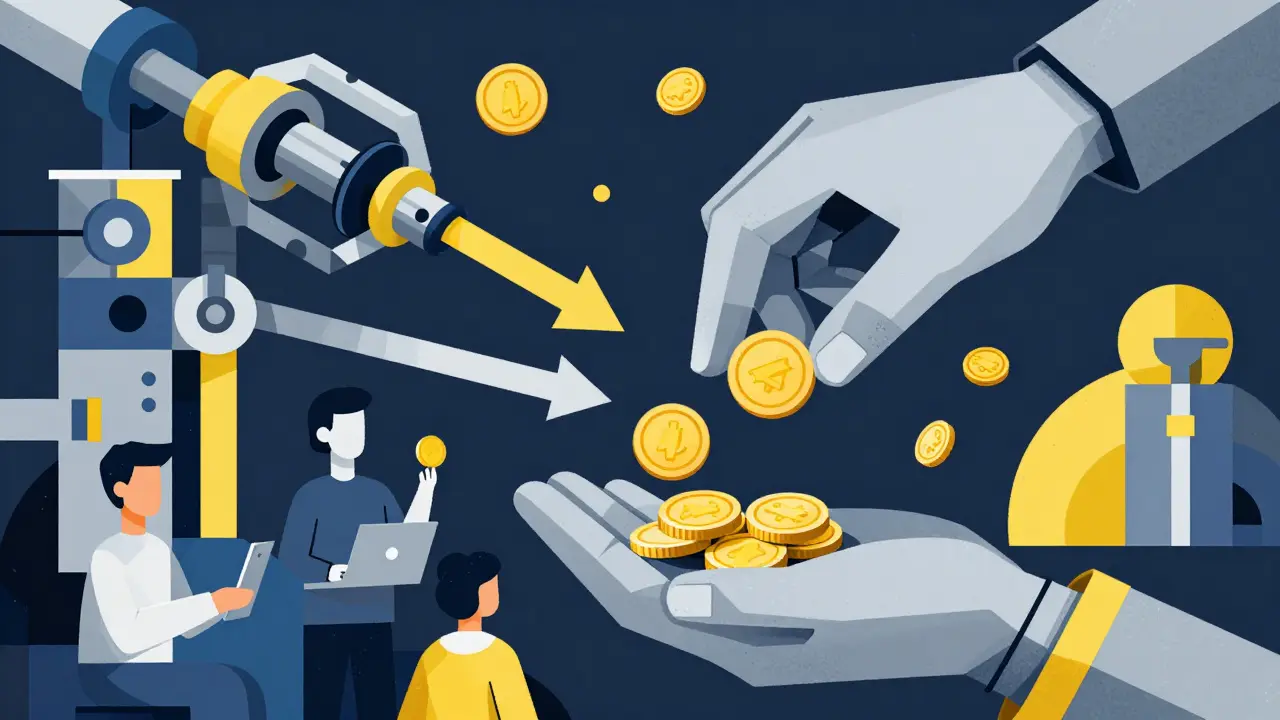
The Role of Smart Contracts and Transparency
A smart contract is essentially a self-executing agreement with the terms directly written into code. In content monetization, this means fairness is enforced by protocol, not by a company's HR department. If you set a 10% royalty on your NFT, every single resale triggers that payment automatically. There is no negotiation, no delay, and no risk of the buyer ignoring your request.
This transparency builds trust. Fans know exactly where their money goes, and you know you will be paid. Platforms like Zora have built their entire reputation on guaranteeing these secondary sales percentages without relying on potentially changeable platform policies. This reliability is crucial for long-term career sustainability.
Overcoming Technical Barriers
Despite the benefits, adoption has faced hurdles. The biggest issue is user experience. Setting up a crypto wallet, managing seed phrases, and understanding gas fees can be intimidating. In fact, research shows a 70% user abandonment rate during wallet setup processes. This is a massive leak in the funnel.
To combat this, hybrid models are emerging. The concept of TOKN, introduced in academic research in February 2025, proposes a hybrid Web2-Web3 strategy. It allows creators to tokenize work while receiving direct payments across familiar platforms like YouTube, TikTok, and Instagram. This bridges the gap between the usability of Web2 and the financial incentives of Web3.
Additionally, Layer 2 solutions are simplifying the backend. By moving transactions off the main Ethereum chain to faster, cheaper networks, users face fewer friction points. Progressive implementation strategies, such as offering free "loyalty pass" NFTs first, help onboard fans without requiring immediate financial commitment or technical knowledge.
| Feature | Traditional Platforms (Web2) | Blockchain Models (Web3) |
|---|---|---|
| Revenue Share | Creators keep 70-95% | Creators keep up to 90-95% (with low fees) |
| Secondary Sales | No royalties for creators | Automatic royalties via smart contracts |
| Cross-Border Fees | High (up to 70% reduction possible with blockchain) | Low (settlement in seconds) |
| User Onboarding | Easy (email/password) | Complex (wallet setup, 70% abandonment rate) |
| Control | Platform-dependent (risk of bans) | Self-custodial (ownership of assets) |

Global Adoption and Market Trends
The appetite for blockchain-based payments is growing globally, particularly in regions with high digital wallet usage. In the Asia-Pacific region, 70% of e-commerce spending now occurs through digital wallets, and 160 million users have adopted tokenized payment systems. This infrastructure supports the broader adoption of creator economies.
In the U.S., 28% of consumers use in-store digital wallets, a 47% increase since 2019. This comfort with digital finance translates to willingness to engage with blockchain content models. Gaming and blockchain synergies are also resonating strongly in 2025, with creators using Decentralized Autonomous Organizations (DAOs) and play-to-earn systems to build sustainable communities.
Strategic Implementation for Creators
If you're ready to dive in, start small. Don't overhaul your entire business overnight. Begin by experimenting with NFT-gated content or social tokens on a platform with strong community support, like Zora or Friend.tech. Engage with Discord servers and Twitter spaces to learn from peers. Community support is often the best educational resource available.
Focus on value, not just technology. Your audience cares about the content, not the underlying code. Use blockchain to enhance their experience-give them ownership, exclusive access, and a stake in your success. As hybrid models mature, expect to see seamless integrations where fans pay with credit cards but receive blockchain-backed assets behind the scenes.
Is blockchain content monetization legal?
Yes, but regulations vary by country. While the technology itself is legal, selling certain types of tokens may fall under securities laws depending on local jurisdiction. Always consult with a legal expert in your region before launching large-scale token offerings.
What are the best platforms for beginners?
Platforms like Zora and Base Chain offer user-friendly interfaces for minting NFTs and enforcing royalties. They are designed to reduce technical barriers, making them suitable for creators new to blockchain technology.
How do I handle taxes on blockchain earnings?
In most jurisdictions, cryptocurrency received as income is taxable. You should track the fair market value of each transaction at the time of receipt. Consult a tax professional experienced in crypto to ensure compliance.
Can I combine traditional subscriptions with blockchain?
Absolutely. Hybrid models are becoming popular. You can offer standard subscriptions on Patreon while providing exclusive blockchain-gated perks for top supporters, maximizing reach and revenue streams.
Why do transaction fees matter so much?
High fees discourage micropayments and small purchases. Networks like Polygon and Base Chain have reduced costs to fractions of a cent, enabling viable monetization for low-cost content items.
Gavin Wonnacott
May 13, 2026 AT 20:03You think this is some kind of revolution? It's just another way for tech bros to scam people who don't understand code. I've seen enough of these 'decentralized' schemes to know they all end in tears for the little guy. Stop pretending you're helping creators when you're really just building a more complex pyramid scheme.
Sheldon Friesen
May 15, 2026 AT 09:35Oh, look at you! So brave! So bold! Standing up against the 'tech bros' with your well-researched opinion! Did you actually read the article, or did you just skim the title and decide to be contrarian because it makes you feel superior? The math doesn't lie, buddy. 90% retention vs 50%? Do the arithmetic! It’s not rocket science, it’s basic economics!
Tricia Alach
May 17, 2026 AT 03:04i think its cool that u can keep more money but im scared of losing my keys lol. like what if i forget my password then? is there a customer service dept? probably not right? feels risky but also kinda exciting to own ur stuff. maybe ill try it later when im less confused about wallets
Caique Muniz
May 17, 2026 AT 13:51another day another crypto bro trying to sell me something i dont need. smart contracts? sure jeez. sounds like work. i'd rather just use patreon and not have to deal with gas fees and seed phrases. yawn.
Bradley Geldenhuys
May 17, 2026 AT 17:04listen here pal. you are missing the point entirely. this is about freedom. real freedom. not just paying a subscription fee to some corporation that can ban you tomorrow. yes its hard now. yes its confusing. but thats because we are breaking chains. stop being lazy and learn the tech. its empowering. trust me on this one.
robert Whitehead
May 18, 2026 AT 02:58The arrogance in this thread is palpable. You people treat blockchain like it's magic beans. It's a ledger. A distributed, immutable ledger. If you cannot manage a private key, you do not deserve ownership. This isn't about 'ease'; it's about responsibility. The abandonment rate isn't a bug; it's a feature filtering out the incompetent. Get over yourselves.
Mike S
May 18, 2026 AT 15:08Wow. Just wow. Another lecture from someone who thinks they're smarter than everyone else because they bought an NFT. You call it 'filtering out the incompetent'? I call it leaving money on the table. Your moral high ground is crumbling faster than your portfolio during a bear market. Sit down before you hurt yourself.
H F
May 19, 2026 AT 17:39I’m actually quite excited about this! The idea of direct support without the middleman taking such a huge cut is brilliant. Sure, the tech is tricky right now, but imagine where it’ll be in five years! We should focus on making it easier for everyone to join, not gatekeeping it as some exclusive club. Let’s build together!
Michael Berggren
May 19, 2026 AT 22:56This is a great perspective! 🌟 I’ve been experimenting with Zora lately and while the learning curve is steep, the sense of community is unmatched. When fans truly own a piece of your journey, their engagement changes completely. It’s not just a transaction; it’s a partnership. Keep exploring, everyone! 💪🚀
Kiran CS
May 20, 2026 AT 04:35One must acknowledge the inherent absurdity of expecting the general populace to master cryptographic protocols merely to consume content. It is, quite frankly, ridiculous. The pretension of believing that 'ownership' of a digital file holds any intrinsic value beyond speculative mania is laughable. Do educate yourselves before spouting such nonsense.
Bridget Coogle
May 20, 2026 AT 17:18it seems like everyone has strong feelings about this. i get why some are skeptical but also see the potential. lets just find a middle ground where people can choose what works for them no pressure needed