CoinCasso Crypto Exchange Review: Scam, Shutdown, and What Happened
 Dec, 6 2025
Crypto Exchange Scam Checker
Is this exchange legitimate?
This tool analyzes key indicators of scam exchanges based on the CoinCasso case study. Enter details about the exchange to see if it shows signs of being a scam.
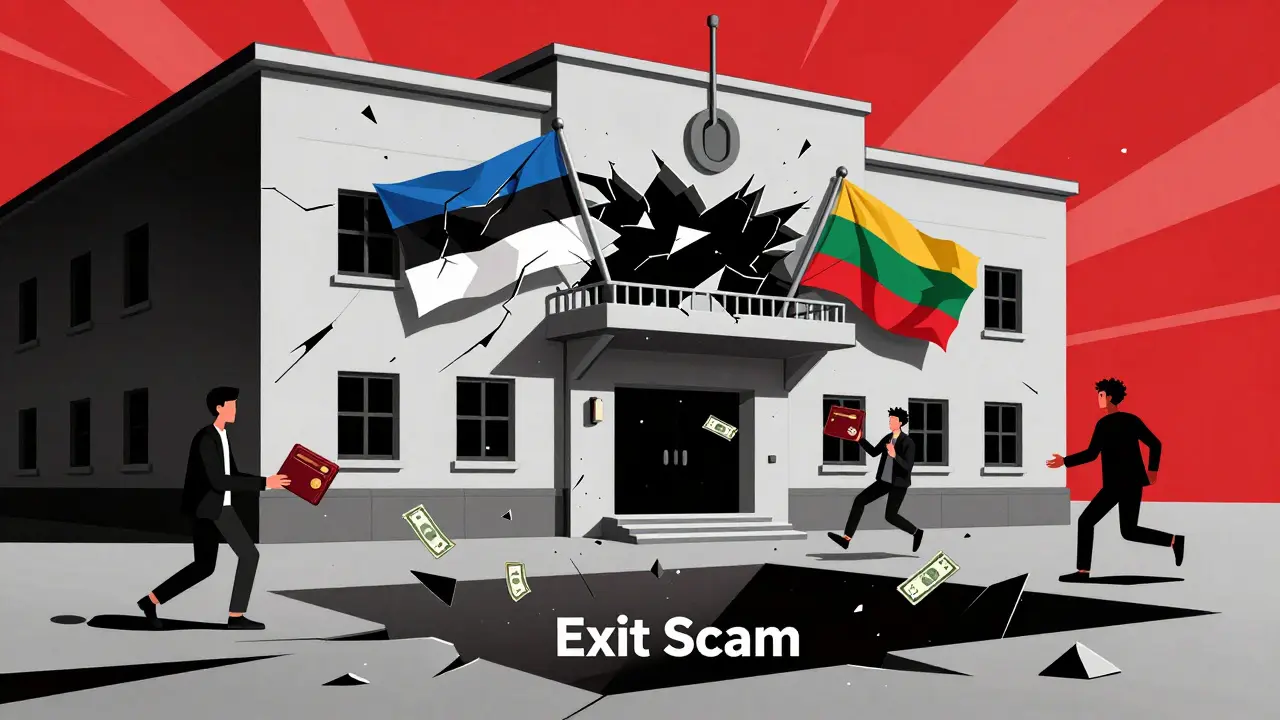
If you're looking at CoinCasso right now, you're probably wondering if it's still active - or worse, if you've already lost money there. The truth? CoinCasso is dead. Not just inactive. Not just struggling. It's officially listed as "out of business" by multiple watchdogs, marked "dead" in exchange graveyards, and flagged as a scam by financial crime investigators. This isn't a review of a mediocre platform. This is a warning about a failed exchange that vanished with users' funds.
What Was CoinCasso Supposed to Be?
CoinCasso claimed to be a cryptocurrency exchange based in Estonia, launched around 2019. It offered trading pairs with EUR and PLN, meaning it targeted European users who wanted to buy crypto with bank transfers. It supported Bitcoin, Ethereum, USDT, and a few others. The platform looked clean - built on TradingView, with a simple interface in English, Polish, Russian, and Turkish. It even promised a debit card and up to 80% profit sharing, which sounded too good to be true - because it was. It held two Estonian licenses: one for virtual currency wallet services (FRK000282) and another for exchanging crypto to fiat (FVR000340). At first glance, that made it look legit. But here's the catch: Estonia revoked hundreds of similar licenses between 2021 and 2022 after cracking down on shell companies and money laundering risks. CoinCasso was one of them. The licenses didn’t mean it was safe. They meant it had passed a basic paperwork check - nothing more.Trading Volume? Almost Nothing
A real exchange needs liquidity. That means people are actually buying and selling. CoinCasso didn’t have that. As of December 2021, its 24-hour trading volume was $107,613. Let that sink in. Binance, one of the smallest major exchanges, handled over $50 billion in volume that same day. CoinCasso’s volume was 0.0002% of Binance’s. That’s not just small - it’s invisible. If you tried to sell 10 BTC on CoinCasso, you’d either get a terrible price or your order wouldn’t fill at all. No serious trader would touch it.Fees, Deposits, and Withdrawals - The Trap
CoinCasso charged 0.125% to 0.25% per trade, depending on your CCX token balance. That’s not outrageous on its own. But here’s the problem: the minimum deposit was just 1 PLN or 20 EUR for fiat, and 1 EUR for crypto. That’s easy to get into. And that’s exactly how scams work. They make it simple to deposit, hard to withdraw. Deposits? You could use bank transfer, card, or crypto. Withdrawals? Also listed as possible. But users who tried to cash out reported delays, excuses, and eventually silence. Customer service would reply quickly - too quickly. That’s a red flag. Legit exchanges have long wait times during high volume. CoinCasso’s instant replies were scripted, designed to keep you hopeful while they drained your account.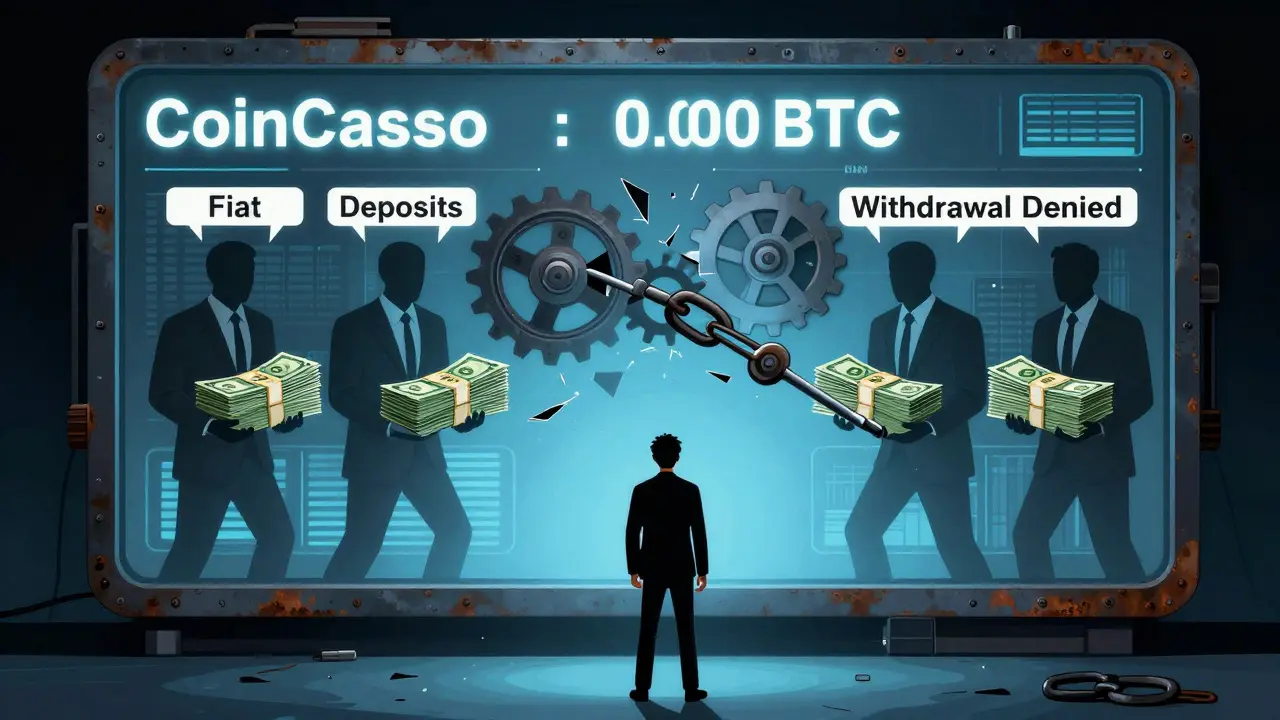
Why Did It Die? The Scam Pattern
This wasn’t a business failure. It was an exit scam. The pattern is classic: attract users with low barriers to entry, promise easy profits, offer a clean UI, and then vanish when enough money piles up. CoinCasso did all of that. By mid-2025, multiple sources confirmed it was gone:- Cryptowisser marked it as "dead" in their Exchange Graveyard.
- Forex Peace Army listed it as "Out of business" with a July 24, 2025 update.
- Cryptolegal.uk included it in their 2025 list of "fake crypto exchanges" and warned users not to engage.
- TradersUnion.com called it a "fraudulent exchange registered in Lithuania," despite its Estonian claims.
- BTCC.com warned: "Contacting CoinCasso customer service is part of the scam. They will feign to work with you to transfer your crypto out of their wallet."
What About the Positive Reviews?
You might see a few glowing reviews online - "Best crypto exchange with EURO!" or "Fast customer support!" - especially on Forex Peace Army. But here’s the truth: those are either fake or from people who only deposited money and never tried to withdraw. Once you try to take your crypto or euros out, the system breaks. Support stops replying. Your account gets locked. Then they ask for more fees to "unlock" it. That’s not customer service. That’s the next stage of the scam. One 5-star review on Forex Peace Army praised CoinCasso’s SEPA transfers. But SEPA is just a payment system. It doesn’t make a platform trustworthy. Any scammer can set up a bank account in the EU and say they use SEPA. That doesn’t mean they’ll give your money back.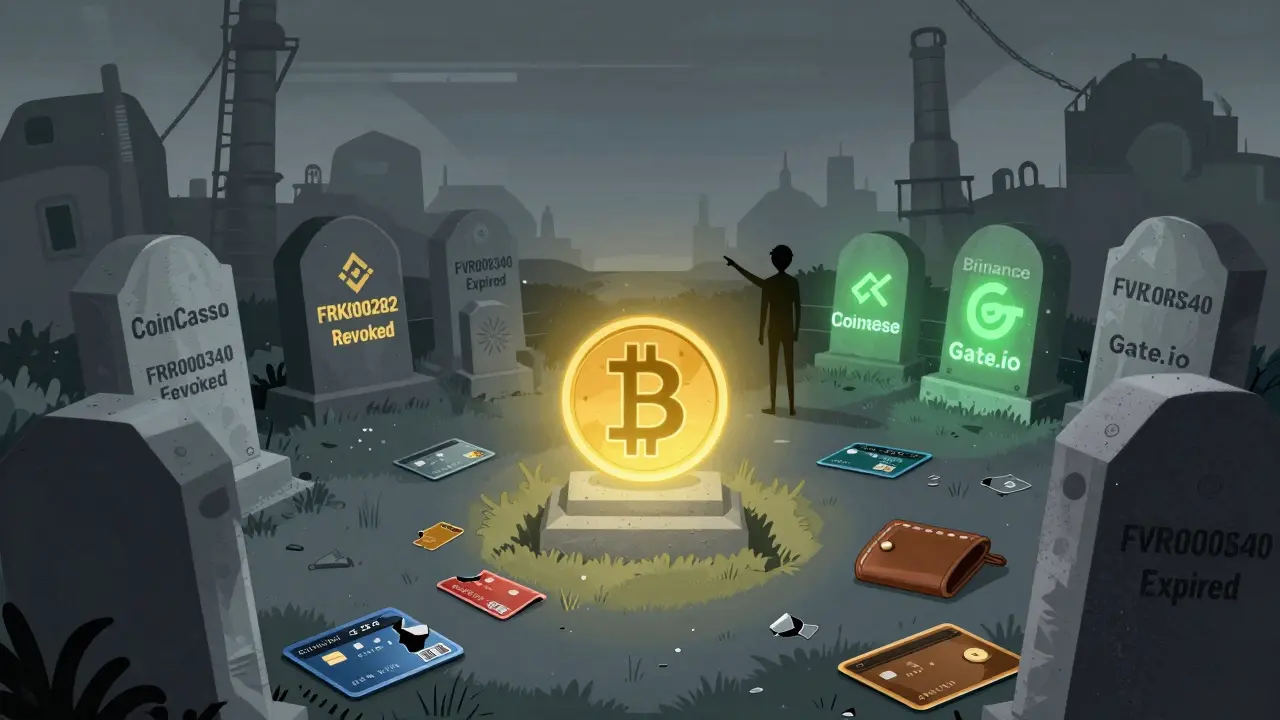
What Should You Do If You Used CoinCasso?
If you deposited funds and can’t withdraw:- Stop sending more money. They’ll ask for "processing fees," "taxes," or "verification deposits." Never pay.
- Do not contact their "support" again. They’re not helping you. They’re fishing for more cash.
- Report it. File a complaint with your local financial regulator. In the UK, that’s the FCA. In the EU, contact your national financial authority.
- Check your wallet. If you sent crypto to CoinCasso’s wallet address, it’s gone. There’s no recovery. Blockchain transactions are irreversible.
What Are the Real Alternatives?
If you want to trade crypto safely, use platforms with real volume, real regulation, and real track records:- Gate.io - Solid liquidity, low fees, supports fiat deposits.
- Binance - Largest exchange by volume, strong security, regulated in multiple jurisdictions.
- Coinbase - Beginner-friendly, regulated in the US and EU, insured custodial wallets.
- UPHOLD - Supports fiat and crypto, transparent fees, good for EUR/USD users.
- Zengo Wallet - Non-custodial, no KYC, self-custody, high security.
Final Verdict: Avoid CoinCasso - It’s Gone
CoinCasso was never a real exchange. It was a trap dressed up as a trading platform. It used fake licenses, low fees, and a clean interface to lure people in. Once users deposited, they couldn’t withdraw. The platform vanished. No warning. No notice. Just silence. If you’re reading this in December 2025, you’re likely looking for answers because you or someone you know got caught. The best thing you can do now is learn from it. Never trust an exchange with no volume, no clear regulatory status, and promises that sound too good to be true. In crypto, if it feels like a scam, it probably is.Stick to the big names. Use wallets you control. And never, ever send money to a platform that disappears after you deposit.
Is CoinCasso still operating in 2025?
No, CoinCasso is not operating. Multiple independent sources, including Cryptowisser and Forex Peace Army, confirmed it is dead as of July 2025. The website is unreachable, customer service no longer responds, and regulatory bodies list it as an out-of-business scam.
Was CoinCasso regulated?
CoinCasso claimed to hold two Estonian licenses, but Estonia revoked hundreds of similar licenses between 2021 and 2022 due to widespread non-compliance. Even if the licenses were valid at one point, they did not guarantee safety or ongoing operations. The platform’s later disappearance and scam reports indicate it was never properly regulated in practice.
Can I get my money back from CoinCasso?
The chances of recovering funds are extremely low. Once you sent crypto to CoinCasso’s wallet, it left your control and is likely gone. If you sent fiat, there’s no legal recourse unless you report the fraud to authorities immediately - and even then, recovery is rare. Do not pay any "recovery fees" - those are scams within scams.
Why did CoinCasso shut down?
CoinCasso shut down because it was an exit scam. It attracted deposits from users, then vanished with the funds. Its extremely low trading volume ($107k daily in 2021) meant it couldn’t sustain real operations. Instead of building a legitimate business, it exploited users’ trust and disappeared when the money accumulated.
Are there any safe exchanges similar to CoinCasso?
Yes. If you liked CoinCasso’s low minimum deposits and EUR/PLN support, try Gate.io, Uphold, or Coinbase. All offer fiat on-ramps, real liquidity, and regulatory oversight. Unlike CoinCasso, they have been operating for years with transparent fees and verified customer support.
How do I avoid crypto scams like CoinCasso?
Check trading volume on CoinGecko or CoinMarketCap - anything under $1 million daily is risky. Look for regulation by known agencies (FCA, CySEC, FinCEN). Avoid platforms promising high returns or profit sharing. Never use an exchange that doesn’t let you withdraw to your own wallet. If it sounds too good to be true, it is.
Manish Yadav
December 7, 2025 AT 17:20This is why you never trust some random crypto site with a nice logo and low deposit minimums. People are gullible. They see "80% profit sharing" and think they're genius. Newsflash: if it's too good to be true, it's a scam. And now they're gone. Good riddance.
Annette LeRoux
December 8, 2025 AT 13:13Ugh. I feel so sad for the people who lost money. 😔 I remember when I first got into crypto, I thought every platform was like Coinbase. Turns out, most are just digital slot machines with a website. CoinCasso wasn't even trying to hide it. The "instant support" was the biggest red flag. Like, bro, if your customer service replies in 2 minutes, you're either a bot or a scammer. And it was both.
Nina Meretoile
December 8, 2025 AT 16:32It’s wild how many people still fall for this. The pattern’s been the same since 2017: fake licenses, low barriers, fake reviews, then poof. 🌫️ The real tragedy? The victims aren’t the ones with big wallets-they’re the students, the immigrants, the retirees trying to build something safe. And now they’re left with nothing but a ghost site and a bank statement that says "crypto deposit: gone." We need better education. Not more regulations. More awareness.
Mairead Stiùbhart
December 9, 2025 AT 16:21Oh sweet mercy. CoinCasso was basically the crypto version of a 2003 Nigerian prince email. Just with a TradingView UI and a better logo. 🙃 I mean, "up to 80% profit sharing"? That’s not a business model, that’s a cry for help from someone who failed accounting 101.
Billye Nipper
December 10, 2025 AT 16:07I just want to say… if you’re reading this and you lost money to this, please don’t blame yourself. You weren’t stupid. You were hopeful. And hope is not a crime. The system is broken. We’re taught to trust logos, licenses, and fast customer service-but none of that means anything if the company’s structure is built on sand. Please, if you’re hurting, reach out. You’re not alone.
Tara Marshall
December 11, 2025 AT 15:53Trading volume was $107k? That’s not a crypto exchange. That’s a side hustle with a website. Real exchanges don’t need to promise 80% returns-they have volume. And volume comes from trust. CoinCasso had neither. Just a pretty UI and a lot of empty promises. Case closed.
michael cuevas
December 12, 2025 AT 03:25People still don't get it. You don't need to be a genius to spot a scam. Just look at the profit numbers. 80%? In crypto? Bro. That's not a feature. That's a warning siren with a discount code. And the fact they switched countries? Classic. Move the goalposts. Move the money. Move on.
Noriko Robinson
December 12, 2025 AT 13:44I read this whole thing and I just felt this weird mix of anger and sadness. Not because I lost money-but because I know someone who did. And they’re still checking their email every day hoping for a reply. That’s the real horror. Not the scam. The waiting. The hope. The silence. We need more stories like this. Not just warnings. Real human stuff. So people stop hoping and start protecting themselves.
miriam gionfriddo
December 13, 2025 AT 00:40LOL at the "Estonian licenses". Like that means anything. Estonia revoked like 90% of those licenses because they were all shell companies run by Russian guys with fake names. CoinCasso was just another one. And the "profit sharing"? That’s just a fancy way of saying "we’re going to steal your crypto and call it a bonus." The only thing worse than the scam? The people who still defend it in forums. You’re not helping. You’re part of the problem.
Roseline Stephen
December 14, 2025 AT 03:57Just one thing: if you ever see a crypto platform that offers fiat deposits with no KYC and instant withdrawals… walk away. Not run. Walk. Slowly. Like you’re avoiding a snake. Because that’s exactly what it is. CoinCasso wasn’t an exception. It was the rule.