Crypto Exchanges Banned in Iran: Sanctions and Regulatory Limits
 Apr, 16 2026
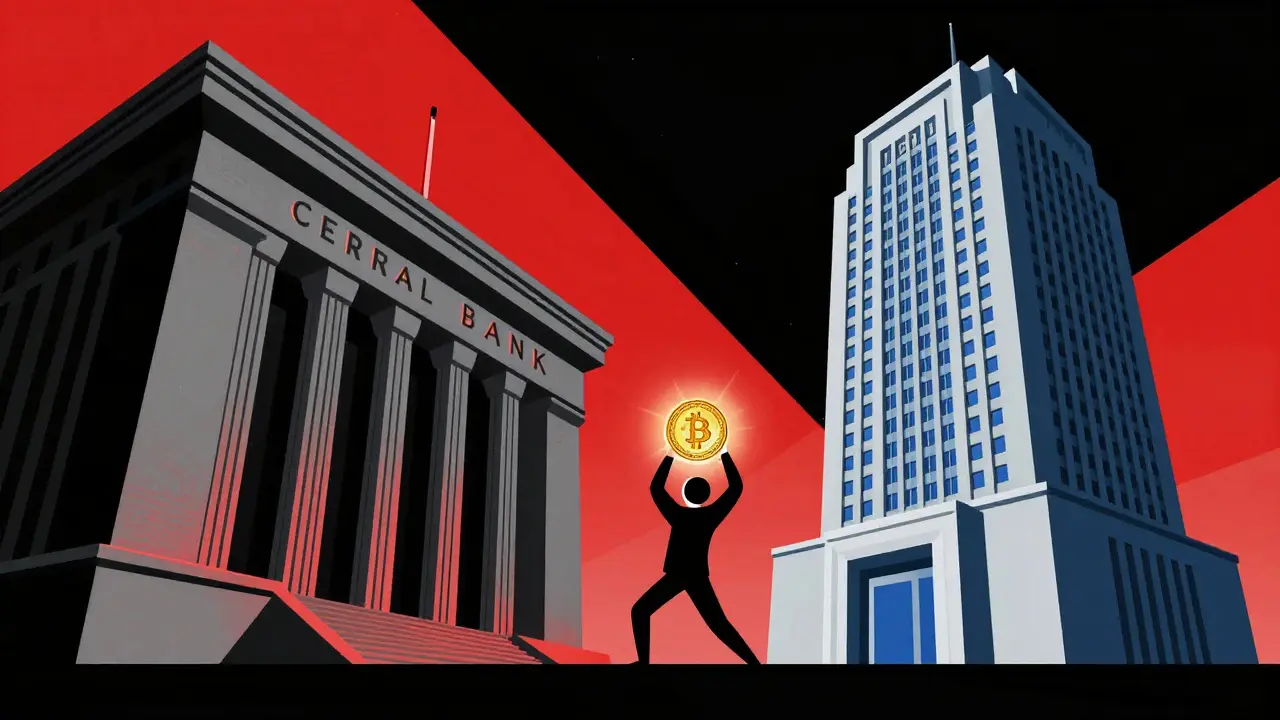
If you're trying to trade crypto in Iran, you've probably noticed that it isn't as simple as signing up for an account and depositing funds. There isn't just one single "blacklist" of banned exchanges. Instead, Iranian traders are caught in a pincer movement: the Iranian government is tightening its grip on domestic trading, while global platforms are blocking Iranian users to avoid the wrath of the US Treasury the government department responsible for managing federal finances and implementing economic sanctions.
| Type of Restriction | Who Implements It | Main Goal | Common Impact |
|---|---|---|---|
| Domestic Regulation | Central Bank of Iran | State Oversight & Tax | Blocked rial-to-crypto payments (unless API-approved) |
| International Sanctions | OFAC / US Government | Economic Pressure | Account freezes on global exchanges (e.g., Bittrex) |
| Asset Freezes | Stablecoin Issuers (Tether) | Compliance | Freezing of USDT addresses linked to sanctioned entities |
Why Global Exchanges Block Iranian Users
Most major international exchanges aren't "banned" by the Iranian government in the traditional sense. Rather, these platforms ban themselves from operating in Iran. Why? Because of the Office of Foreign Assets Control the agency of the US Treasury that administers and enforces economic and trade sanctions (OFAC). If a US-based exchange allows an Iranian national to trade, they risk massive fines or criminal charges.
A perfect example of this is Bittrex a cryptocurrency exchange that provided a platform for buying, selling, and storing digital assets. The exchange froze accounts belonging to Iranian nationals to comply with US Treasury sanctions. This wasn't a sudden decision but a mandatory move to stay legal in the US. For users, this is a nightmare scenario; one Iranian national even launched an $88 million lawsuit against Bittrex after losing access to funds during the 2017 and 2021 bull markets. Unfortunately, the courts sided with the exchange, citing Terms of Service that allow providers to suspend accounts for compliance reasons.
The Tether Crackdown and the Nobitex Connection
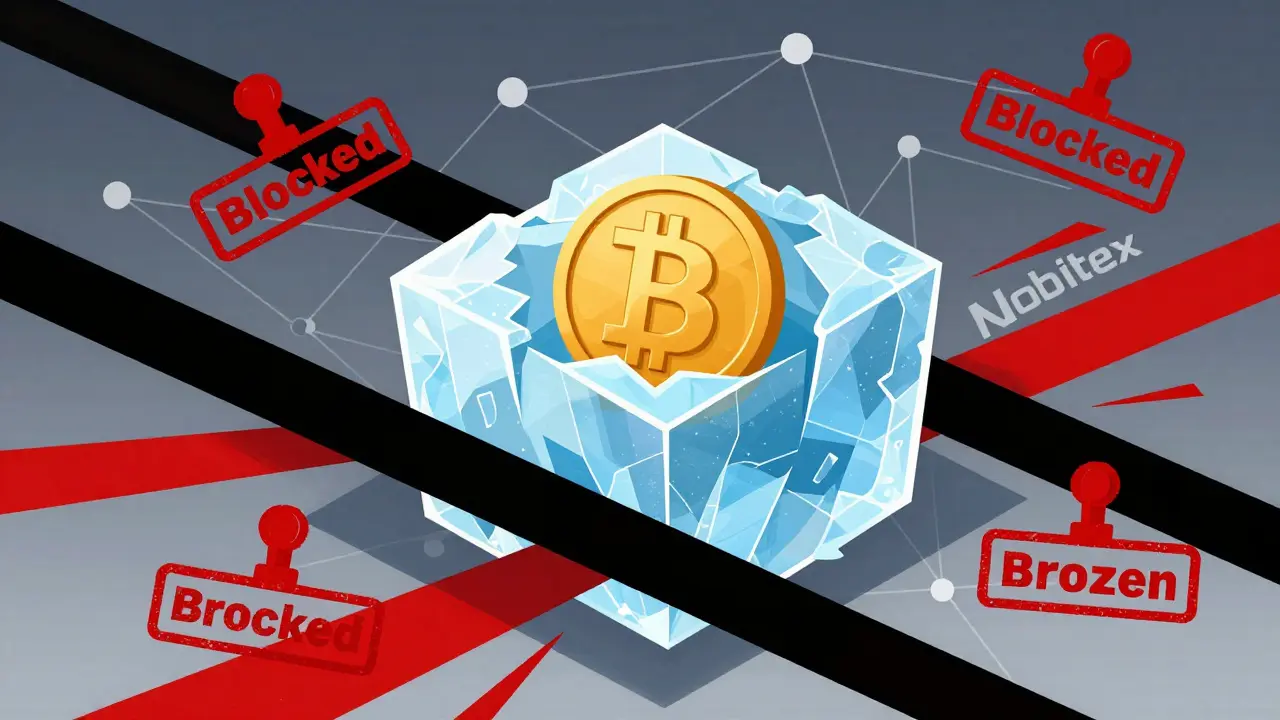
Even if you use a non-custodial wallet, you aren't completely safe. Tether the company that issues USDT, a stablecoin pegged to the US Dollar has become incredibly aggressive in freezing Iranian-linked funds. On July 2, 2025, Tether executed one of its largest freezes ever, targeting 42 addresses. Many of these were tied to Nobitex the largest domestic cryptocurrency exchange operating within Iran, the country's biggest local platform.
The problem here is "tainted" funds. Tether froze wallets that had transactional links to the Islamic Revolutionary Guard Corps a branch of the Iranian Armed Forces that operates both internally and externally (IRGC). Because Nobitex is a hub for so much Iranian volume, legitimate users often find their funds frozen simply because their coins passed through an address that Tether flagged as "high risk." This has led thousands of accounts to be blocked, creating a climate of fear for anyone holding large amounts of USDT.
Domestic Rules: The Central Bank's New Playbook
The Iranian government used to be relatively tolerant of crypto-even legalizing mining in 2018. But that's changed. Since late 2024, the Central Bank of Iran the apex monetary authority of the Islamic Republic of Iran has moved from tolerance to active control. On December 27, 2024, they effectively blocked all cryptocurrency-to-rial payments on websites within the country.
Wait, does that mean all local trading stopped? Not exactly. The government now only allows "approved" exchanges to operate. To get the green light, an exchange must use a government-mandated API system. This gives the state full visibility into every user's data and trade history. Essentially, the government didn't ban crypto; they just made sure they have a key to every door.
They've also put a leash on stablecoins. As of September 2025, the government set strict limits on holding assets like Tether. Now, individuals can only buy up to $5,000 worth of stablecoins per year and can't hold more than $10,000 in their balance. If you're a serious trader, these limits make it almost impossible to operate at scale without breaking the law.
Taxation and the War on Advertising
The government is also treating crypto more like a financial asset and less like a digital experiment. In August 2025, the Law on Taxation of Speculation and Profiteering was enacted. For the first time, this means capital gains tax is applied to crypto trading, putting it in the same bucket as gold, real estate, and forex trading.
To slow down adoption, they've also gone after the marketing. In February 2025, the regime banned all cryptocurrency advertising. Whether it's a billboard in Tehran or a sponsored post on social media, promoting crypto is now against the rules. This is a clear attempt to stop new users from entering the market, likely to keep the existing volume within the government-monitored API systems.

How Iranian Users are Adapting
When the front door is locked, people find a window. Since global exchanges are blocked and local ones are monitored, Iranian traders have shifted their strategies. Many have moved their assets to DAI a decentralized, collateral-backed stablecoin managed by the MakerDAO community, often using the Polygon a scalable and compatible layer-2 scaling solution for Ethereum network. Because DAI is decentralized, there is no central company like Tether to press a "freeze" button on a specific address.
Beyond the tech, there's a geographical shift. Turkey has become the primary safe haven. With its flexible residency laws and a massive, dollarized crypto economy, Turkey acts as a gateway. Traders move funds to Turkish intermediaries who can then interface with the global financial system, bypassing the blocks imposed on Iranian IP addresses and passports.
Can I use a VPN to access banned exchanges in Iran?
While a VPN hides your IP address, it doesn't hide your identity. Most major exchanges require KYC (Know Your Customer) documentation. If you provide an Iranian passport, the exchange will block your account regardless of your IP address to comply with OFAC sanctions.
Is Nobitex legal to use?
Yes, Nobitex is a domestic Iranian exchange. However, it operates under the Central Bank's regulations, meaning the government has access to user data through mandatory API systems. Additionally, some addresses linked to Nobitex have been targeted in Tether's asset freezes.
Why was my USDT frozen?
Tether frequently freezes addresses that show transactional links to sanctioned entities, including the IRGC. Even if you didn't deal with them directly, if your funds passed through a wallet that did, Tether may freeze your assets for compliance with US sanctions.
What is the limit on stablecoins in Iran?
According to directives from September 2025, individuals and legal entities are limited to an annual purchase of $5,000 in stablecoins and a maximum holding balance of $10,000.
Is crypto mining still legal in Iran?
Mining was recognized as a legal industry back in 2018 to allow the state to monitor and regulate mining farms. While mining is generally tolerated, the trading and conversion of those mined assets into rials are now strictly controlled by the Central Bank.
Next Steps for Traders
If you are operating within Iran and want to minimize risk, stop relying on a single point of failure. Avoid keeping large sums of wealth in centralized stablecoins like USDT, which can be frozen instantly. Instead, look into decentralized alternatives or cold storage solutions that don't require a third-party intermediary.
For those needing to move funds globally, the "Turkey Route" remains the most viable, though it requires a trusted intermediary. Always check the latest OFAC designations, as the list of sanctioned addresses is updated frequently, and a wallet that was safe yesterday could be a liability today.
Ian Chait
April 17, 2026 AT 08:01Classic case of the globalist cabal using "sanctions" as a front for total financial surveillance. The whole USDT freeze thing is just a way for the elites to map out every single node in the network so they can eventually kill the off-ramps entirely. If you aren't using Monero or some heavy-duty mixer, you're basically just begging for your assets to be seized by the deep state. It's a total joke that people still trust centralized stablecoins in 2025 when the ledger is basically an open book for the spooks. Wake up and get your keys off the exchange before the great reset hits and you're left with zeros in your wallet while the Fed prints trillions into the void.
Evan Iacoboni
April 18, 2026 AT 08:53The Turkey route is a massive loophole that's going to get closed the second the US Treasury decides it's a systemic risk. It's wild that people think a few intermediaries in Istanbul can stop OFAC when they have the data on every single transaction flowing through the major gateways.
Adam Mann
April 18, 2026 AT 20:02It is truly heartening to see how people are finding creative ways to maintain their financial autonomy despite such incredibly difficult circumstances, and while the situation in Iran seems quite bleak at first glance, the shift towards decentralized assets like DAI on Polygon shows that the spirit of innovation is alive and well in the face of adversity. I believe that as more people learn about the power of non-custodial wallets and peer-to-peer networks, they will eventually find a way to build a more inclusive financial system that doesn't rely on the whims of a few powerful entities or government agencies, and it is just so wonderful to think that technology can bridge these gaps and provide a lifeline to those who are otherwise shut out of the global economy by political disagreements that they had no part in creating in the first place.
Michael Harms
April 19, 2026 AT 09:32DAI is definitely the way to go here.
Karen Mogollon Gutierrez
April 19, 2026 AT 12:33The sheer audacity of Tether to freeze funds based on circumstantial transactional links is nothing short of an absolute travesty. One must wonder how many innocent individuals have been rendered destitute by these arbitrary decisions, which are executed with a cold, clinical indifference that is utterly abhorrent to anyone with a modicum of empathy for the plight of the common citizen. It is an existential crisis for the very concept of digital ownership when a private corporation can unilaterally decide to erase one's wealth based on a flawed algorithm. Truly, we are witnessing the death of financial privacy in the most dramatic fashion imaginable.
Gaurav Undirwade
April 21, 2026 AT 01:28It is fundamentally the responsibility of the individual to ensure their activities remain within the bounds of legality. Those who attempt to circumvent international sanctions are merely engaging in a futile exercise of greed and desperation, and they should not expect the global financial community to accommodate their illicit maneuvers.
Chintu Parikh
April 22, 2026 AT 02:23I completely agree that the move toward decentralized alternatives is the most sustainable path forward for these traders. It is truly inspiring to see the community collaborating to find solutions that prioritize resilience and autonomy over centralized control, and I believe that these strategies will eventually benefit users worldwide by highlighting the vulnerabilities of the current system.
Ankit Sindhu
April 22, 2026 AT 03:31Moving assets to cold storage is a solid move for anyone in a high-risk zone. Just make sure you've got your seed phrases backed up physically because once that's gone, it's gone forever.
nathan jones
April 23, 2026 AT 21:27VPNs are pretty useless for KYC.
Mike Kempenich
April 24, 2026 AT 17:48The $5,000 limit is honestly a joke for anyone actually trying to hedge against inflation. It's basically the government admitting they're scared of the tech while trying to pretend they're in control. Good luck to anyone trying to navigate this mess.