Cryptocurrency Restrictions in Ecuador: What You Need to Know in 2026
 Mar, 17 2026
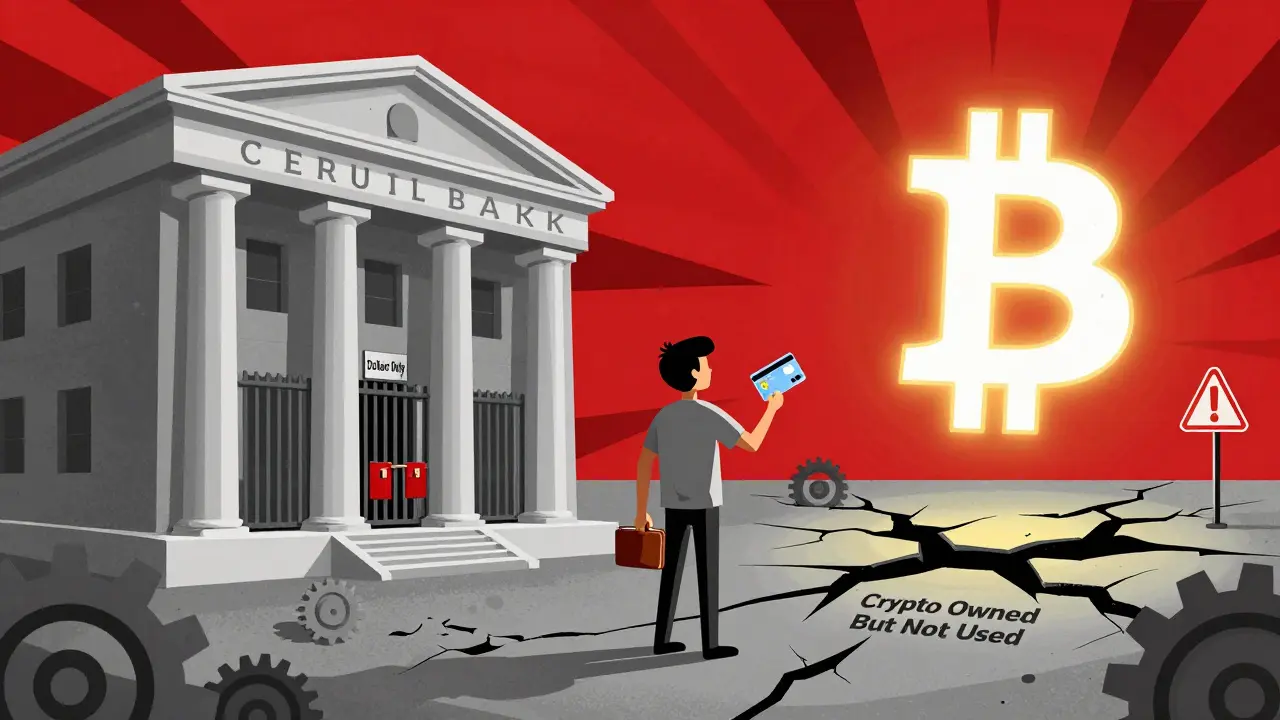
If you’re trying to buy Bitcoin or send crypto to family in Ecuador, you’re not alone. But you’re also walking into one of the most confusing financial environments in Latin America. Cryptocurrencies aren’t illegal here - but they’re not legal either. The government doesn’t stop you from owning them, yet it makes it nearly impossible to use them. And the reason isn’t about safety. It’s about control.
What the Law Actually Says
The Central Bank of Ecuador (BCE) made its position clear in August 2024: cryptocurrencies are not legal tender and not authorized as a payment method. This isn’t a new rule - it’s based on Article 94 of the Organic Monetary and Financial Code, which has been in place since Ecuador adopted the US dollar as its official currency in 2000. That means no business is allowed to accept Bitcoin, Ethereum, or any other crypto as payment. If a store tries to take Dogecoin for coffee, they’re breaking the law.
But here’s the twist: nobody is arresting people for buying crypto. You can still sign up for Binance, OKX, or Mercado Bitcoin. You can still hold your coins in a wallet. You can even trade them privately. The law doesn’t ban ownership - it bans integration. It’s like allowing someone to own a car but outlawing gas stations, traffic lights, and parking spots. You can have it, but you can’t use it in public.
Why Banks Block Everything
If you think you can just use your debit card to buy crypto, think again. Ecuadorian banks are legally required to block any transaction tied to cryptocurrency. The Superintendency of Banks (SB) maintains a public list of unauthorized crypto platforms, and every major exchange - including Binance and Coinbase - is on it. When you try to send money from your bank account to a crypto platform, the system flags it. Often, your account gets frozen. One Reddit user in Quito reported having three bank accounts closed this year after trying to buy Bitcoin. Total losses? $850.
Even card payments for crypto are blocked. Visa and Mastercard processors in Ecuador classify crypto exchanges as high-risk merchants. That means if you try to use your credit card on a global exchange, the transaction gets rejected before it even leaves your phone. No exceptions. No appeals.
This isn’t about fraud prevention. It’s about isolation. The financial system is built to keep crypto out. And it works - at least for now.
Who’s Using Crypto in Ecuador?
Only 2.73% of Ecuador’s population owns cryptocurrency. That’s about 500,000 people. For comparison, the Latin American average is over 10%. Why so low? Two big reasons: banking access and fear.
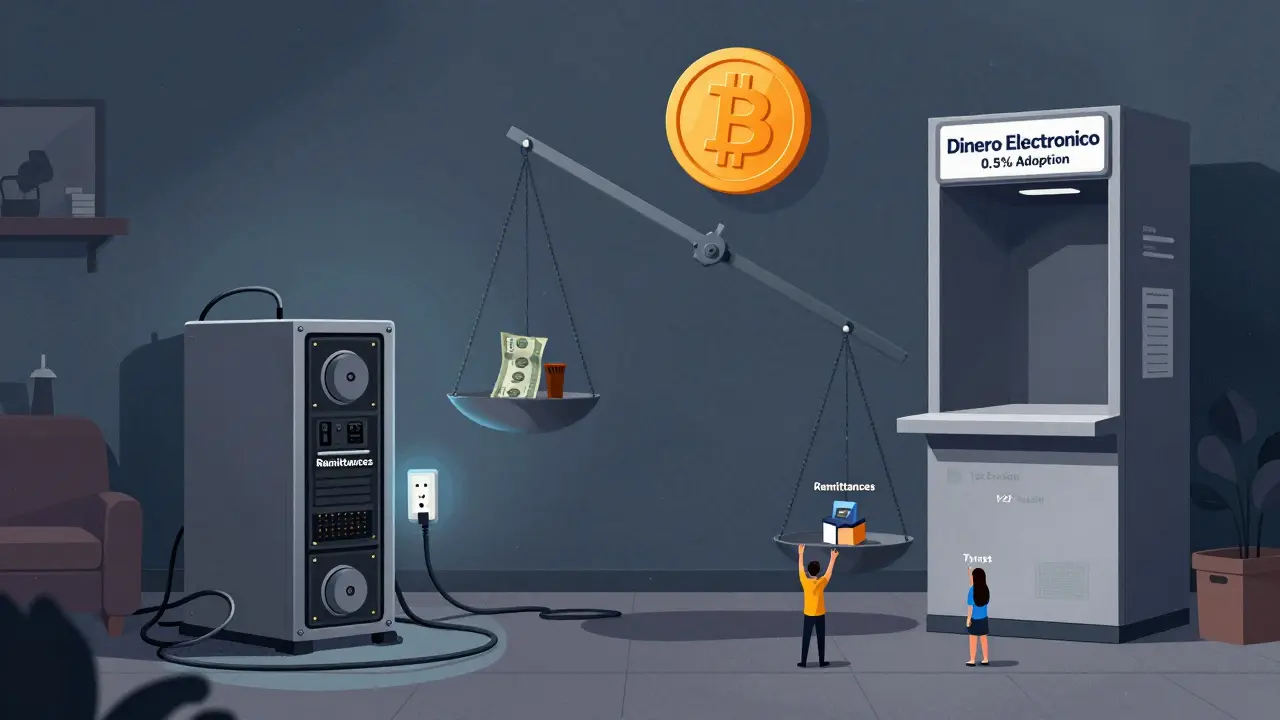
Half of Ecuador’s adult population doesn’t have a bank account. That’s 5 million people. Many of them could benefit from crypto - especially for sending money home. Ecuador receives $3.8 billion in remittances every year, mostly from the US. The average fee? 6.3%. That’s more than double the UN’s recommended target of 3%. Crypto could cut that cost in half. But without a legal way to cash out, people are stuck.
So who’s still using it? Mostly people who already have bank accounts - and who are desperate enough to risk them. The most common use? Receiving crypto from family abroad. According to a 2024 survey by OWNR Wallet, 68% of crypto users in Ecuador get money this way. They convert it to cash through informal, cash-based OTC desks - often set up in cafes or parking lots. These aren’t licensed businesses. They’re just people with WhatsApp groups and trust networks. Fees? 5-7%. Higher than banks, but still better than Western Union.

What About Mining?
Is crypto mining allowed? Technically, yes. But practically? No.
Electricity in Ecuador costs $0.145 per kWh - 23% higher than the Latin American average. Power outages happen nearly 15 hours a month. And if you want to buy mining hardware? You’ll pay a 35% import tax on top of the price. That’s why there’s no large-scale mining here. The entire country’s hash rate is less than 0.0001% of the global total. Most activity is one or two rigs in someone’s living room in Quito or Guayaquil. It’s not profitable. It’s hobbyist.
How Taxing Works (Yes, They Tax It)
Even though the government won’t let you use crypto as money, it still wants a cut of your profits. The Internal Revenue Service (SRI) treats crypto gains as taxable income. Sell Bitcoin for USD? You owe taxes. Trade Ethereum for USDT? That’s a taxable event. The rate? Up to 35% for individuals. For businesses? 25%.
But here’s the catch: no one tracks it. There’s no reporting system. No exchange sends data to the SRI. No bank flags crypto deposits. So unless you voluntarily declare your gains - and most people don’t - you’re not being audited. It’s a tax law with no enforcement. A rule without teeth.
Why Doesn’t Ecuador Just Legalize It?
Some experts say the government is afraid of capital flight. In Q4 2023, $1.2 billion left the country without clear explanation. Officials worry that if crypto becomes easier to use, more people will move money out - and the dollarized economy could destabilize.
Others say it’s about control. The BCE has spent years trying to build its own digital currency - the Dinero Electronico - a state-run e-money system. Launched in 2015, it’s used by less than 0.5% of the population. It’s slow, clunky, and poorly promoted. But it’s theirs. And they’re not ready to let private crypto compete.
Meanwhile, neighboring countries are moving forward. Mexico licenses crypto services. Peru requires exchanges to register. Even Paraguay passed a law in 2022 allowing crypto payments and mining. Ecuador? Still stuck in 2021.
What’s the Future?
There are signs things might change. In early 2025, new rules require fintech startups to incorporate locally, carry liability insurance, and register with regulators - even if they’re not directly handling crypto. That’s a crack in the door. And the Central Bank is still exploring a dollar-pegged CBDC. If they launch it, they’ll have the infrastructure to eventually allow regulated crypto services.
Industry analysts predict that if restrictions loosen, Ecuador’s crypto market could grow to $300 million by 2026 - more than double today’s $135 million. But that’s only if the government decides to stop fighting innovation and start managing it.
For now, the message is clear: you can own crypto. You just can’t use it. And that’s worse than a ban - it’s a trap.
How People Are Getting Around It
If you’re in Ecuador and want to use crypto, here’s how most people do it:
- Use peer-to-peer platforms - Mercado Bitcoin, Binance P2P, or LocalBitcoins. Buy with cash or bank transfer (if you can get one past the block).
- Find OTC traders - Look for verified sellers on Telegram groups. Avoid anyone asking for screenshots of your ID upfront.
- Stick to USDT - Stablecoins are the most trusted. They’re easier to cash out and less volatile.
- Never use your main bank account - Use a separate account, or better yet, a friend’s account with their permission.
- Keep records - Even if the SRI doesn’t audit, you should. Save receipts, screenshots, transaction IDs.
And always assume your transaction might get flagged. If your bank freezes your account, don’t argue. Call them. Ask why. And prepare to wait.
Where to Get Help
There’s no government hotline. No official guide. But there are small, grassroots communities:
- r/CryptoEcuador - 1,247 members as of 2024. Real stories, real warnings.
- Telegram groups - Around 15 active groups. Search for "Ecuador Crypto OTC" or "Bitcoin Ecuador Cash".
- YouTube - Only three Spanish channels have more than 5,000 subscribers. Total subscribers: 28,000.
Most resources are outdated. Most support articles from Binance or Coinbase don’t mention Ecuador. You’re on your own.
Is it legal to buy Bitcoin in Ecuador?
Yes, buying Bitcoin or any cryptocurrency is not illegal in Ecuador. You can sign up for international exchanges like Binance or OKX and purchase crypto using peer-to-peer methods. However, the Central Bank of Ecuador does not recognize cryptocurrencies as legal tender or authorized payment methods, and banks are required to block any direct transfers to crypto platforms.
Can I use crypto to pay for goods or services in Ecuador?
No. Under Article 94 of the Organic Monetary and Financial Code, no business in Ecuador can legally accept cryptocurrency as payment. Even if a store agrees to take Bitcoin, they’re violating national monetary law. This rule applies to all digital assets, including stablecoins like USDT.
Why do banks block crypto transactions in Ecuador?
The Superintendency of Banks mandates that all financial institutions refuse any transaction linked to cryptocurrency. This includes deposits, withdrawals, and transfers to exchanges. The goal is to prevent crypto from competing with the US dollar, which is Ecuador’s only official currency. Banks that violate this rule risk losing their operating license.
Are crypto gains taxed in Ecuador?
Yes. The Internal Revenue Service (SRI) treats profits from crypto sales as taxable income. Individuals pay up to 35% on gains, and companies pay 25%. However, there is no automated reporting system, so most users don’t file unless they’re audited. This creates a gray area where tax compliance is technically required but rarely enforced.
Can I mine cryptocurrency in Ecuador?
Mining is not explicitly banned, but it’s extremely impractical. Electricity costs are among the highest in Latin America ($0.145/kWh), power outages occur nearly 15 hours per month, and importing mining hardware incurs a 35% tariff. As a result, mining is limited to small, residential setups - mostly in Quito and coastal areas - with no large-scale operations.
Is there a crypto exchange in Ecuador?
No. There are no licensed domestic cryptocurrency exchanges operating in Ecuador. All trading happens through international platforms like Binance or OKX, primarily using peer-to-peer (P2P) methods. The Superintendency of Banks lists all major exchanges as unauthorized, meaning they cannot legally operate within the formal financial system.
Why is crypto adoption so low in Ecuador?
Only 2.73% of Ecuadorians own crypto, far below the Latin American average of 10.9%. This is due to banking restrictions, lack of financial literacy, limited access to banking services (only 50% of adults have accounts), and the absence of legal pathways to use crypto. Most users rely on informal cash-based OTC trades, which are risky and expensive.
What’s the difference between Bitcoin and the Dinero Electronico?
Bitcoin is a decentralized digital currency not controlled by any government. The Dinero Electronico is Ecuador’s state-run digital payment system, launched in 2015 and pegged 1:1 to the US dollar. While Bitcoin operates outside the banking system, Dinero Electronico is fully integrated into it - but has failed to gain traction, with only 0.5% adoption as of 2023.
Can I send crypto to Ecuador from abroad?
Yes. Many Ecuadorians receive crypto from family overseas, especially for remittances. The most common method is sending USDT via wallet address, then cashing out through a local OTC trader. This avoids high remittance fees (6.3% average) and bypasses banking restrictions. However, the recipient must find a trusted cash dealer - and pay a 5-7% fee to convert it to pesos or USD.
Will Ecuador ever legalize cryptocurrency?
It’s uncertain. The Central Bank is exploring a dollar-pegged CBDC, which could eventually create infrastructure for regulated crypto services. Fintech startups are pushing for change, and regional trends in Mexico and Peru suggest regulation is coming. But the BCE has repeatedly stated its intent to maintain strict controls to protect dollarization. Most experts believe any change won’t happen before 2027.
Derek Lynch
March 17, 2026 AT 11:17Robert Kunze
March 17, 2026 AT 17:50Heather James
March 18, 2026 AT 00:10Sarah Hammon
March 19, 2026 AT 21:40iam jacob
March 20, 2026 AT 15:17Jesse Pals
March 22, 2026 AT 09:12Diane Overwise
March 23, 2026 AT 11:28Ann Liu
March 24, 2026 AT 18:05Cheri Farnsworth
March 24, 2026 AT 19:18Manali Sovani
March 25, 2026 AT 17:42Konakuze Christopher
March 26, 2026 AT 10:40S F
March 27, 2026 AT 10:17Angelica Stovall
March 29, 2026 AT 00:29Bryan Roth
March 31, 2026 AT 00:31sai nikhil
March 31, 2026 AT 02:22Sahithi Reddy
March 31, 2026 AT 23:47George Hutchings
April 1, 2026 AT 05:49Henrique Lyma
April 1, 2026 AT 07:16Steph Andrews
April 3, 2026 AT 02:14