Dead Man's Switch vs. Multisig Inheritance: Which Protects Your Crypto Better?
 Apr, 4 2026
Table of Contents
- Understanding the Dead Man's Switch: How It Works
- The Mechanics of Multisig Inheritance
- Direct Comparison: Automation vs. Threshold Security
- The Legal Gap: Why Technology Isn't Enough
- Evaluating Top Inheritance Solutions for 2026
- Practical Implementation: A Step-by-Step Strategy
- Frequently Asked Questions
Understanding the Dead Man's Switch: How It Works
At its core, a dead man's switch is a fail-safe. The name comes from old railway systems where a driver had to keep a handle depressed to keep the train moving; if they collapsed, the handle released and the train stopped. In crypto inheritance, it works in reverse: as long as you "check in" (via an email, a button click, or a blockchain transaction), the switch remains dormant. If you vanish for a set period-say, six months-the switch "fires," triggering the release of encrypted keys or instructions to your heirs. One notable implementation is the Deadhand Protocol, an open-source, non-custodial threshold protocol. It uses Shamir's Secret Sharing (SSS), a cryptographic method that splits a secret (like a seed phrase) into multiple shares. To reconstruct the secret, a specific number of shares must be combined. The Deadhand Protocol charges a flat $100 annual fee and avoids KYC, making it attractive for privacy-conscious users. Another decentralized approach is Sarcophagus. It uses a DAO-based model where your "will" is encrypted and stored on a decentralized network. Miners are incentivized with SARCO tokens to monitor the status of the user and release the data when the trigger condition is met. While the idea of "set it and forget it" is appealing, these systems face a critical flaw: the transition from a digital trigger to legal ownership. If a switch releases a key, but your family doesn't know how to use a wallet or is blocked by a probate court, the automation is useless.The Mechanics of Multisig Inheritance
Multisignature (multisig) wallets move away from the "single point of failure" model. Instead of one key ruling everything, a multisig setup requires a threshold of keys to authorize a transaction (e.g., 2-of-3 or 3-of-5). In an inheritance context, this means the assets are never controlled by a single person or entity, but the recovery path is clearly defined. In a typical 2-of-3 setup, you might hold two keys on separate Ledger hardware wallets, while a professional service holds the third. If you pass away, your beneficiary provides a death certificate and legal identification to the service. The service then provides their key, which, when combined with one of yours, allows the beneficiary to move the funds. This removes the risk of a single lost key locking the funds forever and prevents a single rogue actor from stealing the assets. Technological leaps like MuSig2 have further improved this. MuSig2 uses Schnorr signatures to aggregate multiple signatures into one. To the outside world, the transaction looks like a standard single-sig transfer. This provides massive privacy benefits, as blockchain analysts cannot see that you are using a multisig setup, preventing bad actors from targeting your specific key distribution model.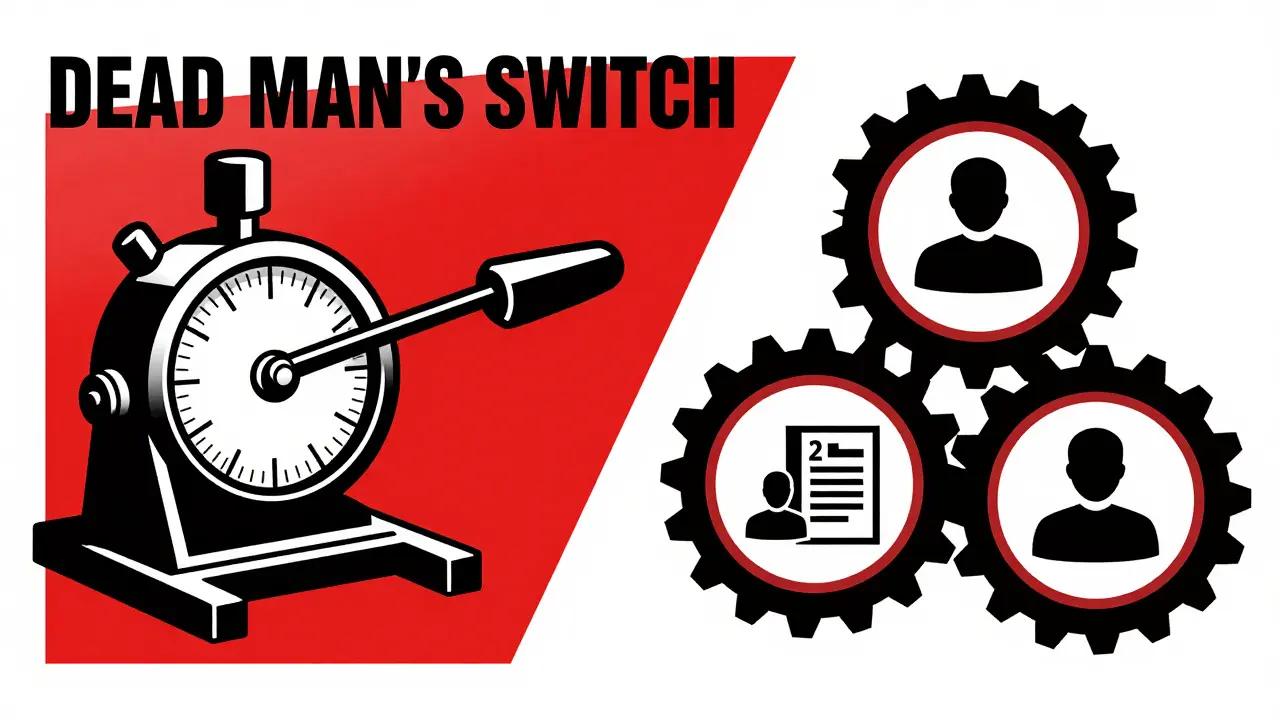
Direct Comparison: Automation vs. Threshold Security
When deciding between these two, you are essentially choosing between the risk of "accidental firing" (Dead Man's Switch) and the risk of "custodial trust" (Multisig).| Feature | Dead Man's Switch | Multisig Inheritance |
|---|---|---|
| Trigger Mechanism | Inactivity / Timer | Legal verification + Key combination |
| Primary Risk | Technical failure or accidental trigger | Reliance on a third-party facilitator |
| User Experience | Passive (Automatic) | Active (Coordination required) |
| Legal Integration | Low/None | High (Built-in) |
| Privacy | High (if non-custodial) | Variable (High with MuSig2) |
The Legal Gap: Why Technology Isn't Enough
One of the biggest mistakes crypto holders make is believing that a smart contract or a timed trigger replaces a will. In the real world, probate is a mess. Even if a dead man's switch sends your seed phrase to your spouse, that spouse may still face legal hurdles if the assets are considered part of a taxable estate or if there are competing claims. Furthermore, relying on a lawyer to hold a backup key-a common "old school" suggestion-is often rated as a high-security risk. Lawyers are targets for phishing, they lose paperwork, and in worst-case scenarios, they can be pressured by beneficiaries to release funds while the owner is still alive but incapacitated. This is why the industry has shifted toward multisig services that act as a "neutral" party, providing guided recovery for non-technical heirs rather than just dumping a raw private key into an inbox.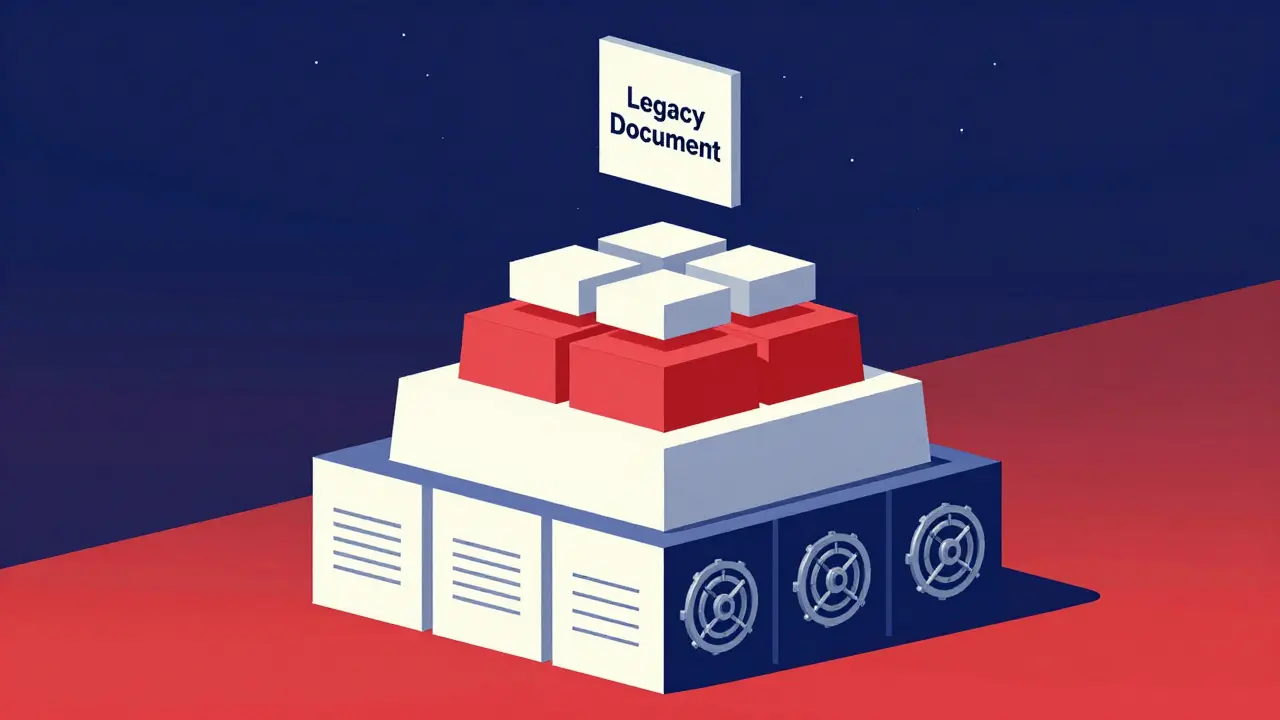
Evaluating Top Inheritance Solutions for 2026
Depending on your technical comfort level and your trust in institutions, different tools will serve you better. Casa is a leader in the Bitcoin space, offering 3-of-5 multisig setups. They act as a facilitator, holding one key and helping you distribute others. While their pricing can be steep (up to $5,000/year for high-net-worth individuals), the value is in the coordinated recovery process. Similarly, Unchained Capital provides institutional-grade vaults with heavy legal support, which is ideal for those with millions in assets who need a formal custodian. For those who want a hybrid approach-combining the automation of a switch with the security of decentralized storage-Vaulternal offers a compelling alternative. Unlike Casa, which focuses purely on keys, Vaulternal is a digital legacy platform that allows you to store encrypted files (like a detailed "how-to" guide for your heirs or a fragmented seed phrase) on Arweave for permanent persistence. It uses an oracle-based architecture to monitor triggers-such as inactivity or specific blockchain events-and releases cryptographic shares via Shamir Secret Sharing only when conditions are met. This removes the need for a single company to hold a key while providing more flexibility than a basic dead man's switch. If you prefer a completely peer-to-peer model, Vault12 uses a "Guardian" network where you designate trusted friends to help recover your vault. It's a non-custodial, quantum-resistant approach that avoids the corporate fee structure of multisig services but requires you to have a reliable social circle.Practical Implementation: A Step-by-Step Strategy
Don't just pick one tool and hope for the best. The most robust inheritance plan is a layered one. Here is a professional framework for securing your digital legacy:- The Asset Audit: List every wallet, exchange account, and hardware device you own. If your heirs don't know a wallet exists, no switch in the world will help them.
- The Hardware Layer: Move the bulk of your holdings into a multisig vault (like Casa or Unchained) or a high-security hardware wallet with a proper backup. Avoid keeping life-savings in a software wallet on a phone, as this creates a massive vulnerability in any inheritance plan.
- The Information Layer: Create a "Legacy Document." This should not contain your seed phrase, but rather instructions: "I have a multisig setup with Casa; contact them using this email to start the recovery process." Store this document in a secure, conditional-release vault like Vaulternal so it only reaches your heirs when necessary.
- The Test Run: Every six months, simulate a recovery. Try to access your funds using only the backup method. If it takes you three hours of sweating and searching for passwords, it will take your grieving spouse three days of panic.
- The Legal Anchor: Mention your digital assets in your legal will. You don't need to list every coin, but explicitly granting your executor the power to manage digital assets ensures the legal path is clear for the technical recovery.
Frequently Asked Questions
Is a dead man's switch safer than giving my seed phrase to a lawyer?
Generally, yes. A non-custodial dead man's switch uses cryptography to ensure no one can access your funds until a trigger is hit. A lawyer is a single point of failure; they can be hacked, lose the paper, or potentially collude with a beneficiary. However, a switch's biggest weakness is the lack of legal verification-it may release keys to someone who isn't the legal heir.
What happens if I forget to "check in" to my dead man's switch?
This is the "false positive" risk. If you are in a coma, lose internet access, or simply forget, the switch may fire and send your private keys to your beneficiaries. To mitigate this, use a long trigger window (e.g., 6 months) and set multiple reminders across different platforms.
Can I use multisig for Ethereum and other altcoins, or just Bitcoin?
Multisig is widely available on Ethereum via smart contract wallets (like Safe). While Bitcoin uses native script for multisig, Ethereum uses the Virtual Machine (EVM) to enforce threshold requirements. Most professional inheritance services are expanding their support for these networks, though Bitcoin remains the most mature ecosystem for this specific use case.
Does multisig inheritance require me to give up my keys?
No. In a proper non-custodial multisig setup, you still hold the majority of the keys. The service provider only holds one key of the threshold. They cannot move your funds without your signature, but you cannot move funds (in a recovery scenario) without their signature once the legal triggers are met.
Which is cheaper: Multisig or Dead Man's Switch?
Dead man's switches are typically cheaper because they are automated. For example, Deadhand Protocol charges a flat $100/year. Multisig services like Casa or Unchained often have higher annual fees because they provide human-led legal coordination and identity verification, which is more expensive to maintain than a server-side timer.
Suvoranjan Mukherjee
April 7, 2026 AT 23:47The implementation of MuSig2 is a total game changer for privacy! By aggregating those signatures into a single Schnorr signature, you basically cloak the multisig nature of the vault from any chain-analysis tools. It's the perfect blend of security and stealth. Definitely recommend looking into this if you're moving serious capital into a long-term inheritance plan. 🚀
Trish Swanson
April 8, 2026 AT 19:31Multisig feels way safer...!!
Arwyn Keast
April 9, 2026 AT 10:50The sheer inefficiency of these 'decentralized' solutions is laughable. Most of these protocols are just glorified scripts that ignore the fundamental reality of jurisdictional probate law. You can play with your L2 scripts and DAO governance all you want, but at the end of the day, if the Crown or a state court decides your assets are taxable or disputed, your fancy dead man's switch is nothing more than a digital paperweight. It's typical of the current crypto-evangelism to think a bit of code overrides centuries of established legal precedent. Absolute rubbish.
vijendra pal
April 11, 2026 AT 10:19bro you just gotta use a hardware wallet and give the seed to your parents lol!! why overcomplicate things with all these fancy tools?? just keep it simple 🤣💸
Siddharth Bhandari
April 12, 2026 AT 11:36Actually, giving the seed directly to family creates a massive security hole. If the seed is compromised, the funds are gone instantly. A multisig setup with a professional facilitator is much more secure because it requires a legal trigger before the final key is released, preventing the 'rogue heir' scenario.
sekhar reddy
April 14, 2026 AT 06:57OMG the thought of my coins just vanishing into the void because of some sock drawer fail is literally giving me a panic attack right now!! 😱 I cannot even imagine the drama of my family fighting over a lost piece of metal. This is honestly the most stressful thing I've read all week, I need to fix my setup IMMEDIATELY or I'll never sleep again!!
Emily 2231
April 15, 2026 AT 21:43The government wants you to use multisig services so they can track exactly who inherits what. Once you use a service that requires a death certificate you are basically handing the state a map to your entire treasure chest. Total surveillance trap. Trust no one especially not a corporate facilitator who claims to be neutral. Keep your keys offline and your business private or the IRS will be the only heir that matters.
Suzanne Robitaille
April 16, 2026 AT 15:27There is something deeply poetic about the concept of a dead man's switch. It's like a digital ghost reaching out from the beyond to ensure the people we love are taken care of. It transforms a cold piece of technology into a final act of love and protection. Truly a beautiful way to bridge the gap between our digital existence and the inevitable silence of the end.
Evan Borisoff
April 17, 2026 AT 10:27The systemic failure of these protocols often stems from a lack of understanding regarding the Byzantine Fault Tolerance required for a truly autonomous inheritance system, especially when you factor in the latency of oracle-based triggers on a network like Arweave which might not be as resilient as we're led to believe. If we are talking about the actual sovereignty of the individual, we must acknowledge that any system relying on a third-party facilitator-even one that only holds a single key in a 3-of-5 setup-is introducing a centralized vector of failure that contradicts the very ethos of the Satoshi whitepaper, and therefore, any 'professional' service is essentially just a fancy bank with a different UI.
Matthew Wright
April 18, 2026 AT 06:32I've actually experimented with a few of these... the key is the test run mentioned in the guide!! Most people set it up and then forget about it for five years... only to find out their recovery phrase was written in ink that faded away!! Always use a steel backup... and definitely test the recovery process at least once a year... it saves so much heartache!!
JERRY ORTEGA
April 19, 2026 AT 17:48multisig is the way to go man. just keep it simple and don't overthink the tech too much. if you have a few trusted friends or a pro service it takes the pressure off the family during a bad time
June Coleman
April 21, 2026 AT 00:22Oh sure, because trusting a company that charges $5,000 a year to "facilitate" my death is exactly how I want to spend my retirement. Pure genius. I'm sure those fees are just for the "coordinated recovery" and definitely not just a way to bleed high-net-worth holders dry while they're too scared of losing their Bitcoin to say no. Truly heartwarming.
akash temgire
April 21, 2026 AT 15:50The lack of legal integration in automated switches is unacceptable. It is a critical failure point.
Robert Coskrey
April 22, 2026 AT 19:04I completely agree that a layered approach is the most prudent strategy...!! It is much better to have redundant systems in place than to rely on a single point of failure...!!
david head
April 23, 2026 AT 07:30sounds good to me 😊 love the idea of a legacy doc
Taylor Meadows
April 23, 2026 AT 09:01You all are just terrified of the void. You think a multisig wallet will save you from the reality that you're just hoarding numbers in a digital cloud. The only real inheritance is the impact you leave on others, not how many satoshis you managed to keep from the taxman through a clever script.
Brooke Herold
April 25, 2026 AT 01:12It's interesting to see how different cultures handle the idea of inheritance and digital legacy. In some places, the family unit is so tight that these complex technical solutions aren't even considered because the trust is implicit, but in the digital age, we're seeing that trust needs a technical anchor to actually function across generations.