Egyptian Banks and Crypto Transaction Monitoring: How Restrictions Are Enforced in 2025
 Dec, 14 2025
Egyptian Crypto Transaction Risk Checker
Check Your Transaction Risk
Enter transaction details to see if it would likely be flagged by Egyptian banks based on current monitoring rules.
Results
Enter transaction details and click "Check Risk" to see results.
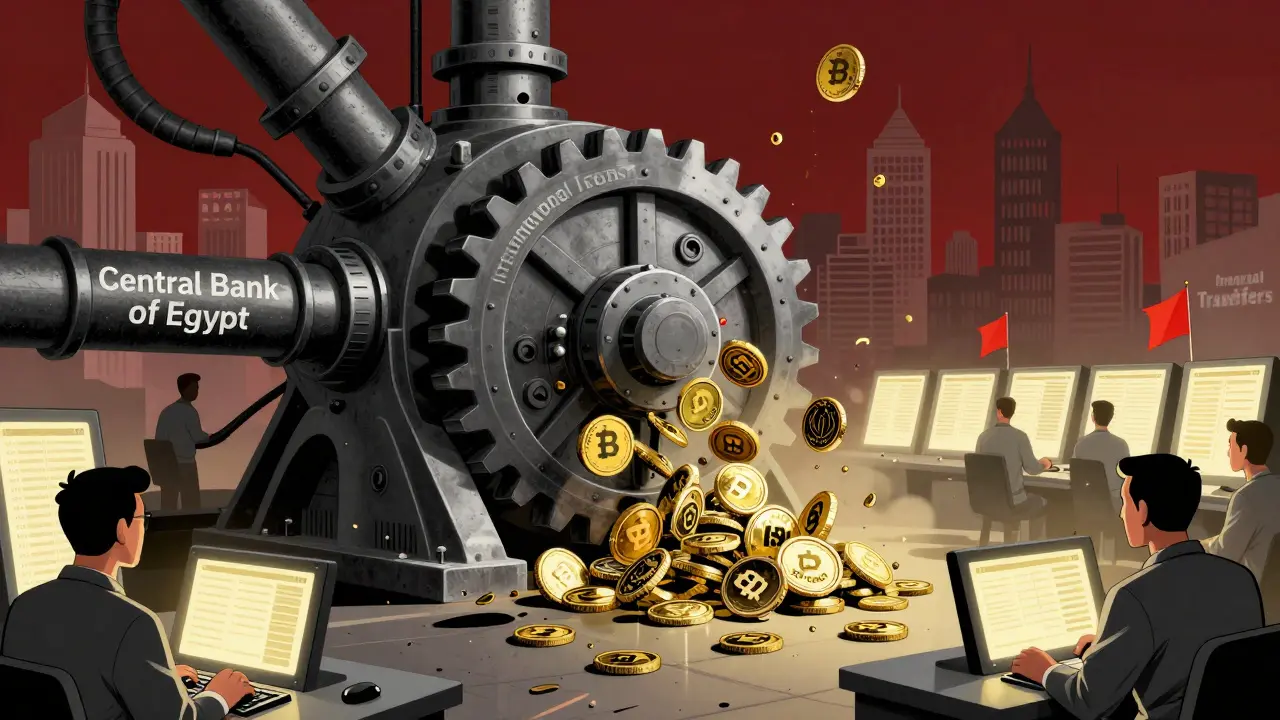
When you send money from an Egyptian bank account to a foreign exchange like Binance or Bitget, it doesn’t just disappear into the digital ether. It gets flagged. Scrutinized. Sometimes frozen. That’s not because of a glitch-it’s because Egyptian banks are legally required to treat those transfers as red flags. Since 2020, the Central Bank of Egypt (CBE) is the sole authority regulating financial institutions in Egypt and enforcing a complete ban on unlicensed cryptocurrency transactions. And in 2025, that ban isn’t just a warning-it’s a system with teeth.
What’s Actually Illegal?
Let’s clear this up: it’s not illegal for you to buy Bitcoin in Egypt. You can still do it. But what’s illegal is for any bank, payment processor, or financial institution licensed in Egypt to touch it. That means no Egyptian bank can open an account for a crypto exchange. No bank can process a direct payment to Binance. No ATM in Cairo will let you withdraw crypto. And if you try to send money to a known crypto wallet address? Your transaction gets caught.
The legal backbone is Banking Law No. 194 of 2020. This law didn’t just say "don’t do it." It made it a criminal offense for any licensed financial entity to issue, trade, promote, or facilitate cryptocurrency transactions without CBE approval. That includes banks, fintechs, and even money transfer services. The law was designed to shut down the pipeline between Egypt’s formal financial system and crypto markets.
How Do Banks Know It’s Crypto?
It’s not magic. It’s data.
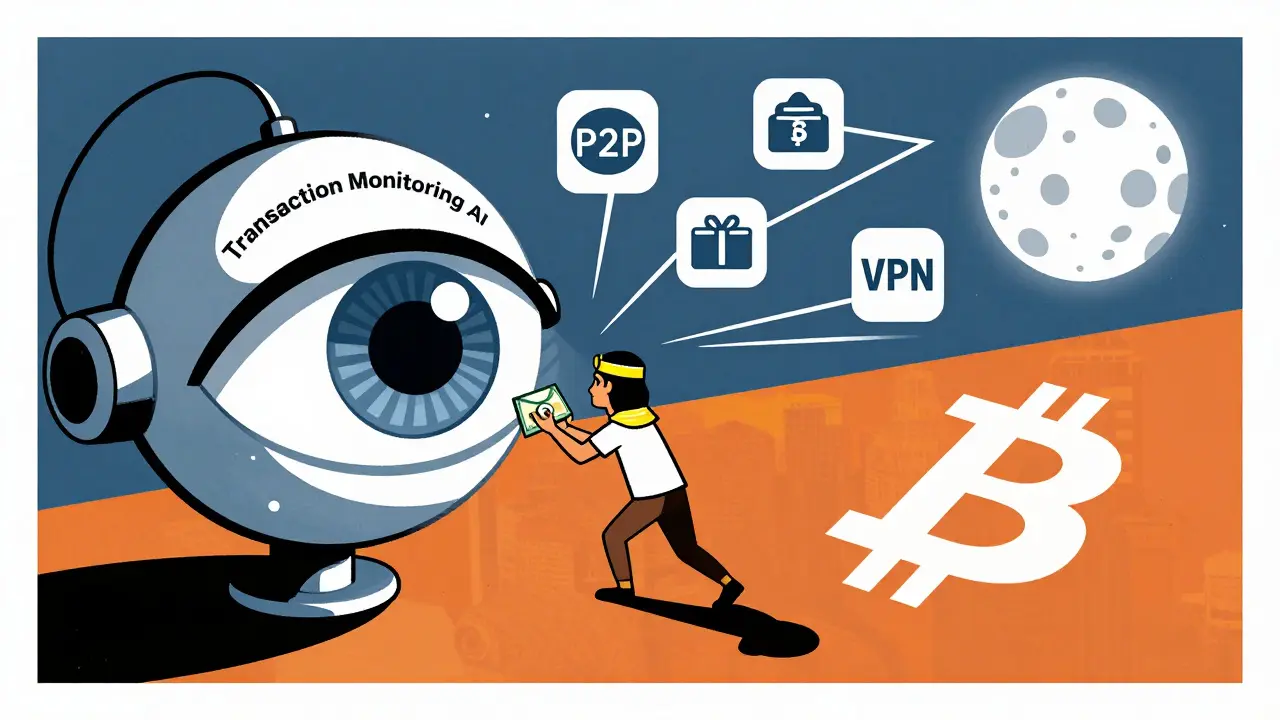
Egyptian banks now use transaction monitoring tools that look for patterns tied to cryptocurrency activity. These tools don’t need to see a wallet address-they just need to see where the money goes. If you send $500 to a known crypto exchange IP address, or if you repeatedly send small transfers to the same overseas account that’s linked to a crypto platform like Rain or KuCoin, the system flags it.
Here’s what triggers alerts:
- Transfers to exchanges like Binance, Bitget, or Bybit
- Payments to peer-to-peer (P2P) platforms with known crypto links
- Multiple small transfers to the same foreign recipient over time
- Transactions timed around major crypto price spikes
- Wire transfers to jurisdictions with high crypto activity (e.g., Turkey, UAE, India)
Some banks even use third-party compliance software from firms like Actimize or FICO to detect these patterns. These systems learn from past cases-like when a customer sent money to a crypto exchange, got their account frozen, and later admitted to buying Bitcoin. That case gets added to the model. The more transactions flagged, the smarter the system gets.
The FRA’s 2025 Warning: A Turning Point
On May 12, 2025, the Financial Regulatory Authority (FRA) is Egypt’s independent financial watchdog that enforces anti-money laundering rules and oversees non-bank financial services. issued its strongest warning yet. It didn’t just repeat the ban-it targeted the ads.
For months, Egyptians had been bombarded with Instagram and TikTok ads promising "earn $100 daily with crypto" or "invest $50, get $500 in 7 days." These weren’t just scams-they were funneling people into high-risk, unregulated platforms. The FRA named names: companies promoting crypto investment schemes without licenses. They warned that anyone promoting these services could face criminal charges.
This was a shift. Before, enforcement focused on banks. Now, it’s going after the promoters. That’s why you see fewer flashy crypto ads on social media. The message is clear: if you’re selling crypto in Egypt, you’re breaking the law-even if you’re not running an exchange.
What Happens When Your Account Gets Flagged?
If your transfer gets flagged, here’s what typically happens:
- Your transaction is paused. You’ll get a message: "Your transfer is under review for compliance purposes."
- You’re contacted by your bank’s compliance team. They’ll ask: "Why are you sending money to this recipient? What is the purpose?"
- You may need to provide documents: a contract, invoice, or even a screenshot of the platform you’re using.
- If you can’t prove it’s not crypto-related, your account may be restricted. Some customers report being blocked from international transfers for weeks.
- In extreme cases, if the bank believes you’re involved in money laundering, they file a report with the FRA-and you could face legal action.
One user in Alexandria told his bank he was sending money to buy a laptop online. The recipient’s domain was registered to a crypto P2P platform. He was asked to prove the laptop existed. He didn’t. His account was frozen for 45 days.
Why Are Banks So Strict?
It’s not just about controlling crypto. It’s about controlling capital.
Egypt’s economy is under pressure. The pound has lost nearly half its value since 2022. Foreign reserves are low. The government is desperate to stop money from leaving the country. Crypto transactions are seen as a major leak-untraceable, irreversible, and outside the banking system.
There’s also the terrorism financing angle. The FRA has repeatedly cited the difficulty of tracking crypto flows as a risk for illicit funding. Even if most users aren’t involved in crime, the system has to assume the worst. That’s why banks err on the side of caution.
And then there’s the religious factor. Dar Al-Ifta, Egypt’s top Islamic legal authority, has declared Bitcoin and other cryptocurrencies "not real money" because they’re not issued by a central authority. That opinion carries weight in public policy.

How Are People Still Getting Crypto?
Despite the restrictions, crypto adoption hasn’t stopped. It’s just gone underground.
Most Egyptians who want crypto use international P2P platforms. They pay in cash to someone in Turkey or the UAE, who then sends Bitcoin to their wallet. Others use gift cards-buying USDT with a Steam or Apple gift card, then trading it on local forums.
Some use VPNs to access exchanges and transfer funds through third-party intermediaries. But even these methods aren’t foolproof. Banks now monitor for unusual patterns: sudden deposits from new countries, repeated small top-ups from different accounts, or transfers timed with crypto price surges.
The result? A cat-and-mouse game. Users get smarter. Banks get smarter too.
What’s Next for Egypt’s Crypto Rules?
Don’t expect legalization anytime soon. Unlike the UAE or Saudi Arabia, Egypt isn’t building a crypto-friendly ecosystem. It’s building a wall.
Next steps? More AI-powered monitoring. More collaboration with international financial intelligence units. More penalties for banks that miss crypto flows. And possibly, a new law that makes it illegal for individuals to use crypto for payments-even privately.
Some experts think Egypt might eventually launch its own Central Bank Digital Currency (CBDC). That would give the government full control over digital money-no need to fight crypto if you replace it.
For now, the message is simple: if you’re using an Egyptian bank, crypto is a risk-not a reward. The system is designed to stop you. And it’s working.
What Should You Do?
If you’re an Egyptian citizen:
- Don’t use your bank account to send money to crypto exchanges. Use cash or trusted P2P networks instead.
- Be ready to explain every international transfer. Keep receipts, invoices, or contracts.
- Avoid platforms that promote "guaranteed returns"-they’re likely illegal and risky.
- Understand that your bank is not your enemy-they’re forced to do this by law.
- If your account gets flagged, cooperate. Arguing won’t help. Providing documentation might.
If you’re a business or freelancer receiving payments from Egypt:
- Don’t accept payments from Egyptian bank accounts if you’re a crypto-related business.
- Use payment processors that aren’t tied to Egyptian banking systems.
- Be aware that your customers might face delays or restrictions when paying you.
Can I legally buy Bitcoin in Egypt?
Yes, you can buy Bitcoin privately using cash or P2P platforms. But you cannot use any Egyptian bank, payment app, or licensed financial service to do it. The law bans financial institutions from facilitating crypto transactions-not individuals from owning crypto.
Why do Egyptian banks block transfers to Binance?
Because Binance and other crypto exchanges aren’t licensed by the Central Bank of Egypt. Under Banking Law No. 194 of 2020, any bank that processes payments to unlicensed crypto platforms violates the law. Banks are required to freeze such transfers and report them to the Financial Regulatory Authority.
What happens if I ignore the restrictions and keep sending money to crypto exchanges?
Your bank will likely freeze your account, restrict international transfers, and may report you to the Financial Regulatory Authority. While individuals aren’t typically jailed for buying crypto, repeated violations can lead to legal investigations, especially if linked to large sums or suspected money laundering.
Are there any legal crypto services in Egypt?
No. As of 2025, there are no licensed cryptocurrency exchanges, wallets, or trading platforms operating legally within Egypt. All services must be approved by the Central Bank of Egypt-and none have received approval.
Can I use a foreign bank account to buy crypto if I live in Egypt?
Yes, but it’s risky. Transferring money from your Egyptian account to a foreign account to buy crypto can trigger compliance flags. Banks monitor outbound transfers closely. If you’re caught moving large sums for crypto purposes, you may face account restrictions or legal scrutiny, even if the purchase happens abroad.
The truth is, Egypt’s stance on crypto isn’t about technology. It’s about control. The government doesn’t trust decentralized money. It doesn’t trust unregulated markets. And it won’t let its banking system become a gateway for capital flight. Until that changes, your bank will keep watching. And you’ll keep finding ways around it.
Ike McMahon
December 16, 2025 AT 02:09Just bought my first BTC via P2P last week-paid cash to a guy in Dubai via WhatsApp. No bank involved. No drama. Just quiet, smart money moves.
Kathleen Sudborough
December 17, 2025 AT 03:32I get why Egypt’s doing this. Their economy’s hanging by a thread. But it’s wild how the system treats regular people like criminals just for wanting financial freedom. I’ve seen friends get locked out of their accounts over $200 transfers. It’s not enforcement-it’s overreach.
Vidhi Kotak
December 18, 2025 AT 21:23As someone from India, I see the same pattern here. Banks block crypto transfers like they’re smuggling heroin. But people still find ways-gift cards, crypto ATMs in malls, even bartering with crypto via Telegram groups. The system can’t stop demand, only make it harder.
Kurt Chambers
December 20, 2025 AT 01:26egyptians are weak. if you wanna crypto, just use a vpn and a foreign bank. stop crying about your bank freezing your account. you chose to live in a dictatorship with a currency that’s worth less than your phone bill.
Kelly Burn
December 21, 2025 AT 04:34Let’s be real-this is the ultimate case of regulatory FOMO. CBE is terrified of losing control over the monetary supply. CBDCs are coming, and this is the pre-game. They’re not banning crypto-they’re preparing for a full digital takeover. The real question: will the people resist or just accept the government’s version of blockchain?
John Sebastian
December 22, 2025 AT 01:48People who use crypto in Egypt are just enabling financial chaos. If you can’t trust your own currency, move. Don’t try to hack the system with shady P2P deals. It’s not freedom-it’s recklessness.
Jessica Eacker
December 23, 2025 AT 16:16Don’t fight the system. Work around it. Use cash. Use gift cards. Use trusted networks. Your bank isn’t the enemy-your fear of doing it right is. Stay smart, stay quiet, and keep going.
Andy Walton
December 24, 2025 AT 15:34bro why are you even reading this if you’re not already using a vpn and a turkish p2p guy? 😅 the system’s rigged but you’re still here asking questions like it’s 2012 🤡
Candace Murangi
December 26, 2025 AT 10:20I lived in Cairo for two years. The banking system there is like a fortress built on sand. Everyone knows the rules, but everyone also knows how to bend them. The real story isn’t the ban-it’s how quietly, cleverly, people keep trading. It’s not rebellion. It’s survival.
Jessica Petry
December 26, 2025 AT 19:15Wow. So Egypt’s just like every other country that fears innovation. Meanwhile, the UAE is building crypto cities and Egypt’s busy blocking $50 transfers. How’s that working out for your inflation rate again? 😏
Taylor Farano
December 28, 2025 AT 08:11Let me guess-your ‘P2P’ guy is a 19-year-old in Istanbul who ghosted you after you sent him 20k EGP. Classic. You think you’re outsmarting the system? Nah. You’re just the next AML case study.
Madison Surface
December 30, 2025 AT 03:49What’s heartbreaking is how many people think this is about crypto. It’s not. It’s about control. The government doesn’t want people to have alternatives. They want you to rely on them-even if their system is broken. That’s the real tragedy.
Tiffany M
December 31, 2025 AT 23:49Can we just admit that this whole thing is ridiculous? People are using gift cards to buy Bitcoin?! That’s not innovation-that’s a glitch in the matrix. And yet, it works. So who’s really broken here? The users? Or the system that made them do this?
Eunice Chook
January 1, 2026 AT 16:53AI monitoring? Actimize? This is just corporate surveillance dressed as regulation. They’re not protecting the economy-they’re building a financial surveillance state. And it’s terrifying how normalized it’s becoming.
Lois Glavin
January 2, 2026 AT 20:19My cousin in Alexandria uses cash to buy USDT from a guy at a coffee shop. No bank. No app. Just a handshake and a QR code. It’s old-school, but it works. And honestly? It’s safer than trusting a bank that could freeze you for saying "Binance" out loud.
Abhishek Bansal
January 3, 2026 AT 06:58you think egypt is bad? try india. banks block everything. but we still do it. just send money to your cousin in dubai who sends crypto back. simple. why make it complicated?
Bridget Suhr
January 3, 2026 AT 17:15It’s not that crypto is illegal-it’s that the banking system can’t handle it. And honestly? That’s their problem. Not ours. We’re just trying to move money. Why does that make us suspicious?
Scot Sorenson
January 4, 2026 AT 14:10So let me get this straight-you’re mad because your bank stopped you from funding a gambling scheme disguised as "crypto investing"? Congrats. You’re not a victim. You’re a statistic.
JoAnne Geigner
January 5, 2026 AT 11:34What’s interesting is how this mirrors the global trend: governments are scared of decentralized systems because they can’t tax them, track them, or control them. But people? People just want to be free with their money. Maybe one day, Egypt will realize that control doesn’t equal stability-it just creates more black markets. And that’s when the real danger begins.