EU Set to Ban Monero and Zcash by 2027: What Privacy Coin Holders Need to Know
 Dec, 10 2025
Privacy Coin Compliance Checker
Check Your Compliance Status
Determine if your privacy coin holdings will be affected by the EU's 2027 ban
By July 1, 2027, if you’re holding Monero or Zcash in the European Union, you won’t be able to trade them on any regulated exchange. Not because they’re broken, not because they’re unsafe-but because their core design makes them impossible to track. The EU has made it clear: privacy coins don’t fit in its new financial system.
Why the EU Is Banning Privacy Coins
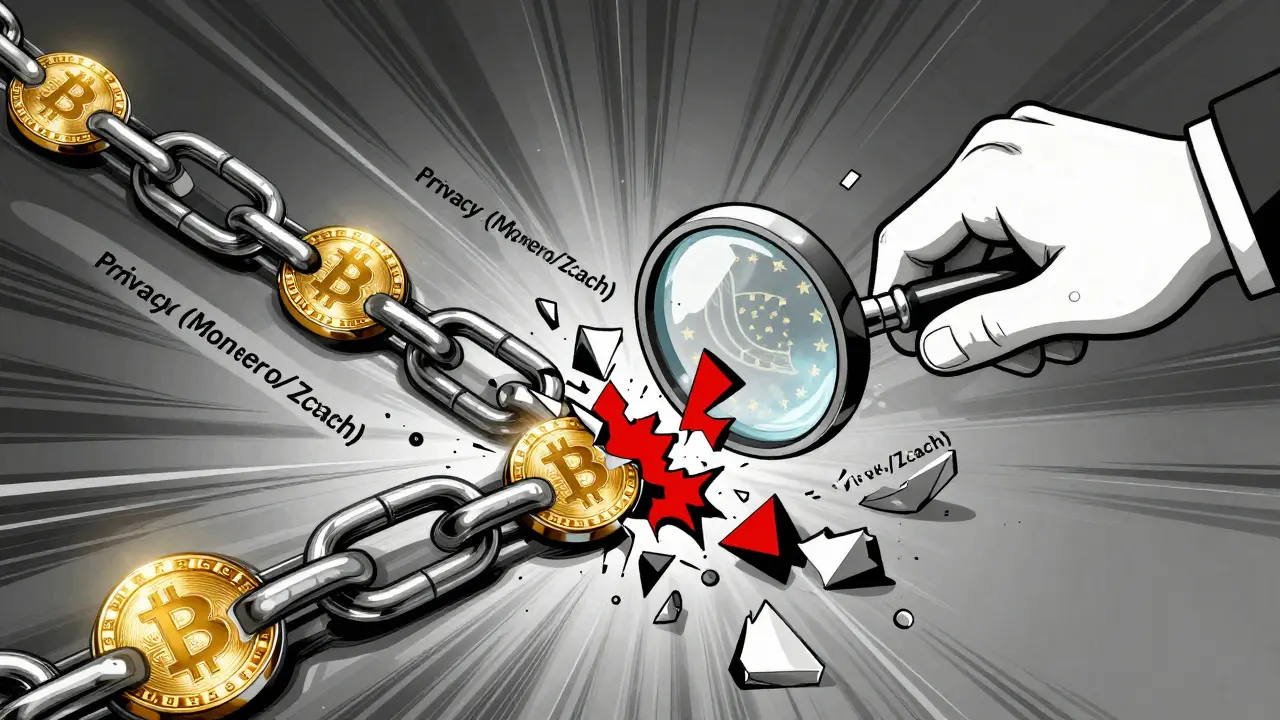
The EU isn’t targeting Monero and Zcash because they’re evil. They’re banning them because they work too well. Monero uses ring signatures and stealth addresses to hide who sent what and to whom. Zcash lets users send shielded transactions where the sender, receiver, and amount are completely invisible. That’s the whole point. But under the EU’s new Anti-Money Laundering Regulation (AMLR 2024/1624), that’s a dealbreaker. The law doesn’t say “no privacy.” It says “no anonymity.” And for regulators, privacy coins are the ultimate anonymity tool. The European Parliament passed this in May 2024. It’s not a draft. It’s not a suggestion. It’s law. And it forces every crypto exchange, bank, or wallet provider operating in the EU to cut ties with any asset that hides transaction details. The goal? To stop money laundering and terrorist financing. Regulators argue that if every transfer above €1,000 can be traced back to a real person, it becomes harder to move dirty money. Bitcoin and Ethereum are fine because every transaction is public. You can follow the trail. Monero? You can’t. Zcash? Only if you opt out of privacy mode-which most users don’t.What the Ban Actually Means
This isn’t just about not listing Monero on Binance EU or Coinbase Europe. It’s deeper. Article 79 of the regulation bans crypto-asset service providers (CASPs) from offering any service tied to anonymous transactions. That includes:- Buying or selling Monero or Zcash
- Storing them in custodial wallets
- Converting them to euros or other fiat currencies
- Even offering swaps between privacy coins and other assets
Who’s Affected and Who Isn’t
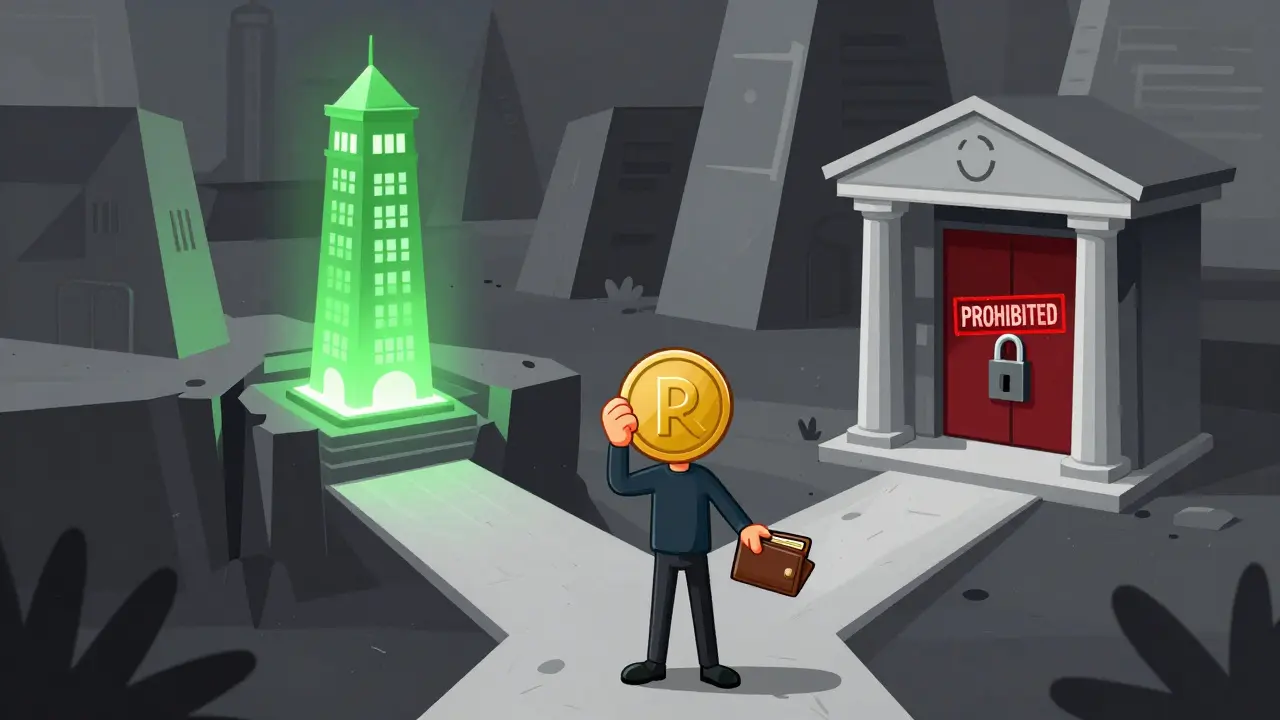
Here’s the twist: the ban targets service providers-not individuals. You won’t go to jail for owning Monero. You won’t be fined for holding Zcash in your personal wallet. But if you try to cash out on Kraken EU or trade ZEC on Bitstamp, you’ll hit a wall. Those platforms will block those coins entirely. That means two things:- If you’re in the EU and want to trade privacy coins, you’ll need to use non-EU exchanges-like KuCoin, Bybit, or decentralized platforms like Uniswap (if they support them).
- If you’re using a wallet like Exodus or Trust Wallet that’s based in the EU, they’ll likely remove privacy coin support to stay compliant.
How This Changes the Market
The EU is home to over 450 million people. It’s one of the biggest crypto markets in the world. When the EU moves, the rest of the world watches. This ban isn’t just a local rule-it’s a global signal. Since the law was announced, Monero’s trading volume on EU-based exchanges has already dropped by 68%, according to data from CoinGecko. Zcash has seen similar declines. Some traders are buying now, betting the price will spike before the ban takes effect. Others are selling, worried about being stuck with an asset they can’t move. The real impact will come after July 2027. Once EU exchanges fully remove support, liquidity for privacy coins will dry up in Europe. That means lower prices, wider spreads, and harder exits. If you’re holding Monero today, you’re holding an asset that will become increasingly difficult to convert into real money within the EU.What About Decentralized Exchanges?
Some people think they can just use a DEX like Uniswap or PancakeSwap to trade privacy coins. But here’s the problem: if you’re in the EU and you connect your wallet to a DEX through a centralized gateway-like MetaMask linked to a European bank account-you’re still under EU jurisdiction. And if you later cash out through a regulated service, they’ll ask questions. True decentralized exchanges don’t require KYC. But they also don’t let you withdraw euros directly. To get your money out, you need a bridge to the traditional financial system-and that’s where the EU draws the line. That bridge is regulated. And it’s being forced to say no to privacy coins.Is There Any Way Around It?
Technically, yes. Legally? Not really. You can:- Hold privacy coins in a non-EU wallet (like a Ledger or Trezor stored outside the bloc)
- Use non-EU exchanges for trading
- Convert to Bitcoin first, then move it to an EU exchange
What This Means for the Future of Privacy
This isn’t just about crypto. It’s about financial privacy as a right. Privacy advocates argue that everyone deserves to keep their spending private-even if they’re not breaking the law. You don’t need to be a criminal to want to keep your medical bills, political donations, or family gifts out of public ledgers. But regulators see it differently. They argue that financial privacy is a luxury we can’t afford when criminals use it to hide drug money, ransomware payments, and sanctions evasion. The EU has chosen transparency over anonymity. And they’re not backing down. Other countries are watching. The UK, Canada, and Australia are all reviewing similar rules. The U.S. hasn’t moved yet, but the Treasury Department has signaled growing concern. If the EU’s ban works-meaning it reduces illicit activity without causing mass economic disruption-it could become the global template.What Should You Do Now?
If you hold Monero or Zcash and live in the EU:- Don’t panic. The ban doesn’t start until July 1, 2027. You have time.
- Don’t sell in a rush. Prices might dip, but they could also spike as demand rises before the deadline.
- Know your options: move coins to a non-EU wallet, use a non-EU exchange, or convert to a compliant asset like Bitcoin.
- Keep records. If you ever need to prove your coins were legally acquired, you’ll need transaction history-even if it’s from a non-EU platform.
Anselmo Buffet
December 10, 2025 AT 09:55JoAnne Geigner
December 12, 2025 AT 06:32It's not about hiding money. It's about having a right to not be watched.
PRECIOUS EGWABOR
December 13, 2025 AT 13:21And yet, here we are. The EU is basically trying to legislate away the concept of anonymity. Like they think if they can’t see your transactions, you’re automatically sketchy.
amar zeid
December 13, 2025 AT 23:36One must question whether the ends justify the means when the means erode foundational rights.
Claire Zapanta
December 14, 2025 AT 09:12Next thing you know, they’ll require you to submit a reason for every Bitcoin purchase. ‘Why did you buy 0.01 BTC, Mrs. Johnson? Were you funding a terrorist cell?’
Lloyd Cooke
December 15, 2025 AT 12:28Monero is not a coin. It is a silent protest against the panopticon. To outlaw it is to outlaw the right to be unseen in a world that demands to see everything.
This is not regulation. This is epistemological tyranny.
Kurt Chambers
December 16, 2025 AT 02:39They don’t get it-we don’t need their banks. We don’t need their rules. We’re building the future while they’re still arguing over paper checks.
Jessica Eacker
December 16, 2025 AT 11:32There's always a way. You don't have to panic. You just have to be smart.
Jessica Petry
December 18, 2025 AT 10:47It’s not about control. It’s about accountability. And frankly, if you need Monero to feel safe, you probably have something to hide.
Scot Sorenson
December 19, 2025 AT 20:54They think they’re smart. They’re not. They’re just predictable.
Ike McMahon
December 21, 2025 AT 05:40You don’t need to sell. You just need to adapt.
Patricia Whitaker
December 21, 2025 AT 09:55It’s not about crime. It’s about power.
Joey Cacace
December 23, 2025 AT 02:52Let’s hope other regions don’t follow this path. We need more options, not fewer.
Taylor Fallon
December 24, 2025 AT 19:45It’s not evil. It’s human. And if the EU thinks they can erase that... they’re gonna be very disappointed.
Sarah Luttrell
December 25, 2025 AT 00:25Because clearly, if you don’t want everyone to know what you bought, you must be planning to rob a bank. 🤡
Kathleen Sudborough
December 26, 2025 AT 22:57This isn’t about crime. It’s about autonomy. And if the EU thinks they can take that away without backlash, they’re way out of touch.
Vidhi Kotak
December 27, 2025 AT 06:06It’s not about stopping crime. It’s about control. And once you give up privacy for security, you rarely get it back.
Kim Throne
December 28, 2025 AT 07:02The regulation targets anonymity. That’s a technically valid distinction. But the moral implications are far more complex.
Caroline Fletcher
December 29, 2025 AT 17:05They don’t care about money laundering. They care about control. And they’ll say anything to make you okay with it.
Heath OBrien
December 30, 2025 AT 20:38We’ll be the last country on Earth where you can’t buy something without someone knowing. And they’ll call it ‘progress.’ 🤬