Exchange Token Fee Discounts Explained: How Native Crypto Tokens Cut Your Trading Costs
 Jan, 29 2026
When you trade crypto, every trade costs money. Even a 0.1% fee adds up fast if you’re active. But what if you could cut those fees in half - or more - just by holding a specific token? That’s the promise of exchange token fee discounts. It’s not magic. It’s a business model built into most major crypto exchanges, and understanding it can save you hundreds - or thousands - of dollars a year.
How Exchange Token Fee Discounts Work
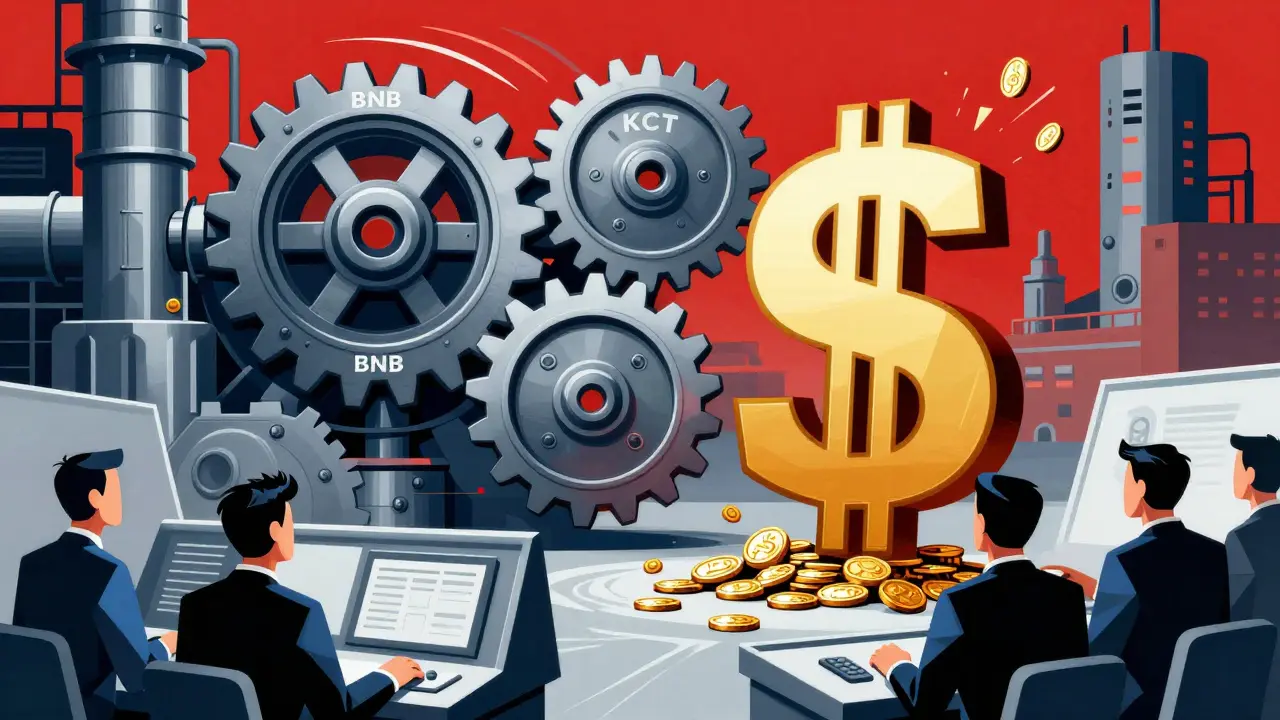
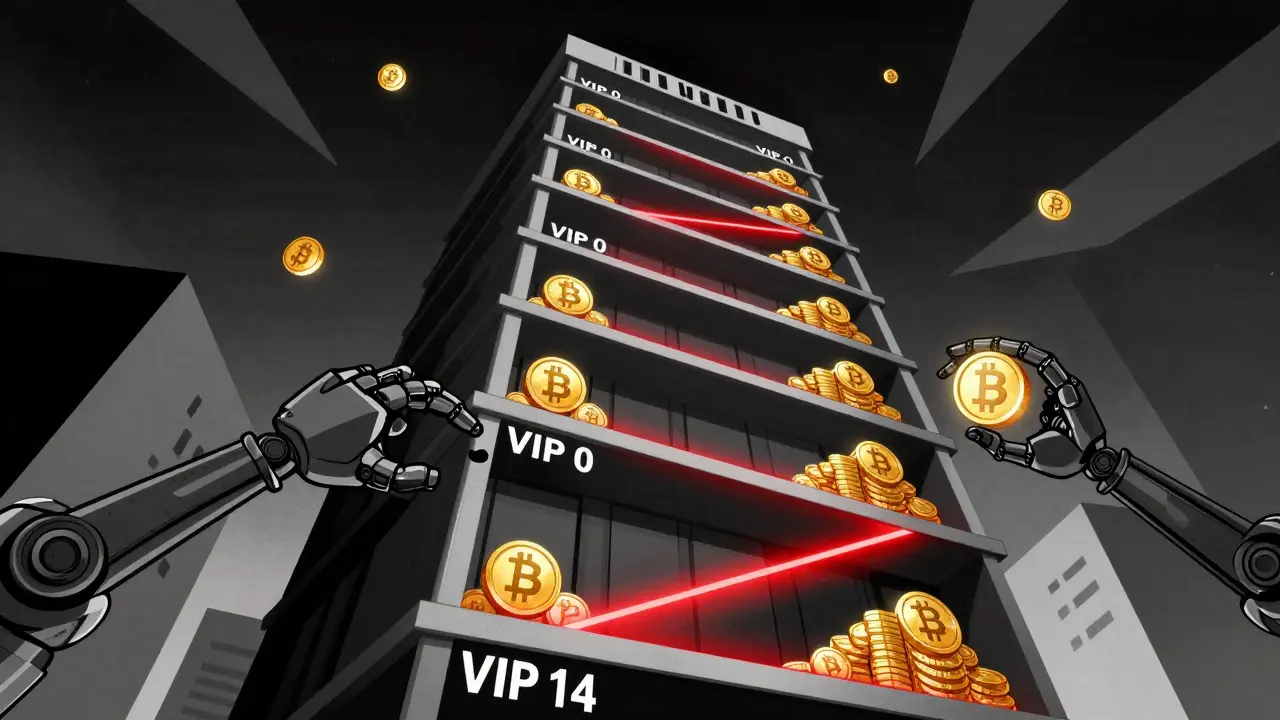
Every time you buy or sell crypto on an exchange, you pay a fee. That’s standard. But many exchanges let you pay those fees in their own native token - and when you do, you get a discount. It’s simple: hold the token, use it to pay fees, save money. For example, Binance lets you pay trading fees in BNB and get up to 25% off. Gate.io gives you discounts of up to 50% if you pay with GT. KuCoin users who hold KCS get 20% off. These aren’t gimmicks. They’re core parts of how exchanges keep users locked in. The discount isn’t always flat. Most platforms use tiered systems. Your savings grow the more you trade and the more tokens you hold. At Gate.io, a VIP level 0 trader pays 0.200% maker and 0.200% taker fees. But if you hold GT and reach VIP level 14, those fees drop to 0.030% and 0.036%. That’s a 85% reduction. And it’s not just for big traders - even modest users can unlock 10-20% off just by holding a few hundred dollars’ worth of the token.Why Exchanges Offer These Discounts
It’s not charity. Exchanges need money. And they need users to stick around. By creating a native token and tying fee discounts to it, they do two things at once: they raise capital (by selling the token) and they create loyalty (by making users dependent on holding it). Think of it like a loyalty card, but digital and volatile. When you buy BNB to get a discount, you’re not just saving on fees - you’re also investing in the exchange’s success. If Binance grows, BNB’s price tends to rise. That means your discount becomes even more valuable - because the token you’re holding is worth more. But if the exchange struggles, the token can crash. That’s the risk. The Bank for International Settlements estimates that exchange tokens have a combined market value over $100 billion. That’s not small change. These tokens are now a major funding source for exchanges, replacing traditional venture capital in many cases.Major Exchange Token Discount Programs Compared
Not all discounts are created equal. Here’s how the top platforms stack up:| Exchange | Native Token | Max Fee Discount | How to Qualify | Additional Benefits |
|---|---|---|---|---|
| Binance | BNB | 25% | Hold any amount of BNB; enable fee payment in BNB | Staking rewards, NFT marketplace discounts, launchpad access |
| Gate.io | GT | 50% | Hold GT + reach VIP level 14 via trading volume | Reduced withdrawal fees, early access to new listings |
| KuCoin | KCS | 20% | Hold KCS; auto-applied when paying fees | Weekly token burns, dividend-style rewards |
| OKX | OKB | 20% | Hold OKB; pay fees in OKB | Margin trading discounts, OKX Card cashback |
| Bitget | BGB | 20% | Hold BGB; pay fees in BGB | Free trading competitions, referral bonuses |
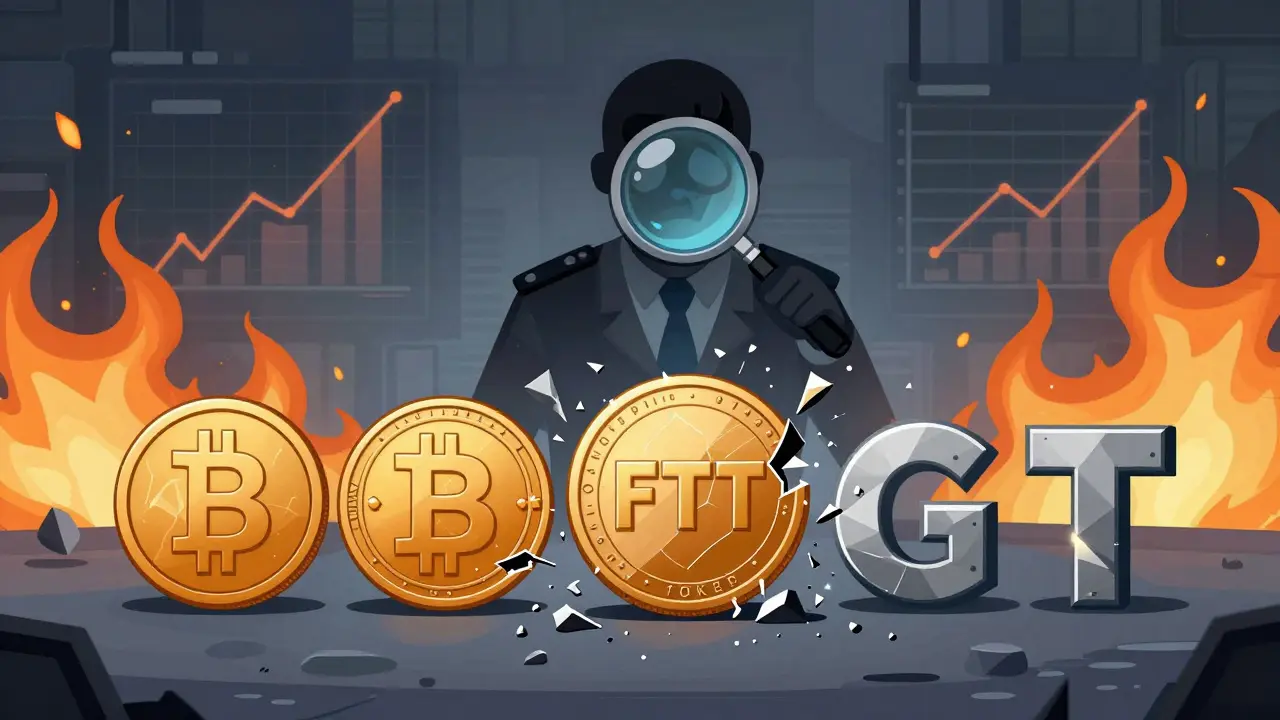
Notice something? Most of these tokens don’t give you voting rights or ownership in the exchange. You’re not buying stock. You’re buying utility. That’s important. If an exchange goes under, your token could become worthless - as happened with FTT after FTX collapsed in 2022. That’s not just a price drop. It’s a total loss of the discount and your capital.
Real Savings: How Much Can You Actually Save?
Let’s say you trade $50,000 a month. On a standard 0.1% fee, that’s $50 in fees per month - $600 a year. Now, if you use BNB and get a 25% discount, you’re paying only $375 a year. That’s $225 saved. But here’s the kicker: if BNB’s price rises 50% over the year, the $225 you saved is now worth more than $337 in real terms. You didn’t just save money - you gained value on your token holding. On the flip side, if BNB drops 40%, you’re still saving $225 in fees - but your token holding is worth less. So your net gain? Maybe zero. Or even negative. That’s why smart traders don’t just buy the token and forget it. They calculate their break-even point: How much does the token need to rise to make the discount worth the risk? If you’re trading $100,000 a month and the token drops 30%, you’d need it to rebound quickly - or you’ll lose more on price than you save on fees.How to Get Started
It’s not complicated, but it’s easy to mess up:- Buy the token. Go to the exchange’s spot market and buy its native token (BNB, GT, OKB, etc.). Don’t use a third-party wallet unless you know how to transfer it back.
- Enable fee payment. In your account settings, find the fee payment option and switch it to the native token. Some exchanges do this automatically.
- Check your tier. See what VIP level you’re on. If you’re not at the highest discount tier, trade more to unlock it. Volume matters.
- Monitor the price. Set a price alert. If the token drops 30% or more, ask yourself: is the discount still worth the risk?
- Rebalance if needed. If your token grows to 30% of your portfolio, consider selling some to lock in gains and reduce exposure.
Some exchanges, like KuCoin, even give you weekly KCS rewards just for holding. That’s free income on top of your fee discount. Others, like OKX, let you use OKB to pay for crypto credit cards. The utility keeps growing.
The Hidden Risks
The biggest risk isn’t volatility - it’s concentration. If you put 70% of your trading capital into BNB just to save on fees, you’re betting everything on Binance’s survival. That’s dangerous. The FTX collapse proved that. FTT wasn’t just a token - it was used to back loans, fund operations, and even pay employees. When FTX went under, FTT crashed to near zero. Traders who relied on it for discounts lost everything. Also, exchanges can change the rules. One day you get 25% off. The next, they lower it to 15% and raise the holding requirement. No warning. No appeal. That’s the nature of centralized platforms.Should You Use Exchange Tokens?
If you trade frequently - more than $10,000 a month - and you’re already using one exchange, then yes. The math usually works. But don’t treat it like a guaranteed return. Treat it like a cost-saving tool with side effects. If you’re a casual trader - maybe you buy Bitcoin once a year - skip it. The hassle isn’t worth it. If you’re unsure, start small. Buy $100 worth of the token. Use it for one trade. See how it works. Then decide.What’s Next for Exchange Tokens?
The next wave is integration. Some exchanges are letting you use their tokens to pay for DeFi protocols, bridge fees, or even NFT minting. Others are burning tokens monthly - destroying a portion of supply to make the remaining tokens more valuable. Regulators are watching. The SEC has signaled that some tokens might be classified as securities. That could force exchanges to change their models. But for now, the discount system is alive and well. The future belongs to exchanges that make their tokens useful beyond trading fees - like offering real-world spending, staking, or even lending. The ones that don’t? They’ll fade.Do I have to hold the exchange token forever to get the discount?
No. You just need to hold it at the time you place a trade and select it as your fee payment method. You can sell it right after. But if you sell too often, you’ll miss out on long-term price gains that can boost your savings.
Can I use multiple exchange tokens to save on fees?
No. Most exchanges only let you pay fees in their own native token. You can’t mix BNB with OKB. You have to choose one exchange per trading account. Some traders use multiple accounts to maximize discounts, but that adds complexity and risk.
Are exchange token discounts better than using a low-fee exchange like Kraken?
It depends. Kraken charges 0.16% for takers - no token needed. But if you trade $50,000 a month and get 25% off with BNB, you’re paying 0.075% - which is lower than Kraken. So if you’re already on Binance, the discount wins. But if you don’t want to hold volatile tokens, Kraken’s flat fee is simpler.
What happens if the exchange token crashes?
You still get the discount - but your holding loses value. If you bought $1,000 worth of BNB for the discount and it drops to $300, you saved $200 in fees but lost $700 on your investment. Net loss. Always calculate the risk before committing.
Do I need to stake the token to get the discount?
Usually not. Staking is separate. Most exchanges let you get the discount just by holding the token in your spot wallet. Staking might give you extra rewards, but it’s not required for the fee discount.
Gavin Francis
January 30, 2026 AT 22:52Gary Gately
January 31, 2026 AT 15:21Gareth Fitzjohn
February 1, 2026 AT 06:01Katie Teresi
February 2, 2026 AT 00:41Moray Wallace
February 2, 2026 AT 16:44William Hanson
February 4, 2026 AT 14:17Lori Quarles
February 5, 2026 AT 14:28Steven Dilla
February 6, 2026 AT 10:32Ramona Langthaler
February 6, 2026 AT 17:35Sunil Srivastva
February 8, 2026 AT 04:25Devyn Ranere-Carleton
February 8, 2026 AT 20:49Kevin Thomas
February 9, 2026 AT 21:09