How North Korea Funds WMD Programs With Stolen Cryptocurrency
 Mar, 27 2026
You might think nuclear missiles and blockchain technology don't mix. But if you look closer at the headlines, they connect in a way that keeps intelligence agencies awake at night. Here is the hard truth: North Korea relies heavily on stolen cryptocurrency to pay for its Weapons of Mass Destruction (WMD) development. While traditional banking channels are tightly monitored and blocked by international sanctions, the world of digital assets offers a backdoor that the regime has been perfecting for nearly a decade.
The Reality of Regime Survival
Imagine a country under heavy economic pressure. Every port is watched, every transaction tracked by banks in major financial hubs. For most nations, this means austerity and reform. For the Democratic People's Republic of Korea, known commonly as North Korea, it means innovation. Not the good kind you read about in Silicon Valley newsletters, but the survival kind. They found a loophole in the very system designed to stop them.
Cryptocurrency Theft has become the backbone of their foreign revenue strategy. It is not a side hustle; it is a critical lifeline. According to data from the U.S. Intelligence Community, the regime has managed to steal hundreds of millions of dollars annually in virtual assets. Between 2017 and 2023 alone, estimates place that total around $3 billion. That is not loose change. It is enough capital to buy components for rocket engines or uranium enrichment machinery when Western suppliers refuse to sell them directly.
Three Paths to Digital Cash
When security experts analyze how the regime generates funds, they break it down into three main approaches. You might guess that they just mine Bitcoin like everyone else. Well, here is why that does not work. Mining requires massive amounts of electricity and computing power. North Korea's grid is unreliable, and importing chips is difficult due to trade restrictions. So, they looked elsewhere.
- Mining: As mentioned, this is inefficient for them. The cost of energy outweighs the profit in most scenarios, making it a rare choice for the state-sponsored groups.
- Initial Coin Offerings (ICOs): In the early days of crypto, scammers sold fake tokens promising big returns. There was one documented case in 2018 involving a scheme called Marine Chain. However, this is too public and leaves too much of a paper trail.
- Cryptojacking and Hacking: This is the winner. It involves stealing digital assets from exchanges, private wallets, or infrastructure providers. This method evades detection better than anything else.
The third option, specifically cryptojacking followed by money laundering, poses the highest threat level. Why? Because it bypasses the "bank" entirely. When you move value through a decentralized ledger, no government regulator signs off on the transfer. This allows the funds to slip right past the United Nations Security Council sanctions that have tried to strangle the economy for decades.
The Human Element in Digital Warfare
Most people picture hackers as hooded figures typing furiously in a dark basement. The reality is far more grounded-and dangerous. The teams operating for Pyongyang are often highly skilled professionals using sophisticated social engineering tactics.
Instead of just brute-forcing passwords, they infiltrate companies by pretending to be someone else. Reports indicate operatives posing as Canadian IT workers, Japanese freelancers, or American consultants. They send out fake resumes. They show up for video interviews. Once inside a crypto firm or a tech company, they gain access to internal systems. From there, they target the cold storage keys or exchange hot wallets. It is corporate espionage blended with financial fraud.
We have seen this play out with groups identified by names like Lazarus Group, also linked to designations like APT38 and the TraderTraitor network. These aren't random script kiddies. They report directly to the regime's primary foreign intelligence organization. Their KPI is simple: get the Bitcoin, wash the tracks, deliver the cash to the state treasury.

Following the Money Trail
Once the funds are stolen, the job is only half done. You cannot buy missiles with Bitcoin directly. Most hardware vendors want fiat currency, like dollars or yuan. So, what happens next is a complex dance of obfuscation. This is where Blockchain Mixing Services come into play.
Think of a mixer like a laundromat for digital coins. You dump your dirty cash into a pool along with thousands of other anonymous users. Then, you withdraw clean coins from the same pool. To an outsider looking at the blockchain ledger, the link between the victim's address and the withdrawal address is broken.
Authorities have tracked specific patterns in this process. For instance, analysts have flagged several Bitcoin addresses where stolen funds are being consolidated before the cash-out. The FBI has identified specific wallets holding significant value linked to these operations. Some addresses, such as those in the 3LU8w... series, have held tens of millions of dollars in Bitcoin during various heist windows. By watching these wallets, investigators try to predict where the money might be converted to physical cash.
| Feature | Traditional Finance | Cryptocurrency Operations |
|---|---|---|
| Oversight | Heavily regulated by governments (e.g., Fed, ECB) | Decentralized, minimal regulatory friction |
| Identity | Strict KYC (Know Your Customer) laws required | Pseudonymous; real identity often hidden |
| Speed | Slow cross-border settlements (days) | Near-instantaneous transfers (minutes/hours) |
| Anonymity | Low; trails lead back to banks | High; enhanced by mixing services |
Global Response and Defensive Measures
This issue does not exist in a vacuum. Governments realize that ignoring these hacks is tantamount to paying a protection fee to a hostile regime. The United States has taken significant steps to counter this. Officials in Washington have pressed for stronger regulations on the entities involved in money laundering, including stricter rules for crypto exchanges and custodial services.
South Korea, feeling the direct threat from its northern neighbor, recently updated its National Security Strategy. They realized the old model of purely defensive cybersecurity wasn't working. The revised strategy now includes offensive capabilities, mirroring the approach taken by the U.S. A trilateral working group involving Japan, South Korea, and the United States was formed to share intelligence on these cyber threats. Lim Jong-in, a cybersecurity professor advising President Yoon, noted that shifting to an offensive stance is necessary to disrupt the revenue generation at the source.
Law enforcement agencies like the FBI and DOJ track these operations closely. They have filed charges against individuals caught in the net. For example, nine people were charged recently in a scheme aimed at generating revenue for the regime. But it remains a cat-and-mouse game. As long as there is a gap in regulation for decentralized finance tools, the opportunity remains open.
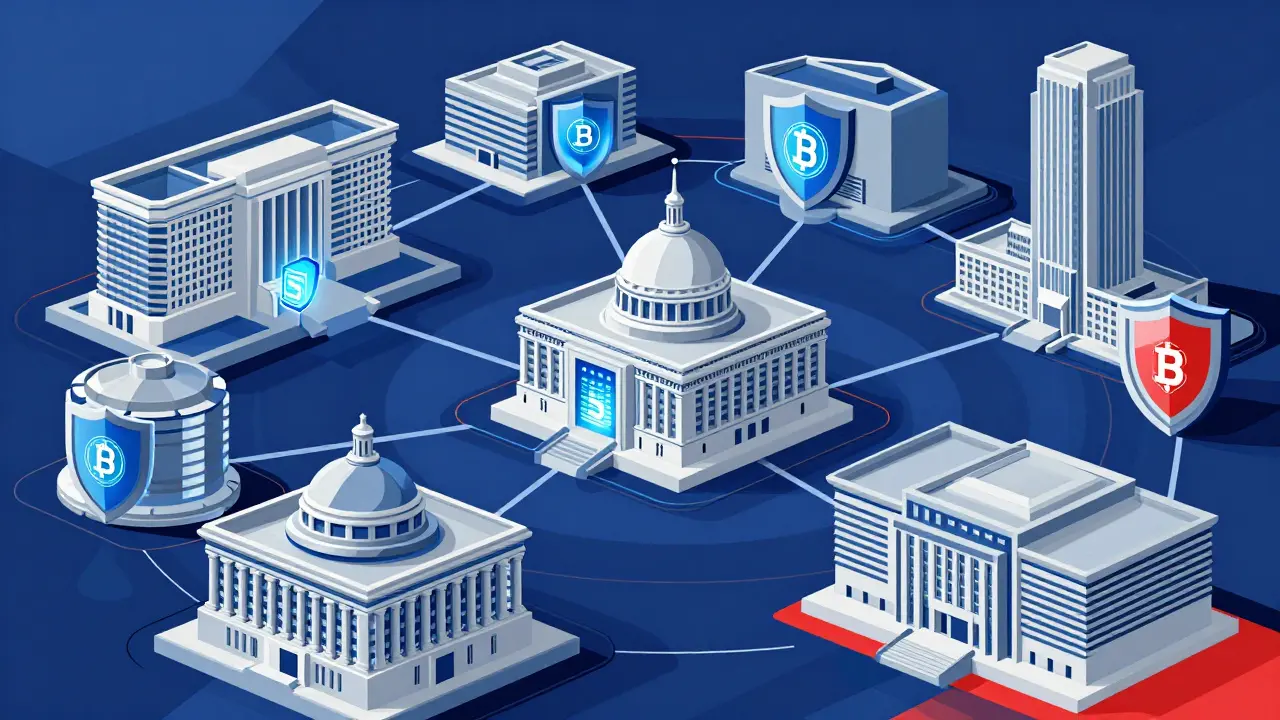
What This Means for the Average Investor
If you hold crypto, you might wonder if this affects you personally. The answer is yes, indirectly. When large-scale hacks occur, market sentiment takes a hit. If a major exchange is breached, trust erodes. Furthermore, the existence of these state-sponsored thieves raises the stakes for cybersecurity across the entire industry.
Companies are now spending billions on security audits. Exchanges are implementing stricter withdrawal limits and multi-signature controls. While annoying for some users who value speed over safety, these measures are necessary defenses against well-funded adversaries who view digital theft as national policy.
The Road Ahead
Looking forward, the trend is unlikely to slow down. The regime needs this money more than ever. The Georgetown Journal of International Affairs analysis from May 2024 suggests that these theft operations will likely proliferate in coming years. The incentive structure remains unchanged: sanctions are tight, and WMD goals are fixed.
As we move through 2026, the battlefront is shifting. It is no longer just about firewalls; it is about human intelligence and supply chain vetting. Who works for your favorite crypto app? What is their background? The human element remains the weakest link in the chain, and North Korean intelligence knows exactly where to pull.
Jay Starr
March 29, 2026 AT 04:38It is terrifying to realize the infrastructure underpinning modern finance is being weaponized by rogue states without hesitation. The sheer audacity required to steal billions while millions suffer sanctions is beyond comprehension. Every dollar stolen represents a direct threat to global stability and security.
Matt Bridger
March 29, 2026 AT 07:12The strategic implications of asymmetric financial warfare cannot be overstated. Sanctions regimes relying on traditional banking oversight are inherently obsolete when faced with decentralized ledger technology exploitation. One must acknowledge the sophistication displayed by state actors in bypassing conventional economic pressure mechanisms.
Elizabeth Akers
March 31, 2026 AT 00:07I totally get what you mean Matt. Sometimes the old rules dont work anymore so they find new loopholes. It feels like we are always chasing them down the wrong path though.
Really interesting stuff to read honestly
Shaira Vargas
April 1, 2026 AT 21:22This is absolutely insane and honestly scary af for everyone investing online right now. Like how do we sleep knowing bad guys are stealing our coins for nukes? The vibe is super off lately with all these hacks popping up everywhere.
Raymond K
April 3, 2026 AT 11:29Hey shairaa dont be too worried tho! We gotta stay positive and keep security high. Im thinking maybe new tech wil fix this soon enough for us all. Just need to trust the system more and stay alert ok?
Addy Stearns
April 4, 2026 AT 03:16When we examine the philosophical underpinnings of digital sovereignty we see a fundamental breakdown in the concept of territorial security. The regime operates on a logic that treats the entire internet as a borderless extraction zone rather than a shared communication medium. This creates a situation where individual property rights are dissolved into state assets through cyber intrusion methods. The moral calculus employed by the leadership prioritizes survival of the regime over any ethical consideration of harm inflicted elsewhere. Technology in this context becomes merely a tool for perpetuation rather than innovation for the good of mankind. We observe a deliberate manipulation of cryptographic protocols designed to ensure transaction immutability yet repurposed for illicit transfers. The victims of these actions are scattered across nations yet the perpetrator remains shielded behind nuclear deterrence. Global responses remain fragmented because economic interests often clash with national security imperatives. Investors face an impossible risk assessment regarding their own holdings versus geopolitical stability. The normalization of such behavior sets a precedent that encourages other pariah states to adopt similar tactics. We fail to address the root cause which is the desperation born of absolute isolationism. Digital currency was sold to us as a democratizing force free from centralized control. Instead it has become a vector for authoritarian resource accumulation on a massive scale. The disconnect between intended utility and actual usage highlights our failure in regulatory foresight. Until a unified global strategy emerges these thefts will continue unabated by technical barriers alone.
Markus Church
April 4, 2026 AT 12:34Your analysis regarding the philosophical breakdown of sovereignty provides significant insight into the structural weaknesses of current international frameworks. It appears necessary to consider whether technological neutrality can ever truly be maintained against hostile intent.
Justin Smith
April 5, 2026 AT 22:40The Lazarus Group is simply utilizing known exploits efficiently.
Ashley Stump
April 6, 2026 AT 11:01You clearly havent looked at the real data. Everything is rigged by elites.
Zackary Hogeboom
April 6, 2026 AT 16:52I was wondering how they actually move the money past the banks. The mixer explanation makes sense now that i think about it. Its like magic laundering money for everyone watching closely.
Liam Robertson
April 8, 2026 AT 01:46Mixers are tricky tools indeed but regulators are learning to track the flows better than before. We should focus on cooperation between countries to stop this.
Justin Garcia
April 9, 2026 AT 17:19Stop pretending this is a solved problem. These people love stealing for power. Nothing will change until they are destroyed physically.
Jamie Riddell
April 10, 2026 AT 01:56We all want safety but violence never solves anything permanently either way. Dialogue seems hard here given the situation
Chris R
April 10, 2026 AT 05:20This story shows why developing nations need better protection systems too. They get caught in crossfire sometimes unintentionally when big powers fight digitally.
Leah Lara
April 10, 2026 AT 06:18Boring news nobody reads this much anymore.
Samson Abraham
April 11, 2026 AT 16:09While we discuss strategy it is important to remember personal hygiene and cybersecurity practices at home remain essential defenses. Please protect your own keys regardless of geopolitics.
Stay safe everyone