LaserSwap Crypto Exchange Review: Is It Worth Using on Base Network?
 Dec, 19 2025
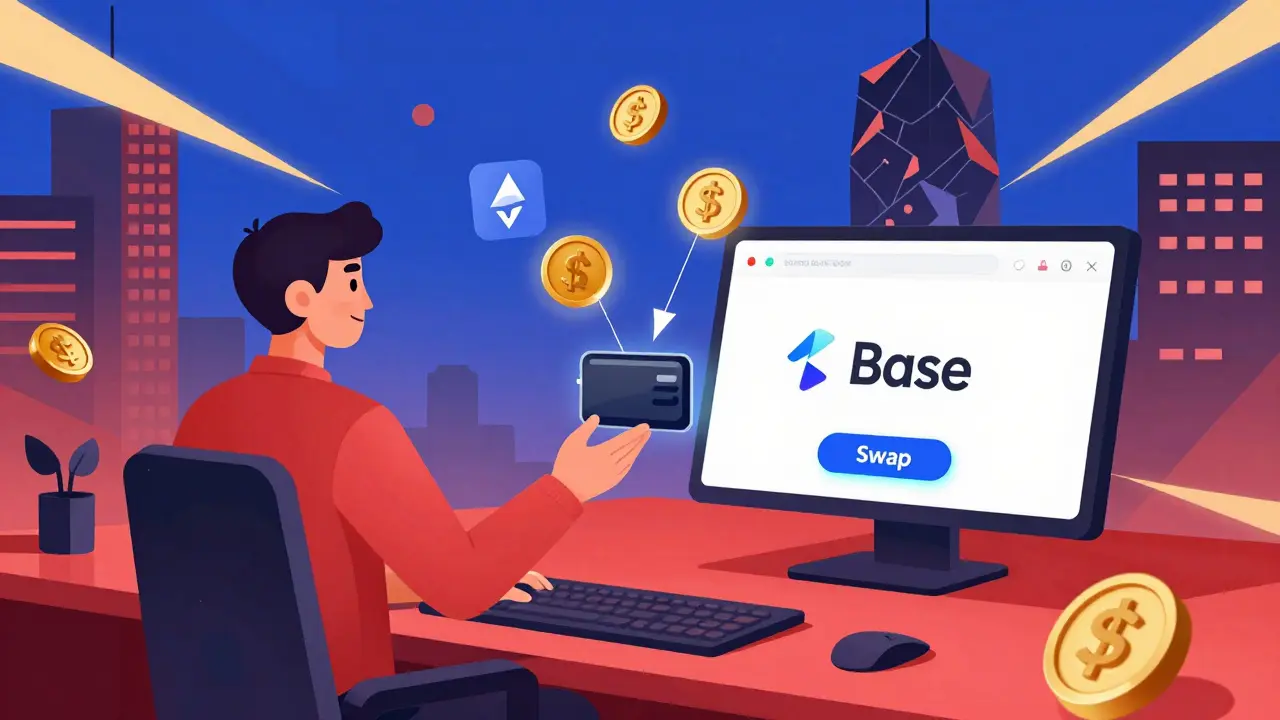
If you're trading crypto on the Base blockchain, you've probably heard of LaserSwap. It’s not Binance. It’s not Coinbase. It doesn’t have customer service hotlines or fiat deposits. But for users who want low fees, direct control over their funds, and early access to new Base-native tokens, LaserSwap might be exactly what they need - if they know what they’re doing.
What Is LaserSwap?
LaserSwap is a decentralized exchange (DEX) built entirely on the Base network, which is Coinbase’s Layer 2 solution built on Ethereum. Unlike centralized exchanges where your coins are stored by the company, LaserSwap lets you trade directly from your wallet. No deposits. No withdrawals. Just connect your MetaMask or Coinbase Wallet, and you’re in.
It launched in 2024 and has grown quietly, serving traders who want to get in early on new tokens before they hit bigger platforms. Think of it like a local farmers market for crypto - small, niche, but full of fresh finds you won’t find at the supermarket.
How LaserSwap Works
LaserSwap uses an automated market maker (AMM) model. That means there are no order books. Instead, trades happen through liquidity pools - groups of token pairs locked in smart contracts. When you swap ETH for a new memecoin, you’re trading against a pool of other users’ funds, not another person.
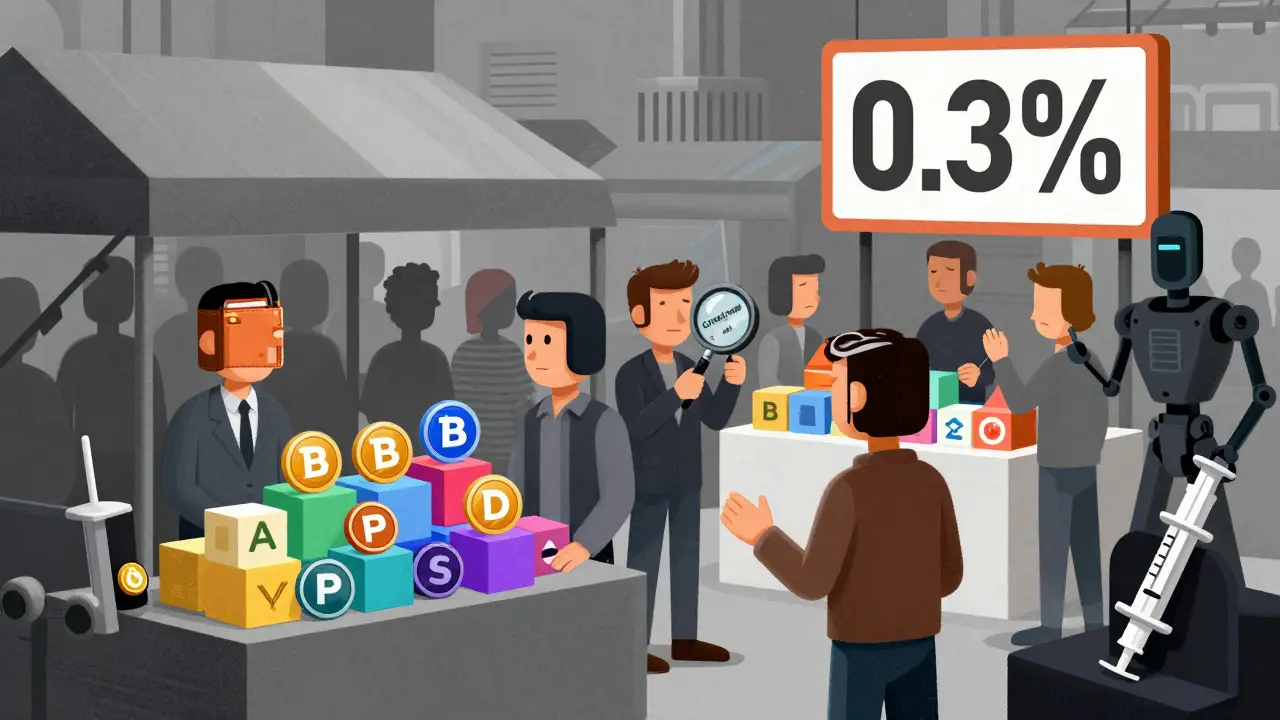
The platform charges a 0.3% fee on every trade. Of that, 0.25% goes back to liquidity providers, and 0.05% goes to the protocol treasury. This is standard for DEXs like Uniswap, but what sets LaserSwap apart is its focus on Base-specific tokens.
Transaction fees on Base are dirt cheap - usually between $0.01 and $0.05 per swap. Compare that to Ethereum mainnet, where a single trade can cost $2 or more during busy times. For small traders, that’s a big deal.
Security and Audits
LaserSwap’s smart contracts were audited by BlockSec in March 2025. That’s a good sign. But here’s the catch: there’s no public audit report. No detailed breakdown of vulnerabilities fixed or risks identified. You’re being told it’s safe, but you can’t verify it yourself.
Compare that to Curve Finance, which has been audited four times by top firms like OpenZeppelin and Trail of Bits. LaserSwap’s single audit feels like a checkbox, not a commitment.
GitHub shows 127 open issues, with 43 marked as critical. One major front-running bug was patched in August 2025 - a common problem in AMMs where bots exploit price delays to steal profits from regular users. It’s fixed now, but it happened. And it’s not the only time.
There are no reported scams targeting LaserSwap users yet, according to CryptoScamDB. That’s reassuring. But the lack of regulatory oversight means there’s no recourse if something goes wrong. No chargebacks. No customer support team to call. You’re on your own.
Liquidity and Trading Experience
LaserSwap’s daily trading volume sits around $8.7 million as of November 2025. That’s tiny compared to Uniswap’s $1.2 billion or even BaseSwap’s $220 million. What does that mean for you?
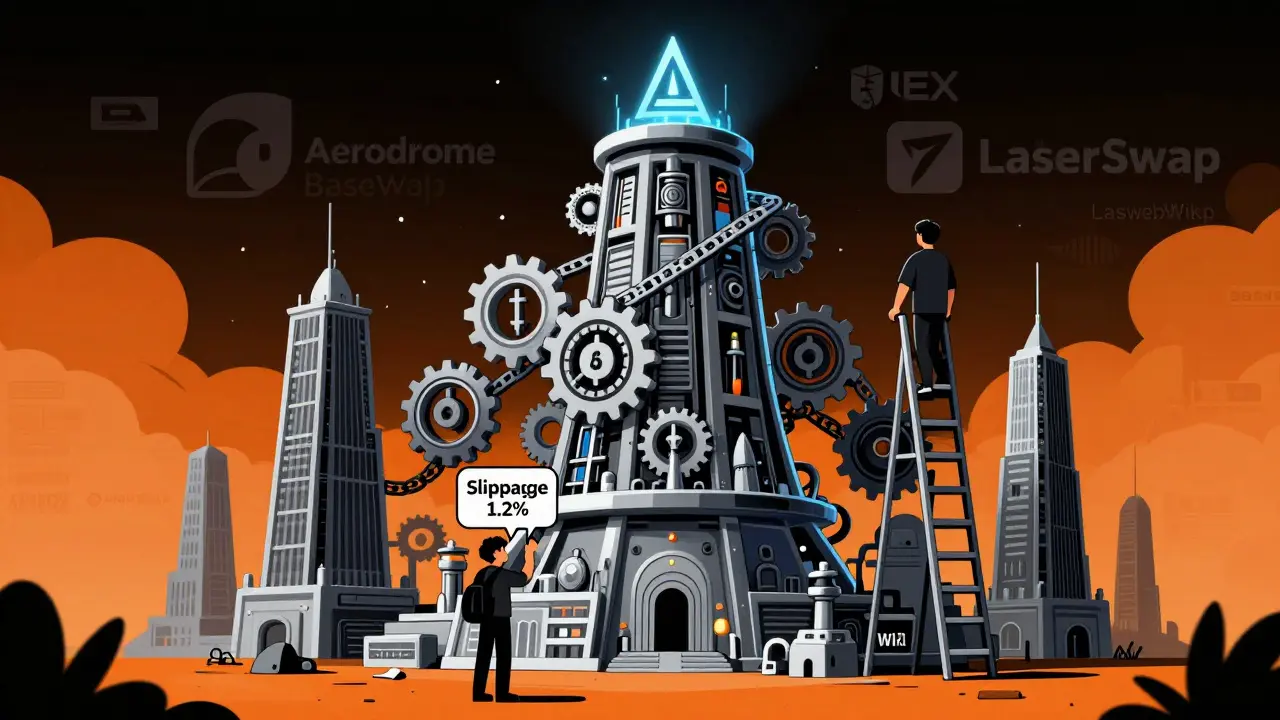
Slippage. For a $10,000 trade, you might see a 1.2% slippage on LaserSwap. On Uniswap, it’s closer to 0.4%. That’s hundreds of dollars lost on a single trade. If you’re moving large amounts, LaserSwap isn’t the place.
It supports about 1,200 token pairs. Uniswap has over 15,000. You won’t find major stablecoins like USDC or DAI with tight spreads here. You’ll find obscure memecoins, new DeFi tokens, and experimental projects that haven’t made it to bigger exchanges yet.
That’s the trade-off. If you want to catch the next big thing on Base, LaserSwap gives you early access. If you want to trade reliably with low slippage and deep liquidity, look elsewhere.
User Interface and Experience
The interface is clean. Simple. Familiar if you’ve used Uniswap or SushiSwap. You’ve got Swap, Pool, and Earn tabs. Connecting your wallet takes two clicks. Swapping tokens is straightforward.
But that’s where the simplicity ends. The platform assumes you already know what slippage tolerance means. It doesn’t explain impermanent loss in plain language. It doesn’t warn you when a token has low liquidity. And there’s no tutorial for first-time users.
According to Discord polls, most users spend 2-3 hours on their first swap. That’s not because it’s complicated - it’s because they’re learning on the fly. Beginners get burned. One Reddit user lost $3,000 in impermanent loss after adding liquidity to a volatile token pair they didn’t understand.
Documentation is rated 3.2 out of 5 by users. The GitHub wiki has answers, but they’re scattered. You’ll need to dig through issues, Discord threads, and GitHub comments to find what you need.
Customer Support and Community
There is no 24/7 support. No email. No live chat. If you have a problem, you go to the LaserSwap Discord server - 12,340 members as of November 2025.
Response times average 4.7 hours. Sometimes it’s faster. Sometimes it’s days. And the people helping you? They’re other users. Not employees. Not experts. Just folks trying to figure it out too.
On Reddit, opinions are split. One user called it “the best way to find new gems on Base.” Another said, “I got rekt because I didn’t know what I was doing.”
The community is active, but it’s not a safety net. It’s a peer-to-peer help desk. You get what you pay for - free access, but zero guarantees.
Who Is LaserSwap For?
LaserSwap isn’t for everyone. It’s not for people who want to buy crypto with a credit card. It’s not for investors who want stablecoin pairs with tight spreads. It’s not for traders who need advanced charting or stop-loss orders.
It’s for one group: crypto-savvy users who want early access to new tokens on the Base network. If you’re tracking upcoming token launches on CoinMarketCal, if you’re already using Base for DeFi, if you’re comfortable managing your own keys and understanding slippage - then LaserSwap is worth trying.
It’s also for people who hate paying $3 in gas fees every time they swap. If you’re tired of Ethereum’s high costs and want a faster, cheaper alternative, Base + LaserSwap is a solid combo.
What’s Next for LaserSwap?
The team is working on LaserSwap v2, scheduled for Q1 2026. It will introduce concentrated liquidity - the same feature that made Uniswap V3 so powerful. That could help reduce slippage and improve capital efficiency for liquidity providers.
They’re also integrating with Snowflake for on-chain analytics, which could help users track their trades for tax purposes. Crypto Tax Calculator already includes LaserSwap in its US tax guide, so compliance is becoming a focus.
But the real threat isn’t competition - it’s consolidation. In 2025, 12 smaller Base DEXs shut down or merged. Messari predicts only 3-4 specialized DEXs will survive per Layer 2 ecosystem by 2027. LaserSwap is one of them. But it’s not the favorite.
Aerodrome Finance holds 62% of Base DEX volume. BaseSwap has 18.7%. LaserSwap? Just 4.3%. To survive, it needs to become the go-to place for specific types of tokens - maybe memecoins, maybe AI-related projects, maybe something else. Right now, it’s just one of many.
Final Verdict
LaserSwap is a tool, not a solution. It’s not broken. It’s not a scam. But it’s not polished, either. It’s raw, fast, cheap, and risky.
If you’re a seasoned DeFi user who wants to trade new Base tokens without paying Ethereum gas fees, LaserSwap delivers. It’s fast, secure enough (for now), and surprisingly intuitive once you get past the learning curve.
If you’re new to crypto, or you want to trade large amounts, or you need customer support when things go wrong - look elsewhere. You’ll save yourself time, stress, and possibly thousands of dollars.
The future of LaserSwap depends on one thing: whether the Base ecosystem keeps growing. If Coinbase keeps pushing Base as the go-to Layer 2 for retail DeFi, LaserSwap might thrive. If other DEXs like BaseSwap or Aerodrome add better tools and deeper liquidity, LaserSwap could fade into obscurity.
Right now, it’s a hidden gem - but only if you know how to dig for it.
Is LaserSwap safe to use?
LaserSwap’s smart contracts were audited by BlockSec, which is a good sign. But there’s no public audit report, so you can’t verify the details. There are no reported scams targeting users yet, but the platform has 43 critical GitHub issues, including past vulnerabilities like front-running. You’re responsible for your own funds - no customer support, no chargebacks. Use it only if you understand DeFi risks.
Can I buy crypto with fiat on LaserSwap?
No. LaserSwap is a decentralized exchange and doesn’t support fiat on-ramps. You need to buy crypto like ETH or USDC on a centralized exchange like Coinbase or Binance first, then transfer it to your wallet and connect it to LaserSwap. You’ll also need Base-native ETH (ETH on Base) to pay for gas fees.
How much does it cost to trade on LaserSwap?
LaserSwap charges a 0.3% fee on every trade. Of that, 0.25% goes to liquidity providers, and 0.05% goes to the protocol. On Base, gas fees are typically $0.01-$0.05 per transaction, making it much cheaper than Ethereum mainnet DEXs, which can cost $1.50-$3.00 per trade.
What tokens can I trade on LaserSwap?
You can trade around 1,200 token pairs, mostly new or low-market-cap tokens native to the Base network. Popular pairs include ETH, USDC, and Base-native memecoins like BONK. You won’t find deep liquidity for major stablecoins or large-cap tokens. If you’re looking for Bitcoin or Ethereum swaps with tight spreads, use a centralized exchange instead.
Is LaserSwap better than Uniswap?
No - not for most users. Uniswap has 15,000+ token pairs, $1.2 billion daily volume, 0.4% average slippage, and massive liquidity. LaserSwap has 1,200 pairs, $8.7 million volume, and 1.2% slippage. LaserSwap’s only advantage is lower fees on Base and early access to new tokens. If you’re not trading Base-native projects, Uniswap is far superior.
Should I provide liquidity on LaserSwap?
Only if you’re comfortable with high risk. Liquidity pools on LaserSwap often involve new, volatile tokens. Impermanent loss can be severe, and there’s little data to predict returns. Many users report losing money because they didn’t understand how AMMs work. If you’re experienced and want to earn fees from early-stage tokens, go ahead. But treat it like high-risk speculation, not passive income.
Does LaserSwap have a mobile app?
No. LaserSwap is a web-based platform only. You access it through your browser using a Web3 wallet like MetaMask or Coinbase Wallet. There’s no official mobile app. Some users use mobile browsers, but the experience is clunky and not optimized for small screens.
What’s the future of LaserSwap?
LaserSwap’s future depends on the growth of the Base ecosystem. With v2 coming in Q1 2026 and concentrated liquidity, it could improve slippage and capital efficiency. But it faces stiff competition from Aerodrome and BaseSwap, which have larger user bases. If Base becomes a top-tier L2, LaserSwap might survive as a niche player. If not, it could vanish - like 12 other small Base DEXs that shut down in 2025.
Brian Martitsch
December 19, 2025 AT 23:55Charles Freitas
December 20, 2025 AT 08:12Rachel McDonald
December 20, 2025 AT 13:42Vijay n
December 22, 2025 AT 11:56Alison Fenske
December 23, 2025 AT 18:12Grace Simmons
December 24, 2025 AT 16:43Collin Crawford
December 25, 2025 AT 22:13Jayakanth Kesan
December 26, 2025 AT 18:50Aaron Heaps
December 26, 2025 AT 19:09Earlene Dollie
December 27, 2025 AT 11:45Kevin Karpiak
December 28, 2025 AT 20:10Amit Kumar
December 29, 2025 AT 11:01