OPNX Crypto Exchange Review: The Short-Lived Platform That Tried to Trade Crypto Bankruptcy Claims
 Nov, 28 2025
Bankruptcy Claim Value Calculator
How Your Crypto Claim Compares
Based on OPNX's model, this calculator shows why creditors didn't sell claims at low percentages. Calculate the difference between immediate sale value versus waiting for recovery.
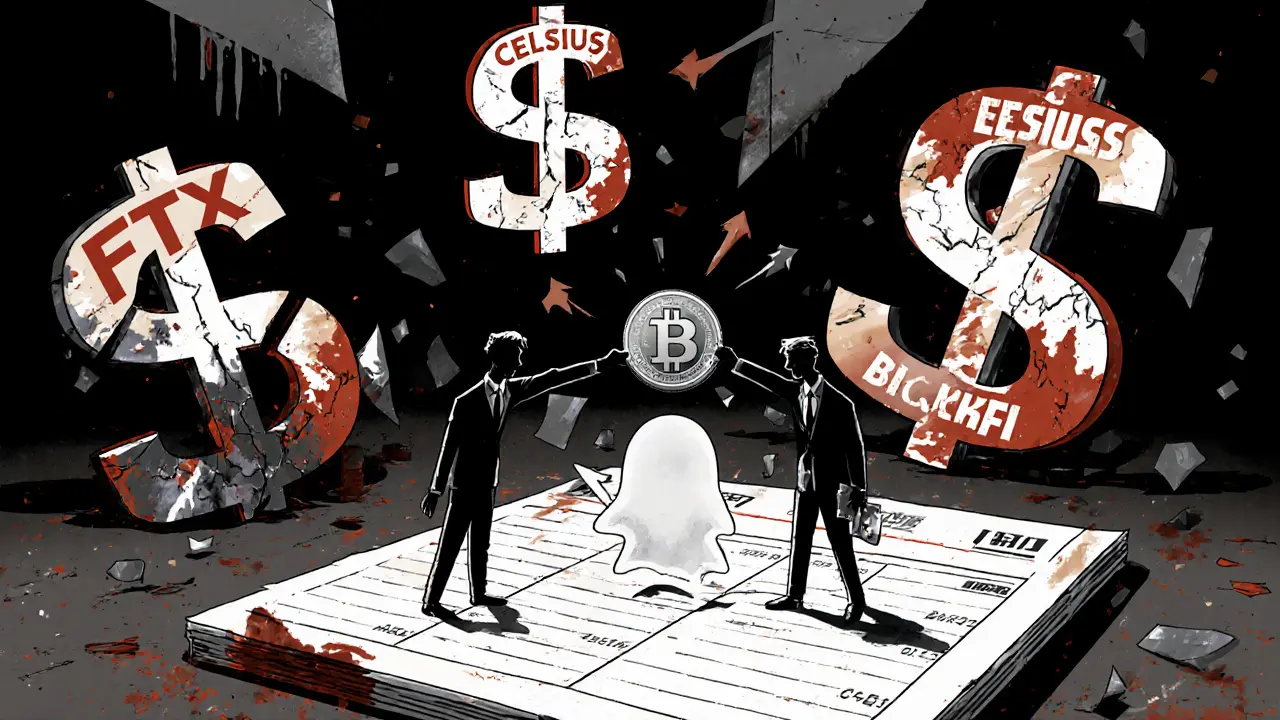
OPNX wasn’t another crypto exchange trying to beat Binance or Coinbase. It didn’t offer spot trading, staking, or even a decent mobile app. Instead, it tried to do something no one else had: turn bankruptcy claims into tradeable assets. If you owned a piece of FTX, Celsius, or BlockFi’s collapsed estate, OPNX said you could sell it - right now - instead of waiting years for a penny back. Sounds smart, right? It wasn’t.
What Was OPNX?
OPNX, short for Open Exchange, launched in 2023 as a niche crypto platform built by Su Zhu and Kyle Davies - the same two men behind Three Arrows Capital, the hedge fund that blew up in 2022 and lost over $3 billion. Their idea? Create a marketplace where creditors of failed crypto companies could trade their legal claims as if they were stocks. If you were owed $10,000 by FTX, you could list it on OPNX and sell it for $2,000 today instead of waiting five years for a possible payout.
The platform used two tokens: FLEX (inherited from their old platform CoinFLEX) and a new one called OX. You could use OX to pay fees, trade bankruptcy claims, or even use those claims as collateral for crypto futures. It was a weird, complex system built on top of a broken system. And it only worked if people actually traded.
Why It Failed Before It Even Started
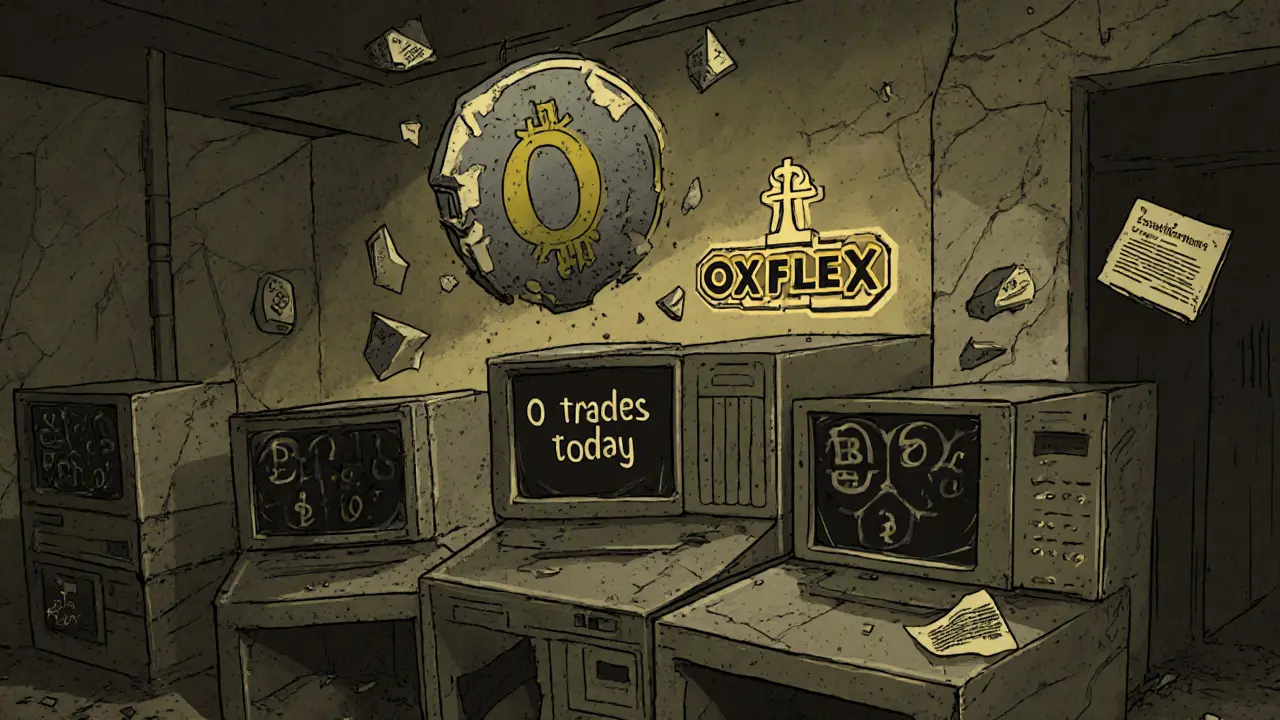
OPNX didn’t just struggle - it flatlined. In its first 24 hours, the entire platform saw less than $2 worth of trades. That’s not a glitch. That’s a death sentence. By the time it shut down in February 2024, its total trading volume over its entire lifespan was just $624,093. For comparison, Binance does that much in under five minutes.
People didn’t buy into the idea because the math didn’t add up. Most creditors didn’t want to sell their claims at 10% or 20% of face value. They held out, hoping for full repayment - and in some cases, like FTX, they eventually got it. Why sell now for pennies when you might get dollars later? The market OPNX created didn’t exist. It was invented, not discovered.
Even worse, the platform had no real liquidity. If you wanted to sell your FTX claim, there were maybe three buyers. If you wanted to buy one, there were maybe two sellers. That’s not a market - that’s a ghost town with a trading terminal.
The Founders’ Shadow
OPNX didn’t just fail because of bad timing. It failed because of who ran it. Su Zhu and Kyle Davies weren’t just crypto entrepreneurs - they were the faces of one of the biggest collapses in crypto history. Three Arrows Capital’s implosion left thousands of investors with nothing. When they showed up again with OPNX, the crypto world didn’t cheer. It sighed.
Regulators in Hong Kong were already investigating CoinFLEX’s transition into OPNX. Creditors claimed the rebrand was illegal. The CEO, Mark Lamb, was tied to ongoing legal battles. No one trusted the leadership. And trust is the only thing that matters in crypto.
Even the name “OPNX” felt like a rebranding trick - not a fresh start. It was CoinFLEX with a new logo and a new pitch. And in crypto, where scams are common and reputations matter, that’s a death sentence.
The Tech Wasn’t the Problem - The Product Was
OPNX didn’t need better code. It didn’t need faster servers. It didn’t need a mobile app. It needed users who cared about trading bankruptcy claims. And there were almost none.
The platform’s interface was basic. No advanced charting. No margin trading. No API for bots. Just a simple order book for claims. If you didn’t already understand bankruptcy law, recovery timelines, and asset valuations, you were lost. And there was no guide. No tutorial. No support team to explain it.
For retail traders used to buying Bitcoin on Coinbase or trading Solana on Bybit, OPNX felt like a foreign country with no map. Even experienced traders didn’t bother. Why spend hours learning how to value a claim when you could just buy ETH and wait for the next bull run?
The OX Token and the Ghost Platform That Followed
When OPNX shut down on February 14, 2024, the founders didn’t disappear. They quietly pivoted to OX.Fun - a derivatives exchange built around the OX token. OX.Fun claimed to be a “new chapter,” but it had no official connection to OPNX. The founders were only listed as “advisers.”
OX.Fun did get more trading volume - peaking at $39 million in a single day. But that volume came from speculation on the OX token itself, not from trading bankruptcy claims. The original purpose of OPNX was dead. OX.Fun was just another crypto token pump.
Today, OX still trades on exchanges like Uniswap, Gate.io, and MEXC. But it has no utility. No platform. No use case. It’s a ghost token chasing a ghost idea. People still hold it, hoping for a comeback. There won’t be one.
Who Was OPNX Even For?
OPNX was never for regular crypto users. It wasn’t for beginners. It wasn’t for traders looking to make quick profits. It was meant for institutional creditors - lawyers, hedge funds, bankruptcy specialists - people who could value a FTX claim and had the patience to wait.
But even they didn’t come. Why? Because the market was too small. Too risky. Too slow. And the platform didn’t offer anything better than what they could already do through legal channels.
OPNX tried to solve a real problem - illiquid bankruptcy claims - but built a solution that no one wanted. It’s like inventing a new kind of stapler for a world that stopped using paper.
The Bigger Lesson
OPNX’s story isn’t just about a failed exchange. It’s about how not to build in crypto.
You can’t just take a bad reputation, slap on a new name, and expect people to trust you. You can’t create a market out of thin air and assume users will come. You can’t ignore the basics - liquidity, trust, simplicity - and think your “innovation” will save you.
OPNX didn’t fail because it was too ahead of its time. It failed because it was too far from reality. The crypto market doesn’t need more complex financial products. It needs better infrastructure, clearer rules, and honest teams.
OPNX was a bold experiment. But bold doesn’t mean smart. And in crypto, where trust is fragile and attention is scarce, smart wins every time.
SHIVA SHANKAR PAMUNDALAR
November 28, 2025 AT 13:46OPNX was like trying to sell your ex’s old socks on eBay-someone might’ve owed you money, but nobody wanted their emotional baggage wrapped in a token.
Shelley Fischer
November 29, 2025 AT 11:20The fundamental flaw in OPNX’s design was its assumption that market demand could be engineered rather than observed. Bankruptcy claims are not securities; they are legal instruments subject to judicial discretion, not speculative trading. To conflate them with tradable assets reflects a profound misunderstanding of both finance and law.
Puspendu Roy Karmakar
November 30, 2025 AT 10:20Look, I get it-people want to get their money back fast. But selling a claim for 20 cents on the dollar? That’s not smart investing, that’s giving up. I’ve seen people wait five years and get 80% back on FTX claims. Patience beats panic every time.
Evelyn Gu
December 1, 2025 AT 03:39It’s just… so sad, you know? Like, imagine being one of those creditors who held on for years, hoping for justice, and then this platform pops up with a shiny new token and a fake promise of liquidity-and you’re like, ‘Wait, is this real?’ and then you check the volume… $624,093… and you just… cry. Not even dramatic crying. Just… quiet, empty, ‘I can’t believe this is happening’ crying.
Michael Fitzgibbon
December 3, 2025 AT 03:32There’s something poetic about OPNX. It wasn’t evil. It wasn’t even stupid. It was just… misplaced. Like building a library in the middle of a desert and wondering why no one’s reading. The infrastructure was fine. The intent? Maybe even noble. But the audience? They were never there.
Komal Choudhary
December 3, 2025 AT 12:23Wait so the guys who blew up 3AC are back?? And you guys are surprised people didn’t trust them?? Like… did you even read the article?? They’re the reason half of us lost money!!
Tina Detelj
December 3, 2025 AT 14:37OPNX was the crypto equivalent of a ghost town’s only diner-sign out front says ‘Open,’ lights are on, chairs are set… but the kitchen’s been closed since 2019, and the owner’s got a new name, a new hat, and zero intention of cooking anything real. The OX token? That’s the ghost haunting the cash register, whispering ‘maybe next bull run…’
George Kakosouris
December 3, 2025 AT 17:56Let’s not sugarcoat this: OPNX was a rebranding shell game disguised as innovation. The founders leveraged the CoinFLEX infrastructure, repackaged it with jargon like ‘bankruptcy claim liquidity,’ and hoped the crypto herd would stampede into the trap. The $624k volume? That’s not a failure-it’s a forensic audit of collective delusion. And OX.Fun? Pure vaporware with a tokenomics PowerPoint.
Mark Adelmann
December 3, 2025 AT 21:44Honestly, I think OPNX had a good idea buried under terrible execution. If you had a team of actual bankruptcy lawyers, a simple UI, and maybe even partnered with the FTX estate, it could’ve worked. But instead, you got a crypto bro startup with a token and zero empathy. That’s not innovation-that’s exploitation.
ola frank
December 5, 2025 AT 16:23The structural incoherence of OPNX stems from its ontological misalignment: bankruptcy claims are contingent liabilities, not tradable securities. The OX token, as a synthetic asset layer atop a non-liquid underlying, violates the fundamental principle of asset-backed valuation. The absence of a regulatory framework further renders the platform a legal gray zone-a speculative construct masquerading as financial infrastructure.
imoleayo adebiyi
December 6, 2025 AT 17:22I think this is a lesson for everyone: when people lose money, they don’t want more complexity. They want honesty. OPNX tried to turn pain into profit, but pain doesn’t trade well. Not without trust.
SHASHI SHEKHAR
December 8, 2025 AT 04:02Bro, imagine if you had $50k in FTX claims and someone offered you $10k today. You’d say no, right? But then you sit there for 4 years while lawyers argue over who owns what. Meanwhile, your rent is due. OPNX wasn’t for the rich. It was for the desperate. And the platform didn’t even give them a way out. Just a fake exit sign.
And now OX.Fun? That’s just a new game where people buy the token because they still believe in the ghost. It’s like buying a lottery ticket for a dead man’s will.
I’ve seen this movie before. The same faces. The same promises. The same empty wallets. Crypto needs real solutions-not rebranded failures.
And don’t even get me started on the tokenomics. OX has zero utility. No staking. No governance. No use case. Just a chart that goes up when the moon is full and down when Elon tweets.
It’s not a platform. It’s a meme with a whitepaper.
And the worst part? People still hold it. Hoping. Waiting. Like it’s gonna rise again. It won’t. It’s dead. We just haven’t buried it yet.
Next time someone says ‘this time it’s different’-run. Don’t look back.
Vaibhav Jaiswal
December 9, 2025 AT 23:13OPNX was like trying to sell your ex’s broken phone to someone who doesn’t even have a charger. The phone might’ve had value once… but now? It’s just a paperweight with a story.
Abby cant tell ya
December 10, 2025 AT 16:41These guys are frauds. They lost billions and now they’re back selling ghost tokens like it’s a TED Talk. I’m not mad, I’m just disappointed. And honestly? Kinda disgusted.
Savan Prajapati
December 12, 2025 AT 09:03No trust. No liquidity. No future. Done.
Michael Labelle
December 13, 2025 AT 03:26I think the real tragedy isn’t that OPNX failed-it’s that someone actually believed it could work. That’s the real crypto sickness: believing in a solution that was never meant to solve anything.
Joel Christian
December 13, 2025 AT 09:30ox token still up?? omg i bought it at 0.0002 now its at 0.0008 maybe i get rich?? lol
jeff aza
December 13, 2025 AT 18:16OPNX wasn’t a failure-it was a controlled demolition. The founders knew the volume would be negligible. They didn’t need liquidity. They needed token distribution. OX.Fun isn’t the next phase-it’s the exit strategy. The real product was never the exchange. It was the OX token sale. And the fools who bought in? They were the product.
Vijay Kumar
December 14, 2025 AT 07:28Same faces. Same scams. Crypto’s just a casino with better branding.
Vance Ashby
December 14, 2025 AT 14:38OPNX was the crypto equivalent of a guy selling ‘healing crystals’ at a bankruptcy court. The idea? Absurd. The people who bought in? Desperate. The outcome? Predictable. 🤡