Peer-to-Peer Insurance Models: How Blockchain and Smart Contracts Are Rewriting the Rules of Risk
 May, 18 2026
Imagine paying for car insurance but actually keeping control of your money. Instead of handing over a premium to a faceless corporation that pockets the profit if you don't crash, you join a pool with other drivers who share your habits. If no one claims, the money stays in the group or gets donated to a cause you care about. This isn't a futuristic dream; it is the core promise of Peer-to-Peer (P2P) Insurance, a model where individuals pool resources to share risks directly, bypassing traditional centralized insurers through digital platforms and community governance. While the global insurance industry sits at a massive USD 7.2 trillion, the P2P segment was only around USD 63 billion in 2023. Yet, with growth rates projected to exceed 30% annually until 2027, this niche is rapidly becoming a serious contender. The shift is driven by a demand for transparency, lower costs, and the power of technology to enforce trust without middlemen.
The Core Mechanics: How P2P Insurance Actually Works
Traditional insurance relies on an adversarial relationship. You pay premiums, and the insurer tries to minimize payouts to maximize profit. P2P insurance flips this script by aligning incentives. Members form communities based on shared risk profiles-think low-mileage drivers, healthy freelancers, or homeowners in the same neighborhood. These groups self-organize and self-administer their coverage, a definition supported by the National Association of Insurance Commissioners (NAIC).
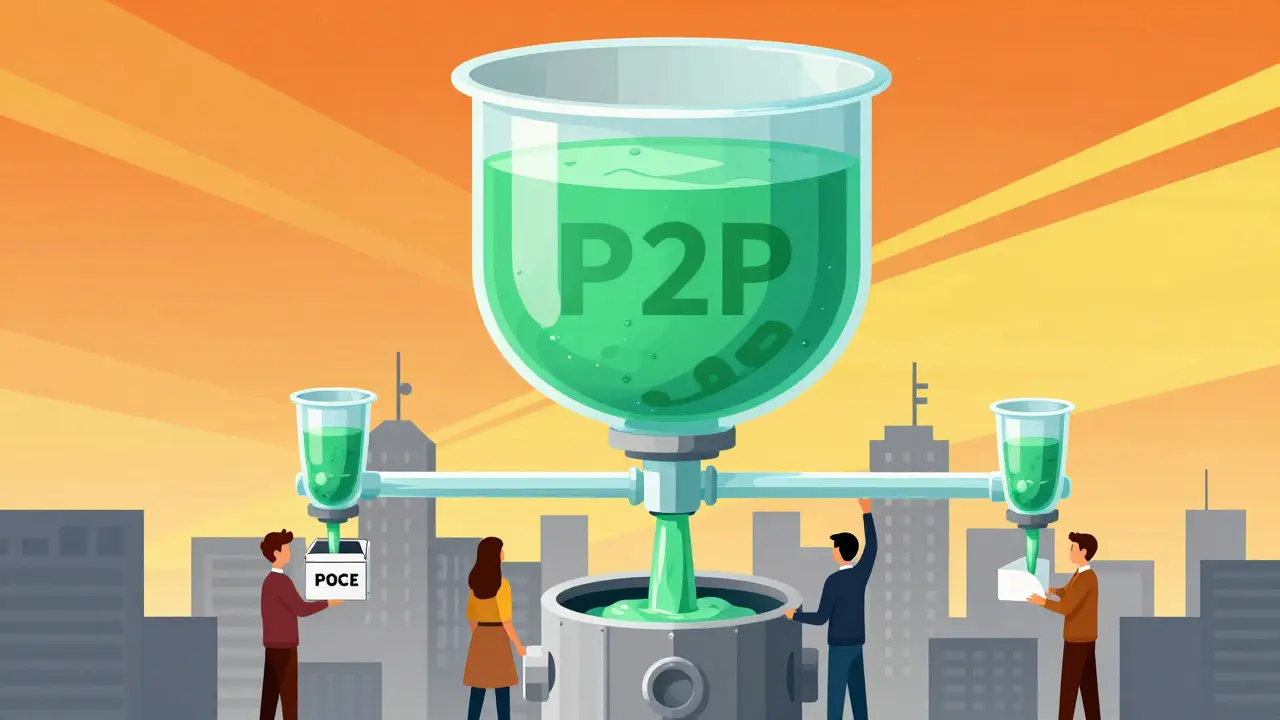
The operational framework is straightforward but powerful. Members contribute fixed premiums into a shared digital pool. When a claim occurs, it is paid from this pool. Here is where it gets interesting: if the pool has leftover funds at the end of the period, those funds are not kept by a corporation. They are either returned to members, reinvested into the pool for future stability, or donated to charitable causes chosen by the group. This creates a direct link between responsible behavior and financial reward.
To manage catastrophic risks that could drain the pool, P2P models often use reinsurance. A reinsurer steps in to cover losses that exceed the group's capacity, ensuring the system remains stable even after major events. This hybrid approach combines the community feel of mutual aid societies with the robustness of modern financial instruments.
Two Primary Structural Models
Not all P2P insurance looks the same. There are two dominant structures currently shaping the market, each with distinct advantages depending on what you value more: simplicity or comprehensive coverage.
| Feature | Insurance Broker Model | Insurance Company Model |
|---|---|---|
| Role of Third Party | Handles large claims via traditional insurer | Provides full coverage and management |
| Premium Structure | Lower overhead; brokers earn commissions | Flat fee for operations; potentially higher cost |
| Coverage Scope | Specific types (liability, physical damage) | Broad, similar to standard policies |
| Risk Handling | Pooled money covers small claims | Reinsurance covers excess payouts |
In the Broker Model, the group handles minor claims internally using their pooled funds. Larger, more expensive claims are passed to a third-party insurance company. This structure keeps administrative costs low because the broker’s commission comes from the insurer, not directly from the pool’s efficiency. It works well for specific, predictable risks like vehicle liability or household belongings.
The Insurance Company Model involves a licensed insurer managing the entire operation for a flat fee. This offers broader protection, similar to what you’d get from a legacy carrier. However, it may come with higher member costs due to the insurer’s need for profit margins and regulatory compliance. Both models aim to reduce the "expense ratio"-the percentage of premiums spent on administration rather than claims-which is notoriously high in traditional insurance.
The Role of Blockchain and Smart Contracts
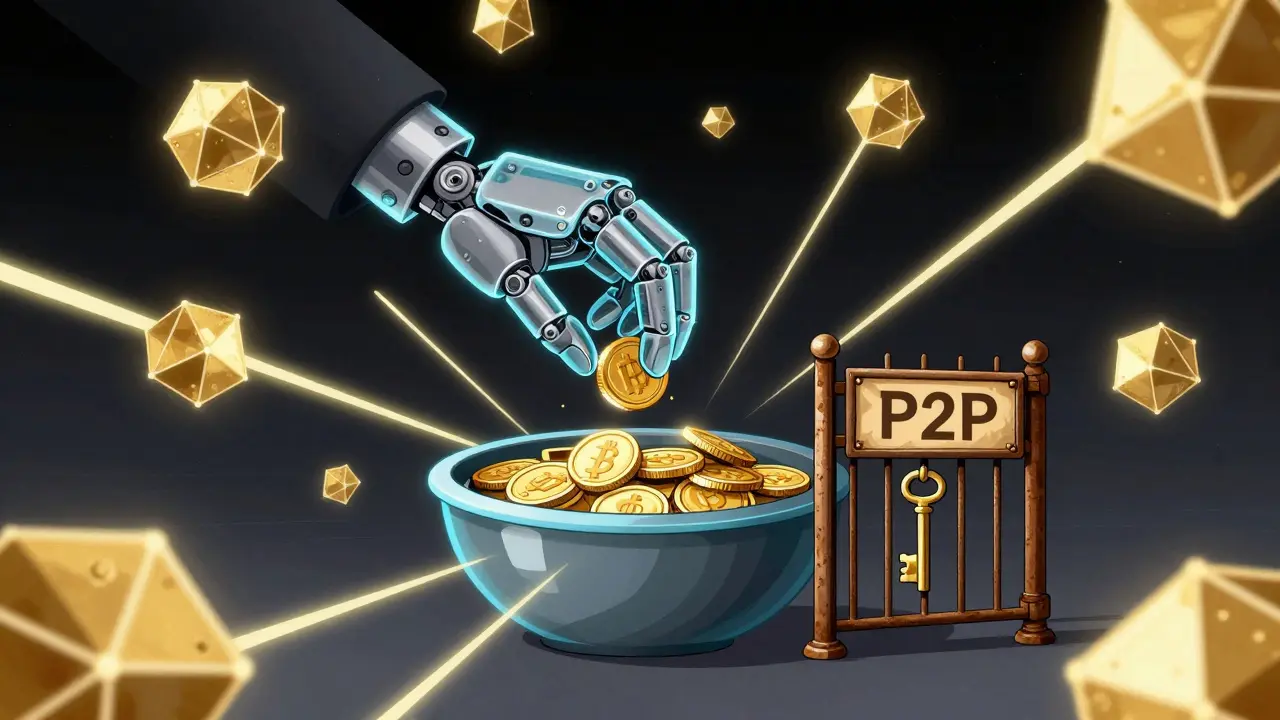
While P2P insurance concepts date back to mutual aid societies, the current wave is fueled by technology. Specifically, Blockchain a decentralized, distributed ledger technology that records transactions securely and transparently provides the infrastructure needed to make trustless cooperation viable. Without blockchain, verifying contributions, tracking pool balances, and executing payouts would require costly intermediaries.
The real game-changer is the Smart Contract self-executing code on a blockchain that automatically enforces the terms of an agreement when predefined conditions are met. In a P2P context, a smart contract can automatically deduct premiums, verify claim eligibility against agreed-upon criteria, and release funds instantly. This removes human bias and slows down the friction of manual processing. For example, if a weather API confirms a flood in your area, the smart contract can trigger partial payouts to all affected members in the pool within minutes, not weeks.
This technological layer enables Decentralized Finance (DeFi) financial services built on blockchain networks that operate without central authorities like banks principles to enter insurance. Users retain custody of their assets until they are needed, and every transaction is auditable on the public ledger. This level of transparency is impossible in traditional black-box insurance systems.
Benefits Beyond Lower Premiums
Cost savings are the most obvious benefit, but they are not the only one. P2P insurance fundamentally changes the psychology of risk management. Because members know their contributions support their peers, there is a natural social pressure to avoid frivolous claims. This reduces fraud significantly. Research indicates that P2P models experience lower loss ratios and fewer fraudulent activities compared to traditional carriers.
Transparency builds trust. In a traditional policy, you rarely see how your premium is allocated. In a P2P platform, you can view the real-time balance of the pool, see past claims, and understand exactly why funds were used. This visibility empowers members to make informed decisions. Furthermore, many P2P platforms allow for member-centric governance. You might vote on which charity receives surplus funds or help define the criteria for claim approval. This sense of ownership transforms insurance from a chore into a community activity.
For microbusinesses-companies with fewer than 10 employees-P2P insurance is particularly attractive. As noted by Kyle Hoffman, program lead at Chubb, these small entities are often underserved by traditional brokers. P2P models offer them tailored coverage with simpler underwriting processes, as the risk pool is homogeneous and easier to assess.
Challenges and Realities
Despite the hype, P2P insurance is not a silver bullet. It faces significant hurdles. Regulatory compliance varies wildly across jurisdictions. In some regions, operating a P2P pool without a license is illegal. Platforms must navigate complex insurance laws to ensure they are offering legitimate coverage rather than just informal betting pools.
Adoption is another barrier. People are creatures of habit. Switching from a familiar brand to a new, tech-driven model requires trust. Users must believe that the app won’t disappear overnight and that their peers will act responsibly. Additionally, while technology reduces administrative costs, it introduces technical risks. Bugs in smart contracts or vulnerabilities in the underlying blockchain could expose users to new types of threats.
Market size also limits immediate scalability. With less than 1% of the global market share, P2P insurance is still finding its footing. However, the integration with the sharing economy-where platforms like Uber and Airbnb already rely on peer interactions-suggests a natural expansion path. As more people engage in gig work and short-term rentals, the demand for flexible, peer-based risk solutions will grow.
Key Players and Future Outlook
Companies like Lemonade and Friendsurance have pioneered this space, demonstrating that consumers are willing to embrace new models if the benefits are clear. Lemonade uses AI to process claims quickly, while Friendsurance focuses on building social networks around insurance products. These examples show that P2P is not just about cutting costs; it’s about creating better user experiences.
Looking ahead, the convergence of P2P insurance with IoT (Internet of Things) devices will deepen personalization. Your smart home data could dynamically adjust your homeowner’s pool contribution based on real-time security metrics. As blockchain technology matures and regulatory frameworks adapt, we can expect P2P models to move beyond consumer products into more complex areas like cyber liability and professional indemnity.
The future of insurance is likely hybrid. Traditional carriers will adopt P2P elements to improve efficiency, while P2P platforms will seek partnerships with established insurers for reinsurance and credibility. For now, the opportunity lies in understanding how these models work and identifying which ones align with your specific risk profile and values.
Is Peer-to-Peer Insurance legally binding?
Yes, legitimate P2P insurance platforms operate under regulatory frameworks and often partner with licensed insurers or reinsurers to ensure legal compliance. The NAIC recognizes P2P insurance as a valid product category, provided it meets state-specific requirements for pooling capital and administering coverage.
How do Smart Contracts prevent fraud in P2P Insurance?
Smart contracts execute payouts only when predefined, verifiable conditions are met. For instance, a flight delay insurance smart contract connects to airline APIs to confirm delays automatically. This removes human discretion, reducing opportunities for fraudulent claims and ensuring objective enforcement of terms.
What happens if my P2P pool runs out of money?
Most P2P models include a reinsurance layer. If claims exceed the pooled funds, a third-party reinsurer covers the difference. This protects individual members from bearing the full cost of catastrophic events, ensuring the stability of the insurance pool.
Can I choose who is in my P2P insurance pool?
In many P2P models, yes. You can often select pools based on shared interests, locations, or risk profiles. Some platforms allow you to invite friends and family, while others use algorithms to match you with similar individuals to optimize risk distribution.
Is P2P Insurance cheaper than traditional insurance?
Generally, yes. By eliminating high administrative overhead, marketing costs, and corporate profit margins, P2P models can offer lower premiums. Additionally, unused funds are often returned to members or donated, rather than retained by the insurer.