Privacy Coin Delisting Wave: Why Exchanges Are Banning Monero, Zcash, and Dash in 2026
 May, 23 2026
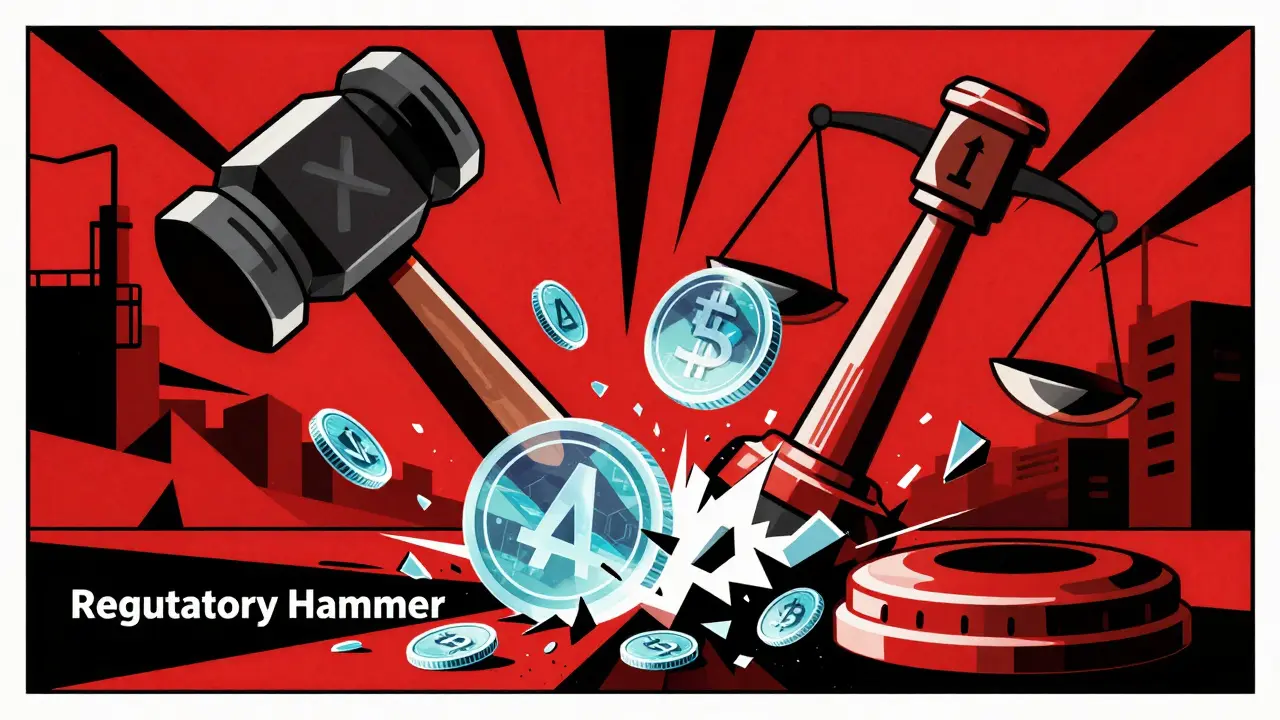
The landscape of cryptocurrency trading changed drastically in 2025. If you tried to buy Monero, Zcash, or Dash on major platforms like Binance or Kraken, you likely hit a wall. These coins weren't just de-listed; they were erased from the order books of dozens of exchanges worldwide. This wasn't a random glitch or a single company's whim. It was a coordinated global wave driven by strict new regulations.
By early 2026, the data is clear: 73 exchanges had removed privacy-focused assets, a 43% jump from 2023. The European Union’s Markets in Crypto-Assets (MiCA) regulation and the Financial Action Task Force (FATF) guidelines forced hands that previously held these tokens loosely. For traders, this means the era of easy access to anonymous crypto is over. But for the coins themselves? Something unexpected happened. Their prices skyrocketed.
The Regulatory Hammer: FATF and MiCA
To understand why your favorite exchange dropped Monero (XMR), you have to look at the regulators. The primary driver is the Financial Action Task Force (FATF). In June 2024, the FATF issued updated guidance that essentially made it impossible for centralized exchanges to host privacy coins without violating Anti-Money Laundering (AML) laws.
The core issue is the "Travel Rule." This rule requires exchanges to share sender and receiver information for transactions above certain thresholds. With Bitcoin, this is easy because every transaction is public. You can see who sent what to whom. Privacy coins use cryptographic techniques to hide this data. When an exchange cannot provide this data to authorities, they are fined or shut down. So, they choose to remove the coins instead.
In Europe, the situation is even tighter. The EU’s MiCA regulation reduced privacy coin offerings by 22% through transparency mandates. By July 2027, the EU will enforce a comprehensive ban on privacy coins and anonymous accounts across all 27 member states. This isn't just advice; it's law. Exchanges operating in regulated jurisdictions like the US, Canada, Japan, and South Korea simply cannot afford the legal risk.
| Jurisdiction | Regulatory Stance | Key Driver |
|---|---|---|
| European Union | Ban effective July 2027 | MiCA Regulation / AMLD6 |
| Japan | Complete Ban (since 2018) | JFSA Guidance |
| South Korea | Exchange Prohibition | FATF Compliance |
| United States | De-facto Ban on Major Exchanges | Treasury Dept Pressure |
| Switzerland/Liechtenstein | Limited Access (KYC/AML Strict) | Regulatory Sandbox |
Why Privacy Coins Trigger Compliance Alarms
It helps to know what makes these coins different. Regular cryptocurrencies like Bitcoin and Ethereum operate on public ledgers. Every transaction is visible. If you send Bitcoin to someone, anyone can trace that movement. Privacy coins change this dynamic using advanced cryptography.
- Monero (XMR) uses ring signatures. This blends your transaction with others, making it nearly impossible to identify the sender.
- Zcash (ZEC) employs zero-knowledge proofs. This allows the network to verify a transaction is valid without revealing the underlying data, such as amounts or addresses.
- Dash (DASH) offers PrivateSend, which mixes coins to obscure the trail.
For regulators, these features are red flags. They argue that these tools facilitate money laundering and terrorism financing (CTF). While privacy advocates point out legitimate uses-such as protecting business secrets or shielding citizens in authoritarian regimes-the regulatory view remains rigid. If you can’t prove where the money came from, the exchange can’t list it.
The Exchange Exodus: Who Left and When
The delistings didn't happen overnight, but the pace accelerated sharply in 2025. Let’s look at the major players.
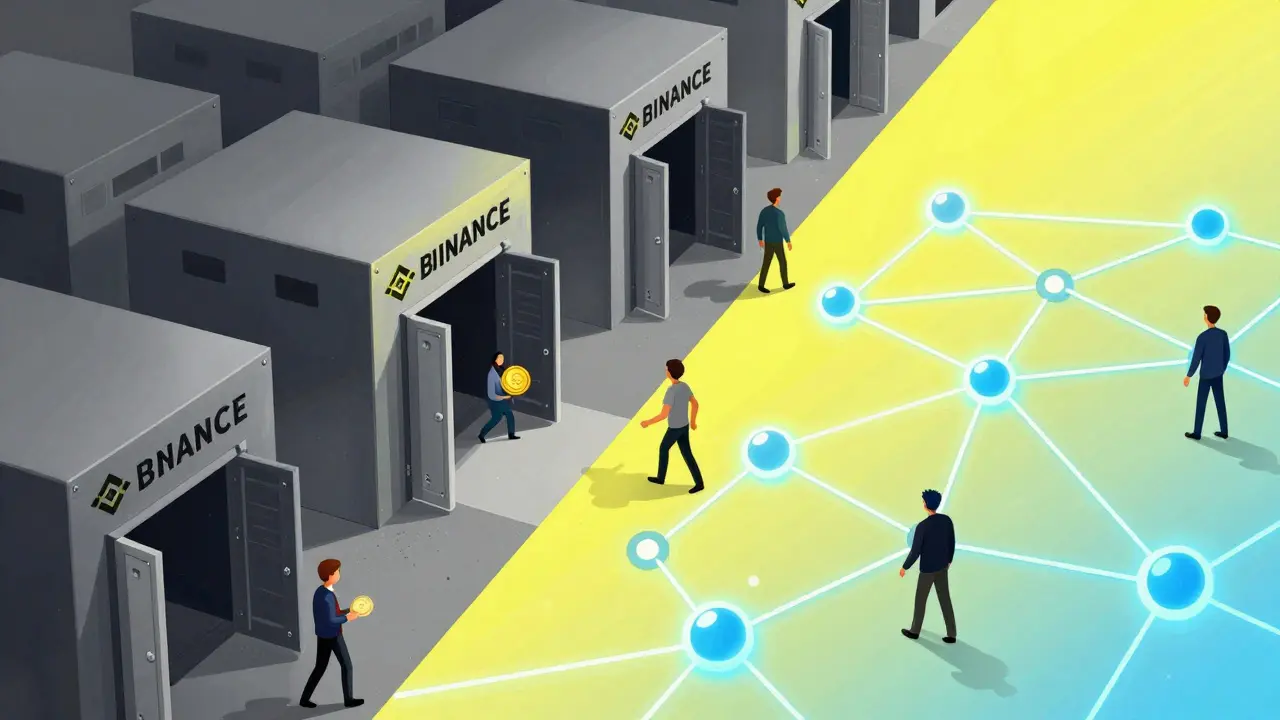
In February 2025, Binance, the world’s largest exchange, announced the removal of XMR, ZEC, and DASH from its European and US platforms. This single move impacted an estimated $600 million in daily trading volume. It sent a shockwave through the industry. Following suit, Kraken delisted privacy coins from its Canadian platform in March 2025, citing non-compliance with FINTRAC regulations.
Asia followed quickly. In Japan, all registered exchanges ceased support, building on a complete ban implemented back in 2018. South Korea’s top five exchanges, including Upbit and Bithumb, removed privacy coins in Q1 2025. Upbit specifically delisted six privacy coins on September 30, following a notice that cited FATF guidance. Even Poloniex globally delisted Monero in April 2025 after direct pressure from the US Treasury Department.
This systematic removal shows that compliance teams at major exchanges are prioritizing survival over product variety. They are choosing to lose revenue from privacy coins rather than risk their licenses.
User Response: Migration to Decentralized Platforms
When the doors close on centralized exchanges, users don't stop trading. They find another way. The community response has been one of frustration but also rapid adaptation.
Data from peer-to-peer platforms like LocalMonero showed a 19% uptick in activity immediately following major delistings. Users are migrating to decentralized exchanges (DEXs) and atomic swap technologies. Atomic swaps allow you to trade one cryptocurrency for another directly between wallets without an intermediary. This bypasses the need for KYC (Know Your Customer) checks entirely.
Social media sentiment is polarized. Some users accept that regulation is necessary for mainstream adoption. Others view the delistings as a betrayal of cryptocurrency’s core principles. Regardless of opinion, the behavior is consistent: traders are moving away from custodial solutions (where an exchange holds your keys) to non-custodial ones (where you hold your own keys).
The Paradox: Prices Rise Amidst Bans
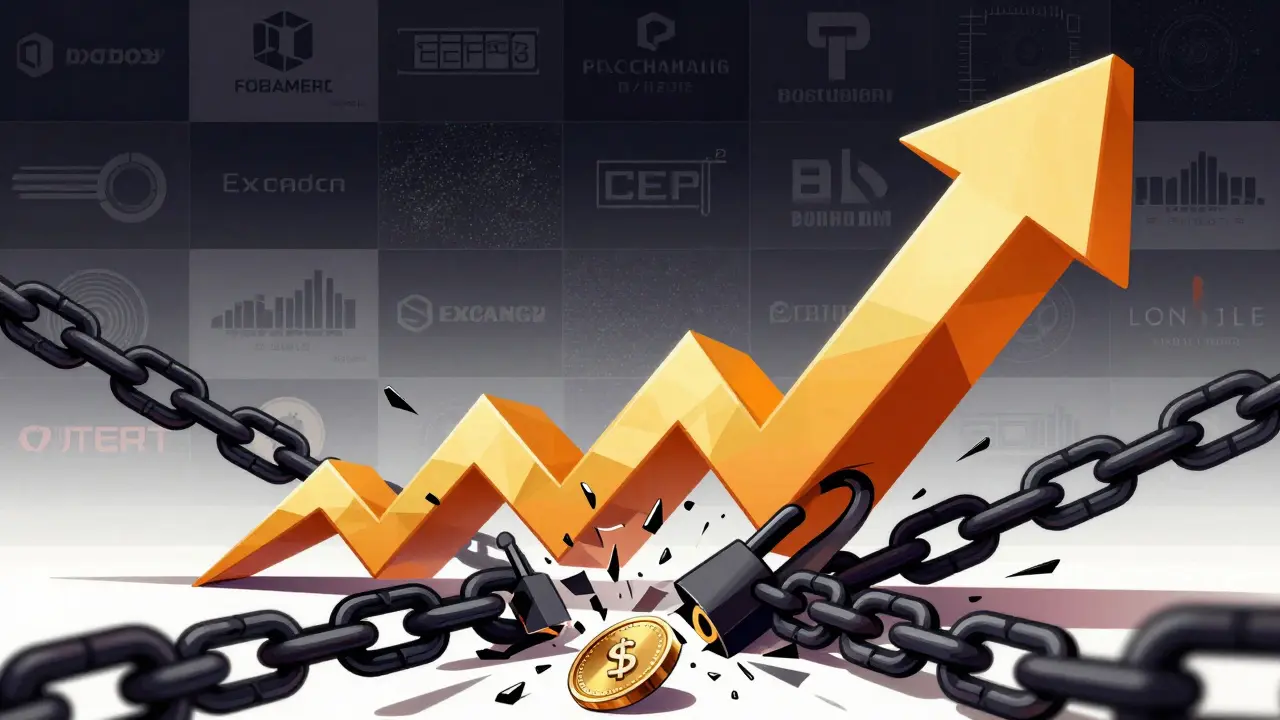
Here is the twist that surprised many analysts. Despite being banned on most major platforms, privacy coins performed exceptionally well in 2025. The sector gained 71.6% in value, outpacing Bitcoin. Why?
It’s basic economics. Supply and demand. As exchanges delisted these coins, the available supply on centralized order books shrank. Meanwhile, demand remained strong among users who valued privacy. This scarcity drove prices up. However, this rally comes with caveats. Liquidity is now fragmented. Trading large volumes is harder and more expensive because you have to use multiple smaller platforms or OTC desks.
Interestingly, Zcash saw an 8% decline in shielded address usage due to strict KYC measures on remaining compliant platforms. This suggests that while speculative interest is high, actual usage of privacy features might be constrained by the difficulty of accessing the coins legally.
Future Outlook: Hybrid Solutions and Technological Evolution
Is this the end for privacy coins? Not necessarily. The industry is evolving. Developers are working on hybrid solutions that balance privacy with compliance. The goal is to create systems that satisfy AML requirements without completely compromising user anonymity.
Zero-knowledge proof implementations are being refined to allow selective transparency. Imagine a system where you can prove to a regulator that your funds are clean without revealing who you are or how much you transacted. 74% of privacy coin developers cite FATF rules as their biggest challenge, but they are adapting. The next generation of privacy coins may not look like Monero today. They will likely offer "compliance layers" that allow institutional investors to participate while maintaining privacy for retail users.
For now, the tension between regulatory oversight and financial privacy defines the market. If you want to trade these assets, you must be prepared to navigate a complex landscape of decentralized tools and international regulations.
Which privacy coins are most affected by the delisting wave?
The primary targets are Monero (XMR), Zcash (ZEC), and Dash (DASH). Other coins like Haven (XHV), BitTube (TUBE), and Pivx (PIVX) have also faced significant delistings. These coins accounted for 11.4% of global crypto transactions in 2025 before the restrictions tightened.
Can I still buy Monero or Zcash in 2026?
Yes, but not on major centralized exchanges like Binance or Coinbase in regulated regions. You will need to use decentralized exchanges (DEXs), peer-to-peer platforms like LocalMonero, or atomic swaps. Be aware that this process is more complex and carries higher counterparty risk.
Why did privacy coin prices rise if they are being banned?
The price increase is driven by reduced liquidity on centralized exchanges and sustained demand from privacy-conscious users. With fewer coins available for sale on major platforms, scarcity drove prices up by 71.6% in 2025, despite the regulatory headwinds.
What is the FATF Travel Rule and how does it impact privacy coins?
The FATF Travel Rule requires exchanges to share customer information for transactions above certain thresholds. Privacy coins' technical architecture obscures sender and receiver details, making it impossible for exchanges to comply with this rule. Consequently, exchanges delist these coins to avoid legal penalties.
Are there any countries where privacy coins are still legal to trade?
Trading is restricted in most major jurisdictions. However, Switzerland and Liechtenstein offer limited access under strict KYC and AML frameworks within regulatory sandboxes. Singapore also maintains a regulated approach. Conversely, Japan, South Korea, and the upcoming EU ban prohibit or severely restrict these trades.
Tobias Gjerlufsen
May 24, 2026 AT 07:50you really think these regulators care about privacy? its all about control and taxation they want to see every single penny you move because if they cant track it they cant tax it and thats the real reason monero is getting nuked not some vague money laundering fear which is just propaganda to scare retail investors into staying on public chains where the government can freeze your assets at will
Samara McCallum
May 26, 2026 AT 06:39i mean honestly isn't it kind of poetic that by trying to kill privacy coins they are making them more valuable like its the streisand effect but for crypto and i guess we should all just be grateful that our financial data is now completely exposed to everyone including corporations who sell it to advertisers anyway so maybe we lost something there too
Sheldon Friesen
May 26, 2026 AT 11:38Look! At this situation! It is quite interesting! The irony is palpable! You see, when you ban something, you create scarcity! And scarcity creates value! So congratulations! You have made Monero more expensive! But at what cost? The ease of use! Gone! Poof! Vanished! Into the ether! Like a bad dream! Or a good one! Depending on your perspective! Which is valid! All perspectives are valid! Except the ones that ignore basic economics! Which is silly!
Caique Muniz
May 27, 2026 AT 22:15honestly this whole article is bs the prices didnt go up because of scarcity they went up because bots are pumping them before the final crash nobody actually uses xmr anymore except for people buying illegal shit online and even then its harder than ever to cash out without getting flagged so dont let the hype fool u its a dead coin walking
robert Whitehead
May 29, 2026 AT 00:46The moral decay of society is evident in the desperation to hide transactions. If you have nothing to hide, why do you need privacy? This is a simple logical fallacy that proponents of these dark tools cannot overcome. They claim it is for protection against authoritarian regimes, yet the vast majority of users are merely criminals seeking to evade law enforcement. The delisting is a necessary cleansing of the financial ecosystem. We must prioritize transparency over the selfish desire for anonymity. Those who cling to Monero are clinging to their own guilt.
Tobias Gjerlufsen
May 30, 2026 AT 14:21@robert whitehead oh please spare me the self-righteous garbage you clearly dont understand how digital currency works or you would know that privacy is a fundamental right not a crime having a private conversation doesnt mean you are plotting murder so having private finances doesnt mean you are laundering money your logic is flawed and your morality is performative typical of someone who loves handing over their data to big tech companies while pretending to be a patriot
robert Whitehead
May 30, 2026 AT 17:01Your aggression masks your ignorance. I am not handing over data; I am complying with the rule of law. You are defending chaos. There is a difference between order and tyranny, and you seem unable to distinguish between the two. Your analogy is weak and your tone is childish. Grow up and accept responsibility for your actions instead of hiding behind cryptographic obfuscation.
Bradley Geldenhuys
May 31, 2026 AT 04:43yo look man im just sayin that the whole point of bitcoin was to be free from banks and now were letting the gov tell us what we can trade its kinda sad but also kinda inspiring that people still fight for it even when its hard like yeah atomic swaps are annoying as hell but its better than giving up our rights just cause its convenient to have an app do everything for us keep fighting the good fight bro
Kiran CS
June 2, 2026 AT 00:19One must consider the sheer audacity of believing that technology can outpace legislation. It is a quaint notion, truly. The regulatory frameworks are tightening like a vice, and those who resist are merely delaying the inevitable. The pretension of thinking one can remain anonymous in a world of total surveillance is laughable. One should perhaps focus on more productive endeavors than attempting to circumvent global financial standards.
Bijan Das
June 2, 2026 AT 18:24this is stupid rich people want to hide their money from taxes and poor people like me cant afford to buy these coins anyway so why should i care its just another way for elites to screw everyone else over and pretend they are victims when they get caught
H F
June 3, 2026 AT 17:25I suppose you're right, in a sense. The market has spoken, albeit in a rather fragmented manner. It is fascinating to observe the resilience of these assets despite the headwinds. Perhaps there is merit in the argument for privacy after all, though I remain skeptical of the methods employed. Nevertheless, the price action is undeniable, and one must respect the market's verdict, however chaotic it may appear.
Michael Berggren
June 4, 2026 AT 09:54It’s wild to see how fast things changed 📉📈 I remember when you could just buy XMR on Binance easily. Now it’s like going through the underground railroad 😅 But hey, at least the tech is getting better with ZK-proofs and stuff. Maybe in the future we’ll have a middle ground where you can prove you’re not a criminal without showing your whole life story 🤞✨ Privacy is important but compliance is here to stay so we gotta adapt 💪
Ashley Rodriguez
June 4, 2026 AT 15:02i feel like we are all just missing the point here because its not really about the coins themselves but about who gets to decide what is acceptable behavior in our digital lives and once we start allowing governments to dictate what technologies we can use based on their interpretation of risk we open the door for so many other restrictions that might not be related to finance at all but could affect speech or association or whatever they decide next
Jan Gilmore
June 5, 2026 AT 05:02Folks listen up the bottom line is liquidity is king and right now privacy coins are bleeding liquidity because exchanges are scared stiff of the FATF guidelines so unless you are a whale with access to OTC desks or you enjoy spending hours on decentralized platforms dealing with slippage and counterparty risk you might want to rethink your portfolio allocation because the easy days of privacy crypto are definitely over and the new era is for the hardcore enthusiasts only