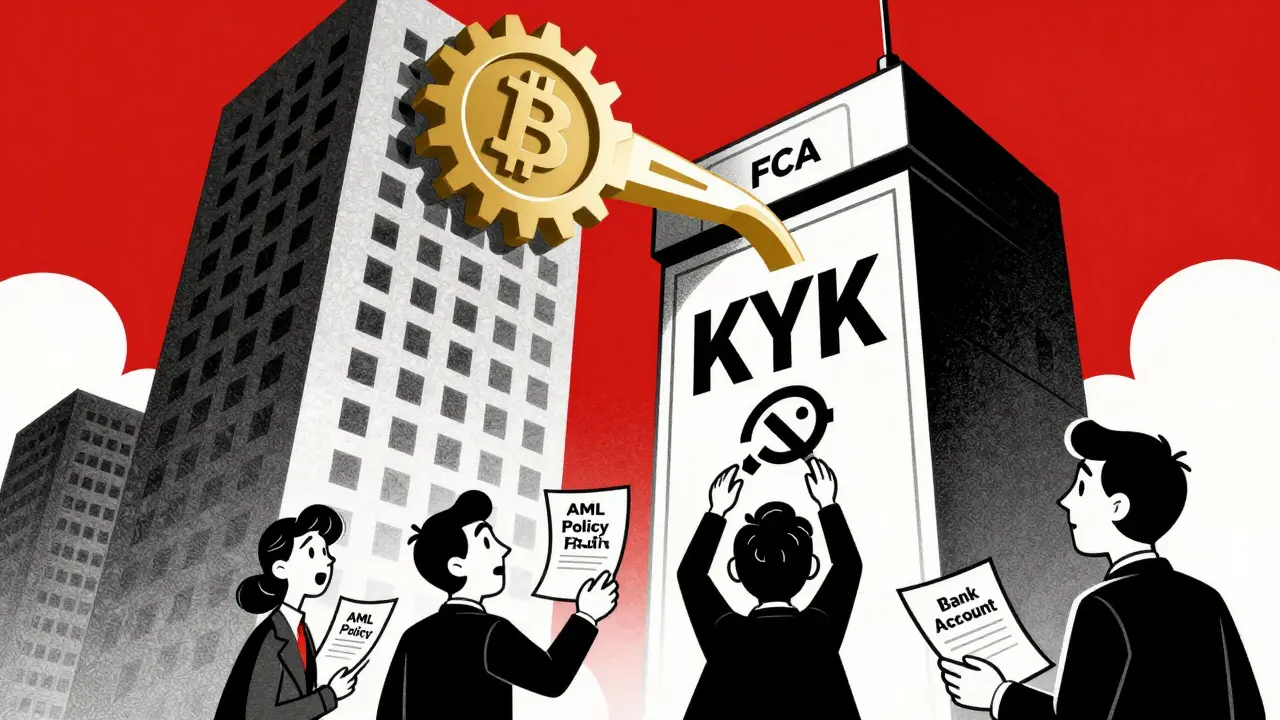
VASP registration in the UK is mandatory for crypto businesses targeting UK customers. Learn what the FCA requires, why applications get rejected, and how to navigate the complex compliance process.
When you hear VASP registration UK, a legal requirement for crypto businesses operating in the United Kingdom under the Financial Conduct Authority’s anti-money laundering rules. Also known as crypto exchange licensing, it’s not just paperwork—it’s the line between operating legally and being shut down overnight. Since 2020, any company offering crypto services like exchanges, wallets, or trading platforms in the UK must register with the Financial Conduct Authority (FCA), the UK’s main financial watchdog that enforces rules for digital asset firms. This isn’t optional. If you’re running a crypto business in the UK and you haven’t registered, you’re breaking the law—and the FCA doesn’t wait around to warn you.
The goal of VASP registration, a system designed to stop criminals from using crypto to launder money or fund illegal activity. It forces companies to prove they know who their customers are, track every transaction, and report anything suspicious. That’s why you’ve seen platforms like CoinCasso and Paycml disappear—they never applied, never complied, and got shut down fast. Meanwhile, exchanges like CoinFalcon made the effort to register, even if they still struggle with user trust. The FCA doesn’t care if you’re big or small. If you touch crypto in the UK, you need to be on their list.
For everyday users, this means two things: First, you’re safer using a registered platform. They can’t just vanish without warning. Second, if you’re trying to launch a crypto project in the UK, you can’t skip this step. The FCA doesn’t issue licenses like a stamp—you have to prove you have proper systems, trained staff, and real controls. Many fail on the first try. That’s why so many crypto firms either leave the UK or never try to enter. The process is slow, expensive, and strict. But it’s also the only way to play the game legally.
What you’ll find in the posts below are real examples of what happens when companies ignore these rules—or when they try to follow them and still fail. You’ll see how scams like CoinCasso and Paycml slipped through the cracks before collapsing. You’ll learn why even registered platforms like CoinFalcon still carry risk. And you’ll see how other countries, like Vietnam and Russia, handle crypto differently. This isn’t theory. It’s what’s actually happening on the ground. The rules are clear. The consequences are real. And if you’re dealing with crypto in the UK, you need to know exactly where you stand.
VASP registration in the UK is mandatory for crypto businesses targeting UK customers. Learn what the FCA requires, why applications get rejected, and how to navigate the complex compliance process.