Understanding Crypto Market Premiums in Banned Jurisdictions
 Apr, 13 2026
| Jurisdiction Type | Primary Driver of Premium | Enforcement Tool | Typical Asset Demand |
|---|---|---|---|
| Absolute Ban (e.g., Afghanistan) | High Risk / Low Supply | Central Bank / Religious Law | Bitcoin, Stablecoins |
| State-Driven Shift (e.g., China) | Systemic Exclusion | Comprehensive Legislation | Ethereum, Altcoins |
| Aggressive Oversight (e.g., India) | Compliance Avoidance | Financial Intelligence Units | Privacy Coins, BTC |
The Mechanics of the Shadow Price
Why does a Bitcoin cost more in a banned zone than it does on a global exchange like Coinbase? It comes down to a few basic economic levers. First, there's the supply squeeze. In a place like China, where the government passed sweeping laws in May 2025 to criminalize personal ownership of digital assets, the legal pipeline for getting coins is gone. When you cut off the official supply, the only available coins are those held by people willing to risk everything to sell them. Then you have the risk premium. An underground dealer isn't just providing a service; they're taking a gamble. If they get caught by the authorities, they face asset seizure or prison. To make that risk worth it, they add a surcharge. This isn't a random fee-it's a direct reflection of the local legal danger. The more aggressive the police, the higher the premium. Finally, there's the liquidity problem. Global exchanges allow you to trade millions of dollars in seconds. In a shadow market, you're dealing with individuals. This lack of liquidity means wider bid-ask spreads, meaning the gap between what a seller wants and what a buyer offers is huge, often pushing the final price higher.Global Hotspots of Crypto Restrictions
Different countries handle bans differently, and this changes how the underground market behaves. For instance, Afghanistan has an absolute ban where cryptocurrency is declared "haram" under Sharia law. Here, the Da Afghanistan Bank and FinTRACA work to shut down exchanges and arrest traders. Because the ban is so absolute and based on both religion and economics, the underground market is incredibly covert, which likely drives premiums even higher because the risk of detection is immense. Contrast that with Egypt, which also maintains a blanket ban. In 2025, over a hundred people were arrested for crypto violations. This shows a pattern: the government says "no," but people keep trading. When you see high arrest rates alongside continued activity, it's a clear signal that a shadow market exists, albeit one where the participants are paying a steep price for anonymity. Then there's the "compliance push." In India, it's not necessarily a total ban, but the Financial Intelligence Unit (FIU) has become incredibly aggressive. In 2024, they slapped non-compliant platforms with $9.5 million in fines. When the cost of staying legal becomes too high for a small exchange, or the KYC (Know Your Customer) requirements become too invasive for a user, they move to peer-to-peer (P2P) networks. This shift creates a secondary market where prices deviate from the global spot rate to avoid the paper trail.
How Technology Circumvents the Law
Governments are fighting a losing battle against math. Even with a total ban, the very nature of blockchain makes it hard to stop completely. Decentralized Exchanges (DEXs) are the primary tools here. Since a DEX doesn't have a central office for a government to raid, users can swap assets without a middleman. This reduces the premium slightly by removing the "dealer's cut," but it doesn't eliminate the cost of getting fiat currency into the system. Privacy-centric coins also play a huge role. While Bitcoin is transparent, coins like Monero are designed to hide the sender and receiver. In banned jurisdictions, these coins often command a much higher premium than Bitcoin because they provide the only real shield against state surveillance. If you're in a country where holding a wallet is a crime, you'll pay extra for the coin that keeps you out of prison. We're also seeing the rise of state-backed alternatives. China is betting everything on its Central Bank Digital Currency (CBDC), the digital yuan. The goal is to replace the need for any other digital asset. By providing a state-sanctioned digital version of money, they hope to kill the demand for underground crypto. However, the irony is that the more the state controls the digital yuan, the more some people crave the permissionless nature of Bitcoin, further fueling the black market.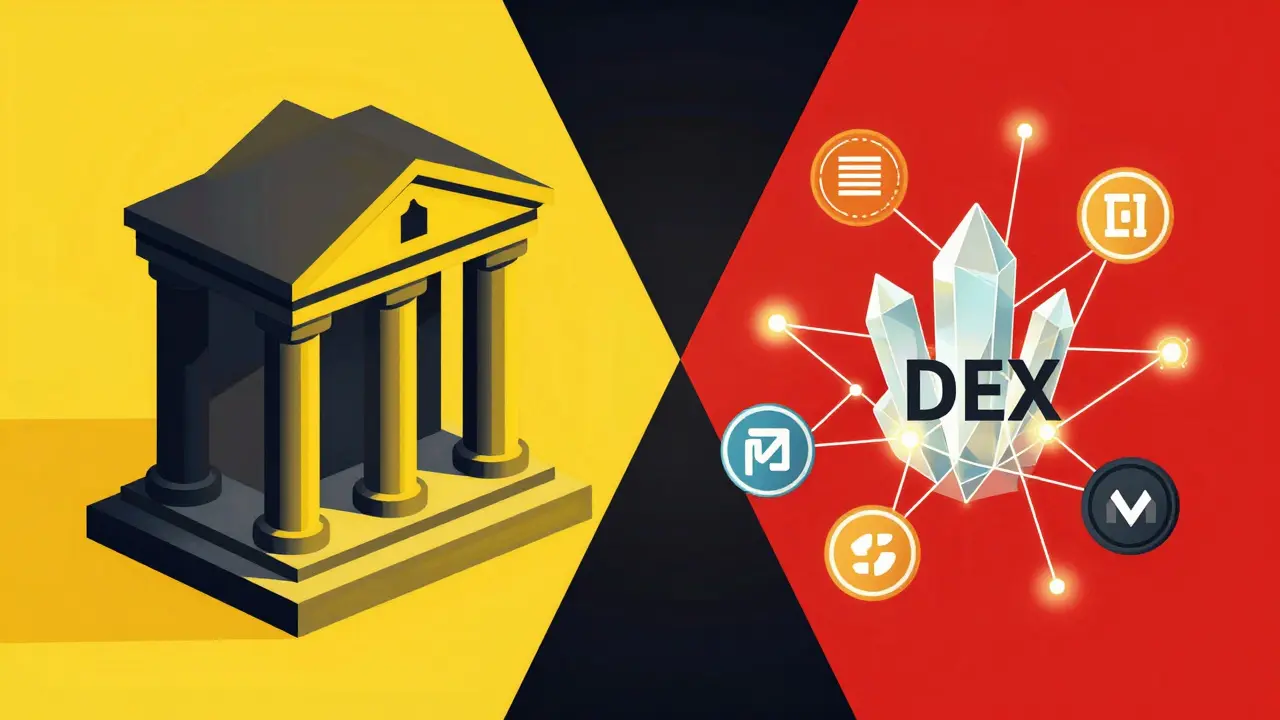
The Ripple Effect in Emerging Markets
It's not just the "hard bans" that cause premiums. We're seeing a massive trend in emerging markets where regulatory uncertainty creates mini-premiums. In South Africa, 12 firms lost their licenses in 2025 over AML (Anti-Money Laundering) failures. In the Philippines, the SEC blacklisted 20 exchanges and froze $150 million. When a trusted exchange is suddenly shut down, users panic. They scramble to move their funds to other platforms, often using unverified P2P channels. During these spikes, the local price of crypto can jump 5-10% above the global average simply because people are desperate for an exit. This is a "panic premium," and it's common in markets where the government is unpredictable. Similarly, in Brazil and Colombia, there's been a surge in enforcement against fraudulent ICOs and suspicious transactions. As the Financial Action Task Force (FATF) pushes more countries to adopt strict VASP (Virtual Asset Service Provider) registrations, the "cost of being legal" rises. When 83% of emerging markets now require registration, the gap between the regulated price and the underground price widens for those who refuse to provide their identity to the state.Predicting Future Market Shifts
Where do we go from here? As surveillance tech improves, the premiums will likely increase. If a government can track every wallet via AI and chain analysis, the risk of trading increases, and so does the price. But on the flip side, as P2P technology becomes more user-friendly, the barriers to entry drop, which could potentially lower the premiums by increasing the supply of underground sellers. One thing is certain: as long as there is a gap between what a government wants and what a citizen needs (whether that's a hedge against inflation or a way to send money home), there will be a market. The premium is simply the price of freedom in a restricted environment. Whether it's the digital yuan in China or the religious bans in Afghanistan, the market always finds a way to route around the roadblock.What exactly is a crypto market premium?
A crypto market premium is the difference between the price of a cryptocurrency on a global, liquid exchange and its price in a specific local market. In banned jurisdictions, this is usually a "positive premium," meaning the local price is higher because of limited supply, high risk, and the need for anonymity.
Why is China's crypto ban so significant?
China's May 2025 legislation is one of the most restrictive in the world because it didn't just ban trading or mining-it criminalized the actual ownership of digital assets. This pushes all activity into the shadow economy and creates a massive divide between the state-controlled digital yuan and the decentralized crypto market.
Do privacy coins like Monero have higher premiums?
Yes, typically. Because they hide transaction details, they are much more valuable to people living under oppressive regimes. The added utility of "not getting arrested" makes users willing to pay a higher premium for Monero compared to the more transparent Bitcoin.
How do P2P platforms help avoid premiums?
Peer-to-Peer (P2P) platforms allow users to trade directly with each other. By cutting out the centralized exchange or the "middleman dealer," users can sometimes find better rates. However, they still face the risk of scams and the difficulty of converting local cash into crypto without being noticed.
What role does the FATF play in this?
The Financial Action Task Force (FATF) sets global standards for anti-money laundering. When they push countries to implement strict VASP registrations, it forces many small operators to either shut down or go underground. This increased regulatory pressure often leads to a decrease in legal supply and an increase in underground premiums.
Rob Mitchell
April 13, 2026 AT 16:47P2P trading is definitely the bedrock of these shadow markets.
Adam Auksel
April 14, 2026 AT 08:17Spot on with the P2P point! 🚀 It's honestly amazing how the community finds ways to support each other even under pressure. The resilience of these networks is just wild! 💎🙌
Carroll Foster
April 14, 2026 AT 10:27Oh look, another discovery that 'math beats laws.' Groundbreaking. Truly. I'm sure the guys running these arbitrage loops are just doing it for the 'freedom' and not because they're farming a massive delta between the global spot and the local premium for a quick profit. Let's call it what it is: high-risk market inefficiency and a total lack of regulatory arbitrage for the average peasant. 🙄
James Bone
April 14, 2026 AT 21:43The irony here is that people think they're 'escaping' the system by paying a premium to some random guy in an alley. You're just trading a state-sponsored cage for a black-market cage where the only rule is that the dealer can scam you and you can't call the cops. It's a pseudo-intellectual fantasy to call this 'freedom.' It's just a different form of desperation fueled by the delusion that a digital coin is a magic shield against a real-world government. We're just seeing the commodification of fear, and honestly, the people paying these premiums deserve the haircut they're taking.
Aaliyah BROTHERS
April 16, 2026 AT 11:52WAKE UP PEOPLE!!! This is exactly how they start the social credit nightmare!!! First they ban the coins, then they track the 'shadow' trades to find the rebels, and then BAM!!! You're in a digital gulag because you wanted to hold some Monero!!! It's a total trap designed by the globalists to flush out the patriots!!! They want us on that CBDC leash so they can turn off your money if you say the wrong thing at dinner!!! ABSOLUTE MADNESS!!!
aletheia wittman
April 17, 2026 AT 08:36omg this is literally so scary... imagine just wanting to buy a coin and getting arrested lol like wtf is wrong with the world rite now??
Tracie and Matthew Hartley
April 17, 2026 AT 17:13i dont see why anyone would pay a premium for Monero... like just use a VPN and deal with it lol. ppl act like it's so hard to hide a wallet
Hope Johnson
April 19, 2026 AT 05:17It is fascinating to consider the philosophical intersection of value and risk, as the premium isn't just a monetary surcharge but a tangible measure of the cost of autonomy in an era of increasing surveillance. When we examine the desperation in these banned jurisdictions, we see a profound human drive for financial sovereignty that transcends the legal boundaries imposed by states, suggesting that the desire for a permissionless system is perhaps more fundamental than the desire for legal security itself. This dynamic creates a mirror of the state's own power, where the shadow market becomes a distorted but honest reflection of the actual demand for liberty in a world that is increasingly moving toward centralized digital control.
Heather Warren
April 20, 2026 AT 05:18That is such a thoughtful way to look at it. I think adding a bit more context about how stablecoins act as a bridge in these markets could be really helpful for people trying to understand the flow of money. Often, users don't go straight to BTC but use USDT first to avoid the volatility while they deal with the premium issues.
Rima Dinar
April 21, 2026 AT 09:12As someone who has watched the regulatory landscape shift in my own region, I can tell you that the pressure from the FIU is not just about the money, but about the psychological impact of making people feel like they are criminals for simply wanting to protect their savings from inflation, which is why the shift to P2P is so drastic because it's the only way to maintain a shred of dignity and privacy when the state is breathing down your neck every single time you try to move a small amount of capital across a border.
Akshay Gorad
April 22, 2026 AT 13:04The points regarding India are quite accurate. The regulatory environment here is indeed complex.
Omotola Balogun
April 22, 2026 AT 16:34Actually, the author misses the point about the liquidity traps. Most people don't realize that in these regions, the bid-ask spread is exacerbated by the fact that local liquidity is fragmented across a dozen small P2P circles, meaning you can't just 'market buy' your way out of a position without slippage that would make a Wall Street trader weep. It's basic microeconomics, really, but most 'crypto gurus' forget that the order book in a banned zone is basically just a WhatsApp group with five people in it.
Scott Fenton
April 23, 2026 AT 06:15I must concur with the assessment that the risk premium is a direct correlate of legal volatility. It is imperative to recognize that these premiums serve as a hedge for the provider against the potential for total asset loss via state seizure.
Kieran Smith
April 23, 2026 AT 22:10do u think the premiums go down if more people start using dexs? it seems like that would help a lot of folks avoid the middleman fees
Chidinma Sandra okafor
April 25, 2026 AT 19:28Oh, how wonderful that we are talking about 'freedom' while the world burns. I'm sure the people in these countries are just thrilled to pay 20% extra to some random scammer just so they can feel 'decentralized' while their actual currency is worth nothing. Pure genius!
Lauren Abrams
April 26, 2026 AT 18:40Interesting read. I hadn't considered how the religious aspect in Afghanistan specifically drives the covert nature of the trade.
ssjuul z
April 27, 2026 AT 06:24Totally agree that P2P is the way to go here! 👊 Keep pushing for that financial independence! 🚀