Vietnam's Crypto Boom: Ranking #6 Globally Despite Strict Regulations
 Apr, 8 2026
Vietnam has become a global powerhouse for digital assets, recently securing the #6 spot in the population-adjusted Chainalysis is a blockchain data platform that tracks cryptocurrency adoption and illicit activity globally. 2025 Global Crypto Adoption Index. While some headlines mistakenly placed the country at #4, the actual data reveals a more nuanced story: a massive, organic surge in retail interest clashing with some of the strictest regulatory guardrails in Southeast Asia. For the average person in Ho Chi Minh City or Hanoi, crypto isn't just a speculative bet; it's a tool for remittances and a hedge against economic uncertainty.
But here is the catch: while millions of people are buying and selling, the legal framework is designed to keep them in a very tight box. The government wants the innovation, but it's terrified of losing control over the national currency.
The Legal Shift: Virtual Assets vs. Crypto Assets
In June 2025, the State Bank of Vietnam (SBV), led by Governor Nguyen Thi Hong, finally moved the needle by legalizing cryptocurrencies under the Law on Digital Technology Industry. However, they didn't just give a green light; they created a strict classification system. Now, the law distinguishes between virtual assets (tokenized real-world products) and crypto assets like Bitcoin and Ether.
The most restrictive part? The SBV has explicitly banned the issuance of on-chain fiat-backed assets. This means Stablecoins-the digital dollars that most traders use to lock in profits-are prohibited from being issued locally. If you want to trade, you have to do it in Vietnamese Dong (VND), and if you're a company issuing assets, those assets must be backed by tangible, real-world things, not cash or securities.
The 'Billion-Dollar Barrier' for Local Exchanges
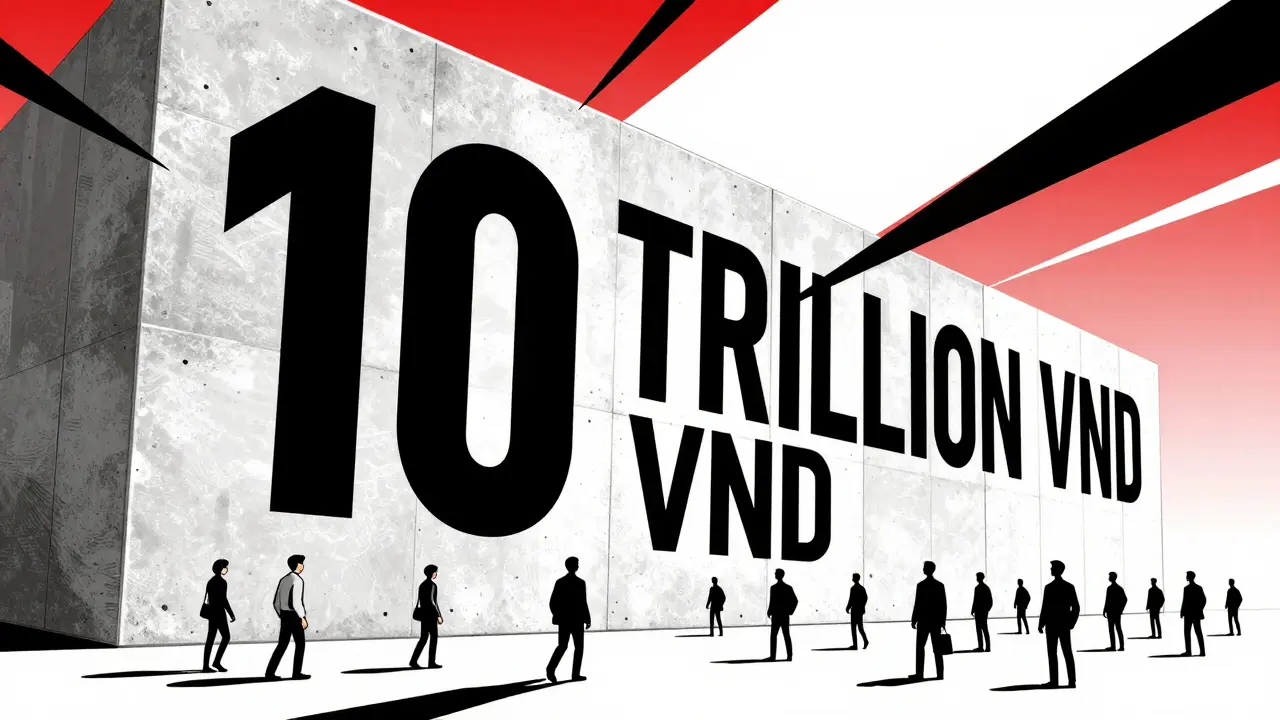
If you've wondered why there aren't many home-grown, legal exchanges in Vietnam, look at the capital requirements. To operate as a Crypto Asset Service Provider (CASP), a company must hold a minimum capital of 10 trillion VND (roughly $379 million USD). For a startup, that's an impossible wall. Professor Nguyen Van Anh from Ho Chi Minh City University of Technology has pointed out that this requirement effectively shuts out everyone except state-owned enterprises.
This has led to a strange paradox. On one hand, Vietnam leads Southeast Asia in retail adoption, with 20.3% of the population owning digital assets. On the other hand, a regulatory sandbox launched in September 2025 had zero applicants by October. The rules are simply too stiff for the private sector to breathe.
| Metric | Vietnam | Singapore | Philippines |
|---|---|---|---|
| Retail Adoption Rate | 20.3% | Lower (Institutional focus) | High (Mobile-led) |
| Stablecoin Issuance | Prohibited | Permitted (Regulated) | Permitted |
| Institutional Adoption | 17% | 49% | Moderate |
| Primary Trading Route | Offshore P2P | Licensed Exchanges | Integrated Wallets (e.g. GCash) |
The P2P Underground: Why Offshore Platforms Win
Because local options are scarce and stablecoins are banned, 87% of Vietnamese users have fled to offshore platforms. Binance P2P is the king here, used by 63% of traders, followed by Bybit and OKX. When you use P2P (peer-to-peer) trading, you aren't dealing with a company; you're dealing with another person. This bypasses the bank's restrictions but adds a layer of risk and cost.
Traders often complain about paying a 3-5% premium just to move their money into VND. It's a slow, clunky process. Some users on Reddit report that converting profits back to local currency can take up to four days through informal channels. Despite this, the drive is there. Why? Because the fees for crypto remittances (around 1.2%) are a fraction of the 6.8% charged by traditional money transfer services.

The Economic Engine: Credit and Demographics
The growth isn't just about tech-savvy youth; it's tied to the broader economy. There is a strong correlation (0.78) between Vietnam's credit expansion and crypto trading volume. As the SBV targets 20% credit growth for 2025, a lot of that liquidity is expected to leak into the crypto markets. We're talking about a potential $20-25 billion injection of new capital.
The demographic profile of the Vietnamese crypto user is strikingly consistent: mostly aged 18-35, university-educated, and earning between 15 and 40 million VND per month. These are people who are comfortable with smartphones and eager to diversify their wealth away from traditional savings accounts.
The Road Ahead: Digital Đồng and Taxation
The government is finally starting to think about how to bring this activity onshore. The Ministry of Finance has proposed a draft circular for taxation, suggesting a 2% VAT and a 0.1% transaction tax. It's a clear signal: the state is okay with crypto, as long as they get a cut.
Even more interesting is the Digital Đồng pilot involving 20 commercial banks. While a Central Bank Digital Currency (CBDC) isn't the same as Bitcoin, it provides the infrastructure that could eventually bridge the gap between traditional finance and the crypto world.
If Vietnam can figure out a middle ground for stablecoins, the impact would be massive. The country processes nearly $20 billion in international remittances annually. If a regulated stablecoin path opened up, crypto could easily capture 20% of that market, removing billions in friction and fees for working families.
Is cryptocurrency legal in Vietnam?
Yes, as of June 2025, the Law on Digital Technology Industry legalized cryptocurrencies. However, they are not recognized as legal tender for payments within the country, and issuing stablecoins or fiat-backed assets remains prohibited.
Why does Vietnam rank so high in adoption despite the restrictions?
The adoption is driven by a young, tech-literate population and high demand for cheaper remittance options. Most activity happens via Peer-to-Peer (P2P) networks on offshore exchanges, which allows users to bypass the strict capital requirements and restrictions placed on local companies.
What is the '10 trillion VND' rule?
It is the minimum capital requirement that Crypto Asset Service Providers (CASPs) must maintain to operate legally in Vietnam. Because this amount is so high (approx. $379 million), it effectively prevents startups from entering the market, leaving it open only to very large or state-linked firms.
How do Vietnamese traders exchange crypto for VND?
Since local regulated exchanges are rare, most users rely on P2P markets on platforms like Binance. They send crypto to a seller who then transfers Vietnamese Dong directly to their bank account.
Will there be taxes on crypto in Vietnam?
The Ministry of Finance has proposed a tax framework that includes a 2% Value Added Tax (VAT) and a 0.1% transaction tax, though these are currently in the draft stage as of late 2025.
Samson Selleck
April 8, 2026 AT 18:48The systemic friction induced by the SBV's prohibitive capital requirements is a textbook example of regulatory capture masquerading as consumer protection. By imposing a 10 trillion VND threshold, they've effectively institutionalized an oligopolistic environment that stifles organic fintech disruption while simultaneously driving liquidity toward offshore P2P shadow markets. The dichotomy between the retail adoption rate and the sandbox participation is an asymptotic curve of bureaucratic failure. It's a fascinating, if predictable, case of macroeconomic dissonance where the state attempts to harness the utility of distributed ledger technology while refusing to relinquish the monopoly on monetary issuance. The resulting inefficiency in the remittance corridor is simply a tax on the underbanked.
jennelle williams
April 9, 2026 AT 17:44sad that people have to risk so much just to send money home
Carroll Foster
April 10, 2026 AT 04:52Oh sure, because setting a capital requirement at nearly 400 million dollars is a totally "reasonable" way to encourage local innovation. Truly a masterclass in how to kill a startup before it even breathes. I love how the government pretends to be open to the "Digital Technology Industry" while basically building a fortress wall around the currency. It's almost like they want the tax revenue but absolutely hate the actual technology. Pure genius.
Hope Johnson
April 11, 2026 AT 03:34When we look at the broader human experience within these digital economies, we must consider how the desire for financial autonomy often outweighs the fear of legal ambiguity. It is quite profound that a population would collectively decide to bypass state structures in favor of a decentralized network, effectively voting with their capital against a rigid system. This struggle between the old world of centralized control and the new world of peer-to-peer trust reflects a deeper philosophical shift in how we perceive value and ownership. We are seeing a global movement where the youth are not just seeking profit, but are actively redefining the social contract between the citizen and the central bank, which is why the organic growth persists despite the oppressive regulatory frameworks.
Alan Seiden
April 12, 2026 AT 01:52Utterly ridiculous. Why is anyone surprised that a state-led economy operates this way? The sheer incompetence of allowing 87% of a market to flee to offshore platforms is staggering. Britain would never tolerate such a blatant loss of fiscal oversight, although given the current state of things, perhaps we could learn how to actually implement a tax that people don't immediately dodge through P2P schemes.
ssjuul z
April 12, 2026 AT 16:03Totally get the frustration but the P2P volume is actually a huge signal for future growth! 🚀 If they can just fix the stablecoin issue, the efficiency gains for families will be insane. Let's keep pushing for more transparency in these regulations! 💪
Chidinma Sandra okafor
April 13, 2026 AT 08:51Imagine thinking this is some kind of "boom" when the government is basically holding a gun to the head of every local founder. So cute that people think a 0.1% transaction tax is a "signal" of acceptance. My country deals with volatility every day and we still manage better than these ridiculous 10 trillion VND barriers. Good luck to the traders paying 5% premiums to move their own money, you're all doing great!
Jason Davis
April 13, 2026 AT 13:03I've spent some time looking at SE Asia markets and the P2P scene in Vietnam is wild. One thing to note is that the risk of "scam" sellers on Binance P2P is real there, so users have to be super careful with their bank transations. Also the Digital Dong might actually be the only way the government lets stablecoins in eventually, just under a different name. Its basically an inevitability at this point.
Rima Dinar
April 15, 2026 AT 08:04I truly believe that if the young people of Vietnam continue to support one another and share knowledge about these offshore platforms, they will eventually force the government to create a more inclusive and supportive environment for everyone to thrive financially, because when 20% of a population is already using a technology, it becomes nearly impossible for the state to ignore the demand for better, safer, and more legal ways to interact with digital assets without causing significant social unrest or economic stagnation.
Jessie Tayaban
April 15, 2026 AT 17:09OMG the fact that they need 379 million dollars just to start an exchange is literally INSANE!! 😱 Like who even has that kind of money?? Its just so unfair to the small devs and it makes me so sad for the innovators there who just want to build cool stuff but get crushed by the govt. Totaly ridiculous!
Prasanna Shembekar
April 16, 2026 AT 04:13imagine waiting 4 days for your money lol that is just wild
Agnessa Dale
April 16, 2026 AT 14:51It is really inspiring to see the resilience of the Vietnamese people in finding ways to grow their wealth despite the hurdles.
aletheia wittman
April 16, 2026 AT 19:31bruh 4 days to get paid is actually a nightmare i would literally scream