What Are Central Bank Digital Currencies? A Clear Guide to CBDCs in 2026
 Mar, 22 2026
Imagine holding digital cash that works just like physical money-no apps, no banks, no intermediaries. Just money issued by your country’s central bank, stored on your phone, and usable anywhere, anytime. That’s a Central Bank Digital Currency (CBDC). It’s not Bitcoin. It’s not a stablecoin. It’s your national currency, but digital. And by 2026, more than 130 countries are actively building or testing them.
What Exactly Is a CBDC?
A CBDC is the digital form of a country’s official money, issued and controlled by its central bank. Think of it as electronic cash. If you have a $10 bill in your wallet, a CBDC version of that $10 would be a digital token with the same value, backed by the full power of the government. It’s not a promise from a bank like a checking account. It’s not a cryptocurrency like Ethereum. It’s direct money from the central bank-just like the coins and notes you use today, but in digital form.Unlike private digital currencies, a CBDC has legal tender status. That means businesses and individuals must accept it as payment, just like cash. You can exchange one CBDC dollar for one physical dollar, one-to-one. No volatility. No hidden fees. No third-party middlemen.
How Is a CBDC Different from Cryptocurrency?
People often confuse CBDCs with Bitcoin or Ethereum. But they’re worlds apart.Bitcoin is decentralized. No government controls it. Its value swings wildly. One day it’s $60,000, the next it’s $40,000. CBDCs don’t do that. They’re tied to your national currency. If the U.S. dollar stays stable, so does the digital dollar.
Stablecoins, like USDT or USDC, claim to be stable because they’re backed by dollars. But who holds those dollars? A private company. If that company goes under, your stablecoin could lose value. A CBDC? The central bank holds the backing. The government guarantees it.
And while Bitcoin uses a public blockchain anyone can join, CBDCs aren’t necessarily built on blockchain at all. Some use centralized databases. Others use distributed ledgers. The design depends on the country’s goals-privacy, speed, control, or efficiency.
Why Are Countries Rushing to Build CBDCs?
It’s not just about technology. It’s about power, inclusion, and survival.Over 90% of global GDP is now in countries exploring CBDCs. Why? Because cash is fading. In Sweden, less than 1% of transactions are made in cash. In China, digital payments dominate. But when private companies like Apple Pay or Alipay control your payments, governments lose oversight. CBDCs give central banks direct control over the money supply.
Here are the top reasons countries are building them:
- Financial inclusion: 1.4 billion people worldwide don’t have bank accounts. A CBDC can be accessed with just a phone number-no credit check, no branch visit.
- Cheaper payments: Sending money across borders costs an average of 6.25% in fees. CBDCs could slash that to under 1% and cut processing time from days to seconds.
- Monetary control: During crises, governments need to send aid fast. With CBDCs, they can send stimulus payments directly to citizens’ digital wallets-no delays, no fraud.
- Security: Counterfeit cash is a $500 billion problem. Digital money can’t be copied. Every transaction is traceable and tamper-proof.
- Competition: If private firms control digital payments, they can charge high fees or block transactions. CBDCs ensure the public has a safe, neutral option.
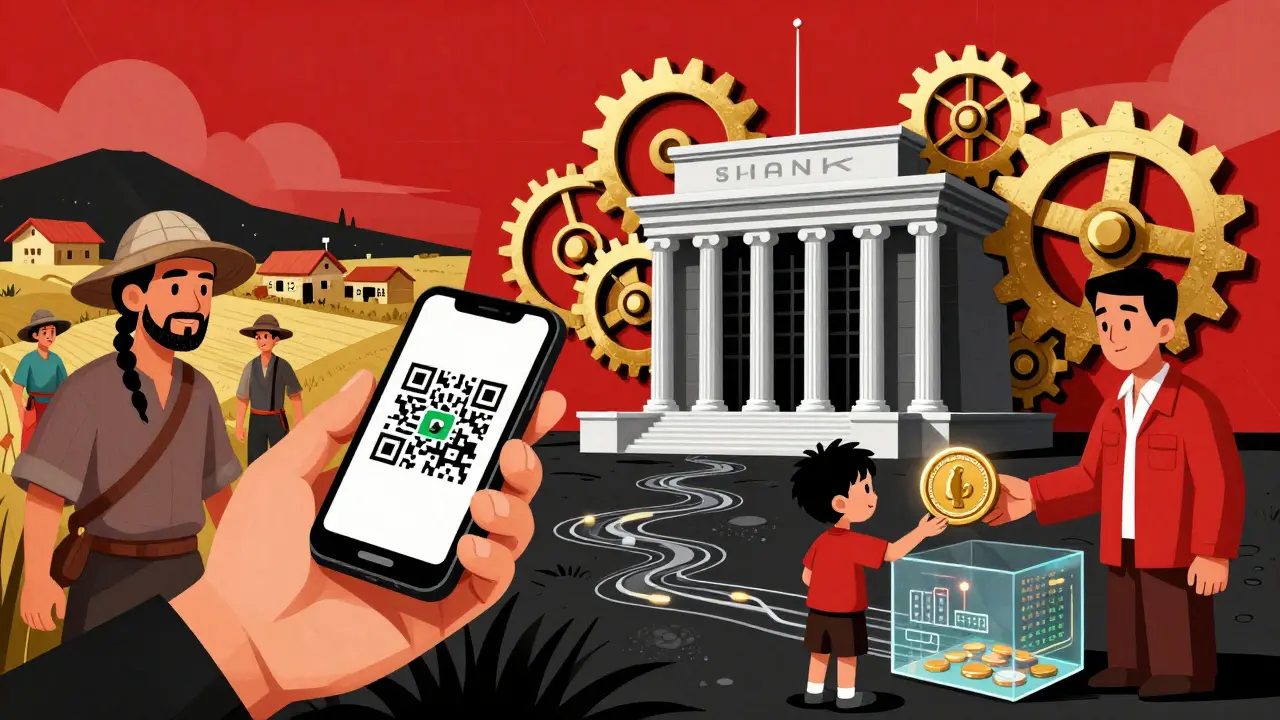
How Do CBDCs Actually Work?
There are two main models: retail and wholesale.Retail CBDCs are for everyone. You, me, small businesses. You download a government wallet app, load it with digital currency, and pay for coffee, rent, or groceries. No bank needed. The central bank handles the ledger directly.
Wholesale CBDCs are for banks and big institutions. They use them to settle large transactions between financial firms-think $100 million loan transfers. Australia’s central bank tested this in 2021 using Ethereum to tokenize syndicated loans. Result? Faster, cheaper, fewer errors.
Some countries use a two-tier system: the central bank issues the CBDC, but commercial banks still handle customer wallets and support. That way, the public gets the benefits of digital cash, and banks keep their role.
Transactions happen in real time. No waiting for ACH or SWIFT. If you send $50 to a friend, it arrives in seconds-even if they’re in another country. And because it’s government-issued, there’s no risk of the payment bouncing.
Who Has Launched a CBDC Already?
As of 2026, nine countries have fully launched CBDCs. Three stand out:- The Bahamas launched the Sand Dollar in 2020-the world’s first nationwide CBDC. It’s used by 90% of the population. Rural islands without banks now have digital access to money.
- Jamaica rolled out the Jamaican Digital Dollar in 2022. It’s used for taxes, utility bills, and government aid. Farmers get direct payments without relying on cash.
- Nigeria launched the eNaira in 2021. It helped reduce cash handling costs by 30% and cut fraud in social welfare programs.
China’s digital yuan (e-CNY) is the biggest experiment. Over 260 million people have used it since 2020. It’s accepted in 100+ cities, from street vendors to subway stations. China even tested it for cross-border payments with Hong Kong and Thailand.

What Are the Risks?
CBDCs aren’t magic. They come with serious trade-offs.Privacy: If every transaction is tracked by the central bank, what stops them from monitoring your spending? Could they freeze your account if you buy something they disapprove of? Some countries are building privacy safeguards-like offline transactions or tiered identification-but others are not.
Bank disruption: If people move all their money from banks into CBDC wallets, banks could lose deposits. That means less money to lend. Central banks are trying to limit how much you can hold in a CBDC wallet to avoid this.
Interoperability: Right now, payment systems don’t talk to each other. A CBDC in the EU won’t work with one in Japan unless standards are set. The G20 is working on global rules, but it’s slow going.
Exclusion: What if you don’t have a smartphone? Or internet access? CBDCs must include offline options-like smart cards or biometric ID-to avoid leaving people behind.
What’s Next for CBDCs?
By 2027, more than half of the world’s population could have access to a CBDC. The U.S., EU, and UK are in advanced testing. The European Central Bank is expected to launch a digital euro pilot by late 2026.CBDCs will likely change how we think about money. No more cash registers. No more wire transfers. Just digital coins flowing instantly between wallets.
They could even let governments program money. Imagine a child allowance that only works for school supplies. Or a climate bonus that can only be spent on solar panels. Money that doesn’t just move-it behaves.
But the biggest shift? Sovereignty. In a world where private companies like Meta or Alibaba are building their own digital currencies, CBDCs are nations’ way of saying: "We still control our money. And we won’t let tech giants take it away."
Is a CBDC the same as Bitcoin?
No. Bitcoin is decentralized, volatile, and not backed by any government. A CBDC is issued by your country’s central bank, has stable value tied to your national currency, and is legal tender. You can’t mine a CBDC. You can’t trade it on exchanges. It’s digital cash, not digital gold.
Can I use a CBDC if I don’t have a bank account?
Yes. One of the main goals of CBDCs is to reach unbanked people. You don’t need a bank. You just need a phone-sometimes even a basic one. Many CBDCs offer offline payment options via QR codes or Bluetooth, so you can pay even without internet.
Will CBDCs replace cash?
Not entirely. Most central banks say CBDCs will complement cash, not replace it. But in places where cash use is already low-like Sweden or China-cash may fade over time. The goal is to give people choice: cash, digital cash, or bank deposits.
Are CBDCs safe from hackers?
They’re designed to be more secure than traditional systems. Since they’re issued by central banks with military-grade encryption and real-time monitoring, they’re harder to counterfeit than cash. But like any digital system, they’re not immune to attacks. That’s why many use offline modes and hardware wallets for high-value users.
Can the government track my spending with a CBDC?
Technically, yes. Every transaction leaves a digital trail. But countries are designing privacy features. Some allow anonymous small payments (like cash), while requiring ID for larger amounts. The level of tracking depends on the country’s laws. In democracies, there are legal limits. In authoritarian states, surveillance is a real risk.
Aman Kulshreshtha
March 24, 2026 AT 06:04Also, no more PayPal fees on my freelance gigs? Yes please.
Shelley Dunbrook
March 24, 2026 AT 08:35CBDCs aren’t about efficiency. They’re about control. And if you’re not alarmed by the fact that your central bank can freeze your wallet on a whim - you’re either naive or already on their payroll.
Abhishek Thakur
March 26, 2026 AT 04:00Alice Clancy
March 27, 2026 AT 16:15Anna Lee
March 29, 2026 AT 05:37Shana Brown
March 30, 2026 AT 09:06Justin Credible
March 31, 2026 AT 12:10Sam Harajly
April 2, 2026 AT 06:54Brad Zenner
April 3, 2026 AT 19:31Alicia Speas
April 4, 2026 AT 19:39Tammy Stevens
April 5, 2026 AT 07:29Tony Phillips
April 5, 2026 AT 16:27Marie Mapilar
April 7, 2026 AT 08:04Dominic Taylor
April 7, 2026 AT 19:14DarShawn Owens
April 9, 2026 AT 00:25John Alde
April 9, 2026 AT 01:45Andy Green
April 9, 2026 AT 12:50Zion Banks
April 11, 2026 AT 05:38Leona Fowler
April 11, 2026 AT 12:21Abhishek Thakur
April 12, 2026 AT 23:57