What Is Aureus Nummus Gold (ANG)? A 2026 Reality Check
 Mar, 30 2026
If you are searching for information on Aureus Nummus Gold (ANG), you have likely come across bold promises. This project markets itself as a fusion of quantum physics technology and physical gold backing. On paper, that sounds like the holy grail of cryptocurrency stability. In practice, the story is more complicated. As we look at the data available in March 2026, there is a significant gap between the marketing hype and the on-chain reality.
The core promise is simple. The project claims to create a stable digital asset capable of handling everything from coffee purchases to government contracts. They want to solve the volatility problem that plagues Bitcoin and Ethereum. However, when you dig into the ledger data, the picture becomes murky. You might see a fully diluted valuation claiming billions while trading volumes barely register single digits. That kind of disconnect usually warrants a deep skepticism before you allocate any funds.
Understanding the Token Structure
To understand where ANG stands today, you need to grasp the fundamental mechanics of the token itself. It operates under the symbol ANG and exists as a smart contract on established blockchains. Specifically, the contract address ends with ...b576fa, placing it within the broader ecosystem of ERC-20 compatible assets. The team behind it set a fixed supply structure early on. They announced a hard cap of 60 trillion tokens.
That number-60,000,000,000,000-is massive compared to standard cryptocurrencies like Bitcoin, which caps at 21 million. When a project chooses a supply in the trillions, the price per unit often looks incredibly small. You might see prices listed at fractions of a cent, like $0.00013 USD. While this makes the token feel accessible, it doesn't change the underlying mathematics of the market cap. A large supply combined with low liquidity can create slippage issues if you try to move significant amounts of capital.
There is also the matter of circulating supply versus total supply. Some data points suggest the circulating supply is effectively zero despite active trading listings. This ambiguity raises immediate questions about distribution. Are tokens locked? Are they held by a central entity waiting to dump them later? Or is the data simply not updated correctly on aggregators? Until these numbers align, treating this as a transparent public asset requires caution.
The Gold Backing Narrative
The most attractive feature marketed for ANG is its supposed link to physical gold. The idea is that every token represents a fraction of actual gold reserves stored in vaults. If true, this creates a stablecoin anchored to a commodity rather than a fiat currency. Historically, gold-backed tokens provide a hedge against inflation and currency devaluation. Investors love the concept because gold has held value for millennia, unlike most digital assets that fluctuate wildly based on sentiment.
However, you must distinguish between a promise and a proof. Does the project publish regular third-party audits of their gold reserves? Can you verify the weight and purity of the metal backing your specific balance? Many projects claim gold backing without providing a mechanism for redemption or independent verification reports. Without audited proof from reputable firms like PwC or Deloitte confirming the chain of custody, "gold backed" often remains a marketing slogan rather than a financial guarantee.
If the backing exists, it should function similarly to how treasury bills or ETFs work. You hold a certificate representing ownership. Here, the certificate is digital. The risk lies in the counterparty trust. If the custodian holding the gold disappears, your tokens become worthless lines of code. Always check for a reserve ratio statement before trusting the stability claims.

Quantum Physics and the Nobel Claim
This is perhaps the most controversial aspect of the Aureus Nummus Gold narrative. Marketing materials frequently assert that the technology driving this token was awarded the 2023 Nobel Prize in Physics. For a crypto investor, that sounds like instant credibility. Science prizes validate innovation. But you need to separate fact from fiction here. Nobel Prizes are rigorous awards given for specific contributions to science.
You can cross-reference the official records from the Nobel Foundation to see who won the 2023 Physics award. Unless the project founders are explicitly named on that shortlist, using the prize as a selling point is misleading. It is crucial to understand the technical implementation. How does quantum physics actually improve a blockchain transaction? Does it speed up hashing? Does it enhance security layers against quantum computer attacks?
Currently, the documentation explaining the bridge between quantum mechanics and the specific utility of ANG is vague. Most legitimate quantum computing projects focus on encryption and simulation, not necessarily payment rails. When a project uses complex scientific terms to explain basic tokenomics, it is often a tactic known as "technobabble." It sounds impressive but explains nothing concrete. Be wary of relying on unverified science claims as the foundation for your investment thesis.
Current Market Performance (March 2026)
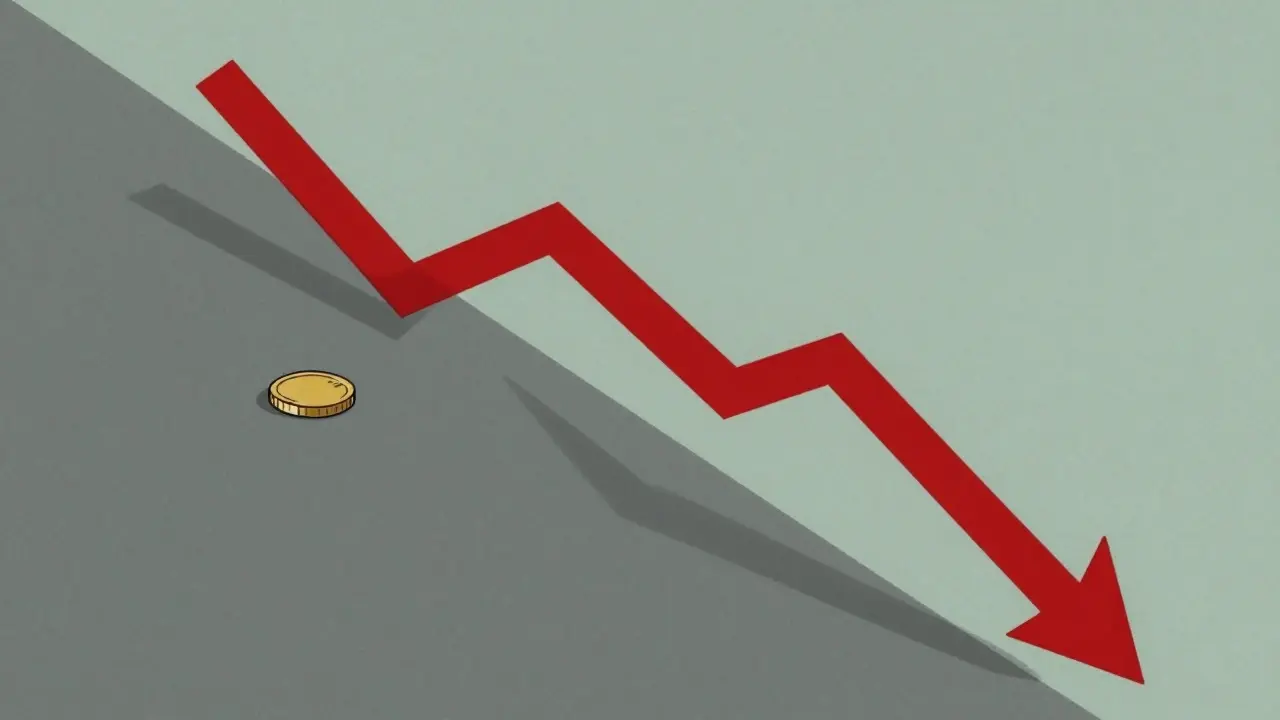
Let's look at the cold hard numbers available as of late March 2026. The price action tells a stark story different from the ambitious whitepaper goals. Historical data shows the token reached an all-time high of roughly $0.0290 back in May 2023. Since then, the asset has seen a massive contraction. Current pricing hovers around $0.00013 to $0.00018 USD depending on which exchange you check.
| Exchange Platform | Last Known Price (USD) | 24-Hour Volume |
|---|---|---|
| Binance | $0.00013 | $1.99 USD |
| Coinbase | $0.000165 | Low Activity |
| Crypto.com | $0.000187 | $0.00 USD |
Note the trading volume. On Binance, the daily volume is reported as less than $2 USD. For comparison, major stablecoins or altcoins usually process millions in daily transactions. This suggests extremely low liquidity. If you buy even a moderate amount, you could crash the price yourself due to lack of buyers on the other side of the order book. It also implies that retail interest has evaporated significantly since the peak in 2023.
Investment Risks and Red Flags
Every asset carries risk, but some carry more warning signs than others. With ANG, the primary concern is the divergence between the fully diluted valuation (FDV) and real-world activity. Reports indicate an FDV near $9.91 billion. An FDV assumes all 60 trillion tokens are circulating and traded at current price. That is mathematically impossible given the supply constraints mentioned earlier.
- Liquidity Trap: With negligible volume, exiting a position without losing money is difficult.
- Supply Discrepancy: Conflicting data on circulating versus total supply obscures true market dynamics.
- Unverified Claims: Reliance on unconfirmed Nobel connections and opaque gold audits.
- Price Contraction: Losing 99% of peak value suggests a failed initial market fit.
These factors do not mean the project is fraudulent, but they mean it is highly speculative. There is currently very little development activity visible on public repositories. Community forums seem quiet. Active communities drive adoption; without users talking about it, the network effect never kicks in. You should treat this as a lottery ticket rather than a foundational portfolio asset.
Conclusion on Viability
In the end, Aureus Nummus Gold presents a fascinating case study of ambition meeting market resistance. It attempts to marry ancient concepts (gold) with futuristic ones (quantum physics). Ideally, this hybrid could offer a secure way to transfer wealth. Realistically, the execution has fallen short of the vision. The token exists, it trades on exchanges, but it lacks the essential ingredients for mainstream success: liquidity, verified reserves, and community momentum.
For now, it remains a niche asset with a long road ahead. If you are watching this coin, track the reserve audits and developer updates closely. Do not let the brand name fool you into ignoring the price chart or the lack of fundamentals. In crypto, proof is always better than promises.
Is Aureus Nummus Gold actually backed by gold?
While the project claims gold backing, independent third-party audits verifying the specific reserves are not readily available in public records. You should verify audit reports before assuming stability.
What is the current circulating supply of ANG?
Data sources conflict on this. Some report zero circulating supply, while others reference the total capped supply of 60 trillion tokens. This discrepancy indicates uncertainty about token distribution.
Can I trade ANG on major exchanges?
Yes, it is listed on platforms like Binance and Coinbase, but liquidity is extremely low, making large buys or sells difficult without price impact.
Is the Nobel Prize claim verified?
Claims linking the project to a 2023 Nobel Prize require independent verification through official Nobel Foundation records, as official announcements do not currently support this connection.
Why is the price so low compared to the all-time high?
The token dropped approximately 99% from its May 2023 high. This reflects reduced market demand, potential lack of utility adoption, or macro-market corrections affecting speculative assets.
Lisa Miller
March 31, 2026 AT 14:34The liquidity situation really stands out as the biggest risk factor right now. Trading volumes are almost non-existent which makes entering or exiting positions incredibly difficult without slippage. It feels like most interest has dried up since that peak in 2023. People are talking about gold backing but nobody is checking the vaults regularly. Transparency is key for any stablecoin alternative to succeed in this market. Hope the team releases those audit reports soon because trust is fragile here.
Lisa Walton
April 2, 2026 AT 10:02Another gold coin another broken promise and another bag holder crying in the dark.
Callis MacEwan
April 2, 2026 AT 19:19We need to analyze the token distribution mechanics using on-chain forensic tools before committing capital. The contract address ending in b576fa reveals an ERC-20 standard implementation which introduces smart contract risk vectors. Liquidity provision protocols fail when depth is insufficient for institutional order sizes. Market cap calculations based on FDV are misleading when circulating supply is effectively zero or unverified. Slippage tolerance settings become critical in illiquid markets where spreads widen significantly. The correlation with actual bullion prices is missing from current valuation models entirely. Technical analysis suggests we are in a descending channel pattern indicating prolonged bearish sentiment. Risk management dictates avoiding assets with unverified reserve ratios regardless of whitepaper promises. Institutional custodians demand third-party attestation from firms like Deloitte before allocation decisions occur.
Sean Carr
April 4, 2026 AT 11:25That technical breakdown helps clarify why the charts look so shaky lately. Definitely worth keeping an eye on volume trends before making moves. Staying safe is the best move until more data comes out.
Michael Nadeau
April 6, 2026 AT 09:27The concept of gold backing is interesting. History shows physical reserves matter. Yet digital ledgers often diverge. We see patterns of inflation elsewhere. Tokenomics dictate market perception. Supply caps influence volatility metrics. Liquidity remains the primary concern here. Volume data suggests low participation. Investors prioritize verified audit trails. Transparency builds trust in asset classes. Without audits speculation rules the narrative. Quantum claims sound impressive technically. Actual utility requires engineering proof. Marketing slogans fade when price drops. Patience is required for such assets. Real value only emerges when adoption matches ambition. Community sentiment shifts quickly without tangible milestones being met. The disconnect between FDV and trading activity defines the current landscape. Skepticism is a healthy approach to any new asset class introduction. We must wait for verifiable data rather than marketing narratives. Time will tell if the reserve ratio holds up under scrutiny.
Zackary Hogeboom
April 6, 2026 AT 23:12I keep thinking about how hard it is to verify the gold vault access personally. There is a lot of potential here if the audits ever come out publicly. The community seems pretty quiet though which is concerning. Maybe they are waiting for the next big announcement to happen soon. Curiosity gets the better of us sometimes when tracking obscure tokens like this. Hopefully some clarity arrives on the supply distribution side shortly. It would be nice to see active development on their public repositories again. Silence often means something behind the scenes needs fixing or changing. We all want to know if this thing has legs for the long term run. Waiting game continues until more information becomes available to everyone.
Shaira Vargas
April 8, 2026 AT 07:13This is absolutely devastating news for anyone who believed in the dream of ANG. My heart hurts reading about the lack of audited reserves honestly. They promised everything and delivered nothing but empty code on a blockchain. Why does this always happen to us poor retail investors who trusted the narrative? It feels like a betrayal of faith every single time a project fails like this. I am so tired of being told to ignore the red flags just because the price might pump later. The silence from the team is screaming louder than any press release ever could. I just wanted stability with gold and now I feel lost in this volatile mess. Please tell me there is hope somewhere in all this chaos and disappointment.
Samson Abraham
April 8, 2026 AT 11:09Loyalty to projects fades when fundamentals disappear completely. Truth remains constant despite emotional reactions online. Numbers do not lie regardless of how much drama surrounds the topic. Silence speaks volumes about internal project health issues currently facing development teams. Caution is better than regret in financial decision making processes. Patience yields better results than panic selling during uncertain market conditions.
Raymond K
April 9, 2026 AT 09:31I trully beleive there is stil a chance for recovery if they fix the audits soon. Just giv it a little bit more time maybe things wull turn around nicely. We shuldnt give up on the vision of decentralized gold too easily. Somedays the charts look bad but the technology could still be cool underneath. Keep your heads up everyone we dont know teh full story yet honestly. Maybe a new update comes soon that changes everything for the better. Stay optimistic friends and hold tight through these rough patches ahead.
Justin Smith
April 11, 2026 AT 08:28Optimism without factual basis constitutes dangerous speculation in volatile markets. The probability of success decreases significantly when core data points remain unverified by independent parties. Financial prudence demands reliance on audited evidence rather than hopeful conjecture about future developments. The discrepancy between stated goals and on-chain reality indicates fundamental structural weaknesses. Investment thesis validity collapses when liquidity dries up to negligible transaction volumes. Market participants should prioritize transparency over promotional materials when allocating capital resources.
Wade Berlin
April 12, 2026 AT 11:48Everyone talks about the Nobel connection but nobody checks the official registry properly. Classic scam move to use fancy science words to confuse unsuspecting buyers. The fact that volume is near zero tells me the smart money already fled months ago. If you buy in now you become the exit liquidity for early whales looking to cash out. Do yourself a favor and stay away until real proof exists beyond press releases. Trusting blind promises in crypto usually ends badly for the majority of holders.
Colin Finch
April 14, 2026 AT 01:43The tapestry of modern finance is woven with threads of gold and silicon alike. We seek anchors in turbulent seas but often find drifting rafts instead. A true legacy endures past the initial hype cycle of marketing and promotion. Perhaps this token represents a lesson in patience rather than a direct path to riches. Nature rewards those who wait for the fruit to ripen on the vine completely. We must discern signal from noise in the cacophony of digital asset chatter today. True value manifests slowly over decades not days or weeks. The search for stability is a journey we all undertake collectively. Let the dust settle before judging the architecture of this new world.
Cara Boyer
April 15, 2026 AT 17:43They are hiding something in the ledger data to protect their own interests :) The elites know the truth about ANG but do not tell the masses. It is obvious that the gold is fake or stoled by corrupt officials managing the vaults. Only those connected to the insider groups will benefit from the eventual collapse. You poor sheeple believe the marketing lies spread by greedy developers. Wake up and see the global conspiracy against real wealth storage systems :) Never trust a centralized authority holding your digital assets. The system is rigged against ordinary citizens trying to save value.
Chris R
April 16, 2026 AT 07:49It is important to remember that every asset class goes through periods of uncertainty and doubt. Patience allows for clearer judgment regarding long term viability of new technologies. We should maintain open dialogue while acknowledging the current limitations of the project. Constructive feedback helps developers understand community concerns better than hostility alone. Finding common ground encourages growth and improvement within the broader ecosystem. Unity among investors strengthens our position when demanding transparency from leadership teams.
Markus Church
April 17, 2026 AT 12:47The discrepancy regarding the circulating supply figures warrants further investigation by regulatory bodies perhaps. Unverified claims of physical collateral pose significant systemic risk to participating investors globally. Due diligence protocols suggest pausing investment until clear documentation supports reserve assertions formally. Historical precedents indicate similar projects often face delisting upon failure to produce audits. Prudent risk assessment requires prioritizing verified data over speculative potential returns. Continued observation without exposure is the recommended strategy for now.