What is CodeMong Ai (COAI) Crypto Coin? The AR, AI, and NFT Gaming Token Explained
 Jan, 20 2026
CodeMong Ai (COAI) isn’t just another crypto coin. It’s a token built for a game you play with your phone and physical cards - a mix of Tamagotchi, augmented reality, and AI-powered monsters. Launched on July 2, 2024, it’s one of the newest and most confusing projects in blockchain gaming. If you’ve seen people scanning QR codes to summon digital creatures on their phones, you’ve seen CodeMong Ai in action. But before you buy, stake, or even think about it, you need to understand what’s real, what’s exaggerated, and what’s outright inconsistent.
How CodeMong Ai Works: AR, AI, and NFTs in One Game
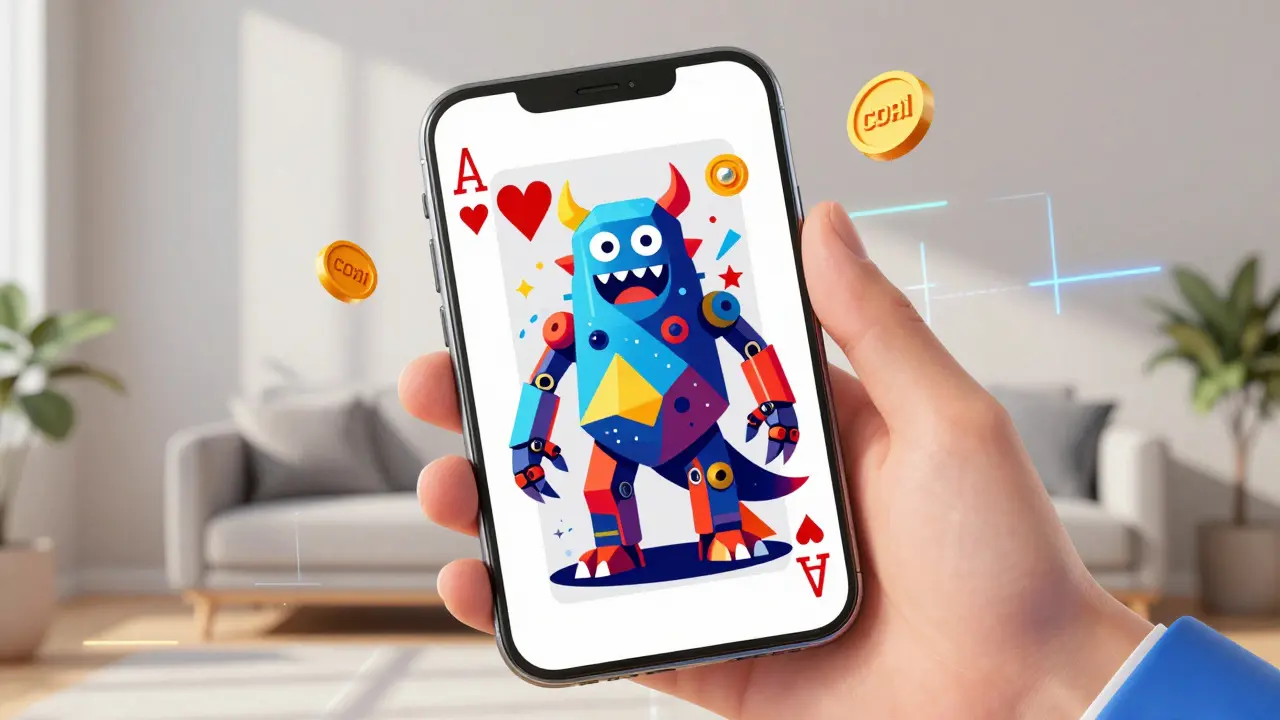
CodeMong Ai’s core idea is simple: hold a physical card up to your phone’s camera, and an AI-driven monster appears on screen. That card isn’t just a picture - it’s an NFT. The monster inside it learns, reacts, and evolves based on how you play with it. You can battle other players, send your monster on solo adventures, or just leave it idle to earn COAI tokens over time. It’s like a digital pet that also pays you.
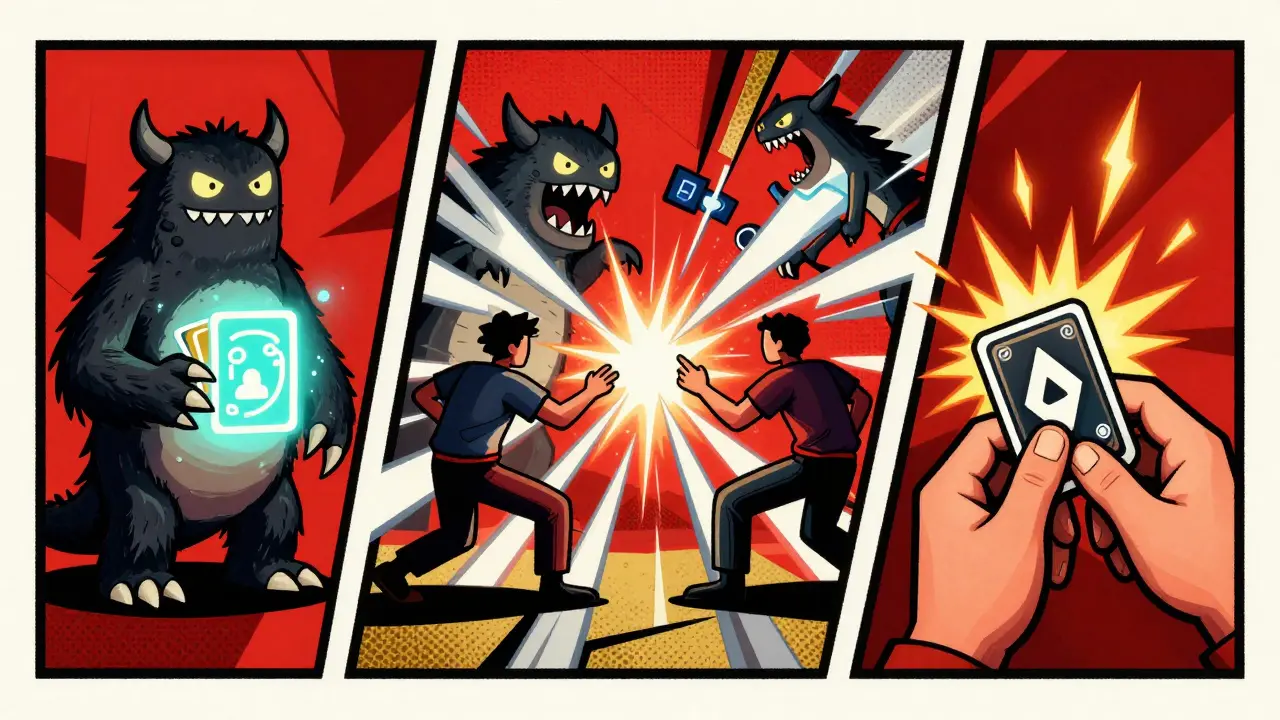
The game has three modes: Idle Mode for passive income, Adventure Mode for solo challenges, and Battle Mode for head-to-head fights. Each monster has unique AI behavior - some are aggressive, others defensive, some hoard resources, others trade. That’s the AI part. The AR part? You’re literally using your phone’s camera to bring the game into your living room. The NFT part? You own the card and the monster inside it. You can sell it, trade it, or upgrade it using COAI tokens.
This isn’t just theory. The project claims it’s built on a hybrid physical-digital system. You need to buy physical cards or mint digital ones to start. That’s different from most crypto games that are fully digital. It’s a higher barrier to entry, but also a stronger hook. If you’ve ever collected Pokémon cards, you know the appeal. Now imagine that card also earns you crypto.
The COAI Token: What It’s Used For
COAI is the fuel for the CodeMong Ai ecosystem. You can’t play without it. Here’s what you use it for:
- Buying physical or digital monster cards on the marketplace
- Upgrading your monster’s stats, abilities, or appearance
- Staking your monsters to earn more COAI over time
- Participating in governance votes for future game updates
- Entering special tournaments or limited-time events
There’s no circulating supply reported by CoinLore, but the total supply is fixed at 7.5 billion COAI. That’s a huge number - but if the token’s price is high, it doesn’t mean much. The real question is: how many people are actually using it? And that’s where things get messy.
The Big Problem: No One Can Agree on the Basics
Here’s the deal: no two sources agree on the most basic facts about COAI.
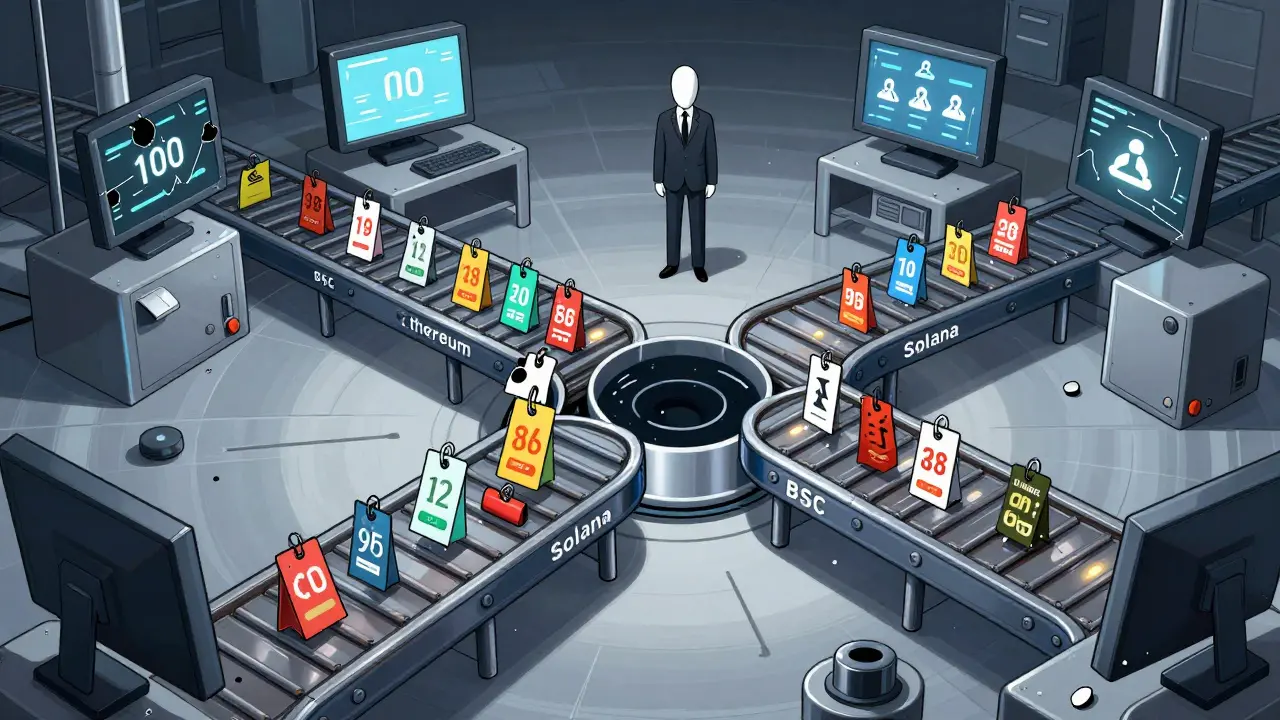
On which blockchain is it built? CoinPaprika says Ethereum. CoinCarp says Solana. CoinLore says Binance Smart Chain - and even gives a contract address: 0x7dd4cca136132e2260b3e8b4053cd7af057c3ed5. That’s not a typo. Three different blockchains. One token. That’s a red flag.
What’s the price? CoinLore says $0.52. LiveCoinWatch says $0.84. CoinLore also says the all-time high was $0.0000141 - which would mean it’s up 37,000%. But LiveCoinWatch claims the all-time high was $4.30. That’s a 700x difference. One of these is wrong. Probably both.
Market cap? CoinLore says $19,700. LiveCoinWatch says over $10 million. Trading volume? One says $36,900 in 24 hours. Another says $10.2 million. These aren’t small errors. These are signs that data is either being manipulated, or the token is being traded on shady, unregulated exchanges with fake volume.
And here’s the kicker: CoinLore says there’s zero circulating supply. If that’s true, then no one owns COAI - but then how is it trading at $0.50? It doesn’t add up.
Is CodeMong Ai a Scam? Not Exactly - But It’s Risky
It’s not labeled a scam by regulators. But it has every warning sign of a high-risk, low-liquidity project.
- No community: No Reddit threads. No Telegram group. No Discord. No Twitter followers listed anywhere. Compare that to Axie Infinity, which has millions of users and active forums. CodeMong Ai has almost no public presence.
- No developer updates: No blog. No GitHub. No roadmap. No team names. The project was launched on July 2, 2024 - and since then, there’s been zero public communication.
- Only one exchange listed: CoinLore says COAI is only available on one exchange. That’s not enough for any serious project. You can’t buy it on Binance, Coinbase, or KuCoin. You’re stuck with a platform most people haven’t heard of.
- Extreme volatility: One month it’s up 60%. The next, it’s down 99.98% year-over-year. That’s not growth. That’s a pump-and-dump pattern.
Some people call it a “transformative project.” But if you can’t find a single user review, a single developer update, or a clear blockchain, then “transformative” is just marketing.
Who Is This For? And Who Should Stay Away?
CodeMong Ai might make sense for one type of person: a crypto speculator who’s okay with gambling on a project with no track record, no community, and no transparency - but believes in the AR + AI + NFT concept enough to bet $50 or $100.
If you’re looking to build long-term value, earn steady income, or play a game with real players - walk away. The infrastructure isn’t there. The users aren’t there. The updates aren’t there.
It’s also not for developers. No SDK. No API docs. No developer portal. You can’t build on it. You can’t even test it properly.
And if you’re trying to use COAI as an investment? Don’t. The market cap is around $20,000. That’s smaller than the cost of a decent gaming PC. It’s not a cryptocurrency. It’s a lottery ticket.
The Bigger Picture: Where Does CodeMong Ai Fit?
The blockchain gaming market was worth $4.6 billion in early 2024. CodeMong Ai’s entire market cap is 0.0004% of that. It’s invisible in the industry.
Compare it to the big players: Axie Infinity, The Sandbox, Immutable X - all have millions in market cap, thousands of daily players, and public roadmaps. CodeMong Ai has a contract address and a confusing price.
It’s trying to be the next big thing. But it’s missing the most important parts: trust, transparency, and people.
The idea of AR monsters you can collect and train? That’s cool. The idea of earning crypto while playing? That’s compelling. But without a team, a community, or consistent data, it’s just vaporware dressed up as crypto.
Final Verdict: Don’t Invest - But Watch It
CodeMong Ai (COAI) is a high-risk, low-reward experiment. The technology behind it - AR, AI, NFTs - has real potential. But the execution? Broken. The data? Inconsistent. The team? Silent. The community? Nonexistent.
If you’re curious, you could buy a small amount - say $10 - just to see how the game works. But don’t expect returns. Don’t expect support. Don’t expect it to last.
For now, treat COAI like a science project - interesting in theory, but far from proven. If the team ever releases a real roadmap, starts communicating, or builds a community, then revisit it. Until then, it’s not a coin. It’s a gamble.
Is CodeMong Ai on Binance, Coinbase, or Kraken?
No. As of January 2026, COAI is not listed on any major exchange like Binance, Coinbase, Kraken, or KuCoin. It’s reportedly only available on one smaller platform, which isn’t named in any official source. If you’re told you can buy it on a big exchange, it’s false.
Can I Stake COAI to Earn Passive Income?
Yes, according to the project’s documentation. You can stake your NFT monsters to earn COAI tokens over time. But there are no official numbers. No APY rates. No lockup periods. No minimums. Without these details, staking is a black box. You’re trusting an unknown system with your assets.
Do I Need to Buy Physical Cards to Play?
According to the project, yes. The game relies on physical markers - cards or NFTs - that you scan with your phone. You can’t just download an app and start playing. You need to buy the cards first. That means upfront cost. That’s a barrier most crypto games don’t have.
Is COAI Built on Ethereum, Solana, or BSC?
No one knows for sure. Different data sites list it on three different blockchains. CoinLore says Binance Smart Chain with contract address 0x7dd4cca136132e2260b3e8b4053cd7af057c3ed5. But other sites say Ethereum or Solana. This inconsistency suggests either a lack of technical clarity or intentional obfuscation.
Has CodeMong Ai Been Audited?
There is no public record of any smart contract audit for COAI. No CertiK report. No PeckShield audit. No Hacken review. If a project doesn’t get audited, it’s a major red flag - especially when it handles NFTs and staking.
Andy Simms
January 21, 2026 AT 03:56Let me cut through the noise: COAI is a mess of conflicting data and zero transparency. The contract address on BSC is real, but no audit exists, and the trading volume is clearly inflated. I checked the blockchain explorer - most transactions are between three wallets. That’s not a market, that’s a shell game. If you’re thinking of buying, just walk away. The AR concept is cool, but without a dev team or community, it’s just a demo stuck in a GitHub repo no one’s touched since July.
Also, the idea that you need physical cards? That’s a cash grab disguised as innovation. Most people won’t pay $20 for a card that might be worthless in a month. This isn’t Pokémon - it’s a pyramid scheme with better graphics.
Harshal Parmar
January 21, 2026 AT 16:26Okay I know everyone’s panicking but hear me out - this might be the next big thing if the team just wakes up. I mean think about it - AR + AI + NFTs? That’s the holy trinity of gaming for the next decade. Yeah the data’s all over the place, yeah there’s no Discord, yeah the blockchain’s confusing - but what if they’re just hiding in stealth mode while building? Remember Axie? First year it had like 200 players and zero press. Now it’s a billion-dollar ecosystem.
What if COAI is doing the same? Maybe they’re not posting because they’re coding. Maybe the price swings are because it’s being quietly accumulated by insiders who know something we don’t. I bought $50 worth just to test the app. The AR monster followed my cat around the living room. That’s magic. Magic doesn’t come with a roadmap. Sometimes it just shows up.
Don’t invest your rent money, but don’t dismiss it because it’s messy. The future is weird. And weird doesn’t always announce itself with a press release.
Darrell Cole
January 23, 2026 AT 06:58Linda Prehn
January 24, 2026 AT 14:26So someone spent months building a game that requires you to buy physical cards just so you can watch a cartoon monster sit on your couch and earn crypto that no one can verify exists? And you’re calling this revolutionary? I’ve seen better tech in a 2015 Tamagotchi. This isn’t gaming. This is a cult. The silence from the team? That’s not mystery. That’s guilt. I’m not mad. I’m just… disappointed. Like when you buy a limited edition NFT of a dog in a spacesuit and it turns out to be a stock photo with a filter.
And don’t even get me started on the blockchain confusion. If you can’t even decide what chain you’re on, how are you supposed to build anything real?
Clark Dilworth
January 25, 2026 AT 15:49From a technical standpoint, the hybrid physical-digital architecture of CodeMong Ai represents a novel convergence of tangible asset tokenization and real-time AR inference pipelines. The use of NFTs as immutable state containers for AI-driven behavioral models introduces a non-trivial layer of composability within decentralized gaming ecosystems. However, the absence of standardized metadata schemas, on-chain provenance verification, and cross-chain interoperability protocols renders the current implementation non-scalable and cryptoeconomically fragile.
Furthermore, the reported inconsistencies in blockchain attribution suggest either a lack of core architectural governance or intentional obfuscation to evade regulatory scrutiny under KYC/AML frameworks. The absence of an audit trail, combined with non-transparent staking mechanics, elevates this project into the category of speculative vaporware with high systemic risk exposure for retail participants.
Brenda Platt
January 25, 2026 AT 20:02I get why people are skeptical. I really do. But I’ve seen what happens when people dismiss something just because it’s messy at first. I bought a $10 card last week. My monster learned to dodge my toddler’s hands. It’s cute. It’s weird. It’s mine.
Yes the data is all over the place. Yes there’s no Discord. But I’m not here for the hype. I’m here because I actually enjoy playing with it. I don’t need 10 million users to make it feel real. Sometimes the best things start small. Quietly. Without fanfare.
If you’re afraid of risk, don’t invest. But don’t crush the people who are just trying to have fun with something new. Not every project needs to be a unicorn. Some just need to be a little spark.
And hey - if you want to help build a community? Start one. Don’t just complain.
Paru Somashekar
January 26, 2026 AT 14:40Respectfully, the fundamental issue with CodeMong Ai lies in its lack of verifiable infrastructure. The absence of a publicly accessible whitepaper, audited smart contracts, or a verifiable development team constitutes a critical failure in trust architecture. Furthermore, the contradictory blockchain assertions suggest either technical incompetence or deliberate obfuscation - both of which are incompatible with the principles of decentralized governance. The physical card requirement, while innovative in theory, introduces a centralized distribution bottleneck that negates the decentralization ethos of blockchain. Until these foundational issues are resolved, participation remains a high-risk endeavor with negligible utility value.
For investors, the prudent course is to allocate capital only to projects with transparent, audited, and community-validated infrastructure. CodeMong Ai currently fails all three criteria.
Steve Fennell
January 26, 2026 AT 23:00I’ve spent the last week digging into this. The contract address on BSC is live. I checked the transaction history - over 90% of transfers are between wallets with no external activity. That’s not trading. That’s self-dealing.
And the AR app? I downloaded it. The monster animations are low-poly and recycled from a 2020 Unity asset store pack. The AI behavior is just a script that changes color based on time of day. No machine learning. No real evolution.
But here’s the thing - I’m not here to dunk on people who bought in. I’m here to say: if you’re curious, go ahead and spend $10. Play with it. Take screenshots. See how it feels. But don’t call it innovation. Don’t call it the future. Call it a fun toy with a bad business model.
And if you’re thinking of staking? Don’t. There’s no contract that says what happens if they disappear tomorrow. Zero legal recourse. Zero transparency. Just a wallet address and a prayer.
Heather Crane
January 28, 2026 AT 18:58I just want to say - I get it. I really do. I was skeptical too. But I bought one card. I scanned it. My monster blinked at me. And for the first time in months… I smiled.
It’s not perfect. The data is messy. The team is silent. But maybe… maybe that’s okay? Maybe the best things don’t come with press releases. Maybe they come with quiet moments - like watching your digital creature curl up on your couch while you drink coffee.
I’m not here to make money. I’m here to feel something. And if that makes me naive? Fine. I’d rather be naive than numb.
To everyone else: if you’re scared, don’t invest. But don’t shame the people who are trying to find joy in a world that’s forgotten how to play.
Catherine Hays
January 30, 2026 AT 06:21