What is Nigella Coin (NIGELLA)? Ecosystem, Utility, and Price Reality
 May, 5 2026
When you hear about a cryptocurrency that promises to revolutionize the clean food industry while offering staking rewards and MLM opportunities, your first reaction should be healthy skepticism. Nigella Coin, trading under the ticker NIGELLA, is one such project. Launched in 2024, it positions itself not just as another speculative token, but as the fuel for a broader ecosystem called Nigella Chain. But does it deliver on its ambitious claims, or is it just another flash-in-the-pan altcoin?
To understand Nigella Coin, you have to look beyond the price chart. You need to understand what it actually *does*. Unlike Bitcoin, which is primarily a store of value, or Ethereum, which is a general-purpose smart contract platform, NIGELLA is designed for specific utility within a private blockchain network focused on supply chain transparency and digital finance.
The Core Mission: Blockchain Meets Clean Food
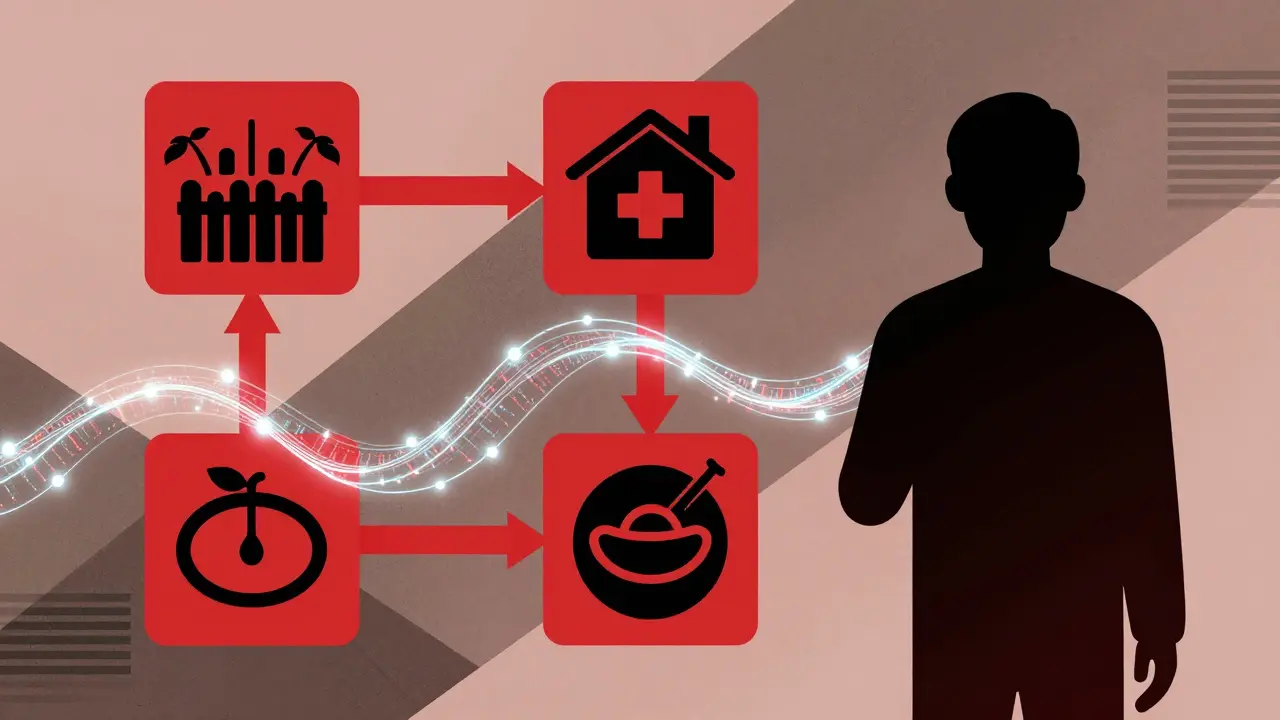
The central premise of the Nigella Chain ecosystem is simple: use blockchain technology to solve real-world problems in the food industry. The flagship product driving this mission is "Clean Food." This isn't just a marketing slogan; it's a traceability system.
Here is how it works. Producers create unique NFT QR codes for their food products. When you scan these codes, you don't just see a website link. You access an immutable record of the product's journey from source to consumer. This includes production stages, origin details, and safety certifications. For consumers, this means informed choices about quality and safety. For producers, it means authentication and protection against counterfeiting.
Nigella Coin serves as the transactional layer for this system. It facilitates payments between parties involved in this supply chain, ensuring that the data integrity remains tied to economic incentives. The project aims to launch 120 projects globally by the end of 2025, with Clean Food being the first major step. As of mid-2026, many of these initiatives are still in beta testing phases, meaning the full potential of the ecosystem is yet to be realized.
Utility Beyond Food: The Nigella Ecosystem
If food traceability was the only use case, NIGELLA would likely struggle to gain widespread adoption. To build liquidity and user engagement, the developers have integrated several other financial tools into the Nigella Chain. These utilities are designed to keep users active within the ecosystem.
- Nigella Wallet: A dedicated interface for managing crypto assets within the ecosystem.
- Nigella Pay: Facilitates fast payments with real-time exchange rates, allowing users to spend NIGELLA for everyday transactions.
- Nigella Stake: Allows users to lock their coins to support network integrity. In return, they earn profits, incentivizing long-term holding over short-term speculation.
- Nigella Swap: A decentralized exchange feature that lets users swap NIGELLA for other cryptocurrencies. This boosts liquidity and allows for portfolio diversification without leaving the ecosystem.
- Nigella Diamond: An educational platform providing testing and certification in blockchain and NFT technologies, aiming to upskill users.
Additionally, there is a multi-level marketing (MLM) program integrated into the chain. Users can engage in network marketing activities and earn rewards based on their contributions. While MLM structures can be controversial in the crypto space, proponents argue that they drive rapid user acquisition and community growth.
Tokenomics and Supply Dynamics
Understanding the economics of any cryptocurrency requires looking at its supply. Nigella Coin has a fixed total supply of 188,017,377 tokens. This capped supply is typical for deflationary models, where scarcity is intended to drive value if demand increases.
However, there is a significant discrepancy regarding the circulating supply. Major data aggregators like Coinbase, Binance, and CoinTracker have reported a circulating supply of 0 at various points. This doesn't necessarily mean the coin doesn't exist; rather, it often indicates that the majority of tokens are locked in presale allocations, team wallets, or staking contracts, and haven't been freely traded on open markets in sufficient volume to register accurately on all trackers. Alternatively, it may reflect reporting errors common with newer, less liquid assets.
This lack of clear circulating supply data makes calculating a true market capitalization difficult. When market cap figures were available, such as in August 2024, Nigella Coin ranked around 2,846th globally with a valuation of approximately $336 million. Today, those numbers are far more volatile and fragmented across exchanges.
Price History and Volatility
If you are considering buying NIGELLA, you need to understand its price history. Cryptocurrencies are inherently volatile, but Nigella Coin has shown extreme swings.
The all-time high (ATH) for NIGELLA was recorded at $12.75 on July 21, 2024. This peak occurred during a period of heightened interest in niche utility tokens. However, prices crashed shortly after. By August 2024, the price had dropped significantly. As of May 2026, trading pairs on exchanges like Binance show prices hovering around $0.27 to $0.28.
This represents a decline of over 97% from its all-time high. For early investors, this is a substantial loss. For new entrants, it might look like a bargain, but it also signals a lack of sustained demand or confidence in the project's current execution. The all-time low of $6.14, recorded in July 2023 (predating the official 2024 launch date), suggests either earlier private trading rounds or data anomalies in historical records.
| Metric | Value / Status |
|---|---|
| Total Supply | 188,017,377 NIGELLA |
| All-Time High | $12.75 (July 21, 2024) |
| Current Price Range (May 2026) | $0.26 - $0.28 |
| Circulating Supply | Disputed/Reported as 0 on major trackers |
| Primary Use Case | Food Traceability & Ecosystem Payments |
| Blockchain Type | Private Blockchain Network |
Risks and Red Flags
No responsible discussion of a cryptocurrency is complete without addressing the risks. Nigella Coin presents several challenges that potential investors must weigh carefully.
- Liquidity Issues: With reported zero circulating supply on major platforms, finding buyers when you want to sell could be difficult. Low liquidity means large trades can drastically impact the price.
- Centralization Concerns: The project describes its underlying technology as a "private blockchain network." While this offers speed and control, it contradicts the core ethos of decentralization that attracts many crypto enthusiasts. Private blockchains are controlled by a single entity, introducing counterparty risk.
- Execution Risk: The promise of 120 global projects is ambitious. Most are still in beta. If these applications fail to gain traction with actual food producers and consumers, the utility of NIGELLA diminishes.
- MLM Structure: Multi-level marketing components can attract regulatory scrutiny and are often associated with unsustainable growth models. Ensure you understand the compensation structure before participating.

How to Buy and Store NIGELLA
If you decide to proceed despite the risks, here is how you interact with the asset. Nigella Coin is listed on a few exchanges, including Binance and Crypto.com, though availability can change rapidly due to delisting policies.
To buy NIGELLA: 1. Create an account on a supported exchange. 2. Deposit fiat currency (USD, EUR) or a major crypto (USDT, BTC). 3. Locate the NIGELLA trading pair. 4. Execute a limit or market order.
For storage, using the native Nigella Wallet is recommended if you plan to participate in staking or use the Clean Food features. However, for pure holding, consider whether the wallet supports hardware integration for enhanced security. Never share your seed phrase with anyone.
Final Thoughts
Nigella Coin is an interesting experiment in applying blockchain to the food supply chain. Its vision of transparent, traceable clean food is noble and addresses a genuine market need. However, the execution so far has been marked by extreme volatility, liquidity issues, and centralized control.
It is not a blue-chip investment like Bitcoin or Ethereum. It is a high-risk, high-reward utility token tied to the success of a specific ecosystem. If you invest, do so with money you can afford to lose, and keep a close eye on the development updates of the Clean Food platform and the rollout of the promised 120 projects.
Is Nigella Coin a safe investment?
No cryptocurrency is guaranteed safe. Nigella Coin carries higher-than-average risk due to its extreme price volatility, low liquidity, and reliance on a private blockchain. It is considered a speculative asset rather than a stable store of value.
What is the main purpose of NIGELLA token?
The primary purpose of NIGELLA is to facilitate transactions within the Nigella Chain ecosystem, specifically for the "Clean Food" traceability system, staking rewards, and swapping services via Nigella Swap.
Why is the circulating supply reported as zero?
A reported circulating supply of zero often indicates that most tokens are locked in presales, team wallets, or staking contracts, or that data aggregation platforms have failed to track the active trading volume accurately. It does not mean the token does not exist.
Can I use Nigella Coin to buy food directly?
Currently, Nigella Coin is used to pay for services within the ecosystem and potentially by producers for traceability services. Direct consumer purchase of food using NIGELLA at retail stores is not yet widely implemented, as most projects are still in beta phases.
What is the all-time high of Nigella Coin?
The all-time high for Nigella Coin was $12.75, recorded on July 21, 2024. Since then, the price has dropped significantly, trading around $0.27-$0.28 in mid-2026.