What is PumaPay (PMA) Crypto Coin? A Realistic Look at the Pull-Payment Protocol
 Dec, 15 2025
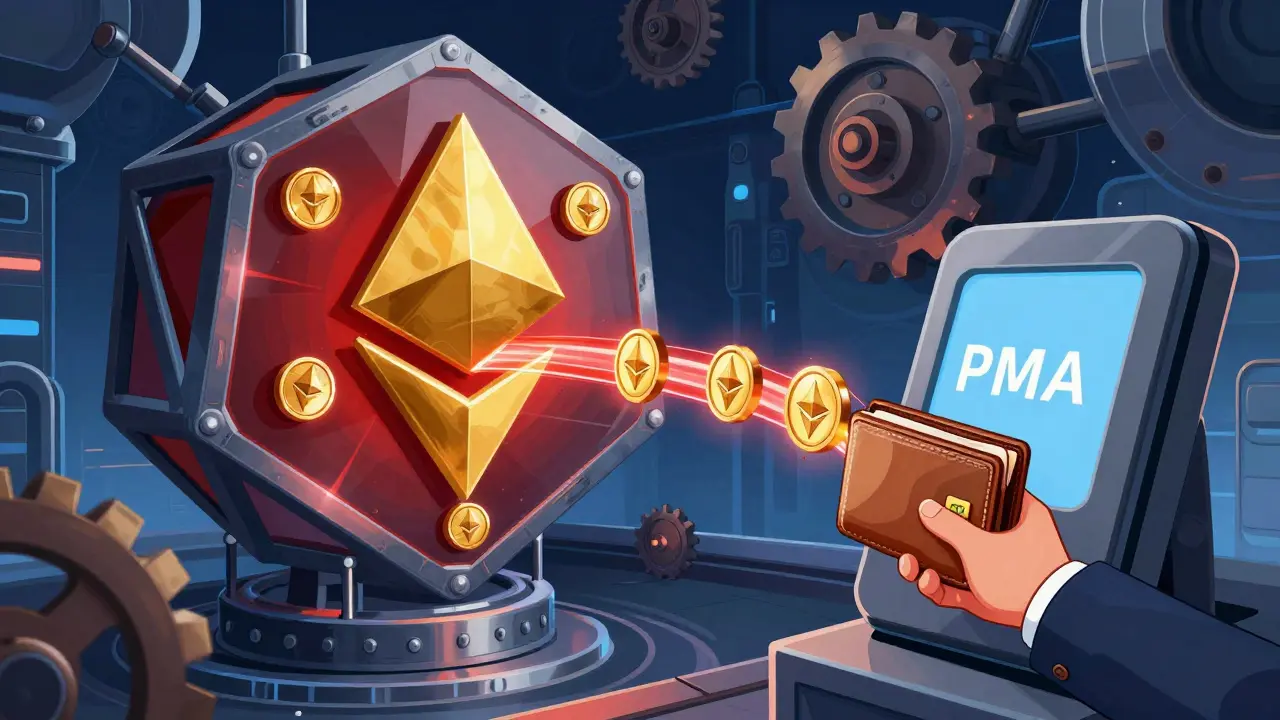
PumaPay (PMA) is not another meme coin or speculative token. It’s a payment protocol built on Ethereum that tried to solve a real problem: recurring crypto payments. Launched in May 2018, its goal was simple - let merchants pull money from customers’ wallets automatically, like a subscription service, without forcing the customer to click ‘pay’ every time. That’s different from almost every other crypto payment system out there, which rely on the customer pushing funds to the merchant. PumaPay called this the PullPayment Protocol.
How PumaPay Actually Works
Most crypto payments work like cash: you hand over money when you buy something. PumaPay flipped that. Imagine you sign up for a monthly gaming subscription. Instead of logging in every month and sending PMA tokens manually, the merchant uses a smart contract to pull the exact amount from your wallet on the due date. You approve the terms once - how much, when, how often - and then it happens automatically.
This isn’t magic. It’s built on Ethereum using two core smart contracts:
- PumaPay Token Contract: Tracks who owns how many PMA tokens. It’s an ERC20 token, so it works with any Ethereum wallet like MetaMask or Trust Wallet.
- PullContract: This is the engine. It stores the payment rules between merchant and customer. It checks if the customer has enough PMA, if the date is right, and then moves the funds. Merchants can customize these rules - daily, weekly, monthly, or even pay-per-use.
The system also includes off-chain tools: a mobile wallet for users, a business dashboard for merchants, and a fiat settlement layer that converts crypto to USD or EUR so businesses don’t have to hold PMA. That last part was key - it removed the risk of price swings for merchants.
Who Was PumaPay For?
PumaPay didn’t aim for Amazon or Walmart. It targeted high-risk industries that traditional payment processors like Visa or PayPal refuse to serve: adult entertainment, online gaming, crypto casinos, and subscription-based services with high chargeback rates.
Why? Because those businesses get locked out of banking systems. Crypto was their only option. But even crypto processors like BitPay or Coinbase Commerce required customers to initiate each payment. That didn’t work well for recurring billing. PumaPay offered a solution no one else did - a way to automate payments without relying on banks or credit cards.
And it was free. No setup fees. No monthly charges. Just plug in the PullContract, and you’re ready. That’s rare in payment tech.
Why It Never Took Off
Here’s the hard truth: PumaPay’s technology worked. The code was sound. But adoption? Almost nonexistent.
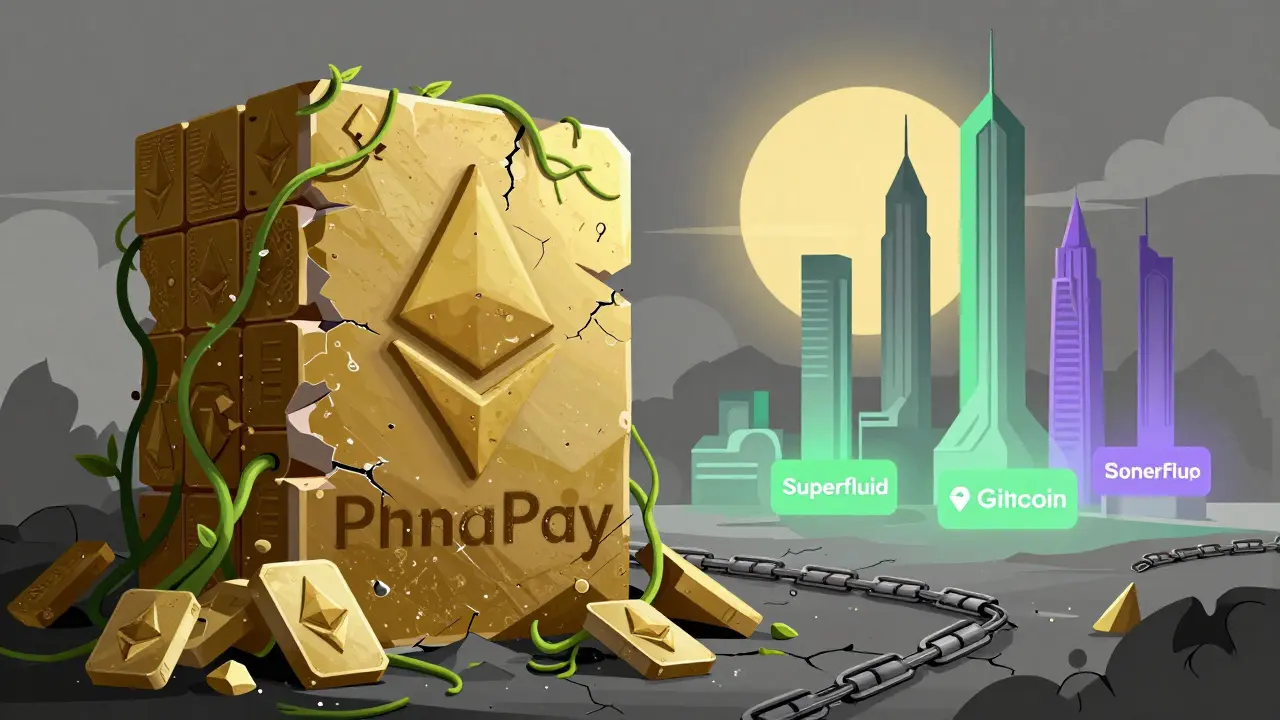
Its native token, PMA, peaked at $0.00164 in 2018. As of December 2025, it trades around $0.000002. That’s a 99.9% drop. Year-over-year, it’s down 78% against USD and over 87% against Bitcoin.
Why? Three big reasons:
- No merchant adoption. Even in high-risk niches, most businesses stuck with simpler solutions - like manually asking users to send crypto each month. Setting up smart contracts felt too technical.
- No wallet integration. You couldn’t find PMA on Coinbase, Binance, or even most DeFi wallets. You had to use niche platforms like Noone.io. That made it hard for users to even get PMA.
- No marketing, no updates. Since 2020, there’s been almost no public development activity. No roadmap updates. No team announcements. No new partnerships. The project went quiet.
Compare that to BitPay, which processes over $6 billion a year, or Crypto.com Pay, which integrates directly with Visa cards. PumaPay had a better idea - but no scale, no visibility, no network effect.

Security and How to Use PMA
If you still hold PMA, treat it like any other low-liquidity token. Security is critical.
Noone.io, one of the few wallets that supports PMA, recommends:
- Enable two-factor authentication (2FA) on your wallet
- Never share your private key or 12-word recovery phrase
- Store your phrase offline - on paper, not in a cloud note
- Keep your wallet app updated
- Only use trusted platforms to buy or trade PMA
There are no official PumaPay apps anymore. The mobile app and business console are offline. The only way to interact with PMA is through Ethereum-compatible wallets that support ERC20 tokens - and even then, you’ll need to manually add the token contract address.
Is PumaPay Still Alive?
Technically, yes. The smart contracts are still on the Ethereum blockchain. PMA tokens still exist. But the company behind it - founded by Yoav Dror in Cyprus - has vanished from public view.
Its original plan was to eventually move off Ethereum and launch its own blockchain. That never happened. No whitepaper updates. No GitHub commits since 2021. The website is a static page with no contact info.
Price predictions for 2026 range from $0.00068 to $0.00077 - still 99.9% below its peak. Technical analysts see no breakout potential. The Bollinger Bands show PMA trading in a 3-cent range - meaning almost zero volatility, and even less liquidity.
What PumaPay Got Right - And Why It Still Matters
Even though PumaPay failed, its idea was ahead of its time. Recurring crypto payments are still a problem today. Platforms like Shopify and Stripe don’t support them natively. DeFi protocols still struggle with automated billing.
PumaPay proved you could build a pull-based payment system on Ethereum. It showed that smart contracts could handle subscription logic without intermediaries. That concept lives on - in newer projects like Superfluid, Gitcoin, or even Layer 2 solutions trying to enable streaming payments.
So PumaPay isn’t dead as an idea. It’s dead as a product. The world moved on. But if you’re building a crypto payment system today, you’re standing on the shoulders of what PumaPay tried to do.
Should You Buy PMA Today?
Almost certainly not.
If you’re looking for a payment solution - look at Coinbase Commerce, BitPay, or even Lightning Network for Bitcoin. They’re active, supported, and integrated with real businesses.
If you’re speculating - PMA has no catalyst. No team. No roadmap. No exchange support. The market has already voted. It’s trading at 0.000002 USD because no one wants it.
There’s no upside left. Only risk.
PumaPay’s story isn’t about a failed coin. It’s about a brilliant idea that crashed because of poor execution, zero marketing, and a market that wasn’t ready - or willing - to adopt it.
Emma Sherwood
December 16, 2025 AT 11:10PumaPay was one of those ideas that sounded like it came straight out of a cyberpunk novel. Automatic recurring crypto payments? Yes, please. But the execution was just... lazy. No marketing, no wallet integrations, no updates. It’s like they built a Ferrari and then left it in the garage because they didn’t feel like driving it.
Still, I respect the ambition. We need more projects that tackle real pain points instead of just chasing moonboys. The pull-payment model? Still relevant. Someone’s gonna nail it someday - maybe on Solana or a Layer 2. Just not PumaPay.
Florence Maail
December 16, 2025 AT 16:30LOL. PumaPay was a CIA psyop to get crypto users to hold worthless tokens. You think they really wanted to revolutionize payments? Nah. They just needed a shiny new ICO to cash out. Look at the timeline - peak price right after launch, then silence. Classic pump-and-dump with a blockchain coat of paint. 🤡
And don’t even get me started on ‘Noone.io’ - that domain looks like it was bought in 2017 and never updated since. RIP PMA. May it rot in the blockchain graveyard with the rest of the scams.
Kelsey Stephens
December 18, 2025 AT 08:33I remember when I first heard about PumaPay. I thought, ‘This is it - the solution for my Patreon-style crypto subscriptions.’ I even bought some PMA. But then… nothing. No updates. No support. No way to even use it easily.
It broke my heart a little. Not because I lost money - I didn’t invest much - but because I believed in the idea. Projects like this remind me how much potential crypto has when it’s used for real utility. Shame it got abandoned. Maybe one day someone will revive it with heart.
Tom Joyner
December 18, 2025 AT 19:24Let’s be honest: PumaPay was a noble failure, but its entire premise was built on a fundamental misunderstanding of human behavior. People don’t want to pre-authorize arbitrary withdrawals - even if they’re ‘smart contracts.’ The cognitive load of trusting a merchant to ‘pull’ funds is higher than just clicking ‘pay’ once a month.
Also, ERC-20 is too slow and expensive for micro-transactions. This wasn’t innovation - it was over-engineering with a side of hubris.
Abby Daguindal
December 19, 2025 AT 23:12Anyone who bought PMA after 2019 deserves to lose everything. You didn’t do your due diligence. The team vanished. The website became a museum piece. The token’s liquidity is lower than my motivation on a Monday.
It’s not a ‘brilliant idea that failed.’ It’s a textbook example of what happens when devs fall in love with their code and forget about users. Don’t romanticize failure. Learn from it.
Patricia Amarante
December 21, 2025 AT 20:47Man, I still have like 500 PMA tokens in my wallet and I just forgot about them. 😅
Kinda funny how you hold onto these things even when you know they’re dead. Like a dusty old CD you can’t throw away because it had a good song on it.
SeTSUnA Kevin
December 23, 2025 AT 06:40It is incorrect to characterize PumaPay as having a ‘pull-payment protocol.’ The mechanism was not novel - it was an implementation of ERC-20 approve() + transferFrom() with custom logic. The term ‘pull-payment’ is marketing jargon, not technical innovation. Furthermore, the absence of a formal audit or formal governance structure renders the system inherently insecure.
Timothy Slazyk
December 23, 2025 AT 11:20Here’s the philosophical truth no one wants to admit: PumaPay didn’t die because of bad tech or bad marketing. It died because it asked people to give up control - to trust a system that could take money without a click. That’s not a payment problem. That’s a psychological one.
We live in an age of transactional anxiety. Every payment is a tiny act of autonomy. PumaPay tried to automate that autonomy away. And people - even crypto people - are terrified of that.
It’s not about liquidity or wallets. It’s about agency. The real failure wasn’t technical. It was existential.
And yet… I still believe in streaming payments. Maybe we just need to make them feel like gifts, not withdrawals.
Madhavi Shyam
December 25, 2025 AT 04:03Actually, the PullContract architecture is a variant of the ERC-677 standard with a custom fee collector interface. The token contract lacks EIP-2612 permit support, which is a critical oversight for gas optimization. No wonder adoption was low - the dev team didn’t even optimize for Layer 2 readiness. Pathetic.
Mark Cook
December 25, 2025 AT 22:04Wait… so you’re telling me this wasn’t a front for a Ponzi scheme? 😏
Because if it was, then it’s the most boring Ponzi ever. No hype. No influencers. Just… silence. Like a ghost town with a smart contract.
Jack Daniels
December 27, 2025 AT 13:50I still get nightmares about that PMA wallet. I opened it once in 2021 just to check… and I swear the balance dropped by 0.0000001 PMA. Like, I didn’t even touch it. I think the blockchain itself hates me now.
It’s not dead. It’s just… watching. Waiting. Always watching.
Bradley Cassidy
December 28, 2025 AT 03:46yo i still got my puma pay tokens in my meta mask and i think they’re kinda cute? like a little digital ghost haunting my portfolio 😭
they dont do anything but they remind me of the wild west days of crypto when people actually tried stuff instead of just copying each other. i’m not selling. they’re my little crypto relics. 🫶
Craig Nikonov
December 29, 2025 AT 06:51Let’s cut the crap - PumaPay was a Trojan horse for centralized control. The ‘merchant dashboard’? That’s a backdoor. The ‘fiat settlement layer’? That’s a KYC trap. And the fact that they vanished right after the ICO? Classic. They didn’t build a payment protocol - they built a honeypot for the gullible.
And now the ‘community’ is out here romanticizing it like it’s some lost art. Nah. It was a trap. Always was.
Donna Goines
December 30, 2025 AT 00:58Did you know that the PumaPay team’s LinkedIn profiles were all deleted the same day? And their domain registrar info was hidden behind a shell company in the Caymans? And the whitepaper had a typo on page 3? That’s not incompetence - that’s intentional obfuscation.
They didn’t fail. They vanished. And now they’re laughing from their private island while we’re here arguing about ‘brilliant ideas.’
Next time, check the team’s history before you buy the dream.