When to Use Public vs Private Blockchain: Clear Rules for Business Decisions
 Feb, 28 2026
Choosing between a public and private blockchain isn't about which one is "better." It's about matching the right tool to the job. If you're trying to build a system where anyone can verify transactions without asking permission, you need a public blockchain. If you're managing internal records, supply chain data, or financial settlements among trusted partners, a private blockchain makes more sense. The difference isn't just technical-it's strategic.
What Is a Public Blockchain?
A public blockchain is open to everyone. No one needs approval to join. You don’t need to sign an NDA or get IT clearance. Anyone with an internet connection can send a transaction, run a node, or check the ledger. Bitcoin and Ethereum are the most well-known examples. As of January 2024, Ethereum had over 7,050 active nodes spread across the globe. That’s not just a number-it’s resilience. The more nodes, the harder it is to manipulate the system.
Public blockchains are transparent by design. Every transaction is visible. If you send 5 ETH to someone, anyone can see it. This isn’t a bug-it’s the point. It creates trust without needing a middleman. You don’t have to believe a bank or a government. You can verify everything yourself.
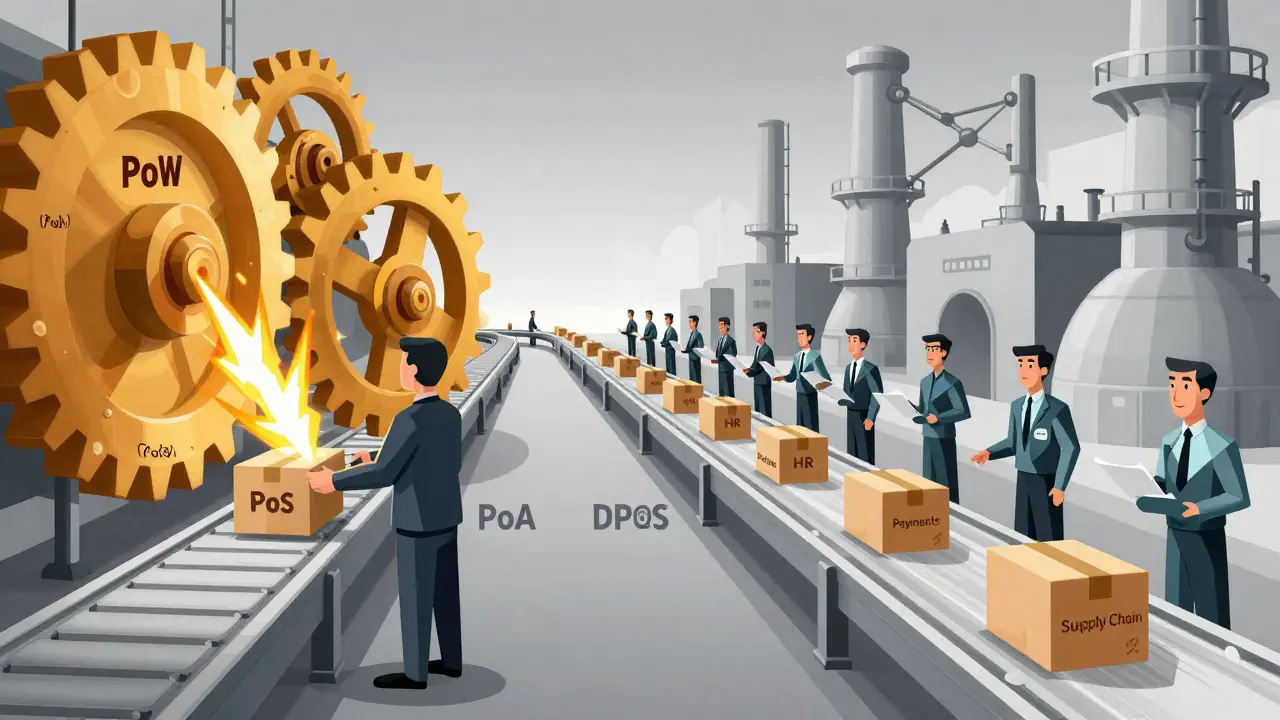
These networks rely on consensus mechanisms like Proof of Work (PoW) or Proof of Stake (PoS). PoW, used by Bitcoin, requires miners to solve complex puzzles. PoS, used by Ethereum after its 2022 upgrade, lets validators stake their own coins to secure the network. Both are energy-intensive compared to alternatives, but they’re built for security, not speed.
Public blockchains are immutable. Once a transaction is confirmed, it’s permanent. No one-not even the creator of the blockchain-can delete or alter it. This makes them perfect for applications where tampering would be catastrophic: voting systems, digital ownership records, or public audit logs.
What Is a Private Blockchain?
A private blockchain is like a members-only club. You need an invitation. Only approved participants can join, validate transactions, or view data. Think of it as a secure internal network, but built on blockchain technology. Companies like IBM, Microsoft, and JPMorgan use private blockchains for enterprise tasks.
These networks are permissioned. Administrators decide who gets to be a node. They can add or remove participants at will. Transactions are hidden from the public. Only those with the right access can see them. This is essential for businesses dealing with sensitive data-medical records, payroll, contract terms, or trade secrets.
Private blockchains use faster, lighter consensus methods like Proof of Authority (PoA) or Delegated Proof of Stake (DPoS). These don’t require thousands of nodes mining blocks. Instead, a small group of trusted validators confirms transactions. This means faster processing-sometimes hundreds of transactions per second, compared to Bitcoin’s 7 or Ethereum’s 15-30.
Unlike public chains, private blockchains aren’t always immutable. Administrators can roll back transactions if needed. This isn’t a weakness-it’s a feature. In regulated industries like banking or healthcare, being able to correct errors or comply with legal requests (like GDPR’s "right to be forgotten") is critical.
When to Choose a Public Blockchain
Go with a public blockchain if you need:
- Maximum transparency - You want anyone to audit the system. Think public grants, charity donations, or open-source funding.
- Censorship resistance - No single entity should be able to block transactions. This matters for political activism, journalism, or financial freedom in unstable regions.
- Interoperability - You’re building a token or dApp that needs to interact with other crypto assets. If you’re creating an NFT, a DeFi protocol, or a DAO, public chains are the only option.
- Decentralized trust - You don’t have a central authority you can rely on. Maybe you’re launching a global crowdfunding campaign or a peer-to-peer marketplace.
- Immutable records - You need proof that something happened, forever. Land titles, academic credentials, or supply chain provenance for luxury goods are common examples.
For example, a nonprofit using a public blockchain to track donations can show donors exactly where every dollar went-no guesswork, no hidden fees. Or a game developer using Ethereum to sell in-game items as NFTs can let players trade them freely on any marketplace that supports ERC-721 tokens.
When to Choose a Private Blockchain
Go with a private blockchain if you need:
- Privacy - You’re handling confidential data: employee salaries, patient records, proprietary pricing, or merger details.
- Speed - Your business can’t wait 10 minutes for a transaction to confirm. Retail payments, real-time inventory tracking, or automated contract execution need low latency.
- Control - You need to revoke access, update rules, or fix mistakes. Regulatory compliance often requires this flexibility.
- Scalability - You’re processing thousands of transactions daily. Public chains choke under load; private ones handle it smoothly.
- Energy efficiency - Your company has sustainability goals. Private blockchains use a fraction of the energy of public ones.
A hospital using a private blockchain to share patient records among authorized clinics can keep data secure while avoiding the risks of centralized databases. A consortium of banks using Hyperledger Fabric to settle cross-border payments can reduce settlement time from days to minutes-without exposing customer data to the public.
Key Differences at a Glance
| Feature | Public Blockchain | Private Blockchain |
|---|---|---|
| Access | Anyone can join | Permission required |
| Transparency | All transactions visible | Only participants can see data |
| Consensus Mechanism | Proof of Work, Proof of Stake | Proof of Authority, Delegated PoS |
| Speed | Slow (7-30 TPS) | Fast (100-10,000+ TPS) |
| Immutability | Always immutable | Often reversible |
| Scalability | Poor under heavy load | Easily scalable |
| Energy Use | High | Low |
| Use Case Fit | Decentralized apps, crypto, public audits | Enterprise systems, supply chains, regulated industries |
Common Mistakes to Avoid
Many organizations pick the wrong type because they misunderstand what blockchain does. Here are the most common errors:
- Using a public blockchain for internal HR records - You’re exposing employee salaries to the entire world. That’s a legal nightmare.
- Using a private blockchain to create a public token - If your token needs to be traded on exchanges, it won’t work on a private chain. No one else can access it.
- Assuming private = more secure - Private chains are less attacked because they’re hidden, but they’re also easier to compromise if one administrator is hacked.
- Thinking blockchain replaces databases - Blockchain isn’t a faster SQL server. It’s a trust layer. If you don’t need trust between untrusted parties, you probably don’t need blockchain at all.
Hybrid and Consortium Blockchains: The Middle Ground
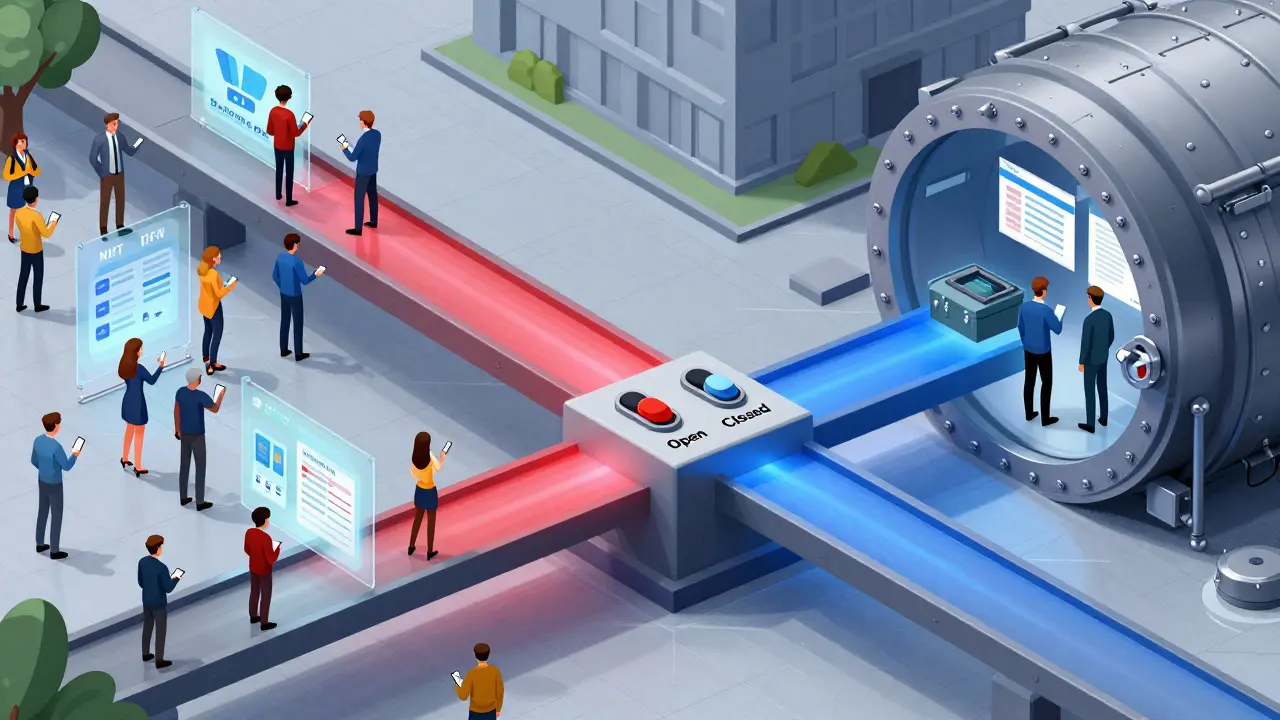
Some organizations don’t need pure public or pure private. They need a hybrid. A hybrid blockchain lets parts of the system be public and parts private. For example, a car manufacturer might use a private blockchain to track parts between suppliers-but publish a public record of each vehicle’s authenticity for customers to verify.
A consortium blockchain is a group of organizations that jointly run a private network. Think of it as a joint venture on blockchain. The Automotive Industry Blockchain Consortium, for example, lets Ford, BMW, and Toyota share supply chain data without giving up control.
These aren’t alternatives-they’re evolution. Many companies start with a private chain to test the tech, then layer in public elements as they scale.
Final Decision Checklist
Ask yourself these five questions before choosing:
- Do I need to prove something to strangers who don’t trust me? → Public
- Do I need to hide data from the public? → Private
- Do I need to process thousands of transactions per second? → Private
- Do I need to interact with Bitcoin, Ethereum, or DeFi? → Public
- Do I need to fix or delete a transaction? → Private
If you answered "yes" to mostly public questions, go public. If you answered "yes" to mostly private questions, go private. If it’s mixed, consider a hybrid.
What’s Next?
The blockchain landscape is changing fast. In 2026, hybrid systems are becoming the norm-not the exception. Most enterprises are no longer asking "public or private?" They’re asking: "Which parts of my system need openness, and which need control?"
If you’re just starting out, begin small. Test a private blockchain for internal processes. If you’re building a crypto project, start on Ethereum or Solana. Don’t overcomplicate it. The right choice isn’t about technology-it’s about the problem you’re solving.
Can a private blockchain be as secure as a public one?
Security works differently. Public blockchains are secure because they’re decentralized-attacking them means overwhelming thousands of nodes. Private blockchains are secure because they’re restricted-only trusted parties can access them. But if one of those trusted parties is compromised, the whole system is at risk. Public chains are harder to attack; private chains are easier to control. Neither is "more secure"-they just manage risk differently.
Can I switch from a private to a public blockchain later?
Technically, yes-but it’s not simple. Data on a private chain isn’t automatically visible on a public one. You’d need to rebuild the system, migrate assets, and redesign access controls. Many organizations start private for testing, then launch a public-facing token or interface on top of it-not replace the whole system.
Are public blockchains slower because of mining?
Yes, but not all public blockchains use mining. Ethereum switched from Proof of Work to Proof of Stake in 2022, cutting energy use by 99.95%. Today’s public chains can handle 15-30 transactions per second. That’s not fast for a bank, but it’s enough for crypto, NFTs, and decentralized apps. Speed isn’t the point-trust is.
Why do some companies use both public and private blockchains?
They’re not choosing one-they’re using each for what it does best. A company might use a private blockchain to manage internal inventory and supplier contracts. Then, they use a public blockchain to issue a public-facing certificate of authenticity for each product. One keeps data private; the other builds customer trust.
Is a private blockchain really a blockchain?
Yes-but it’s a different kind. A true blockchain is a chain of blocks with cryptographic links and consensus. Private blockchains still use those. The difference is who controls it. Some purists say only public chains are "real" blockchains. But in practice, enterprises use private ones because they solve real problems. The term "blockchain" is about the structure, not the politics.
Richard Cooper
March 1, 2026 AT 20:27Sony Sebastian
March 2, 2026 AT 16:15Brian Lemke
March 3, 2026 AT 06:16lori sims
March 5, 2026 AT 05:19Michelle Mitchell
March 5, 2026 AT 20:01Tabitha Davis
March 6, 2026 AT 21:19Dee Resin
March 8, 2026 AT 18:46Deborah Robinson
March 10, 2026 AT 07:51Sriharsha Majety
March 12, 2026 AT 04:15Vishakha Singh
March 13, 2026 AT 21:06Shannon Black
March 14, 2026 AT 16:44Kaitlyn Clark
March 14, 2026 AT 20:54Reggie Fifty
March 16, 2026 AT 14:19