Why Indian Crypto Traders are Moving to Dubai for Tax Savings
 Apr, 12 2026
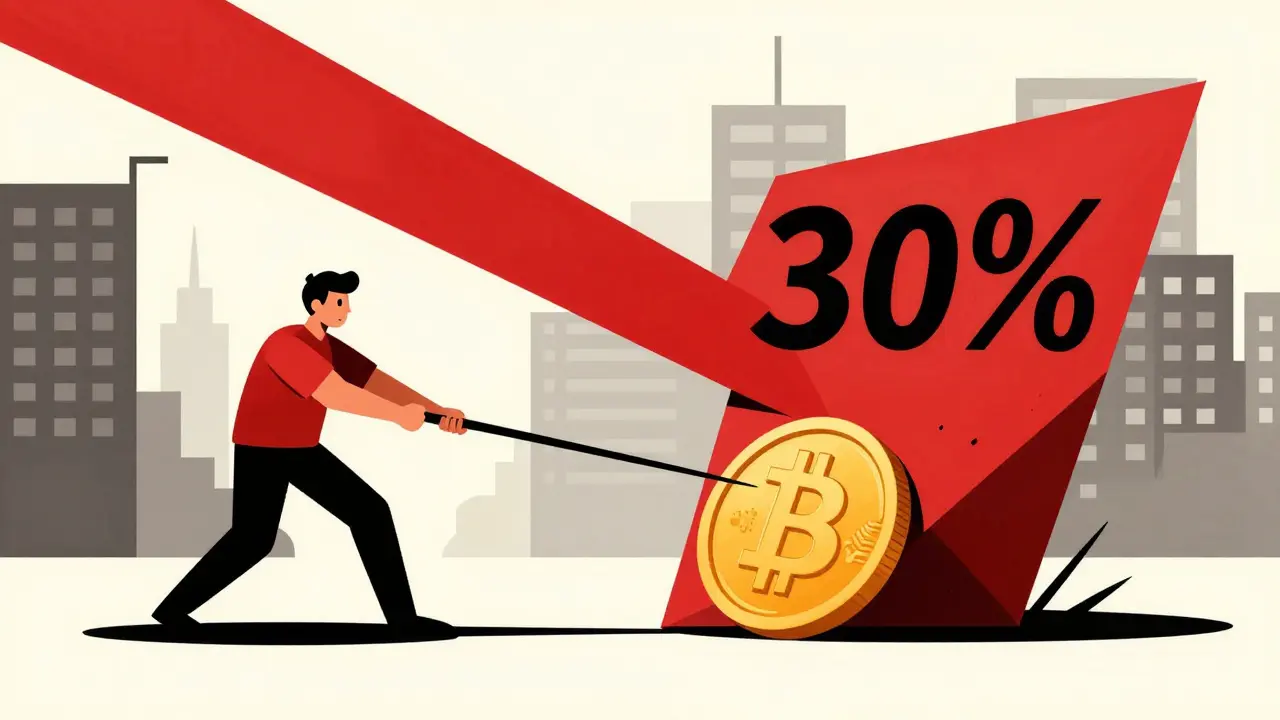
Imagine making $100,000 in profit from a lucky trade, only to watch $30,000 of it vanish instantly to the government. For many in India, this isn't a nightmare-it's the law. This brutal reality has sparked a mass exodus of digital asset investors toward a city where that same profit stays exactly where it belongs: in the trader's pocket. Indian crypto taxation is one of the most aggressive regimes globally, featuring a flat 30% tax on all cryptocurrency gains without any provisions for offsetting losses. This has turned Dubai into the ultimate sanctuary for those looking to protect their portfolios.
The Math Behind the Move: India vs. Dubai
To understand why people are packing their bags, you have to look at the numbers. In India, the government doesn't just take a huge slice of your wins; they make it hard to even track your money. Beyond the 30% flat tax, there is a 1% Tax Deducted at Source (TDS) on every sale. If you're a high-frequency trader, that 1% eats into your liquidity constantly, regardless of whether you actually made a profit on the trade.
Now, flip the script to the UAE. For an individual trader, Dubai is a global financial hub offering 0% personal income tax and 0% capital gains tax on digital assets . Whether you're flipping Bitcoin, staking Ethereum, or trading NFTs, the government doesn't take a cut of your personal gains. For someone netting six or seven figures, the difference isn't just a "saving"-it's a life-changing amount of capital that can be reinvested to compound wealth faster.
| Feature | India (Current Regime) | Dubai (UAE) |
|---|---|---|
| Personal Income Tax | 30% Flat Rate | 0% |
| Capital Gains Tax | 30% (No long-term benefit) | 0% |
| TDS on Sales | 1% on most transactions | None |
| Loss Offsetting | Not allowed | N/A (No tax to offset) |
Setting Up Shop: The Free Zone Advantage
Relocating isn't just about flying to a new city; it's about changing your legal domicile. Most professional traders don't just move as individuals; they set up corporate entities. This is where UAE Free Zones are special economic areas that allow 100% foreign ownership and provide a streamlined path to residency visas .
If you're looking for the best spot, you'll likely run into the Dubai Multi Commodities Centre (DMCC), which is a powerhouse for commodity and crypto trading. Other options like the International Free Zone Authority (IFZA) or Meydan Free Zone offer similar perks. The big draw here is that if your company's revenue stays below AED 375,000 (roughly $102,000), you can often maintain zero corporate tax. Even if you blow past that limit, the corporate tax rate is only 9%-still a fraction of what you'd pay back home.

Safety and Rules: The Role of VARA
One of the biggest headaches for Indian traders is the "regulatory grey area." You never quite know if the rules will change tomorrow. Dubai solved this by creating the Virtual Assets Regulatory Authority (VARA) is the world's first independent regulator dedicated solely to virtual assets, providing clear licenses and guidelines for crypto businesses .
Because VARA provides a clear rulebook, major exchanges and blockchain firms have moved their headquarters there. This creates a massive ecosystem. You aren't just avoiding taxes; you're gaining access to better banking services and a community of peers who are playing the same game. It's the difference between trading in a basement and trading in the center of the action.
The Reality Check: It's Not a Magic Button
Moving to Dubai sounds like a dream, but it requires actual work. You can't just open a UAE bank account and pretend you live there. To legally avoid Indian taxes, you generally need to prove you are no longer a tax resident of India. This usually means spending a specific number of days outside the country and establishing a permanent home elsewhere.
There are also costs to consider. Company registration, visa fees, and the cost of living in one of the world's most expensive cities can eat into your savings if your trading volume is low. For a retail trader making a few thousand dollars a year, the move doesn't make sense. But for professional traders and whales, these are simply the costs of doing business.

The Coming Shift: What is CARF?
If you think moving to Dubai means your trades will be invisible to the world, think again. The UAE is joining the Crypto-Asset Reporting Framework (CARF), an international standard for the automatic exchange of information on crypto-assets between tax authorities .
Starting in late 2025 and fully rolling out by 2027, exchanges and custodians in Dubai will be required to collect and share data on their users. While this doesn't mean Dubai will start charging a 30% tax, it does mean transparency is increasing. Your home country might find out exactly how much you're making. This makes it even more critical to handle your relocation legally and formally rather than trying to "hide" assets.
Do I need to be a millionaire to move to Dubai for crypto?
Not necessarily a millionaire, but you need significant trading volume. Between visa costs, company setup in a Free Zone, and Dubai's high rent, the overhead is steep. If your tax savings don't outweigh these yearly costs, you're better off staying put.
Does moving to Dubai instantly stop my Indian tax liability?
No. You must satisfy the residency requirements to be considered a Non-Resident Indian (NRI) for tax purposes. This usually involves spending more than 182 days outside India and properly documenting your change of domicile.
What is the corporate tax rate for crypto firms in Dubai?
For companies in Free Zones, revenue up to AED 375,000 is generally tax-free. Above that threshold, a corporate tax of 9% typically applies, which is still significantly lower than Indian corporate rates.
Is crypto legal in Dubai?
Yes, it is highly regulated and legal. Through VARA, the UAE has created one of the most comprehensive legal frameworks for virtual assets in the world.
What happens with CARF in 2027?
The Crypto-Asset Reporting Framework (CARF) will force exchanges to share transaction data with international tax authorities. While it doesn't change Dubai's 0% tax rate, it eliminates the anonymity of trading in the region.
Next Steps for Potential Relocators
If you're serious about this move, don't wing it. Start by auditing your annual profits to see if the tax savings actually cover the cost of a Dubai lifestyle and business license. Next, consult with a tax professional who understands both Indian and UAE law to avoid "exit tax" traps or residency disputes.
Once the math checks out, look into a Free Zone that fits your specific trading style-DMCC is great for those wanting a massive network, while other zones might be leaner and cheaper for solo traders. Finally, ensure your record-keeping is spotless, as the upcoming CARF implementation means the days of "off-the-grid" crypto wealth are ending.
Swati Sharma
April 13, 2026 AT 18:52The 30% flat tax without loss offsetting is absolutely brutal for anyone trying to maintain a healthy delta in their portfolio. It basically kills any chance of high-frequency scalp trading because the friction from TDS and the tax hit on wins makes the risk-reward ratio completely untenable for the average retail trader. Moving to a VARA-regulated environment is honestly the only way to scale a serious operation without getting liquidated by the taxman before the market even moves. Most of my peers in the Web3 space are already looking at the DMCC as a way to institutionalize their holdings and optimize their capital efficiency. It is just basic arbitrage of residency to protect the principal.
James Bone
April 14, 2026 AT 08:17Imagine thinking moving to a desert is a 'life-changing' move just to dodge taxes. It is just the same greed wrapped in a different passport. You are all just playing a shell game with the government until the CARF kicks in and the bubble bursts.
Aaliyah BROTHERS
April 14, 2026 AT 16:19Typical!!!! Just a bunch of globalists running away to some sandy oasis to hide their loot while real patriots pay their fair share!!!! The CARF is probably just another layer of the surveillance state to track every single satoshi we own!!!! Wake up people!!!! This is how they get you!!!! Total chaos!!!!
daniella davis
April 16, 2026 AT 09:15Omg please... acting like Dubai is some secret hack. Everyone with actual money has been doing this for years. It is not even that hard to set up a company if you actually have the funds and arent just some broke trader dreaming of a Lambo lol. The rent in Dubai is like actually insane though, so your 'savings' go straight to some landlord who owns half the city.
7stargee Emmanuel Obani
April 17, 2026 AT 12:39Dubai is a scam 🤡. Only for people who think they are rich. Just stay home and trade stealth 📉
Artavius Edmond
April 18, 2026 AT 18:14I think it's pretty fair to want to keep what you earn, man. If a country makes it impossible to trade profitably, people are just going to find a place that actually supports the industry. It's a win-win if the UAE gets the talent and the traders get to keep their gains.
Amanda Faust
April 19, 2026 AT 11:19the 182 day rule is the part people always mess up they think a visa is enough but the indian tax authorities will come for you if you dont actually leave the country
Jessie Tayaban
April 21, 2026 AT 05:21Omg i can't even imagine loseing 30% of my money to taxes!!!! That is literally a crime!!!! I would move to the moon before letting the govt take my btc!!!! My god the stress of it all is just too much to handle!!!!
Jason Davis
April 21, 2026 AT 18:04Actually if you look at the cost of living in Dubai, it can be hit or miss. Some areas are way more affordable than the downtown spots. Just make sure you check the liscensing fees for the free zones carefully because they vary a lot between the ones mentioned.
Rebecca Violette
April 23, 2026 AT 01:19i just feel like everything is so unfair for us small traders... why does the goverment always have to take everything away from us when we are just trying to survive... its so depresing
Emily H
April 24, 2026 AT 19:49It is truly commendable that individuals are seeking legal avenues to optimize their financial futures. While the transition requires significant diligence, the long-term benefits of operating within a structured regulatory framework like VARA are substantial. Establishing a proper corporate entity not only secures one's assets but also fosters a professional environment for growth. I would highly recommend that anyone considering this path ensures their documentation is impeccably maintained to satisfy both UAE and Indian authorities. Such a proactive approach to wealth management is an excellent way to ensure stability in the volatile digital asset market. It is often the difference between temporary success and sustainable wealth. Furthermore, the transition to a global hub provides networking opportunities that are simply unavailable in more restrictive jurisdictions. By aligning oneself with the forward-thinking policies of the UAE, traders can truly maximize their potential. It is a sophisticated strategy for those who value both legal compliance and financial efficiency. The path is clear for those with the discipline to follow the residency requirements. Ultimately, the goal is to create a legacy of wealth that is protected by law. This shift is a logical evolution for the global crypto community. I wish everyone the best of luck in their financial journeys.