Ally Direct Token (DRCT) Airdrop: Reality Check and Market Status
 Oct, 7 2026
You see the ticker DRCT floating around social media or a sketchy Telegram group, and suddenly there is talk of an Ally Direct Token airdrop. It sounds like free money, right? But before you connect your wallet to some random website promising millions of tokens, pause. As of October 2026, the reality of the DRCT project is far less exciting than the hype suggests. There is no verified, active airdrop campaign running for this token in the mainstream crypto space. In fact, the market data tells a story of dormancy, not distribution.
This article cuts through the noise. We will look at what Ally Direct actually is, why its token is showing zero trading volume, and how to spot whether an "airdrop" offer is legitimate or just another trap for impatient investors. If you are hoping to farm a new coin, you need to understand the current state of the ecosystem first.
The Core Promise: What Is Ally Direct?
To understand the token, you have to understand the platform it claims to support. Ally Direct is a blockchain-based software-as-a-service platform designed to connect businesses, service providers, and customers directly. The pitch is simple: cut out the middleman. Think about apps like DoorDash, Postmates, or GrubHub. They take hefty commissions from restaurants and often squeeze drivers on pay. Ally Direct aims to remove these third-party marketplace inefficiencies using enterprise technology.
The goal is to let merchants keep 100% of their revenue while offering branded iOS, Android, and Web interfaces. For drivers, the promise is earning up to 42% more than traditional platforms. Customers supposedly save around 30% because the markup disappears. On paper, it looks like a win-win-win. But here is the catch: technology needs adoption, and adoption needs liquidity. Without those two things, the token is just code.
Tokenomics Under the Microscope
Let’s look at the numbers, because they don’t lie. The total supply of DRCT is capped at 1.2 billion tokens with a self-reported circulating supply of approximately 362.65 million. That is a massive amount of potential value if the price were even $0.01. But that is the problem-the price isn't anything close to that.
| Metric | Current Status (Oct 2026) | Implication |
|---|---|---|
| Trading Price | $0.00 USD | No perceived market value |
| 24h Volume | $0.00 USD | Zero liquidity; no buyers/sellers |
| Exchange Listing | Not Listed (Binance, etc.) | Hard to buy or sell |
| Circulating Supply | ~362 Million | High dilution risk if sold |
Bitget and other major trackers show the token down by 0.00% with zero volume. This isn't just a dip; it's a flatline. When a token has zero volume, it means nobody is buying and nobody is selling. You can't cash out. You can't trade it. It is effectively frozen in terms of market activity.
Is There Actually an Airdrop?
Here is the big question everyone asks: "Did I miss the snapshot?" Based on available data from major aggregators and exchange pages, there is no verifiable information about an active or recently announced DRCT airdrop. Most legitimate airdrops require you to do something specific-bridge assets, interact with a smart contract, or hold a certain balance during a snapshot date.
If you saw a post claiming "Claim Your DRCT Now," be skeptical. Scammers love dormant tokens. They know people remember hearing about them years ago. They create fake claim sites asking you to approve unlimited token allowances. Once you click that button, they drain your wallet. Since DRCT isn't listed on major exchanges like Binance, any "official" claim portal should come directly from the project's verified Twitter or Discord, not a random link sent in DMs.
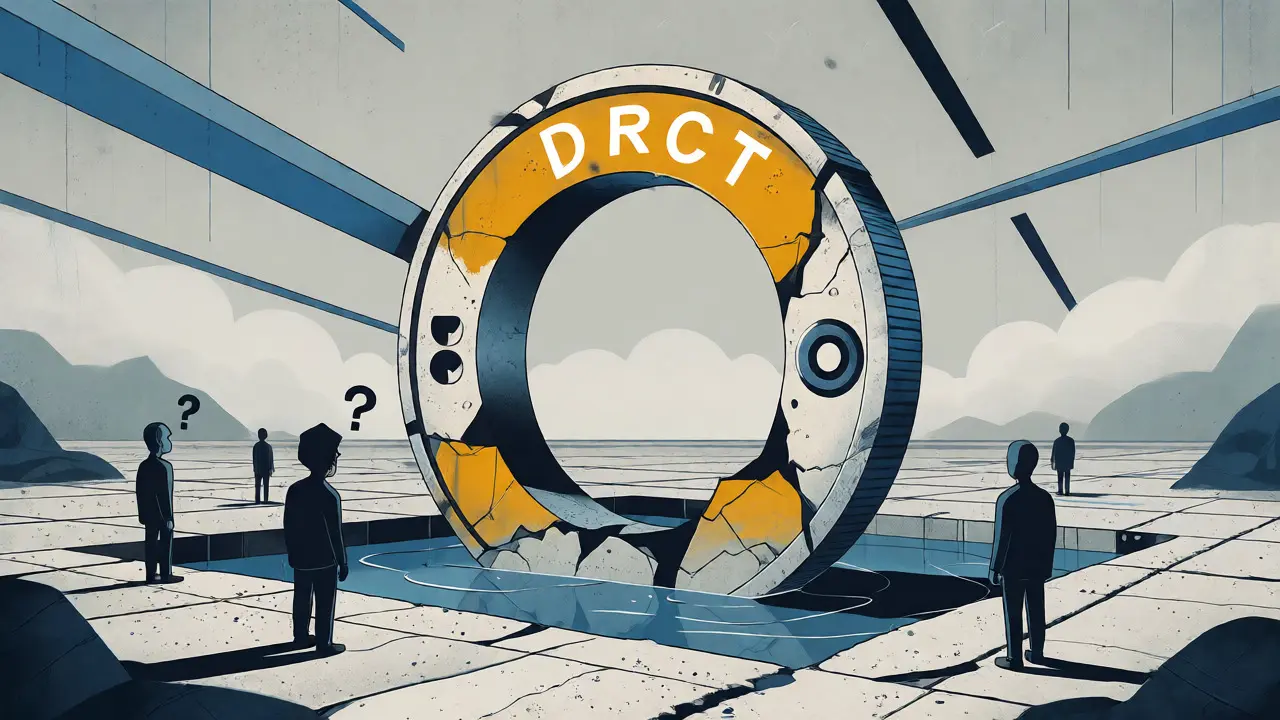
Why the Confusion with ADT?
Another layer of messiness comes from ticker confusion. Some sources refer to "Ally Direct Token" as ADT a separate designation emphasizing peer-to-peer transactions and privacy features. This inconsistency suggests either poor documentation, a rebranding effort that never fully took off, or multiple projects trying to ride the same name.
In crypto, tickers matter. If you send ETH to an address expecting one thing and get another, you lose money. With DRCT/ADT, the lack of clear branding makes it hard to trust official communications. Always double-check the contract address. Do not rely on the ticker symbol alone.
Modern Airdrop Standards vs. DRCT
The landscape of crypto airdrops has changed drastically since 2021. Today, projects use sophisticated methods to filter out farmers. They use Soulbound Tokens to verify user authenticity and prevent sybil attacks. They reward meaningful contribution, like restaking ETH via EigenLayer or interacting with Layer 2 protocols.
Compare this to DRCT. A successful airdrop usually accompanies a launch or a major update. DRCT seems stuck in limbo. Its ambitious promises-NFT integration, reputation management, dispute resolution-are cool concepts, but they require active users. Without users, there is no reason to distribute tokens. Modern airdrops reward activity; dormant tokens rarely reward anyone because there is no activity to reward.
Risk Assessment: Should You Care?
If you already hold DRCT, you might feel stuck. If you don't, should you buy in hoping for a future airdrop? Probably not. Here is why:
- Liquidity Risk: With $0 volume, you cannot exit your position easily. You are holding a bag you can't drop.
- Delisting Threat: Being absent from top-tier exchanges like Binance signals low institutional interest.
- Opportunity Cost: Capital tied up in dead tokens could be working in active ecosystems like Solana or Ethereum L2s where real airdrops happen.
The disconnect between the marketing copy ("revolutionizing delivery") and the market reality ("zero trades") is a classic red flag for projects that have lost momentum. Until the team announces a concrete roadmap with development updates and exchange listings, treat DRCT as a speculative gamble with very long odds.
How to Spot Legitimate Airdrops in 2026
Since DRCT likely isn't giving away much, where should you look? Focus on projects with verifiable on-chain activity. Look for:
- Active Development: Check GitHub commits. Are engineers still pushing code?
- Community Engagement: Is the Discord lively, or is it full of bots spamming "wen moon"?
- Clear Tokenomics: Does the whitepaper explain exactly how many tokens go to the community versus insiders?
- Partnerships: Are they integrating with known wallets or payment processors?
Projects like Notcoin or Hamster Kombat proved that simple, engaging mechanics work. They had millions of users. DRCT needs users first, then airdrops second. The order matters.
Is the Ally Direct Token (DRCT) airdrop currently live?
No, there is no widely verified or active airdrop campaign for DRCT as of October 2026. Most claims of live airdrops appear to be unverified or potentially scam-related, given the token's zero trading volume and lack of major exchange listings.
Why does DRCT have zero trading volume?
Zero trading volume indicates a complete lack of market liquidity. This usually happens when a token is delisted from major exchanges, lacks active community interest, or the project itself is dormant. Without buyers and sellers, the price remains static at effectively zero.
What is the difference between DRCT and ADT?
Documentation inconsistencies exist within the Ally Direct ecosystem. While DRCT is the primary ticker associated with the main token, some sources reference ADT (Ally Direct Token). This may indicate a rebranding attempt or legacy naming conventions. Always verify the specific smart contract address rather than relying solely on the ticker.
Can I buy DRCT on Binance?
Currently, DRCT is not listed for spot trading on Binance. The platform may have informational pages, but actual trading pairs are unavailable. This limits accessibility and suggests the token does not meet the liquidity or compliance standards required for major centralized exchanges.
Should I invest in DRCT now?
It is highly risky. With zero volume and no clear recent developments, investing now is speculative. Unless the project announces a major partnership, exchange listing, or functional product update, capital might be better deployed in more active ecosystems with proven airdrop histories.