Amplify Exchange Review: Is It a Scam or Safe? (2026 Reality Check)
 May, 30 2026
You’ve likely seen an ad for Amplify Exchange promising high returns, low fees, and easy trading. It sounds too good to be true. Here is the hard truth: there is no legitimate, regulated cryptocurrency exchange called "Amplify Exchange." If you are looking to trade Bitcoin or Ethereum on this platform, stop right now. You are likely facing a phishing site, a clone scam, or a misunderstanding of a completely different financial product.
In 2026, the crypto landscape is cleaner than ever, but scammers are getting smarter. They borrow names from trusted brands to trick new investors. This article cuts through the noise. We will explain why "Amplify Exchange" does not exist as a trading platform, what real products actually use the name "Amplify," and how to verify if any exchange is safe before you deposit a single cent.
The Red Flag: Why "Amplify Exchange" Doesn't Exist
If you search for major industry reports, regulatory databases, or reputable review sites like ICOBench or Token Metrics, you won’t find "Amplify Exchange." That silence is loud. Legitimate exchanges like Binance, Coinbase, Kraken, and OKX have millions of users, public audits, and clear regulatory status. They appear everywhere in financial news.
When a platform has zero presence in authoritative sources, it usually means one of three things:
- It is a brand-new scam: A website created last week to steal deposits.
- It is a clone: A fake site copying the look of a real company to confuse users.
- It is a misnamed product: You might be thinking of a different service entirely.
We need to address that third possibility immediately because it is the most common source of confusion.
Confusion Alert: Amplify Investments vs. Crypto Exchanges
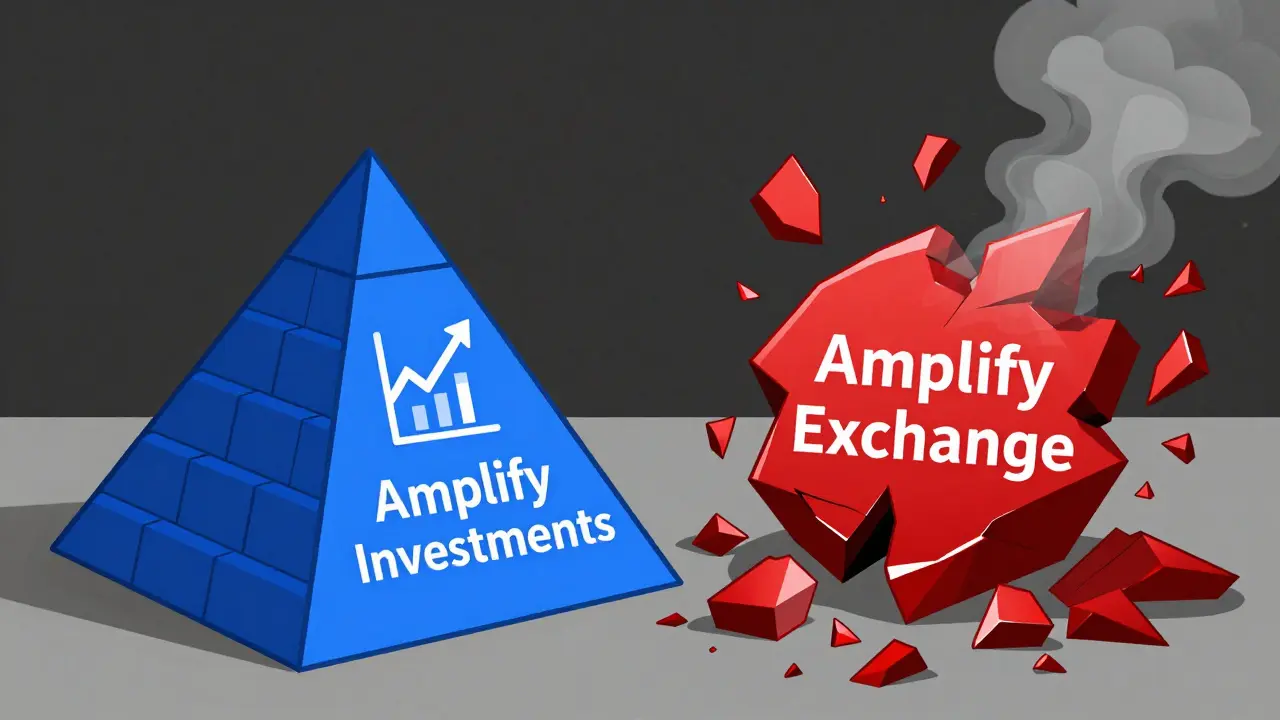
There is a very real, highly respected financial firm called Amplify Investments LLC. Amplify Investments is an asset management firm that creates exchange-traded funds (ETFs) focused on blockchain technology and digital assets. However, they do not run a cryptocurrency exchange where you can buy and sell coins directly.
Instead, Amplify Investments manages products like the Amplify BLOK ETF (ticker: BLOK). The Amplify BLOK ETF invests in companies involved in the blockchain ecosystem, such as miners, wallet providers, and payment processors. This is a stock market product. You buy shares of the ETF through a traditional brokerage account (like Fidelity, Schwab, or E*TRADE), not through a crypto app.
Here is the critical difference:
| Feature | Amplify Investments (Real) | "Amplify Exchange" (Fake/Suspicious) |
|---|---|---|
| Product Type | Exchange-Traded Fund (ETF) | Crypto Trading Platform |
| Where to Buy | Traditional Stock Brokerage | Unknown Website / App Store Clone |
| Regulation | SEC Registered (USA) | Unregulated / Offshore |
| Asset Exposure | Blockchain Companies (Stocks) | Direct Crypto Holdings (BTC, ETH) |
| Risk Level | High (Volatility) | Extreme (Scam Risk) |
If you saw an ad for "Amplify Exchange" offering direct Bitcoin trading, it is using the credibility of Amplify Investments to lure you in. This is a classic "brandjacking" tactic. Do not fall for it.
How to Spot a Fake Crypto Exchange in 2026
Scammers know that trust is currency. They build websites that look professional, with slick designs and fake testimonials. But they always leave cracks in the armor. Here is how to check if an exchange is legitimate before you sign up.
1. Check Regulatory Licenses
A legitimate exchange must be registered with financial authorities. In the United States, this means registration with the SEC (Securities and Exchange Commission) or FinCEN (Financial Crimes Enforcement Network). In Europe, look for licenses from the FCA (UK) or BaFin (Germany). In Australia, check ASIC.
If a site claims to be "globally regulated" but lists no specific license numbers or jurisdictions, run away. Real companies proudly display their license IDs in the footer of their website. For example, Coinbase provides its MSB (Money Services Business) registration number clearly.
2. Look for Independent Audits
Trust, but verify. Legitimate exchanges undergo regular security audits by firms like CertiK, Hacken, or SlowMist. These audits prove that the platform’s code is secure and that user funds are stored safely. If you cannot find an audit report for "Amplify Exchange" on Google, assume the code is untested and unsafe.
3. Search for Community Sentiment
Go to Reddit, Twitter (X), or Trustpilot. Search for the exact name of the exchange. If you see complaints about "withdrawal issues," "fake support," or "account frozen," these are massive red flags. Scammers often delete negative reviews on their own site, but they can’t control independent forums.
4. Beware of "Too Good to Be True" Promises
No legitimate exchange guarantees profits. If a platform promises "daily returns," "risk-free trading," or "AI-powered guaranteed gains," it is a Ponzi scheme. The crypto market is volatile. Even the best traders lose money sometimes. Anyone promising otherwise is lying.
Safe Alternatives: Where to Actually Trade Crypto
Since "Amplify Exchange" is not a viable option, where should you go? Depending on your location and experience level, here are some proven, regulated alternatives that dominate the market in 2026.
For Beginners: Coinbase
Coinbase is one of the largest and most regulated cryptocurrency exchanges in the world, publicly traded on the NASDAQ under the ticker COIN. It is ideal for beginners because of its simple interface and strong customer support. Coinbase is fully compliant with US regulations and offers insurance for digital assets held in cold storage. While fees can be higher than competitors, the peace of mind is worth it for new users.
For Advanced Traders: Binance
Binance is the world's largest cryptocurrency exchange by trading volume, offering hundreds of trading pairs, futures, options, and staking services. Founded in 2017, it serves over 90 million users globally. Binance offers lower fees and more advanced tools than Coinbase. However, its complexity can overwhelm beginners. Ensure you are using the correct regional version (e.g., Binance.com for global users, Binance.US for Americans) to comply with local laws.
For Security Focus: Kraken
Kraken is a well-established exchange known for its robust security track record and transparent proof-of-reserves audits. Kraken has never been hacked since its founding in 2011. It offers excellent customer support and a wide range of fiat currency pairs. If security is your top priority, Kraken is a top-tier choice.
For Decentralized Options: Uniswap
If you want to avoid centralized exchanges altogether, consider decentralized protocols like Uniswap. Uniswap is a leading decentralized exchange (DEX) protocol built on Ethereum, allowing users to swap tokens directly from their wallets without intermediaries. You retain full control of your private keys. However, you must understand gas fees, slippage, and smart contract risks. This is not for beginners.
What If You Already Deposited Money?
If you sent funds to a site claiming to be "Amplify Exchange" and cannot withdraw them, act quickly. Unfortunately, recovering stolen crypto is difficult, but not impossible if you move fast.
- Contact Your Bank/Card Issuer: If you paid via credit card or bank transfer, call them immediately. Report the transaction as fraudulent. They may reverse the charge if caught early enough.
- Report to Authorities: File a report with your local cybercrime unit. In the US, use the FBI’s Internet Crime Complaint Center (IC3). In the UK, report to Action Fraud. Provide all evidence: screenshots, transaction hashes, and website URLs.
- Warn Others: Post your experience on social media and review sites. This helps prevent others from falling victim to the same scam.
- Do Not Pay "Recovery Fees": Scammers often pretend to be "recovery agents" who can get your money back for a fee. These are secondary scams. Never pay anyone to recover lost crypto.
Final Thoughts: Protect Your Digital Assets
The crypto space is filled with innovation, but also deception. Names like "Amplify" sound trustworthy because they are associated with real financial institutions. Always verify the exact legal entity behind any platform. Check regulatory registries. Read independent reviews. And remember: if an exchange doesn’t exist in major financial databases, it probably shouldn’t hold your money.
Stick to established, regulated platforms like Coinbase, Binance, or Kraken. Use hardware wallets for long-term storage. Stay skeptical of ads promising easy riches. Your financial safety depends on your diligence.
Is Amplify Exchange a legitimate crypto platform?
No. There is no verified, regulated cryptocurrency exchange named "Amplify Exchange." The name is likely being used by scammers or confused with Amplify Investments, which manages blockchain ETFs, not a trading exchange.
What is the difference between Amplify Investments and a crypto exchange?
Amplify Investments is a regulated asset manager that sells ETFs (like BLOK) through traditional stock brokers. A crypto exchange allows you to buy and sell cryptocurrencies directly. Amplify Investments does not offer direct crypto trading.
How can I tell if a crypto exchange is a scam?
Check for regulatory licenses (SEC, FCA, etc.), independent security audits, and genuine user reviews on third-party sites. If the exchange promises guaranteed profits, lacks transparency, or has no online presence outside its own website, it is likely a scam.
Are there safe alternatives to Amplify Exchange?
Yes. Reputable alternatives include Coinbase (for beginners), Binance (for advanced traders), and Kraken (for security-focused users). All are regulated and have large, active user bases.
Can I recover money lost to a fake exchange?
Recovery is difficult but possible if you act quickly. Contact your bank or card issuer to dispute the charge. Report the fraud to local cybercrime authorities. Avoid paying "recovery fees" to unknown agents, as these are often secondary scams.
Why do scammers use names like "Amplify"?
Scammers use "brandjacking" to borrow the trust associated with legitimate companies. By mimicking the name of a respected firm like Amplify Investments, they hope users will assume the platform is safe without doing due diligence.
Is the Amplify BLOK ETF a safe investment?
The Amplify BLOK ETF is a legitimate, SEC-registered investment product. However, it is highly volatile because it tracks blockchain-related stocks, not stable assets. It carries significant market risk, though it is not a scam.
What is a hardware wallet and why do I need one?
A hardware wallet is a physical device that stores your cryptocurrency private keys offline. It protects your assets from online hacks and exchange failures. For long-term holdings, a hardware wallet is much safer than leaving coins on any exchange.
Craig Swanson
May 30, 2026 AT 19:55Listen up folks because I am not going to repeat myself. This article is spot on and if you are still thinking about putting money into some random site called Amplify Exchange you are literally throwing your life savings into a black hole. Craig here and I have seen too many people get burned by these brandjacking scams where they use the name of a legit ETF firm to trick you into thinking it is safe. It is not safe. It is a trap. Do your homework or lose your cash.
Rosie Morris
June 1, 2026 AT 13:04omg thank god i read this befor depositing anyting. my friend told me abt amplify exchange and said it was super easy money but now im so glad i checked here first. it sounds like total scam to me. why would a real company not have reviews?? that makes no sense at all. i feel so lucky i didnt fall for it.
lorna erni
June 1, 2026 AT 15:00You need to wake up people! The fact that there are zero audits is the biggest red flag in history. I am tired of seeing newbies get slaughtered by these offshore operations. If it sounds too good to be true, it is a lie. Period. Stop looking for shortcuts and start using regulated platforms like Coinbase or Kraken if you want to keep your money. Aggressive? Maybe. But necessary.
stalin brian
June 2, 2026 AT 22:07i always tell my friends to check the sec database before trusting any platform. its crazy how many people just trust an ad they see on social media. the confusion with amplify investments is real tho. i remember getting confused back in the day when crypto etfs started popping up. its important to know the difference between buying shares of a fund and trading actual coins on an exchange. big difference.
kamal ifrani
June 3, 2026 AT 20:59The absolute ignorance displayed by those who fall for this is pathetic. You are out here playing financial roulette while the house burns down. These scammers are laughing at your gullibility. I analyze markets for a living and I can tell you that a platform with no regulatory footprint is not just risky, it is criminal. You deserve to lose your money if you cannot do basic due diligence. It is embarrassing.
saradee dee
June 5, 2026 AT 11:44Oh my goodness, this is such a scary situation for everyone involved! I was reading through the comments and I just felt so much anxiety for the people who might have already sent their money. It is truly heartbreaking to think about families losing their savings to something so fake. We really need to look out for each other and share this information everywhere we can go. Please stay safe everyone!
Bill Gunn
June 6, 2026 AT 15:36Hey team! 👋 Bill here with a quick tip. Always check the footer of the website for license numbers. Real companies like Coinbase put them right there in plain sight. 🕵️♂️ If you see vague language like 'globally regulated' without specific jurisdictions, run! 🏃♂️💨 Use hardware wallets for long term holds. Stay safe out there! 🔒✨
Dana Rapoport
June 7, 2026 AT 20:55I often ponder the nature of trust in digital spaces. It is fascinating how easily we surrender our skepticism to polished interfaces. The distinction between Amplify Investments and this fraudulent entity highlights a deeper philosophical issue regarding brand identity in the age of information overload. One must remain vigilant.
Debbie Lewis
June 8, 2026 AT 19:07i just sit here watching the drama unfold. honestly people should know better by now. but whatever. just stick to kraken if you want security. done.
Joe Clements
June 10, 2026 AT 00:33Thanks for sharing this info. It is really helpful to have clear guidance on what to look for. I appreciate the detailed breakdown of the red flags. It helps me feel more confident in avoiding these traps. Keep up the good work.
Miss Masquer
June 11, 2026 AT 07:12I find it incredibly intriguing how the cultural perception of cryptocurrency has shifted from a niche interest to a mainstream financial instrument, yet the predatory tactics remain surprisingly archaic in their reliance on deception rather than innovation, which suggests that perhaps the industry as a whole needs to engage in a more profound dialogue about ethical standards and consumer protection mechanisms that go beyond mere regulatory compliance, especially when considering the global nature of these transactions and the varying levels of financial literacy across different demographics.
Diana Morris
June 12, 2026 AT 11:46stop falling for it guys. its obvious. check the licenses. if its not sec registered run. dont be stupid. i say this every time but nobody listens until they lose everything. then they come crying here. annoying.
Dianne Wright
June 14, 2026 AT 05:41i knew it was a scam from the second i saw the ads. why does everyone need to be spoonfed this info? it is insulting to my intelligence that people cant figure out that high returns with low risk is impossible. i guess some people just love being taken advantage of. it is exhausting dealing with this level of naivety.
trisya hazriyana
June 15, 2026 AT 12:07look at the metrics. zilch. nada. zero. the alpha is in knowing what to avoid not what to buy. this is basic risk management 101. if you cant handle the volatility of real crypto you sure cant handle the certainty of a scam. stop whining and start learning.
Eric Grosso
June 16, 2026 AT 00:04so i was wondering if anyone else noticed how similar the logo looks to the real amplify investments one. its almost like they copy pasted it. makes me wonder if they are trying to confuse people on purpose. also does anyone know if uniswap is hard to use for beginners?