Automated DCA Tools and Platforms: A Complete Guide to Crypto & Stock Automation
 Jul, 17 2026
You want to invest without the stress of timing the market. You know that buying a little bit regularly is smarter than trying to catch the bottom, but you also know that remembering to buy every week is hard. That is exactly why automated DCA tools exist. These platforms take the human error out of investing by scheduling your purchases for you, whether you are buying Bitcoin on a Tuesday or an S&P 500 ETF on a Friday.
Dollar-Cost Averaging (DCA) is not a new trick. It has been around since the early 20th century, promoted by mutual funds to help regular people build wealth slowly. But doing it manually requires discipline. Automation removes that requirement. Today, we have everything from simple bank apps that round up your coffee change to complex AI-driven bots that trade cryptocurrency 24/7 based on volatility signals.
How Automated DCA Actually Works
At its core, automated DCA is just software executing a rule you set. The rule is simple: "Buy $X amount of Asset Y every Z days." The software connects to your broker or exchange, checks if you have enough cash, and places the order. No emotion, no panic selling, no FOMO buying.
The technical side varies depending on where you invest. In traditional finance, Robo-advisors like Betterment or Wealthfront hold your money in custody. They use internal systems to move cash into ETFs automatically. In crypto, third-party bots often connect to your exchange account via API keys. This means the bot tells your exchange what to do, but the exchange actually holds the funds. Understanding this distinction is crucial for security.
For those deep in decentralized finance (DeFi), smart contracts handle the automation. Protocols like Mean Finance allow you to deposit tokens once, and the code executes swaps at specific block intervals. This removes the need for a central server entirely, shifting trust from a company to the blockchain itself.
The Four Main Types of DCA Platforms
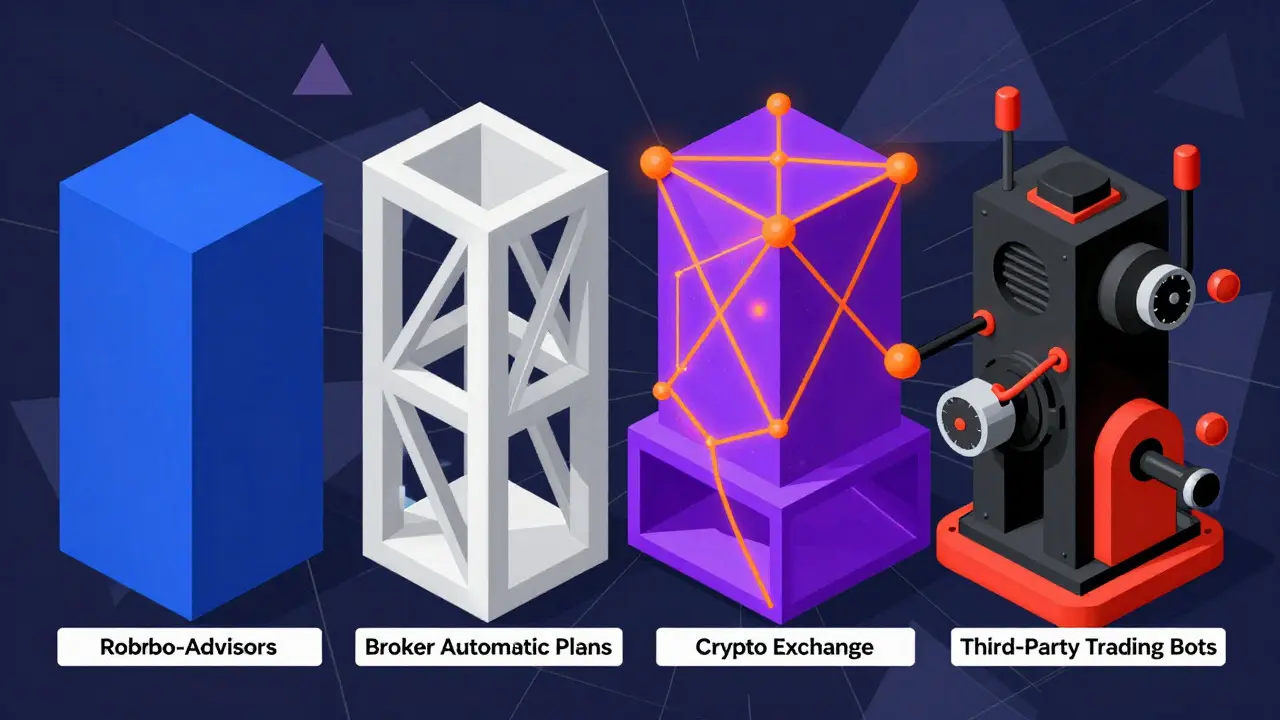
Not all automated tools are built the same. Choosing the right one depends on how much control you want versus how much convenience you need. Here are the four main categories dominating the market in 2026.
- Traditional Robo-Advisors: These are the "set it and forget it" options for stocks and bonds. You answer questions about your risk tolerance, and they build a diversified portfolio. They automatically reinvest dividends and balance your assets. Think Betterment or Wealthfront.
- Broker Automatic Investment Plans: Major brokers like Vanguard, Fidelity, and Charles Schwab offer free recurring buys. You pick the fund, set the date, and they execute. It’s basic, cheap, and effective for long-term stock investors.
- Crypto Exchange Native Features: Exchanges like Binance, Coinbase, and Kraken have built-in "Auto-Invest" features. You schedule a buy for Bitcoin or Ethereum directly on their platform. It’s easy and secure because you don’t need to share API keys with third parties.
- Third-Party Trading Bots: Platforms like 3Commas, Cryptohopper, and Pionex offer advanced strategies. They can buy more when prices drop (averaging down) or sell when profits hit a target. These are for traders who want granular control over entry and exit points.
Top Platforms Compared: Costs and Features
Pricing models vary wildly. Some charge a percentage of your assets, while others charge a flat monthly fee. Let’s look at the specifics so you can calculate the real cost of automation.
| Platform | Type | Pricing Model | Best For | Key Feature |
|---|---|---|---|---|
| Betterment | Robo-Advisor | 0.25% annual fee on assets | Long-term retirement savings | Tax-loss harvesting included |
| Wealthfront | Robo-Advisor | 0.25% annual fee on assets | Goal-based planning | Direct Indexing for high balances |
| Binance Auto-Invest | Crypto Exchange | Standard trading fees (~0.1%) | Crypto accumulation | Supports 300+ assets |
| 3Commas | Trading Bot Platform | $14.90 - $49.90/month | Active crypto traders | Advanced safety orders & grid trading |
| Pionex | Built-in Bot Exchange | 0.05% trading fee | Beginners wanting low fees | No subscription, bots built-in |
| Vanguard | Traditional Broker | $0 commission + low expense ratios | Passive index investors | Ultra-low cost ETF access |
If you are investing thousands of dollars a month into stocks, the 0.25% fee from a robo-advisor might feel steep compared to a free broker plan. However, that fee covers tax optimization and rebalancing services that save you time and potentially taxes. For crypto traders, the subscription model of tools like 3Commas makes sense only if you are actively managing multiple strategies. If you just want to buy Bitcoin weekly, sticking with the exchange’s native feature is cheaper and safer.
Risks and Security: What Could Go Wrong?
Automation reduces behavioral risk, but it introduces technical and operational risks. You need to be aware of these before linking your accounts.
API Key Leaks: When using third-party bots, you grant them access to your exchange account. Always use "Trade Only" permissions. Never enable withdrawal permissions. In late 2022, several users reported unauthorized trades linked to compromised API keys, highlighting the danger of poor security hygiene. Phishing attacks targeting bot users are common.
Martingale Danger: Many crypto bots offer "Martingale" strategies, which mean buying larger amounts as the price drops to lower your average entry price. This sounds great until the asset keeps dropping. During the 2022 bear market, many traders exhausted their entire capital reserves because their bots kept buying altcoins that fell 80% or more. If you use safety orders, set strict limits on how much capital can be deployed.
Smart Contract Risk: In DeFi, if the protocol holding your funds has a bug, you could lose everything. While audits by firms like CertiK reduce this risk, they do not eliminate it. Stick to well-established protocols with long track records.

Is DCA Better Than Lump-Sum Investing?
This is the most debated question in investing. Research from Vanguard (2012) and Morningstar consistently shows that lump-sum investing-putting all your money in at once-outperforms DCA about two-thirds of the time in rising markets. Why? Because markets generally go up over time. Money sitting in cash waiting for a DCA schedule misses out on gains.
So why automate DCA then? Psychology. Studies like Dalbar’s Quantitative Analysis of Investor Behavior show that individual investors underperform the market significantly because they try to time entries and exits. They buy high out of excitement and sell low out of fear. Automated DCA forces discipline. It accepts slightly lower expected returns in exchange for reduced regret and emotional stress. For most people, the peace of mind is worth the small mathematical disadvantage.
Getting Started: A Practical Checklist
Ready to automate your investing? Follow these steps to ensure you start safely and effectively.
- Define Your Goal: Are you saving for retirement (use a Robo-advisor or Broker) or trading crypto volatility (use a Bot or Exchange)?
- Choose the Right Platform: Match the tool to your goal. Don’t use a complex trading bot for simple retirement savings.
- Start Small: If using a new bot, run a paper trading simulation first. Or start with a tiny amount ($50-$100) to test the execution.
- Secure Your Accounts: Enable two-factor authentication (2FA) everywhere. Use hardware keys if possible. For API keys, restrict IP addresses to your home network if the platform allows it.
- Set Realistic Expectations: DCA is a marathon, not a sprint. Do not expect to get rich quick. Focus on consistency over intensity.
- Review Quarterly: Automation doesn’t mean abandonment. Check your performance every three months to ensure the strategy still aligns with your financial goals.
What is the cheapest way to automate DCA?
For stocks, use a major broker like Vanguard or Fidelity that offers free automatic investment plans with zero commissions. For crypto, use the native "Auto-Invest" or "Recurring Buy" feature on large exchanges like Binance or Coinbase, which only charge standard trading fees without monthly subscriptions.
Are crypto DCA bots safe to use?
They can be, but they carry higher risk than traditional brokers. Third-party bots require API keys, which can be compromised if not secured properly. Always disable withdrawal permissions on API keys. Built-in exchange bots (like Pionex) are generally safer regarding API leaks but introduce custodial risk since the exchange holds your funds.
Can I use DCA bots for leveraged trading?
Yes, many advanced bots support futures and margin trading. However, this is extremely risky. Leveraged DCA can lead to liquidation if the market moves against you rapidly. Most experts recommend avoiding leverage unless you are an experienced trader who understands risk management deeply.
Does DCA work for volatile assets like meme coins?
Technically yes, but financially it is dangerous. Meme coins can drop 90% and never recover. DCA assumes the asset will eventually trend upward. Using DCA on highly speculative assets can result in accumulating a massive position in a worthless coin. Stick to established assets with long-term utility for DCA strategies.
How does DeFi DCA differ from centralized bots?
DeFi DCA uses smart contracts on blockchains like Ethereum or Polygon. You retain custody of your funds in your wallet, and the contract executes swaps automatically. Centralized bots rely on a company’s servers and API connections. DeFi offers more transparency and self-custody but often involves higher gas fees and technical complexity.