BOA Exchange Review: Bank of America’s Crypto Policy & ETF Guide (2026)
 Jul, 4 2026
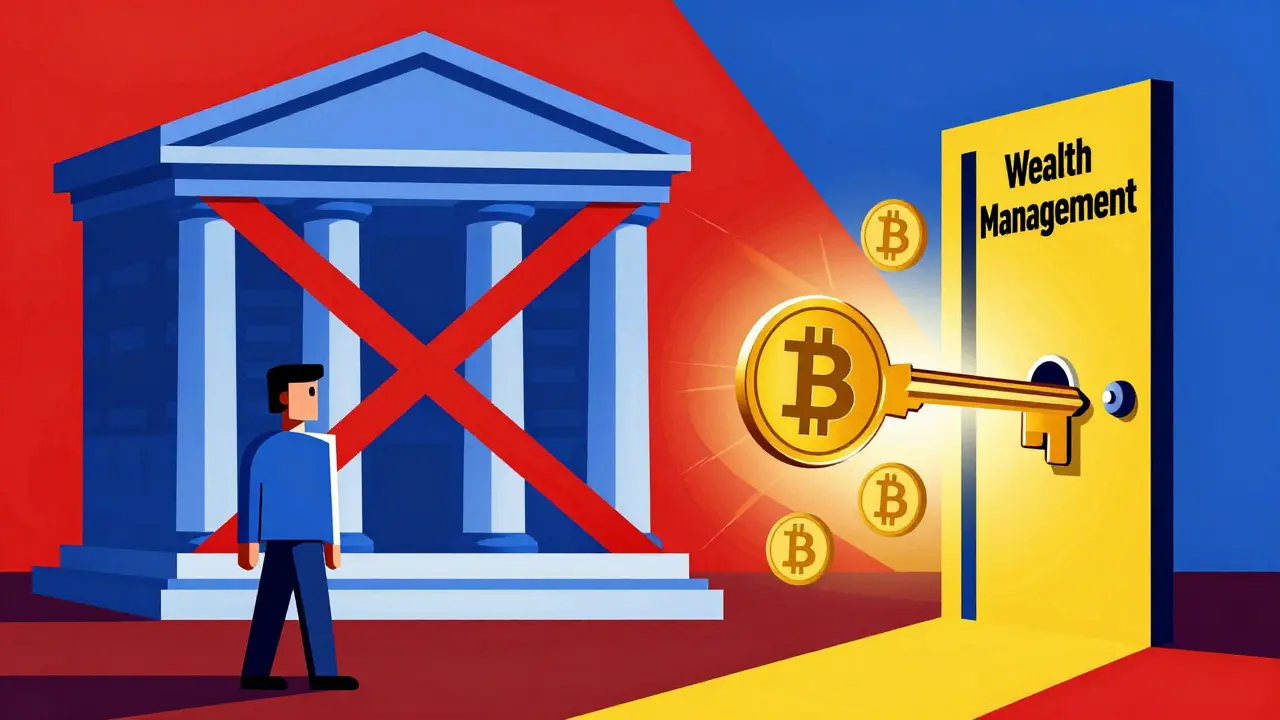
There is no such thing as a "BOA Exchange." If you are looking for a platform to buy and sell Bitcoin directly through Bank of America like you would on Coinbase or Binance, you will not find it. However, if you are a high-net-worth individual with a wealth manager at Bank of America (BOA), the landscape changed dramatically in January 2026. The bank has shifted its policy to allow advisors to recommend cryptocurrency investments, but strictly through regulated exchange-traded products (ETPs), primarily spot Bitcoin ETFs.
This distinction matters. You cannot log into your standard checking account and trade crypto. Instead, this move signals that one of the "Big Four" U.S. banks now views digital assets as a legitimate, albeit small, part of a diversified portfolio. For millions of retail customers, the answer remains "no direct access," but for wealth management clients, the door has cracked open. Let’s break down exactly what this means for your money, how the process works, and whether it is worth switching to a Bank of America advisor just for crypto exposure.
The Reality Check: No Direct Crypto Trading
First, let’s clear up the confusion. Many users search for "BOA Exchange" expecting a standalone trading app. That does not exist. Bank of America does not custody actual cryptocurrency. They do not hold Bitcoin or Ethereum in their vaults for you. Instead, they facilitate trades in Spot Bitcoin ETFs Exchange-Traded Funds that track the price of Bitcoin without requiring you to hold the coin itself.
Why does this matter? Because there is a difference between owning Bitcoin and owning a share of a fund that owns Bitcoin. When you use a dedicated crypto exchange, you have direct control over your private keys (if you self-custody) or direct market access. With Bank of America, you are buying shares in a trust managed by firms like BlackRock or Fidelity. This adds a layer of separation. You benefit from regulatory oversight and ease of use within your brokerage account, but you pay fees and rely on the fund manager to handle the underlying assets. It is safer for the average investor who doesn’t want to deal with wallet security, but it is less flexible than direct ownership.
How the New Wealth Management Policy Works
Effective January 5, 2026, Bank of America reversed its previous stance that prohibited advisors from proactively suggesting crypto. Now, advisors across Merrill Bank of America's wealth management division, the Private Bank, and Merrill Edge The online brokerage platform for self-directed investors can recommend these products. But there are strict guardrails.
Advisors are authorized to suggest allocating between 1% and 4% of a client’s total portfolio to digital assets. This percentage isn't arbitrary; it is determined by your risk tolerance and investment horizon. The bank’s internal guidance specifies that crypto allocations should only be recommended to clients with at least a 10-year investment horizon and a risk tolerance score above 7 on a 10-point scale. If you are nearing retirement or prefer low-risk bonds, your advisor likely won’t bring this up unless you ask.
To make these recommendations, advisors must complete a mandatory 3-hour digital assets certification module. This ensures they understand the volatility and mechanics of the products they are selling. According to an internal survey of 1,200 wealth managers in January 2026, 92% reported a "moderate" learning curve, suggesting the training is substantive rather than a box-ticking exercise.
Which Crypto Products Can You Buy?
You don’t get to pick any random token. Bank of America’s Chief Investment Office covers only four specific Bitcoin ETFs. These are the only vehicles your advisor can recommend:
- BlackRock’s iShares Bitcoin Trust (IBIT): Often the most liquid option with competitive fees.
- Fidelity’s Wise Origin Bitcoin Fund (FBTC): A strong contender with deep institutional backing.
- Bitwise Bitcoin ETF (BITB): Known for its focus on crypto-native strategies.
- Grayscale’s Bitcoin Mini Trust (GBTC): The rebranded version of the former Grayscale Bitcoin Trust, now operating as a standard ETF.
All transactions are executed through Bank of America’s existing brokerage infrastructure. There is no separate "crypto window." You simply place an order for these ticker symbols in your Merrill or Merrill Edge account, just like you would buy Apple stock. As of January 2026, Bitcoin was trading around $92,654, and Ether around $3,196, showing significant daily volatility that the bank explicitly warns about. In November 2025 alone, Bitcoin dropped $18,000 in a single month. This volatility is why the allocation limits are so tight.
| Feature | Bank of America (via Advisor) | Direct Crypto Exchange (e.g., Coinbase) |
|---|---|---|
| Asset Type | Bitcoin ETFs (Paper Exposure) | Direct Cryptocurrency Ownership |
| Custody | Third-party Fund Manager | Self-Custody or Exchange Custody |
| Typical Fees | ETF Expense Ratio + Advisory Fee (Higher) | Trading Fee + Network Gas (Lower) |
| Regulatory Protection | High (SEC-Registered Brokerage) | Variable (Depends on Exchange Jurisdiction) |
| Access Requirement | Wealth Management Client / High Net Worth | Anyone with ID Verification |

Costs and Hidden Frictions
Convenience comes at a price. Critics point out that the fee structure for accessing crypto through traditional finance is significantly higher than using a dedicated exchange. On a direct exchange, trading fees might range from 0.1% to 0.5%. Through Bank of America, you face the ETF expense ratio (typically 0.25% to 0.20% for major Bitcoin ETFs) plus your financial advisor’s annual management fee (often 1% or more of assets under management).
A user on r/CryptoCurrency noted in January 2026 that "the 2.5% average fee drag versus 0.2% on direct holdings makes this a watered-down option." This is a crucial consideration. If you are investing $100,000, the difference in annual costs could amount to thousands of dollars. However, for many wealthy clients, the value proposition isn't the lowest fee-it’s the integration. Having your crypto allocation rebalanced automatically alongside your stocks and bonds by a fiduciary advisor saves time and reduces emotional decision-making during market crashes.
Who Is This Actually For?
If you are a retail investor with a basic checking account, this policy change does not affect you. You still cannot buy crypto through the standard Bank of America mobile app. This shift is designed for the wealth management segment. Specifically, it targets clients who:
- Already have a relationship with a Merrill or Private Bank advisor.
- Have a long-term investment horizon (10+ years).
- Want regulated, tax-efficient exposure to Bitcoin without managing wallets.
- Prefer professional advice over self-directed trading.
For these users, the barrier to entry has been removed. Previously, advisors were forbidden from suggesting crypto, forcing clients to hide their interest or seek second opinions elsewhere. Now, it is a sanctioned part of the conversation. Early feedback from Reddit’s r/WealthManagement shows positive sentiment, with one planner noting that adding FBTC to a client’s portfolio was "smoother than expected" with the new guidance documents.

Risks and Volatility Warnings
Bank of America is not endorsing Bitcoin as a stable store of value. Their internal research documents caution that "speculative activity can push prices beyond true utility." The bank’s strategy includes automatic review triggers if Bitcoin’s 30-day volatility exceeds 85%. Currently sitting at 72%, this metric keeps the bank on edge. If volatility spikes, advisors may be instructed to pause new allocations or reduce existing ones.
Furthermore, because you are buying ETFs, you are subject to premium/discount dynamics. Sometimes the ETF price trades slightly above or below the actual net asset value of the Bitcoin it holds. While arbitrageurs usually keep this gap small, it introduces a minor inefficiency compared to direct spot trading. Additionally, tax implications differ. Selling an ETF triggers capital gains taxes just like stocks, whereas holding Bitcoin in a personal wallet allows you to manage cost basis more flexibly (though tax laws vary by jurisdiction).
Future Outlook: Ethereum and Beyond
The current policy focuses heavily on Bitcoin due to its relative maturity and the availability of spot ETFs. However, Bank of America announced in mid-January 2026 that it plans to expand research coverage to include Ethereum ETFs later in Q1 2026. Expect stricter guidelines here-likely a 0.5% to 2% allocation range-due to Ethereum’s perceived higher volatility and complex staking mechanics.
This gradual expansion mirrors the broader trend in institutional finance. Vanguard also allowed crypto ETF trading in January 2026, affecting 50 million investors. Morgan Stanley implemented similar 1-5% guidelines in 2025. The message is clear: crypto is becoming a standard, albeit niche, component of modern portfolios. But it is not replacing gold or bonds; it is sitting in the corner of the portfolio as a speculative growth asset.
Can I buy Bitcoin directly on the Bank of America app?
No. Bank of America does not offer direct cryptocurrency trading for retail customers. You can only gain exposure through Bitcoin ETFs if you are a wealth management client working with an advisor who recommends them.
What is the minimum amount needed to invest in crypto through Bank of America?
There is no specific minimum asset requirement solely for crypto access, but you generally need to qualify for Merrill or Private Bank services. The allocation is typically 1-4% of your total portfolio, meaning if you have $100,000 invested, you might allocate $1,000-$4,000 to crypto.
Is Bank of America safe for crypto investments?
Yes, in terms of regulatory safety. By using SEC-approved ETFs through a regulated brokerage, you avoid the risks of unregulated exchanges failing. However, the underlying asset (Bitcoin) remains highly volatile, and the value of your investment can drop significantly.
Will Bank of America support Ethereum soon?
Bank of America announced plans to expand research coverage to Ethereum ETFs in Q1 2026. Advisors may begin recommending Ethereum exposure with stricter allocation limits (0.5-2%) due to higher volatility compared to Bitcoin.
Do I need a financial advisor to buy these ETFs?
Not necessarily. If you have a Merrill Edge account, you can self-direct and buy these ETFs (IBIT, FBTC, etc.) yourself. However, the proactive recommendation and suitability assessment come from the advisory side. Self-directed traders bear full responsibility for their choices.