Crypto Laws by Country: Global Regulations, Taxes & Bans Explained (2026)
 Jun, 6 2026
Buying Bitcoin or launching a DeFi project isn't just about tech anymore. It's about geography. If you click 'buy' in one country, you're protected by law. In another, you might face fines or jail time. By mid-2026, the wild west days of crypto are officially over. Over 78% of countries now have specific rules for digital assets, up from just half in 2022. This shift isn't random; it's a global push to stop money laundering, protect investors, and collect taxes.
Understanding your jurisdiction's crypto laws is no longer optional-it's the first step in any crypto strategy. Whether you're a casual trader holding ETH in a wallet or a startup building on Ethereum, the rules where you live dictate what you can do, how much you pay in taxes, and whether your funds are safe if an exchange collapses. Let’s break down exactly how these regulations work, which countries are leading the pack, and what this means for your portfolio right now.
The Three Main Regulatory Approaches
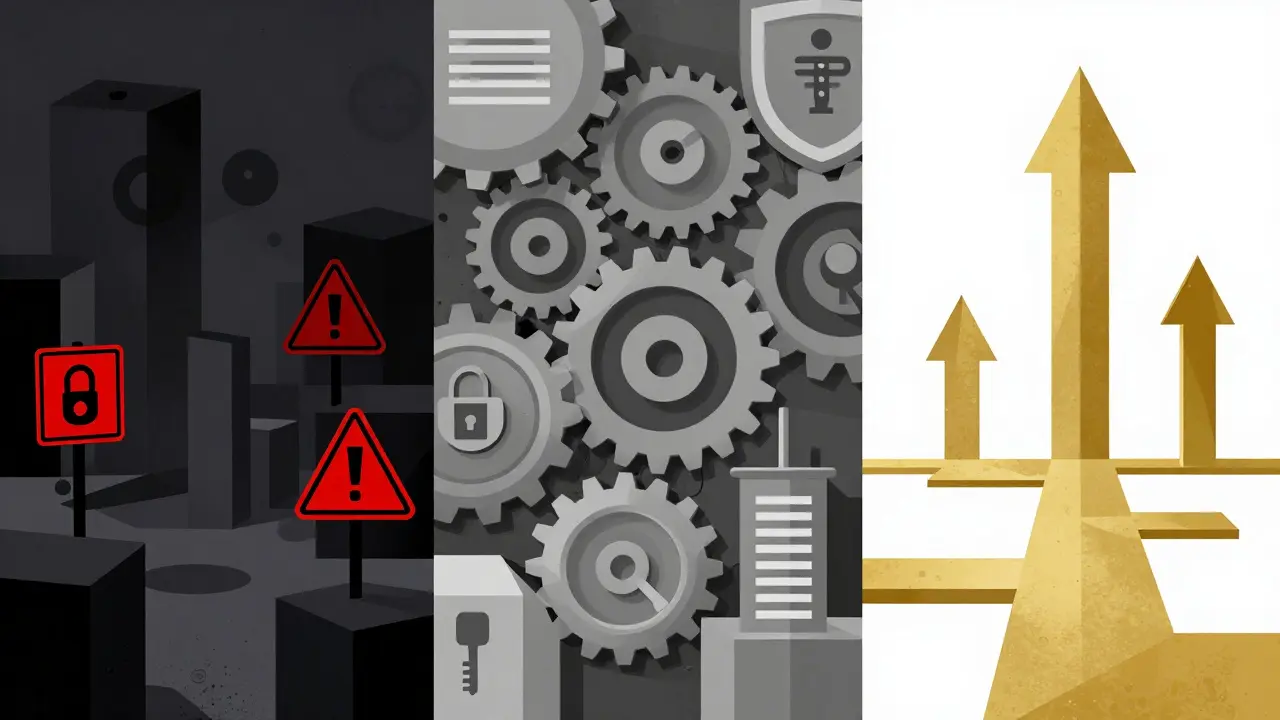
Regulators around the world generally fall into three buckets: restrictive, neutral, and crypto-friendly. Knowing which bucket your country falls into helps you decide whether to trade locally, use offshore services, or move your business operations entirely.
| Approach | Key Characteristics | Example Jurisdictions | Risk Level for Users |
|---|---|---|---|
| Restrictive | Bans on trading, mining, or usage; heavy penalties | China, Algeria, Bolivia | High (Legal risk) |
| Neutral/Standard | Treated like traditional securities or commodities; standard AML rules apply | United States, India, Japan | Medium (Compliance complexity) |
| Crypto-Friendly | Dedicated licenses, clear tax rules, innovation hubs | UAE, Switzerland, Singapore | Low (Clear path to compliance) |
In restrictive jurisdictions like China, the government banned crypto exchanges and ICOs years ago and cracked down on mining in 2022. Using crypto there often means relying on peer-to-peer networks, which carry significant legal risks. On the other end, places like the United Arab Emirates have created dedicated zones like ADGM and DIFC with zero capital gains tax and clear licensing paths via VARA. These friendly jurisdictions attract billions in institutional investment because companies know exactly what the rules are.
Europe’s Game Changer: MiCAR
If you’re in Europe, the most important thing you need to know is MiCAR (Markets in Crypto-Assets Regulation). Fully operational since December 2024, MiCAR is the world’s first comprehensive framework for crypto assets. It applies across all EU member states, meaning a license in France works in Germany too.
For users, this brings massive consumer protection. Crypto Asset Service Providers (CASPs)-like exchanges and custodians-must now hold your funds in segregated accounts. They can’t mix your money with their own operating capital. If they go bankrupt, your crypto is safer. MiCAR also imposes strict rules on stablecoins. Issuers must back every token 1:1 with high-quality liquid assets like cash or short-term government bonds. They have to publish monthly attestations proving they have the reserves.
However, convenience has a cost. Many European exchanges stopped offering staking services for dozens of tokens because MiCAR classified them as risky activities requiring extra licensing. If you were earning yield on 23 different tokens, you likely saw those options disappear overnight. The regulation prioritizes safety over speculative yield, forcing platforms to simplify their offerings.
The US Patchwork: Federal vs. State Rules
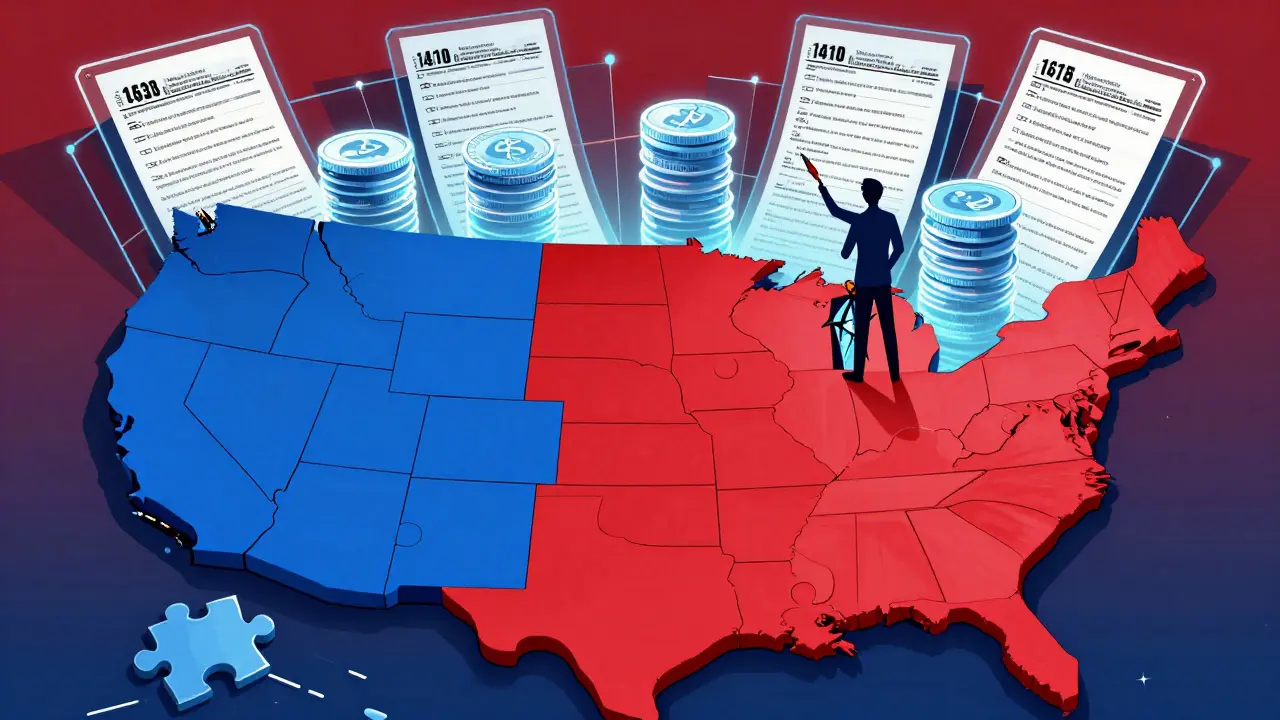
The United States remains unique-and frustrating-for crypto businesses. Instead of one federal rulebook, you have a patchwork of agencies. The SEC treats most tokens as unregistered securities, while the CFTC sees Bitcoin and Ether as commodities. This ambiguity creates a minefield.
In July 2025, Congress passed the GENIUS Act, creating the first federal framework for payment stablecoins. This was a huge win for clarity, requiring stablecoin issuers to hold 1:1 reserves in US dollars or Treasuries and undergo regular audits. But for everything else, the chaos continues. Coinbase CEO Brian Armstrong noted that complying with 50 different state money transmitter laws costs his company $120 million annually. For individual traders, this means fewer US-based exchanges offer full services compared to international peers, pushing many Americans toward offshore platforms that may not comply with US consumer protections.
Tax Implications: How Much Will You Pay?
Regulation isn't just about legality; it's about taxes. Governments realized they were missing out on billions in revenue, so they’ve tightened the net. Here’s how major jurisdictions treat crypto profits:
- Germany: Hold crypto for more than one year, and long-term capital gains are tax-exempt. Short-term trades are taxed at your income rate.
- Portugal: After years of tax-free status, Portugal now taxes capital gains from crypto trading at 28% for individuals.
- India: One of the harshest regimes. A flat 30% tax on gains plus a 1% Tax Deducted at Source (TDS) on every transaction. This double taxation can eat up 35%+ of your returns even on modest gains.
- United States: Treated as property. Every swap, sale, or purchase triggers a taxable event. You must track cost basis meticulously.
Ignoring these rules is dangerous. In 2025, tax authorities in multiple countries began sharing data with crypto exchanges through FATF Travel Rule implementations. If you trade above certain thresholds, your identity and transaction details are shared between institutions. The days of anonymous, tax-free crypto trading are effectively gone.
Stablecoins: The New Frontier
Stablecoins like USDT and USDC bridge the gap between crypto and fiat, but they pose systemic risks if they fail. That’s why 2025-2026 saw a surge in stablecoin-specific laws. The US GENIUS Act and EU MiCAR both mandate reserve transparency. In Singapore, the Monetary Authority (MAS) revised its guidelines in January 2025 to require stricter liquidity buffers for digital payment tokens.
For users, this means higher confidence in major stablecoins but potentially lower yields. Algorithmic stablecoins, which don’t hold physical reserves, are facing severe scrutiny or outright bans in many friendly jurisdictions. If you’re using stablecoins for savings or payments, stick to those regulated under these new frameworks to avoid depegging risks.
How to Stay Compliant in 2026
Navigating this landscape doesn’t require a law degree, but it does require diligence. Here’s a practical checklist:
- Check Your Local Status: Is crypto legal? Banned? Taxed? Start with your national financial regulator’s website.
- Use Licensed Exchanges: Stick to platforms licensed in your jurisdiction (e.g., MiCAR-compliant in EU, FCA-authorized in UK). They offer dispute resolution mechanisms.
- Track Everything: Use automated tax software that connects to your wallets and exchanges. Manual tracking fails when you have hundreds of transactions.
- Understand Stablecoin Risks: Only use stablecoins with audited, transparent reserves compliant with local laws.
- Watch for Updates: Regulations change fast. Subscribe to updates from bodies like the Financial Action Task Force (FATF) or your local central bank.
The goal isn’t to avoid regulation but to work within it. Jurisdictions with clear rules see 37% higher institutional investment because businesses feel safe. As a user, you benefit from that same safety. Your funds are less likely to vanish in a scam, and your legal standing is secure.
Is crypto legal in my country?
Legality varies widely. In most Western nations, owning crypto is legal, but trading and mining may be regulated. Countries like China and Algeria ban it entirely. Check your national financial regulator’s website for the latest status. Never rely on outdated forums for legal advice.
What is MiCAR and how does it affect me?
MiCAR is the EU’s comprehensive crypto regulation. It protects you by ensuring exchanges keep your funds separate and stablecoins are fully backed. However, it may reduce the number of staking products available to you, as platforms remove high-risk offerings to stay compliant.
Do I have to pay taxes on crypto gifts?
It depends on your jurisdiction. In the US, gifting crypto is generally not a taxable event for the giver, but the recipient inherits the cost basis. In some countries, any transfer can trigger gift tax. Always consult a local tax professional before making large transfers.
Can I use offshore exchanges if my country restricts crypto?
Technically yes, but legally risky. If your country bans crypto, using offshore services may violate local laws, leading to frozen bank accounts or fines. Additionally, offshore platforms may not offer consumer protections, leaving you vulnerable to hacks or fraud.
How do new stablecoin laws impact my savings?
New laws like the US GENIUS Act and EU MiCAR make regulated stablecoins safer by requiring 1:1 backing with liquid assets. This reduces the risk of losing value due to issuer failure. However, expect lower yields compared to unregulated, algorithmic alternatives, which are becoming increasingly restricted.