Custodial Risk of Wrapped Tokens: The Hidden Danger in DeFi
 Nov, 2 2026
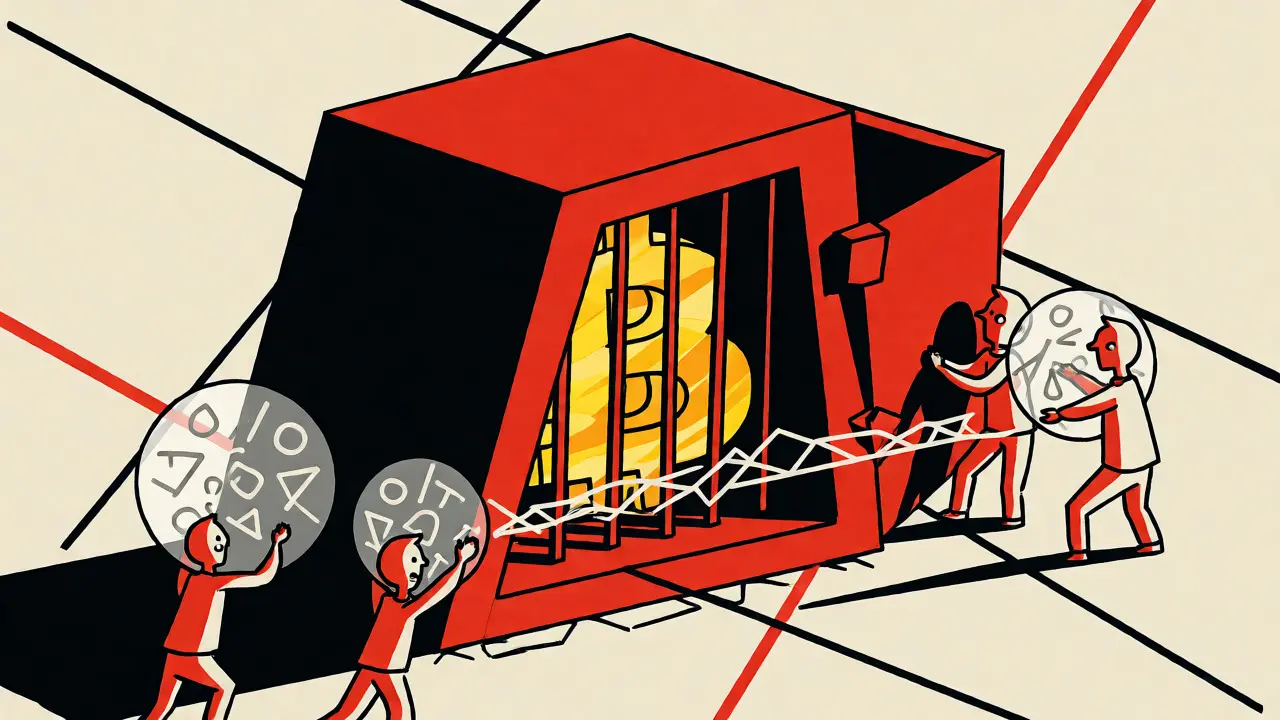
You think you own Bitcoin because you hold Wrapped Bitcoin (WBTC) in your wallet. But do you really? If the company holding the actual BTC behind that digital token goes bankrupt, gets hacked, or simply freezes your funds for a "security audit," your asset is just a number on a screen. This is the core of custodial risk in wrapped tokens.
It’s a massive blind spot for many crypto users. We love the idea of decentralization, yet billions of dollars sit in systems that rely entirely on trusted third parties. As of late 2023, over $11 billion was locked in various wrapped Bitcoin implementations. Most of that money rests on the shoulders of centralized entities like BitGo. When you wrap an asset, you aren't just moving it; you are trading sovereignty for convenience. And that trade comes with a price tag that can wipe out your portfolio if things go wrong.
The Mechanics of Trust: How Wrapping Actually Works
To understand the risk, you have to look under the hood. A wrapped token is a digital representation of an asset from one blockchain that exists on another. Take WBTC, for example. It is an ERC-20 token on Ethereum that claims to be backed 1:1 by real Bitcoin held in cold storage. The problem? You don’t hold that Bitcoin. A custodian does.
This setup solves a real technical hurdle. Bitcoin doesn’t speak smart contracts. Ethereum does. By wrapping BTC into an ERC-20 format, users can lend, borrow, and trade Bitcoin within the DeFi ecosystem. But this interoperability creates a dependency chain. The minting process requires a user to send real BTC to a custodian’s address. Once received, the custodian mints the equivalent amount of WBTC and sends it to the user. To redeem, the process reverses: burn the WBTC, get the BTC back.
Here is where the friction starts. The custodian holds the private keys. If they lose them, the backing assets are gone forever. If they decide to pause redemptions, you’re stuck holding a token that might not convert back to cash when you need it. According to Transak’s 2023 analysis, 92% of wrapped Bitcoin implementations still rely on these centralized custody models. That means nearly all the liquidity in this sector is exposed to single points of failure.
Case Studies in Failure: When Custody Breaks Down
We don’t have to guess what happens when custody fails. We’ve seen it. The most glaring example isn’t even about Bitcoin; it’s about Ethereum. On February 2, 2022, the Wormhole bridge was exploited. Attackers stole approximately $320 million in wrapped ETH. Why? Because the validation mechanism-the part of the code that checks if the underlying asset actually existed-was flawed. The custodial layer failed to verify the integrity of the transfer.
While Wormhole used a semi-decentralized guardian set, the principle applies to fully centralized models too. Consider the operational risks highlighted by user experiences on platforms like Reddit and Twitter. One user reported losing access to $15,000 worth of WBTC when BitGo suspended withdrawals for 72 hours during a routine security audit. Imagine needing to sell your position during a market crash, but your custodian decides to take a weekend off. Your stop-loss orders won’t execute. Your liquidation prices will slip. You are at their mercy.
Then there are the technical glitches. During network congestion events, such as the spike in gas fees to 150 gwei in March 2023, redemption transactions can fail. If the transaction times out while the custodian’s validation window is open, you might end up with burned tokens but no returned BTC until you manually resolve the issue. For one DeFi user on Ethereum Stack Exchange, this resulted in a $7,850 loss due to missed opportunities and complex recovery processes.
Centralized vs. Decentralized Custody Models
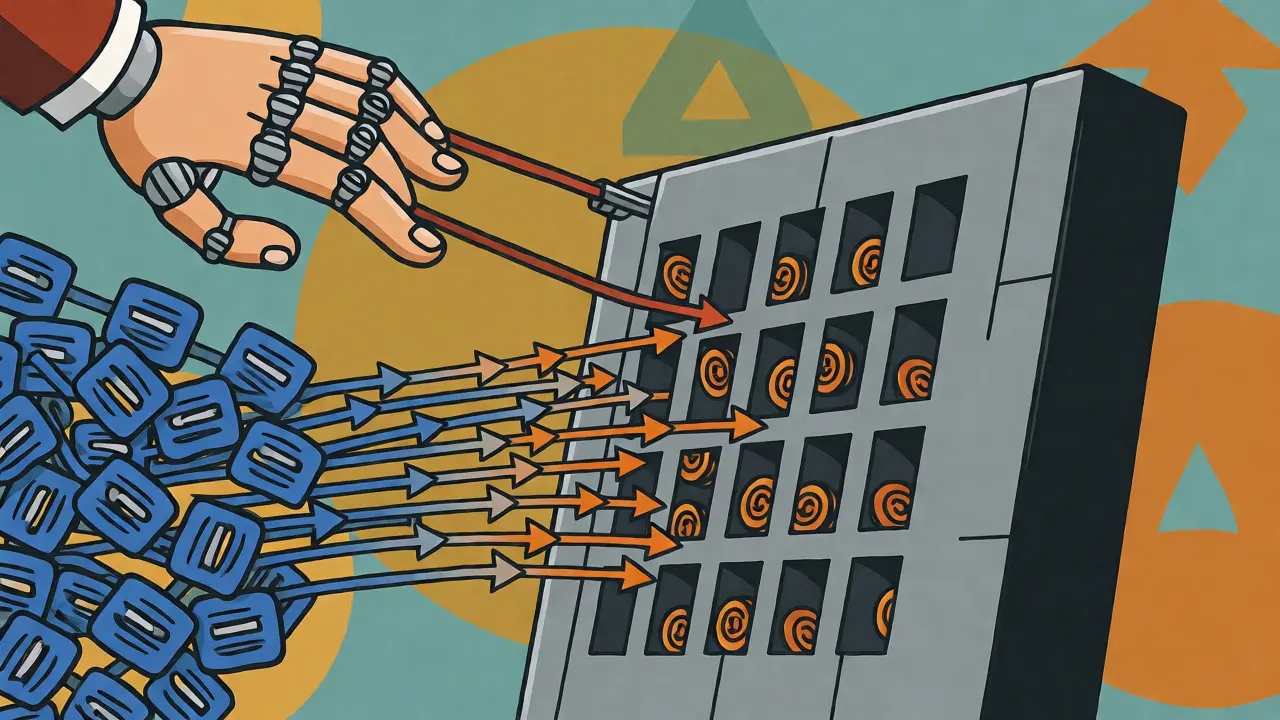
Not all wrapped tokens are created equal. The industry has experimented with different ways to handle the custody problem. Here is how the major players stack up against each other.
| Token | Custody Model | Key Entity | Redemption Time | Primary Risk |
|---|---|---|---|---|
| WBTC | Centralized | BitGo | 15-30 mins | Single point of failure, KYC requirements |
| renBTC | Decentralized (sMPC) | RenVM Network | 2-4 hours | Smart contract bugs, lower liquidity |
| sBTC | Hybrid (Sidechain) | Stacks Miners | Variable | Limited adoption, miner collusion |
| tBTC | Decentralized (Threshold Signatures) | Keep Network | Fast | Complexity, higher initial fees |
WBTC dominates the market with roughly 62.5% share. Its strength is efficiency. Redemption is fast, and it integrates seamlessly with major DeFi protocols. But its weakness is obvious: BitGo is a US-based company subject to US regulations. If the SEC decides BitGo needs to freeze assets for compliance reasons, they can. In fact, the SEC issued 17 subpoenas to wrapped token custodians in Q2 2023 regarding asset segregation practices.
On the other side, renBTC uses Secure Multi-Party Computation (sMPC). No single entity holds the private key. Instead, the key is split among nodes. This removes the human element of trust. However, it introduces code risk. In June 2021, renBTC suffered a $0.5 million exploit due to cryptographic vulnerabilities. While smaller than WBTC’s potential exposure, it proves that "decentralized" doesn't mean "bug-free." Plus, the settlement time is slower-often taking hours compared to minutes for WBTC.
The Regulatory Shadow Over Wrapped Assets
If you think technology is the only threat, think again. Regulation is tightening around these instruments. The European Banking Authority included wrapped tokens in its MiCA framework under "asset-referenced tokens." This classification implies that regulators view these tokens similarly to stablecoins, which are already under intense scrutiny.
Institutional investors often prefer centralized custodians like BitGo because they offer regulatory clarity. BlackRock invested $500 million in WBTC-secured lending protocols, signaling that big money trusts the centralization model for now. But this creates a bifurcated market. Retail users, wary of censorship and seizure, are migrating toward decentralized alternatives. Data from DappRadar showed renBTC’s retail user base grew by 43% in Q3 2023, while institutional wallets continued to dominate WBTC holdings.
This fragmentation is dangerous for the ecosystem. Liquidity is split across 14 different wrapped BTC implementations. Without a unified standard, we lack the deep liquidity needed to absorb large shocks. If one major custodian fails, the contagion could spread quickly through the interconnected DeFi protocols that use their tokens as collateral.
How to Mitigate Your Personal Custodial Risk
You can’t eliminate custodial risk entirely without leaving the wrapped token ecosystem, but you can manage it. Here is a practical checklist for anyone holding significant amounts of wrapped assets:
- Diversify Custodians: Don’t put all your eggs in one basket. Split holdings between WBTC, tBTC, and sBTC. If BitGo freezes, your tBTC remains accessible.
- Monitor Governance Proposals: For WBTC, keep an eye on DAO votes. Recent changes increased the multisignature threshold from 8-of-15 to 12-of-18, reducing the power of any single malicious actor.
- Avoid Large Single Transactions: Custodians often impose daily withdrawal limits. BitGo caps daily withdrawals at 100 BTC without special approval. Plan your exits carefully.
- Understand the Fees: Decentralized options often have higher wrapping fees (0.5-0.8%) compared to WBTC (0.25%). Factor this into your profit margins, especially for trades under $1,000.
- Verify Proof of Reserves: Regularly check independent audits. While Chainlink’s Cross-Chain Interoperability Protocol (CCIP) offers new verification methods, traditional monthly attestations from firms like Armanino remain crucial for WBTC.
Experienced users report spending 8-12 hours researching custody models before committing capital. This diligence pays off. Understanding whether you are relying on a legal contract, a cryptographic proof, or a reputation determines how safe your money truly is.
The Future: Hybrid Models and Native Interoperability
Is the era of wrapped tokens coming to an end? Probably not soon, but it is evolving. Long-term viability assessments suggest wrapped tokens will maintain 60-70% market share through 2026 due to their operational efficiency. However, the definition of "wrapped" is changing.
New technologies aim to remove the custodian entirely. Chainlink’s CCIP uses Proof-of-Reserve oracles to verify asset backing across chains without trusting a central holder. Meanwhile, the Ethereum Foundation’s roadmap includes proposals for native cross-chain verification mechanisms. These systems would use cryptographic proofs rather than trusted intermediaries to validate that the underlying asset exists.
Quantum computing poses a distant but existential threat. Cyfrin.io warns that advances in quantum technology could compromise current cryptographic standards by 2030, potentially breaking the encryption protecting both the custodians and the decentralized networks themselves. Until then, we must accept that using wrapped tokens means accepting a degree of counterparty risk.
The bottom line? Wrapped tokens are powerful tools for financial freedom, but they are not magic. They are bridges built on trust. Before you step onto that bridge, make sure you know who owns the rope.
What exactly is custodial risk in the context of wrapped tokens?
Custodial risk refers to the danger that the entity holding the original underlying asset (like Bitcoin) may become insolvent, hacked, or censorious. Since you hold a derivative token rather than the actual coin, you depend on the custodian's honesty and solvency to redeem your asset.
Is Wrapped Bitcoin (WBTC) safer than holding native Bitcoin?
No, it carries additional risk. Holding native Bitcoin means you control the private keys. Holding WBTC means you trust BitGo and the WBTC DAO. While WBTC allows use in DeFi, it adds layers of counterparty and operational risk that native BTC does not have.
Can I lose my wrapped tokens if the custodian goes bankrupt?
Yes. If a centralized custodian like BitGo goes bankrupt, the BTC they hold might be tied up in bankruptcy proceedings. You would become an unsecured creditor, meaning you might not recover the full value of your wrapped tokens immediately, or at all.
Which wrapped token has the lowest custodial risk?
Tokens using decentralized custody models, such as renBTC (using sMPC) or tBTC (using threshold signatures), generally have lower custodial risk because no single entity controls the private keys. However, they carry higher smart contract risks.
Why do institutions prefer centralized wrapped tokens?
Institutions prefer centralized models like WBTC for regulatory compliance and operational efficiency. Centralized custodians provide insurance, clear legal frameworks, and faster settlement times, which align better with corporate governance requirements than decentralized alternatives.