Future of IP Protection with Blockchain: A 2026 Guide
 Jun, 21 2026
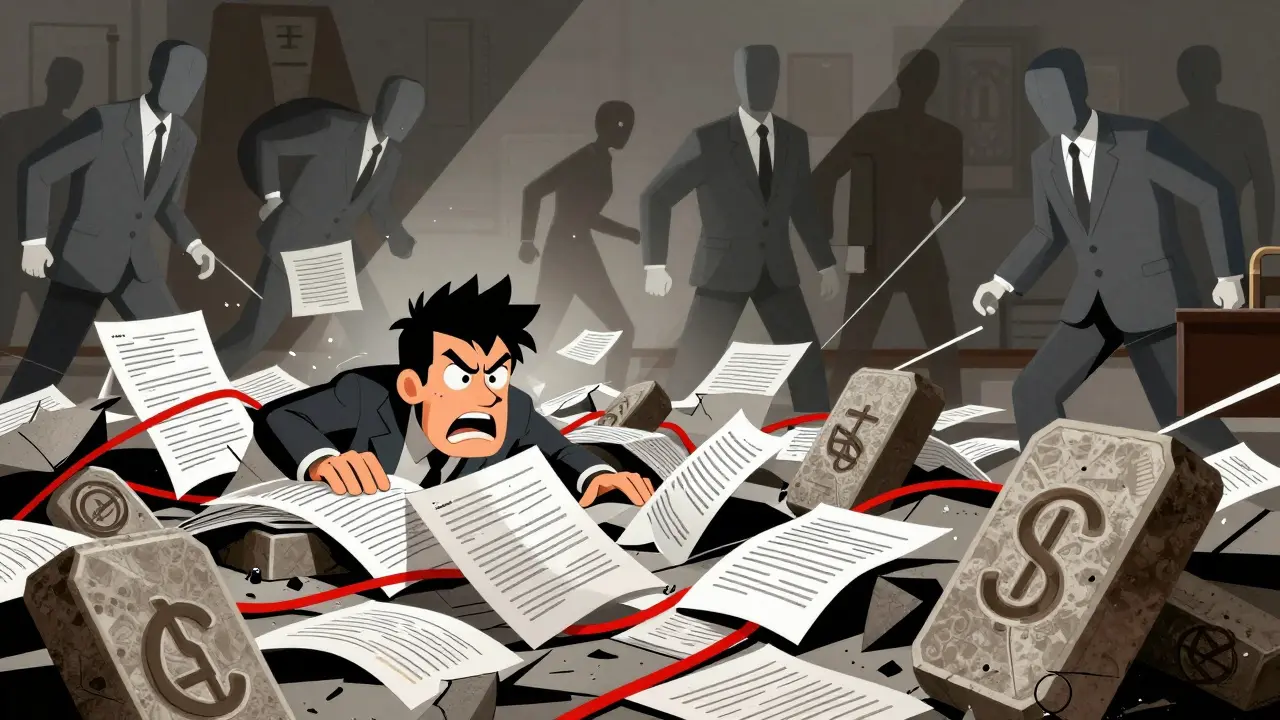
Imagine you just finished writing a novel or designing a unique logo. You hit publish, and within seconds, your work is online. But who owns it? In the past, proving that "you" created something before someone else claimed it was a nightmare of paperwork, expensive lawyers, and waiting months for government agencies to stamp a document. Today, in 2026, that old system is crumbling under the weight of digital speed. Enter blockchain technology, which is quietly rewriting the rules of intellectual property (IP) protection.
This isn't about Bitcoin prices or crypto speculation. It’s about a fundamental shift in how we prove ownership. Blockchain creates an unchangeable, time-stamped record of existence. If you register your creation on a blockchain, you have mathematical proof that you owned it at a specific moment. This simple capability is solving decades-old problems in copyright, patents, and trademarks.
The Problem with Traditional IP Systems
To understand why blockchain matters, you first need to see why the current system fails. Traditional IP protection relies on centralized authorities like national patent offices or trademark registries. These systems are slow, expensive, and geographically limited.
If you want to protect a trademark in five different countries, you file five separate applications. Each one costs thousands of dollars and takes months to process. During that wait, someone could copy your brand and start selling counterfeit goods. By the time your registration arrives, the damage is done. Worse, if the central database gets hacked or corrupted, your legal proof vanishes. This fragility is unacceptable in a world where digital assets move instantly across borders.
| Feature | Traditional System | Blockchain System |
|---|---|---|
| Speed of Registration | Months to years | Minutes to hours |
| Cost | High (legal fees, filing fees) | Low (transaction/gas fees) |
| Geographic Scope | National (requires multiple filings) | Global (single ledger access) |
| Data Integrity | Vulnerable to hacking/corruption | Immutable and tamper-proof |
| Licensing Management | Manual, error-prone tracking | Automated via smart contracts |
How Blockchain Secures Intellectual Property
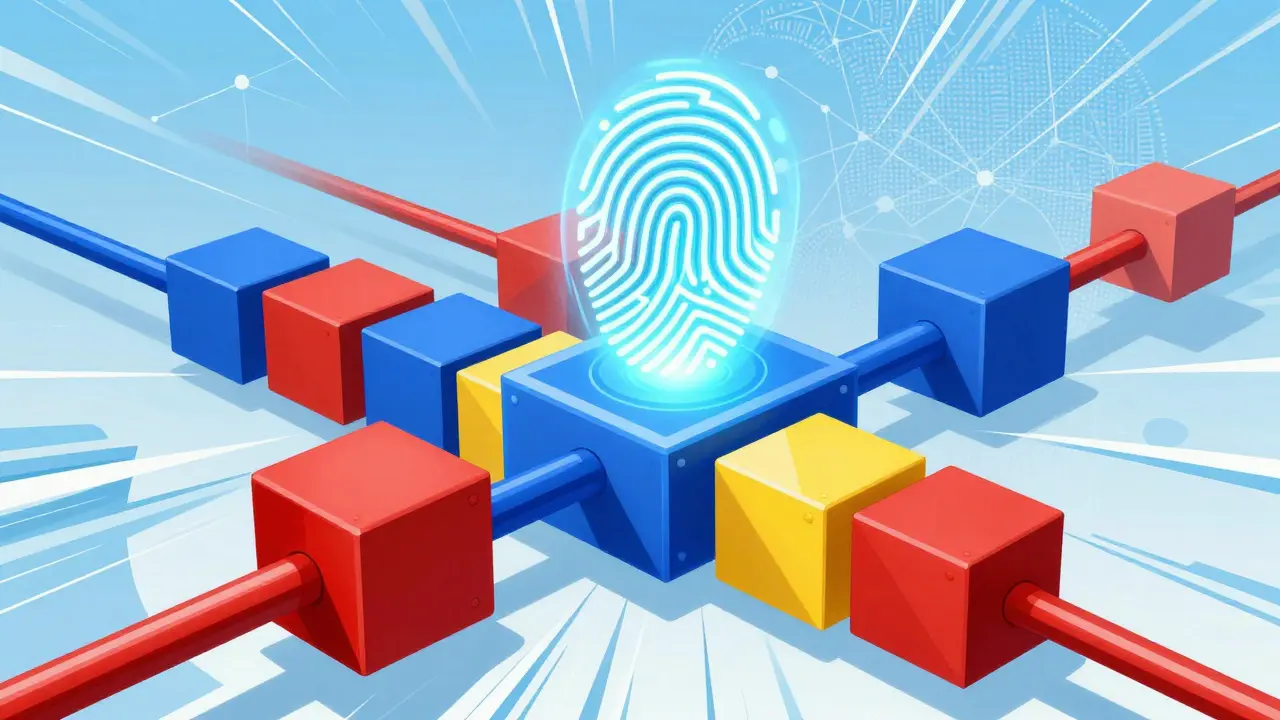
At its core, blockchain acts as a decentralized ledger. When you upload a hash (a unique digital fingerprint) of your creative work to the blockchain, you create a permanent timestamp. You don’t necessarily store the entire video or design on the chain-that would be too expensive-but you store the proof that it existed at that exact second.
This immutability is key. Once data is written to blocks like Ethereum or specialized IP chains, it cannot be altered retroactively without altering all subsequent blocks and gaining consensus from the network. For an inventor, this means establishing a "priority date" for a patent claim is instant and indisputable. For an artist, it proves they created the image before any alleged thief.
In 2026, several major platforms have emerged specifically for this purpose. They allow creators to mint their works as non-fungible tokens (NFTs) not for speculation, but for certification. The NFT serves as a certificate of authenticity linked to the original file. This shifts the burden of proof from the creator to the accuser. If someone claims you stole their work, the blockchain timestamp shows otherwise.
Smart Contracts: Automating Licensing and Royalties
Proving ownership is only half the battle. Monetizing your IP is the other. Traditionally, licensing deals involve lawyers drafting complex contracts, then hoping licensees actually pay royalties on time. Many creators, especially musicians and writers, lose millions annually because royalty tracking is opaque and inefficient.
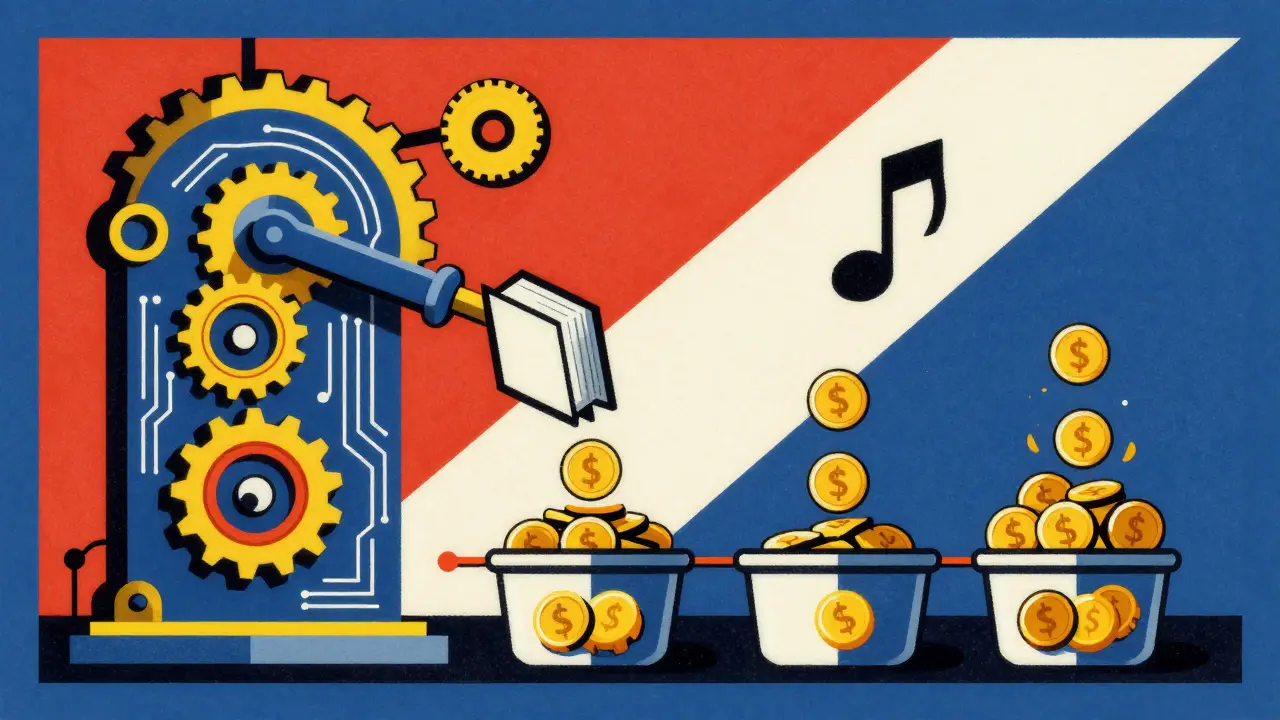
Smart contracts change this dynamic entirely. A smart contract is self-executing code stored on the blockchain. It contains the terms of a license agreement. For example, a photographer can set a rule: "Anyone who uses this high-resolution image must pay $5." When a user tries to download the image, the smart contract automatically charges them $5 and releases the file. No middleman, no invoicing delays, no missed payments.
This automation extends to complex scenarios. Imagine a song used in a movie. The smart contract can split the payment instantly between the songwriter, the composer, the producer, and the label according to pre-agreed percentages. Every transaction is recorded transparently. This eliminates the administrative overhead that currently eats up significant portions of creative revenue.
Combating Counterfeits and Protecting Trademarks
For brands, counterfeiting is a massive threat. Luxury goods, pharmaceuticals, and electronics are frequently faked, endangering consumers and eroding brand value. Blockchain provides a supply-chain verification layer that is nearly impossible to fake.
Companies now embed QR codes or NFC chips in products that link to a blockchain entry. When a consumer scans the code, they see the product’s entire journey-from raw material sourcing to manufacturing to retail sale. Because the blockchain record is immutable, a counterfeiter cannot simply replicate the QR code; they cannot replicate the history behind it. Major fashion houses and pharmaceutical companies have adopted this approach to verify authenticity in real-time.
This transparency builds trust. Consumers know they are buying genuine articles. Brands gain valuable data on where their products are sold and can quickly identify leaks or unauthorized distributors. It turns IP protection from a reactive legal battle into a proactive technical safeguard.
The Role of AI and Tokenization in 2026
As we move through 2026, two trends are accelerating blockchain’s impact on IP: Artificial Intelligence (AI) integration and Real-World Asset (RWA) tokenization.
AI algorithms are now scanning blockchain registries to detect infringement patterns. Instead of manually searching the web for stolen images, AI tools cross-reference new content against the immutable timestamps on the blockchain. If a match is found, the system can automatically issue takedown notices or trigger legal protocols. This synergy makes enforcement scalable for the first time.
Tokenization is transforming IP into liquid assets. Intellectual property rights can be fractionalized into digital tokens. This allows investors to buy small shares of a patent portfolio or a music catalog. It democratizes access to IP investment and provides creators with upfront capital. However, this also introduces regulatory complexities, as securities laws must adapt to these new financial instruments.
Challenges and Legal Uncertainties
Despite the promise, blockchain IP protection is not without hurdles. The biggest issue remains legal recognition. While a blockchain timestamp is strong evidence, courts in many jurisdictions still require formal registration with national bodies for full legal standing. The World Intellectual Property Organization (WIPO) has established a Blockchain Task Force to develop standards, but global harmonization is slow.
Interoperability is another challenge. Different blockchains do not always communicate seamlessly. A record on one platform might not be easily verifiable on another. Additionally, the "oracle problem" persists: blockchain ensures data on-chain is true, but it doesn't guarantee the physical object linked to it matches the digital record. If a factory produces a fake good but somehow links it to a legitimate blockchain entry (through compromised IoT sensors), the system fails.
Jurisdictional issues also complicate enforcement. Blockchain is borderless, but law is not. If a dispute arises between parties in different countries, determining which court has authority can be difficult. Legal frameworks are evolving, but they lag behind technological capabilities.
What This Means for Creators and Businesses
For individuals and businesses, the message is clear: adapt or risk being left behind. You don’t need to become a blockchain expert, but you should understand how these tools can protect your assets. Start by identifying your most valuable IP. Is it a software codebase? A brand logo? A music library?
Consider using existing blockchain-based registry services to timestamp your creations. Explore smart contract platforms for licensing if you distribute digital content. Monitor developments in WIPO standards and local regulations regarding digital evidence. The future of IP is not just about owning ideas; it’s about managing them efficiently in a digital-first economy.
The transition from paper-based, centralized systems to decentralized, automated ledgers is inevitable. Those who embrace this shift will find lower costs, faster monetization, and stronger protection. Those who ignore it may find themselves fighting battles they could have prevented with a few lines of code.
Is a blockchain timestamp legally binding for copyright?
In many jurisdictions, a blockchain timestamp serves as strong evidence of creation date and authorship, but it may not replace formal registration with national copyright offices for certain legal remedies. Courts increasingly accept blockchain records as valid proof of priority, but local laws vary. Always consult legal counsel for high-value IP.
How do smart contracts handle royalty payments?
Smart contracts are programmed with specific conditions. When a licensed action occurs-such as a stream, download, or use of a trademark-the contract automatically triggers a payment from the licensee's wallet to the creator's wallet. This happens instantly and without manual intervention, ensuring accurate and timely compensation.
Can blockchain prevent all types of IP theft?
No. Blockchain prevents fraudulent claims of ownership and simplifies proof of origin, but it cannot physically stop someone from copying a digital file or manufacturing a counterfeit physical good. It enhances detection and enforcement efficiency rather than acting as an impenetrable barrier.
What is the role of WIPO in blockchain IP protection?
The World Intellectual Property Organization (WIPO) is developing international standards and guidelines for using blockchain in IP management. Their Blockchain Task Force aims to ensure interoperability between different systems and provide legal clarity for governments and businesses adopting these technologies.
Is it expensive to register IP on a blockchain?
Generally, no. Transaction fees (gas fees) on public blockchains can vary but are typically much lower than traditional legal filing fees. Specialized IP-focused blockchains often offer even lower costs. The main expense may be integrating these systems into existing business workflows.