German Crypto Exchange Regulations and Licensing: The 2026 Compliance Guide
 Jun, 25 2026
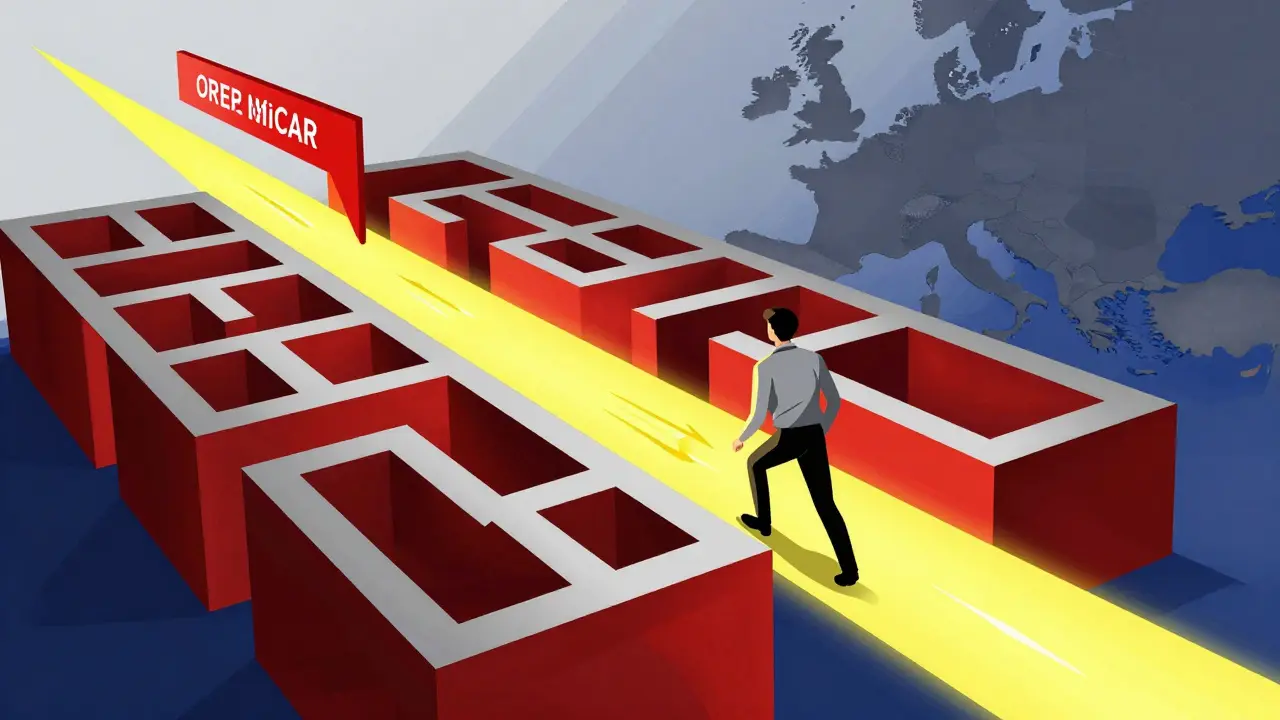
Running a crypto exchange in Germany used to feel like navigating a maze with shifting walls. Today, the path is clearer, but the stakes are higher than ever. If you are planning to launch or expand your crypto business in Germany in 2026, you are not just dealing with local rules; you are operating under one of the most rigorous regulatory frameworks in Europe. The landscape has shifted dramatically since the full implementation of the Markets in Crypto-Assets Regulation (MiCAR) on December 30, 2024.
This isn't about finding loopholes. It is about understanding exactly what the Federal Financial Supervisory Authority (BaFin) expects from you. From licensing requirements to anti-money laundering protocols, the difference between a successful operation and a shut-down venture comes down to precise compliance. Let’s break down what this means for your business right now.
The New Regulatory Reality: MiCAR and National Law
Germany does not regulate crypto in isolation. It sits at the intersection of EU-wide directives and specific national laws. The cornerstone of this system is MiCAR, which standardized crypto asset service provider (CASP) licensing across the European Union. For exchanges, this means that once you are licensed in Germany, you can operate throughout the EU via passporting rights. However, getting that initial license requires strict adherence to both MiCAR and German-specific amendments.
In early 2025, Germany introduced two critical pieces of legislation to bridge the gap between old rules and MiCAR: the Act on the Digitalisation of the Financial Market (FinmadiG) and the Act on the Supervision of Markets for Crypto-Assets (KMAG). These laws established transitional provisions that allowed existing players to adapt while ensuring no new entrants could bypass oversight. If you started before December 2024, you likely operated under a "grandfathering" regime. That period ended on December 31, 2025. Now, everyone must hold a valid MiCAR-compliant authorization.
BaFin Authorization: The Non-Negotiable First Step
You cannot trade, custody, or exchange crypto assets in Germany without explicit authorization from BaFin. This is not a suggestion; it is a legal mandate. BaFin evaluates your application based on several key pillars:
- Fitness and Propriety: Your management team must demonstrate integrity and professional competence. BaFin will scrutinize backgrounds thoroughly.
- IT Infrastructure: You need robust cybersecurity measures to protect consumer assets. Basic firewalls are not enough. You must show resilience against sophisticated attacks.
- Organizational Structure: Clear lines of responsibility, risk management protocols, and internal controls are mandatory.
BaFin released detailed guidance on January 10, 2025, clarifying how MiCAR licensing connects to existing investment services under MiFID II. If your exchange offers financial instrument tokens, you may need to comply with additional securities trading regulations. Understanding which category your tokens fall into-financial instrument tokens, security-like tokens, or capital investment tokens-is crucial because each triggers different compliance obligations.
Anti-Money Laundering and the Travel Rule
Compliance goes beyond getting a license. You must actively prevent money laundering. In Germany, this is governed by the Crypto Asset Transfer Regulation (KryptoWTransferV). This regulation implements the Financial Action Task Force (FATF) "travel rule," requiring exchanges to collect and transmit originator and beneficiary information for all crypto transfers.
What does this mean in practice? Every time a user sends funds, you must verify their identity (Know Your Customer or KYC) and ensure the recipient’s details are also verified if they are using another regulated entity. Failure to comply can result in severe penalties, including the loss of your license. BaFin President Mark Branson has been vocal about this, emphasizing that global regulation is essential to preserve international financial stability. Germany is leading by example here.
Tax Reporting and Documentation Requirements
The tax landscape for crypto in Germany has also become more transparent. On March 6, 2025, the Federal Ministry of Finance published an updated circular replacing vague terms like "virtual currencies" with the standardized "crypto assets." This update introduced stricter requirements for transaction overviews and tax reporting.
Exchanges must now provide clear valuation guidelines using daily market rates. Additionally, the circular addressed decentralized finance (DeFi) for the first time, distinguishing between active and passive staking for tax purposes. While this primarily affects users, exchanges play a role in facilitating accurate reporting. You need systems in place to generate comprehensive transaction histories that align with these new standards. Transitional rules applied through the 2024 tax year, but as we move further into 2026, full compliance is expected.
Enforcement: What Happens When Rules Are Broken?
Regulators are not just writing rules; they are enforcing them. A stark example occurred in June 2025 when BaFin ordered the winding up of Ethena GmbH’s operations related to USDe stablecoins in Germany. Holders were given until August 6, 2025, to redeem their tokens through a special representative appointed by BaFin. This case sent a clear message: if you issue or manage assets that do not meet regulatory standards, you will be shut down.
This enforcement action highlights the importance of due diligence in your own offerings. Before listing any token, you must assess its classification under German law. Is it a security? Does it promise returns? If so, it falls under the German Securities Prospectus Act or Capital Investment Act, requiring additional approvals beyond standard exchange licensing.
Comparison of Key Regulatory Frameworks
| Regulation | Primary Focus | Implementation Date | Relevance to Exchanges |
|---|---|---|---|
| MiCAR | EU-wide CASP licensing and market conduct | December 30, 2024 | Core licensing requirement for all exchanges |
| FinmadiG | Digitalization of financial markets | February 18, 2025 | Transitional provisions and technical standards |
| KMAG | Supervision of crypto-asset markets | February 18, 2025 | Defines supervisory powers and procedures |
| KryptoWTransferV | Anti-money laundering and travel rule | 2023 (ongoing enforcement) | Mandatory KYC and transfer data transmission |
| Securities Trading Act (WpHG) | Financial instrument tokens | Ongoing | Applies if tokens qualify as financial instruments |
Strategic Advantages of Operating in Germany
Despite the complexity, Germany offers significant advantages. It is home to over 82 million people and serves as a gateway to the broader EU market. The country ranks fourth globally in innovation according to the Bloomberg Innovation Index, reflecting strong support for technology and high-tech organizations. There are also extensive double taxation avoidance agreements, reducing burdens for international operations.
Moreover, the clarity of the framework instills trust. Institutional investors prefer jurisdictions with well-defined rules. By complying fully with BaFin and MiCAR, you position your exchange as a safe and reliable partner. Research and development grants are available for innovative projects, providing additional financial incentives.
Next Steps for Compliance
If you are entering the German market, start by conducting a thorough legal audit. Identify every token you plan to list and classify it correctly. Engage with BaFin early in the process-they offer pre-application consultations. Build your IT infrastructure to exceed minimum security standards, not just meet them. Implement robust KYC and AML systems that automate travel rule compliance. Finally, stay updated on future developments, particularly regarding DeFi protocols, which remain an evolving area of focus.
Regulation is not a barrier; it is a foundation. Build yours wisely, and you will thrive in one of Europe’s most dynamic crypto hubs.
Do I need a BaFin license to operate a crypto exchange in Germany?
Yes, absolutely. Any entity providing crypto-asset services such as custody, trading, or exchange functions must obtain formal authorization from BaFin. Operating without a license is illegal and can result in severe penalties, including forced closure of operations.
How does MiCAR affect my existing German crypto license?
If you held a license before December 30, 2024, you operated under a grandfathering regime until December 31, 2025. After that date, all providers must hold a MiCAR-compliant license. You must apply for conversion or new authorization to continue operating legally in 2026.
What is the KryptoWTransferV and why does it matter?
KryptoWTransferV is Germany's implementation of the FATF travel rule. It requires exchanges to collect and share sender and receiver information for all crypto transfers. This is critical for anti-money laundering compliance and failure to adhere can lead to license revocation.
Can I use my German license to operate in other EU countries?
Yes, under MiCAR, a license issued by BaFin allows you to passport your services across the European Union. This means you can serve customers in other member states without needing separate licenses in each country, provided you notify the relevant authorities.
How are stablecoins regulated in Germany?
Stablecoins are treated as electronic money tokens (EMTs) or asset-referenced tokens (ARTs) under MiCAR. They face strict reserve requirements and transparency obligations. The shutdown of Ethena GmbH's USDe operations in 2025 demonstrates BaFin's zero-tolerance approach to non-compliant stablecoin issuers.
ELNORA JEFFERSON
June 26, 2026 AT 04:59Ugh, another wall of text about compliance. Nobody wants to read this.
Carol @minaszilda
June 27, 2026 AT 03:01I know it looks daunting but breaking it down helps so much. We are all learning together here. It is okay to feel overwhelmed by the new rules. Just take it one step at a time. The community is here to support you through the transition.
Trent Erman1
June 28, 2026 AT 03:46This is actually huge news for the industry! 🚀 MiCAR brings clarity that we have been begging for years. No more guessing games with regulators. If you get your BaFin license now you can passport across the entire EU. That is a massive strategic advantage for any serious exchange. Don't sleep on this opportunity because the window for easy entry is closing fast. Let's build something real and compliant. 💪
Fiona Ellis
June 28, 2026 AT 08:55You really think anyone reads these dry legal summaries? 😂 I bet half the people commenting don't even understand what a CASP license is. But sure, keep pretending this makes you an expert. It is adorable how you try to sound professional while just copying and pasting regulatory jargon. 🙄
Sajjad Ghorbani Moghaddam
June 30, 2026 AT 08:44Hey everyone, just wanted to say that the travel rule implementation is tricky but doable. I have seen teams struggle with the KryptoWTransferV requirements. Make sure your KYC flows are automated or you will drown in manual checks. It is not as bad as it sounds if you plan ahead. We are all in this together and sharing knowledge helps us all survive the regulatory wave.
Carl Hanzel
July 1, 2026 AT 05:00This article is completely wrong. You are ignoring the fact that BaFin is just trying to crush innovation. They want to kill crypto under the guise of safety. Every time they release a new guideline they make it harder for small players. This is not compliance, it is persecution. You should be ashamed for promoting this bureaucratic nightmare. Real freedom dies when you start following every little rule they throw at you.
Emma Rémond
July 2, 2026 AT 02:53The epistemological framework presented here is fundamentally flawed. One cannot simply reduce the complex socio-economic implications of MiCAR to a mere checklist. The ontological status of digital assets remains ambiguous within the current legal paradigm. Your reductionist approach fails to account for the dialectical tension between state sovereignty and decentralized autonomy. It is truly pathetic how laymen attempt to grasp these nuanced concepts without proper academic grounding. The semiotic value of tokens is entirely disregarded in your superficial analysis.
John Curry
July 3, 2026 AT 06:15I just sit back and watch the drama unfold. It is fascinating how everyone reacts differently to regulation. Some see opportunity, others see oppression. In the end, the market finds its way regardless of what BaFin says. History repeats itself in cycles of boom and bust. We are just observers in a grand experiment. Let the chips fall where they may.
Nicole Woessner
July 3, 2026 AT 15:52In my culture we value patience and careful planning. Rushing into licensing without understanding the local context is a mistake. Germany has a unique blend of tradition and innovation. Respect the process and the rules will respect you back. It is not about fighting the system but working within it to create lasting value. Take your time to understand the nuances.
Jon Milton
July 4, 2026 AT 09:24Listen up folks! You need to stop complaining and start acting. The Ethena shutdown was a warning shot across the bow. If you are still operating without a clear path to MiCAR compliance you are playing with fire. Get your act together now or get left behind. There is no room for amateurs in this space anymore. Step up or step aside!
Rebecca Shoniker
July 5, 2026 AT 01:00It is absolutely critical; that we adhere; to the strictest standards; of operational integrity. Failure; to implement robust AML protocols; is not merely an oversight; it is a moral failing. The tax reporting requirements; outlined in the March circular; are non-negotiable. Any deviation; from these guidelines; will result in severe consequences. We must maintain; a posture of absolute vigilance; against financial crime.
Jay Sharma
July 6, 2026 AT 03:26BaFin is just a front for global banking elites to control our money. They want to track every single satoshi you move. The travel rule is surveillance technology disguised as security. Do not trust them. They are building a cage for your wealth. Wake up before it is too late.
Scott Miller
July 7, 2026 AT 12:48You guys are missing the big picture! This is the best thing that could happen to crypto. Legitimacy equals adoption. Institutional money is waiting for exactly this kind of clarity. Stop whining about red tape and start building compliant products. The future is bright for those who adapt. Crush it! 🔥
Abby Martin
July 7, 2026 AT 13:35I am so tired of people treating compliance like it is optional. It is basic ethics. If you cannot follow the law you do not deserve to operate in this space. The self-righteous attitude of some commenters is disgusting. You are risking real people's savings. Act responsibly or stay out of it. Simple as that.