How Blockchain Speeds Up Insurance Claims Processing
 Nov, 15 2026
Imagine filing an insurance claim for a delayed flight and getting paid before you even land. Sounds like sci-fi? It’s already happening. Blockchain is quietly rewriting the rules of how insurers handle money, turning weeks-long bureaucratic nightmares into minutes-long digital transactions. If you’ve ever waited months for a check while your car sat in a repair shop, you know the pain. This tech isn’t just about crypto traders; it’s about making sure you get what you’re owed, fast.
Quick Summary
- Speed: Complex claims that used to take 30-90 days can now settle in hours or even minutes.
- Automation: Smart contracts automatically trigger payments when conditions are met, removing human bottlenecks.
- Fraud Reduction: Immutable ledgers make it nearly impossible to alter claim history, cutting fraud by up to 25%.
- Best Use Case: Parametric insurance (like flight delays) sees the biggest gains, though other sectors are catching up.
Why Traditional Claims Are So Slow
Let’s be honest: traditional insurance claims are a mess of paperwork, phone calls, and waiting games. When you file a claim, it enters a labyrinth of manual verification. Adjusters check documents, cross-reference databases, and negotiate with third parties. This process often drags on for 15 to 30 days for simple cases and up to 90 days for complex ones. Why? Because there’s no single source of truth. The insurer has one set of records, the repair shop has another, and you have yours. Reconciling these takes time.
Administrative overhead eats up 10-30% of every claim dollar. That’s not going to your payout; it’s going to the people pushing paper around. The World Economic Forum noted back in 2020 that blockchain could slash these times dramatically. By creating a shared, real-time ledger, everyone sees the same data at the same time. No more "I sent that email three weeks ago" excuses. The friction disappears because the trust is built into the code, not the conversation.
How Smart Contracts Automate Payouts
The magic ingredient here is the Smart Contract. Think of it as a self-executing contract where the terms are written directly into lines of code. You don’t need an adjuster to approve a payment if the condition is binary. For example, if your flight is delayed by more than four hours, the smart contract checks the official airport data feed via a Oracle-a tool that feeds external data to the blockchain. If the delay matches the policy terms, the money moves. Automatically. Instantly.
This isn’t theoretical. AXA launched 'Fizzy', a flight delay insurance platform that uses this exact mechanism. Users don’t even have to file a claim. If their flight is late, the system detects it and pays them out. SCN Soft reported that such automation delivers up to a 3x speed increase and cuts costs by half. For standardized claims, this removes the human error and bias that often slow things down. You aren’t waiting for someone to review your form; you’re waiting for a database update.

Real-World Impact: From Weeks to Minutes
How much faster are we talking? In traditional systems, settling a corporate insurance claim might take 45 days. IBM and AIG partnered to build a blockchain platform that reduced this to under 72 hours. That’s a massive shift for businesses that rely on cash flow. For individual consumers, the difference between getting reimbursed for medical bills in two days versus two months is life-changing.
It’s not just about speed, though. Transparency plays a huge role. With a blockchain ledger, you can track your claim’s status in real-time. You see exactly where it is in the pipeline. Is it verified? Is the payment pending? There’s no black box. Confie’s analysis showed that 85% of users felt more confident knowing they had visibility into the process. Plus, because the record is immutable-meaning it can’t be changed once written-disputes over "what was said" or "what was submitted" vanish. The ledger remembers everything.
Where Blockchain Shines (And Where It Doesn’t)
Don’t expect blockchain to fix every insurance problem overnight. It excels in Parametric Insurance, where payouts are based on objective data triggers rather than subjective assessments. Flight delays, weather events, and shipping cargo losses are perfect fits. The data is clear: did the ship arrive late? Yes or no. Did the rain gauge hit 10 inches? Yes or no.
| Metric | Traditional Process | Blockchain Process |
|---|---|---|
| Settlement Time (Simple) | 15-30 Days | Hours to Minutes |
| Settlement Time (Complex) | Up to 90 Days | Days (if automated) |
| Fraud Rate | Baseline | Reduced by 15-25% |
| Admin Costs | High (Manual Review) | Low (Automated) |
| Transparency | Limited | Full Real-Time Visibility |
However, complex liability claims-like a multi-car accident where fault is disputed-still require human judgment. Blockchain can store the evidence securely, but it can’t decide who was negligent. Currently, only about 20-30% of all insurance claims are suitable for full automation. Experts like Professor Michael Chen from Stanford warn that while blockchain speeds up standardized processes, it’s not a silver bullet for subjective assessments. It works best as part of a broader digital transformation, not a standalone replacement for human expertise.
Overcoming Implementation Hurdles
If you’re an insurer looking to adopt this, know that it’s not plug-and-play. Integration with legacy systems is tough. Most insurers run on old mainframes that don’t talk easily to modern blockchains. Developing smart contracts requires specific skills, like proficiency in Solidity for Ethereum-based systems or Hyperledger Fabric for enterprise solutions. Training staff also takes time-expect 40-80 hours of instruction to get teams comfortable with decentralized concepts.
Data privacy is another big hurdle, especially in Europe with GDPR. How do you keep personal data private on a public ledger? Solutions involve storing only hashes (digital fingerprints) of data on-chain while keeping the actual details off-chain. Regulatory frameworks are catching up, too. The European Insurance and Occupational Pensions Authority (EIOPA) issued guidelines in 2024 to clarify how smart contracts fit into legal standards. Start small. Pilot programs for specific products, like travel insurance, allow companies to test the waters without risking their entire operation.
The Future of Fast Claims
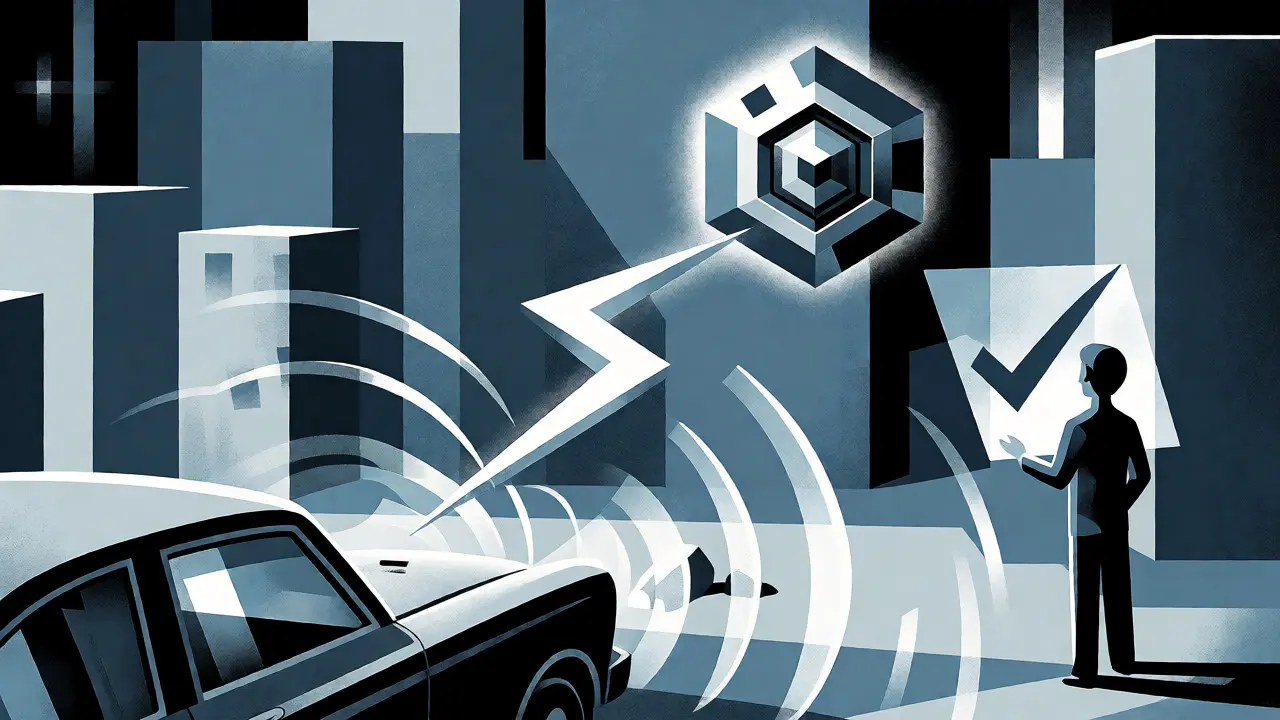
We are just scratching the surface. Gartner predicts that by 2027, blockchain will handle 30% of all standardized insurance claims, up from just 8% in 2024. The integration of IoT devices is the next frontier. Imagine your car’s sensors automatically detecting an accident and sending crash data directly to the blockchain. The claim starts itself before you even call your insurer. McKinsey estimates this could save the industry $21 billion annually by 2030.
For consumers, this means less stress and faster access to funds. For insurers, it means lower costs and better customer loyalty. The days of holding your breath while waiting for a check are numbered. As adoption grows, especially in Europe where 65% of major insurers have pilots underway, blockchain will likely become the standard infrastructure for trust in finance. It’s not just about technology; it’s about respecting your time.
Does blockchain replace human insurance agents?
No, not entirely. While smart contracts automate routine, data-driven claims (like flight delays), complex claims involving liability disputes still require human assessment. Blockchain acts as a tool to support agents by providing instant, verified data, allowing them to focus on nuanced cases rather than administrative tasks.
Is my personal data safe on a blockchain?
Yes, through techniques like hashing and permissioned ledgers. Typically, sensitive personal information is stored off-chain in secure databases, while only a cryptographic hash (a unique fingerprint) of that data is recorded on the blockchain. This ensures privacy compliance (like GDPR) while maintaining the integrity and immutability of the transaction record.
Why is parametric insurance the best use case for blockchain?
Parametric insurance relies on objective, measurable triggers (e.g., wind speed, flight delay duration) rather than subjective damage assessments. Because the condition is binary and verifiable via external data sources (oracles), smart contracts can execute payments automatically without human intervention, maximizing speed and reducing errors.
How much does blockchain reduce insurance fraud?
Industry reports suggest a reduction of 15-25%. The immutable nature of the blockchain prevents retroactive changes to claim records, and the transparent audit trail makes it easier to detect anomalies or duplicate claims across different insurers sharing the same network.
What is a blockchain oracle in insurance?
An oracle is a service that connects the blockchain to external data sources. Since blockchains cannot access real-world data on their own, oracles fetch trusted information (like flight status from an airline API or weather data from a sensor) and feed it to smart contracts, triggering actions when predefined conditions are met.