How Blockchains Reach Agreement: A Guide to Consensus Mechanisms
 Apr, 15 2026
When we talk about "agreement" in a blockchain, we aren't talking about a democratic vote where people change their minds. We are talking about a mathematical certainty. The goal is to ensure that every participant shares the same version of the truth, preventing fraud and the dreaded "double-spending" problem. Whether you are using Bitcoin or Ethereum, the network relies on these mechanisms to maintain the sanctity of the data. But not all methods are created equal; some prioritize raw security, while others chase speed or environmental sustainability.
The Puzzle of Trust: Solving the Byzantine Generals Problem
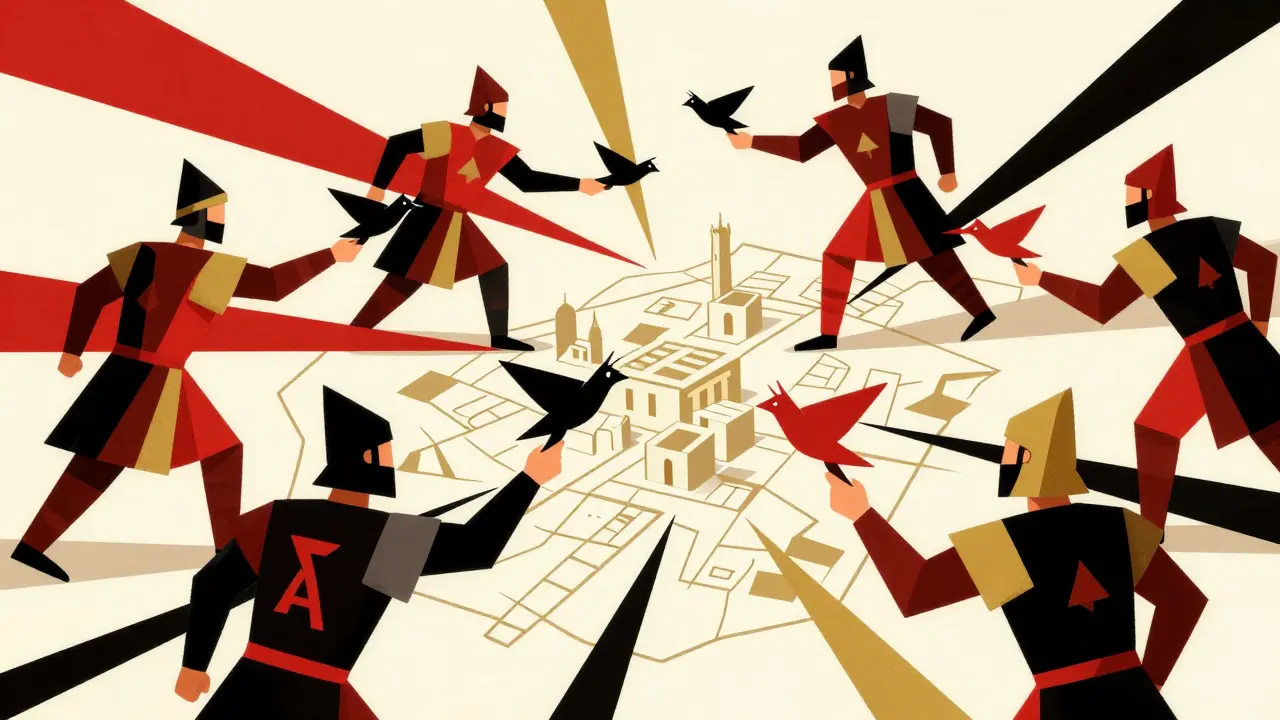
To understand why these mechanisms exist, we have to look at the Byzantine Generals Problem. This is a classic logic puzzle where several generals must agree on a time to attack a city. If they don't all attack at once, they fail. The catch? Some generals might be traitors sending fake messages to confuse the others. In a blockchain, the "generals" are the nodes, and the "traitors" are malicious actors trying to hack the network.
Consensus mechanisms solve this by creating economic disincentives for dishonesty. Essentially, they make it so expensive or risky to lie that it's more profitable to play by the rules. This transforms a system based on trust (which is fragile) into a system based on game theory and cryptography (which is predictable). The network's security isn't based on the goodness of the people running it, but on the cost of attacking it versus the potential reward.
Proof of Work: The Original Heavyweight
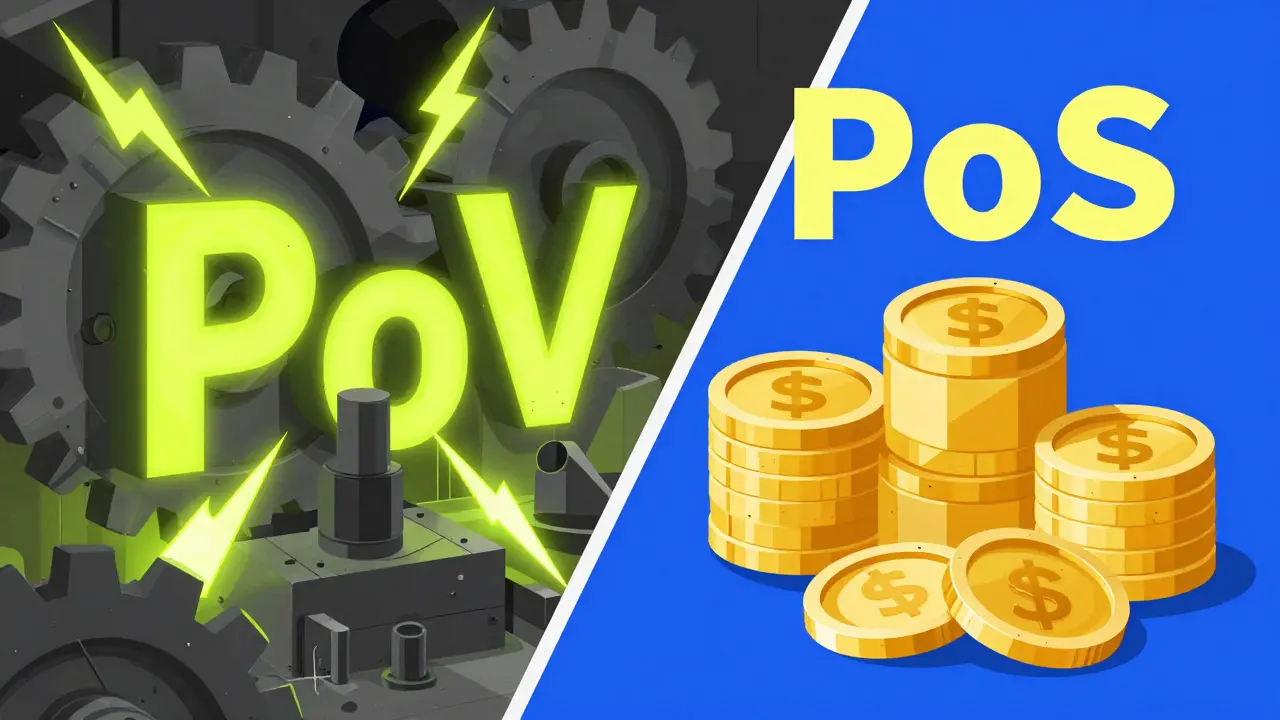
Proof of Work (PoW) was the first real solution to the trust problem, introduced by Satoshi Nakamoto in the 2008 Bitcoin whitepaper. Think of PoW as a global competition. To add a new block of transactions to the chain, "miners" must use powerful hardware to solve a complex mathematical puzzle. The first one to find the answer wins the right to update the ledger and earns a reward in cryptocurrency.
This process is intentionally difficult. Because it requires massive amounts of computational energy, it's incredibly hard for a bad actor to rewrite history. To change a past block, an attacker would need to outwork the entire rest of the network-a feat that would require an astronomical amount of electricity. This is why Bitcoin is viewed as the gold standard for a "store of value." However, the cost is high. As of 2023, the Bitcoin network consumed roughly 143.26 TWh annually, making it a target for environmental criticism and regulatory pressure from bodies like the EU under MiCA regulations.
Proof of Stake: Efficiency Through Collateral
As the limitations of PoW became clear, Proof of Stake (PoS) emerged as a leaner alternative. Instead of using electricity to prove trustworthiness, PoS uses capital. In this system, "validators" lock up (or stake) their own coins as collateral. The network then chooses who gets to validate the next block based on how much they have staked and other factors.
The genius of PoS lies in its penalty system, known as "slashing." If a validator tries to cheat or goes offline, the network can destroy a portion of their staked coins. This makes attacking the network financially suicidal. When Ethereum completed "The Merge" in September 2022, it shifted from PoW to PoS, slashing its energy consumption by a staggering 99.95%. While PoS is faster and greener, it faces a different critique: the risk of "wealth concentration," where those who already own the most coins gain the most influence over the network.
Enterprise Solutions: PBFT and Federated Agreement
Public chains like Bitcoin are designed for total openness, but corporations often need something more controlled. This is where permissioned systems and Practical Byzantine Fault Tolerance (PBFT) come in. Used in frameworks like Hyperledger Fabric, PBFT doesn't rely on mining or staking. Instead, it uses a voting system with three distinct phases: Pre-prepare, Prepare, and Commit.
In a PBFT system, nodes communicate constantly to agree on a state. It's incredibly fast-achieving finality in seconds-but it doesn't scale well. If you have too many nodes, the amount of communication required grows exponentially, which is why PBFT networks usually cap their node count. Other variations include the Federated Byzantine Agreement used by Stellar, which uses "quorum slices" to allow nodes to trust only specific subsets of the network rather than everyone.
| Mechanism | Resource Used | Energy Cost | Throughput (TPS) | Primary Use Case |
|---|---|---|---|---|
| Proof of Work (PoW) | Computational Power | Very High | ~7 (Bitcoin) | Store of Value |
| Proof of Stake (PoS) | Capital (Coins) | Very Low | 15-45 (Ethereum) | Smart Contracts |
| PBFT | Node Communication | Low | High (Small Scale) | Enterprise Supply Chain |
| Proof of History | Cryptographic Clock | Low | Up to 65,000 (Solana) | High-Frequency Trading |
The Trade-offs: Security, Scalability, and Decentralization
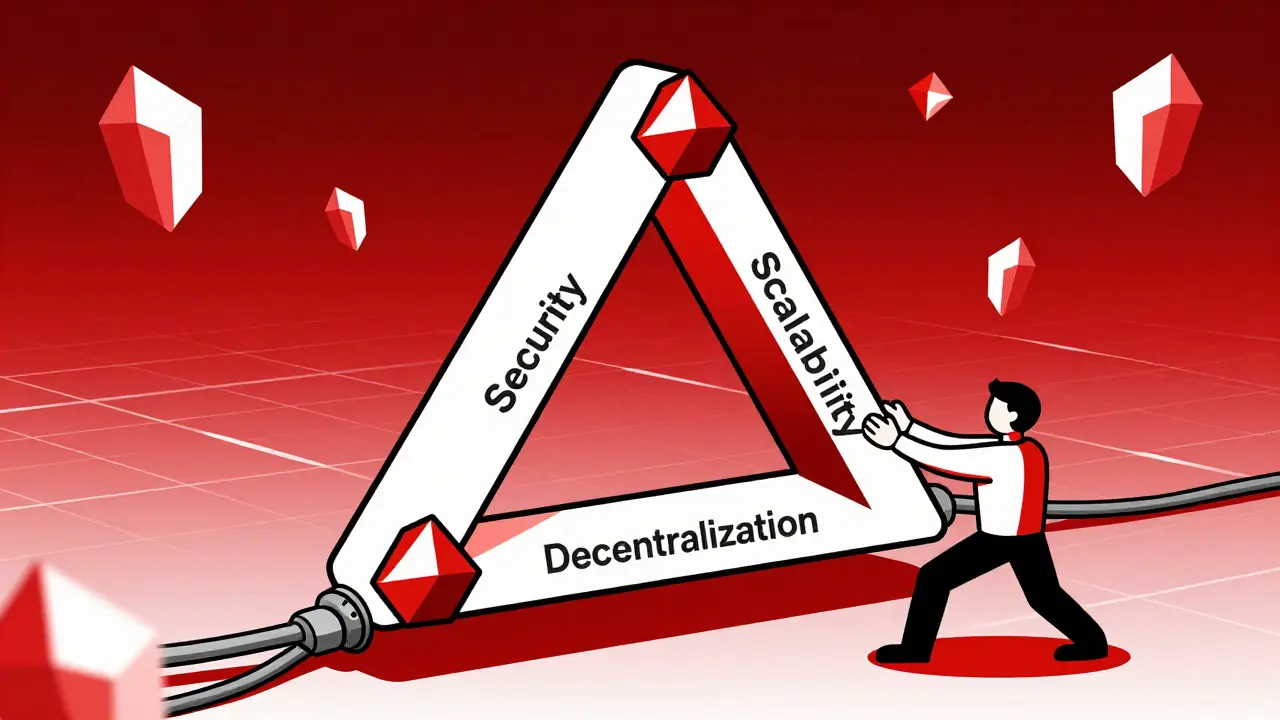
In the blockchain world, there is a concept known as the "Blockchain Trilemma." It suggests that you can only pick two of the following three: Security, Scalability, and Decentralization. If you want total decentralization and high security (like Bitcoin), you sacrifice speed. If you want incredible speed (like Solana), you often have to accept a more centralized set of validators.
The choice of consensus mechanism determines where a project sits on this triangle. PoW is the king of security and decentralization but fails at scale. PoS improves scale and energy efficiency but introduces new risks, such as "nothing-at-stake" problems where validators might vote for multiple versions of a chain because it costs them nothing to do so. PBFT offers nearly instant finality, which is great for a bank's internal ledger, but it's far too centralized for a global currency.
Looking Ahead: Hybrid Models and Sharding
We are now entering an era of hybridity. Many new projects are combining mechanisms to get the best of both worlds. For example, some networks use PoS to select a small group of validators and then use a BFT-style voting system to finalize the block quickly. This blends the fairness of staking with the speed of voting.
We're also seeing a push toward sharding-essentially breaking the blockchain into smaller, manageable pieces (shards) that process transactions in parallel. Ethereum's upcoming upgrades aim to push throughput toward 100,000 TPS using these techniques. The goal is to move away from a world where every single node must validate every single transaction, which is the primary bottleneck of traditional consensus.
What is the main difference between Proof of Work and Proof of Stake?
The primary difference is the resource used to secure the network. Proof of Work requires computational power and electricity (mining), whereas Proof of Stake requires users to lock up cryptocurrency as collateral (staking). PoW is generally more energy-intensive but is considered highly secure for store-of-value assets, while PoS is vastly more energy-efficient and allows for faster transaction processing.
Can a blockchain change its consensus mechanism after launch?
Yes, although it is a complex technical and social process. The most famous example is Ethereum's "The Merge" in 2022, where the network transitioned from Proof of Work to Proof of Stake. This required a hard fork and significant coordination across the community to ensure the network remained stable during the switch.
What is a 51% attack?
A 51% attack occurs when a single entity or group gains control of more than half of the network's hashing power (in PoW) or staked coins (in PoS). With this majority control, they could potentially reverse transactions, prevent new transactions from being confirmed, or double-spend their own coins. This is why larger networks like Bitcoin are harder to attack than smaller, newer chains.
Why is PBFT better for enterprises than PoW?
Enterprises usually operate in "permissioned" environments where the participants are known and vetted. They don't need the extreme decentralization of PoW, which is slow and expensive. PBFT provides "instant finality," meaning once a transaction is agreed upon, it cannot be reversed. This is critical for business contracts and supply chain tracking where certainty is more important than total anonymity.
Does staking in Proof of Stake mean I lose my coins?
Generally, no; you still own your coins, but they are "locked" and cannot be moved while they are being used to secure the network. However, if you act as a validator and attempt to cheat the network or fail to maintain your hardware (causing significant downtime), you may face "slashing," where a portion of your stake is permanently removed as a penalty.
Andrew Southgate
April 16, 2026 AT 09:43The breakdown of the Blockchain Trilemma is really spot on here. It's so important for newcomers to realize that there is no such thing as a perfect system where you get top-tier security, instant speed, and total decentralization all at once because the physics of network propagation and data verification simply don't allow for it without some form of compromise. If you're looking into this for the first time, I highly recommend reading up on how L2 solutions like Optimism or Arbitrum are trying to move some of that execution off-chain to alleviate the pressure on the main consensus layer while still inheriting the security of the L1.
Joshua Salwen
April 17, 2026 AT 03:06Ugh, typical! Everyone just ignores the fact that PoS is basically just a digital version of the same old banking system where the rich get richer and the poor just watch from the sidelines!! It's absolutely TRAGIC that we called this an evolution when it's just a return to the status quo of wealth concentration. Totaly a joke!
Ian Chait
April 18, 2026 AT 02:44Wake up sheeple!! The whole "energy cost" narrative is just a psyop to push us into PoS so the globalist cabal can control the validators through their central bank digital currencies (CBDCs). PoW is the only way to keep the ledger truly untouchable by the deep state. The hashing power is a shield, not a "cost." They want us on "green" chains so they can flip a switch and erase your wallet when you dont comply with the New World Order. Pure propaganda!
John and Lauren Busch
April 18, 2026 AT 19:32Sure, let's just pretend the environment isn't a factor here. Totally logical.
Adedamola Oyebo
April 19, 2026 AT 12:45The mention of PBFT is crucial!! Many forget that finality is the most important metric for business operations...
Vicky Duffala
April 20, 2026 AT 17:05This is such a great way to demystify the tech! It makes me think about how consensus isn't just for computers, but for how we build trust in human societies too 🌟. We're all just nodes trying to find a shared truth in a noisy world. Keep exploring these horizons everyone!
Michelle Stanish
April 21, 2026 AT 12:10I don't think PoW is a gold standard.
Kim Smith
April 21, 2026 AT 20:13it's funny how we talk about these as math problems but really it's all about human nature and the fear of being cheated... like, we spent centuries building laws and courts and now we're tryin to replace the whole thing with a bunch of code that we hope doesn't have a bug in it somewhere deep in the logic. it's a wild experiment and i love how it challenges our traditional notions of authority and what it even means to "agree" on something when you don't even know who the other person is on the other side of the globe.
Shannon Kelly Smith
April 23, 2026 AT 13:23Let's be clear: if you aren't understanding the trade-offs here, you aren't ready to invest 🚀. Security is non-negotiable, but scalability is where the real growth happens! Get your head in the game! 💎🙌
Mark Pfeifer
April 24, 2026 AT 01:02The PBFT section is a bit too brief. We need to talk more about why the communication overhead grows exponentially and how that actually limits the number of nodes in a real-world deployment.
Kaitlyn Wu
April 24, 2026 AT 09:10I appreciate the explanation, but we need to ensure we're including the perspective of those who can't afford high-end mining rigs or massive stakes. True decentralization shouldn't be a pay-to-play system.
nikki krinkin
April 25, 2026 AT 16:43Just reading and learning. Interesting stuff.
Sandeep Bhoir
April 26, 2026 AT 09:56Oh yes, because a "voting system" among a few vetted corporations is exactly what we needed to replace the banks. Truly revolutionary.
Keri Pommerenk
April 27, 2026 AT 04:16good summary of the basics i think its helpful for anyone startng out
Sean Mitchell
April 27, 2026 AT 23:46The prose is adequate, though the analogy of the generals is quite cliché at this point. It's almost exhausting to see it in every single blockchain primer.
Thomas Jewett
April 29, 2026 AT 09:37The only real way to secure a nation's wealth is through a system that doesn't rely on foreign hardware or energy that can be shut off by globalists who hate our way of life!! We need a system that puts American interests first and doesnt bow to the EU's ridiculous MiCA regulations which are just a thinly veiled attempt to stifle our dominance in the digital age and cripple our innovators through red tape!!
Gillian Kent
April 30, 2026 AT 10:33I think the most impornt thing is that we find a way to make these systmes accessable to everyone regardless of where they live or how much money they have in the bank.
Anna Grealis
April 30, 2026 AT 22:09probably just a front for the feds to track everything anyway... the