How NFTs Stop Counterfeiting: A Practical Guide for Brands and Buyers
 Jun, 18 2026
Imagine buying a limited-edition sneaker or a high-end watch, only to find out three months later that it’s a fake. It’s not just annoying; it’s expensive. The global counterfeit market is worth an estimated $1.82 trillion. That’s money lost by brands, governments, and honest consumers alike. For years, we’ve relied on holographic stickers, serial numbers, and paper certificates. But if you can print a logo, you can print a fake certificate. That’s where the game changes.
Enter Non-Fungible Tokens (NFTs). While most people associate them with digital art sales, their real power lies in something much more practical: proving that a physical object is genuine. By linking a physical product to a unique digital token on a blockchain, brands can create an unbreakable chain of custody. This isn’t science fiction. Luxury fashion houses, pharmaceutical companies, and even car manufacturers are already testing this tech. But how does it actually work, and is it foolproof?
The Core Problem: Why Traditional Authentication Fails
To understand why NFTs matter, you first have to see why the old ways break down. Traditional anti-counterfeiting methods rely on centralized databases and physical markers. A brand prints a QR code on a box. You scan it. It leads to a website saying "Authentic." Sounds good, right? Here’s the catch: hackers can clone that QR code. They can spoof the database. Or they can simply buy authentic packaging from a factory worker and refill it with fake goods.
This is known as the "oracle problem" in blockchain terms. Digital records are great, but if the link between the digital record and the physical object is weak, the whole system collapses. If I steal your NFT, I own the digital proof. But if I don’t have the actual shoe, the NFT is worthless to me as a counterfeiter. Conversely, if I make a perfect fake shoe, I still need to trick the system into believing my fake has the same digital history as the real one. Traditional systems fail because they aren’t immutable. Someone with admin access can change the record. Blockchain cannot.
How NFT Anti-Counterfeiting Actually Works
Let’s strip away the hype and look at the mechanics. An NFT is a unique cryptographic token stored on a blockchain that represents ownership of a specific asset. In anti-counterfeiting, the NFT acts as a digital passport. Here is the step-by-step flow:
- Minting: When a product is manufactured, the brand creates (mints) a unique NFT. This NFT contains metadata: serial number, production date, materials used, and initial owner.
- Linking: The NFT is linked to the physical product via a secure method. This could be an NFC chip embedded in the product, a unique QR code, or a biometric fingerprint of the material itself.
- Transfer: When the product is sold, the NFT is transferred from the brand’s wallet to the buyer’s wallet. This transaction is recorded on the blockchain forever.
- Verification: Any future buyer can scan the product. The app checks the blockchain. If the NFT associated with that serial number matches the current holder, it’s authentic. If the NFT was never minted, or if it’s currently held by someone else who hasn’t sold it, it’s a red flag.
The magic here is immutability. Once that transaction is on the blockchain, no one-not the brand, not the hacker, not the government-can delete or alter it. You get a transparent, public ledger of every single hand the product has passed through.
The "Physical Gap": Why NFTs Alone Aren't Enough
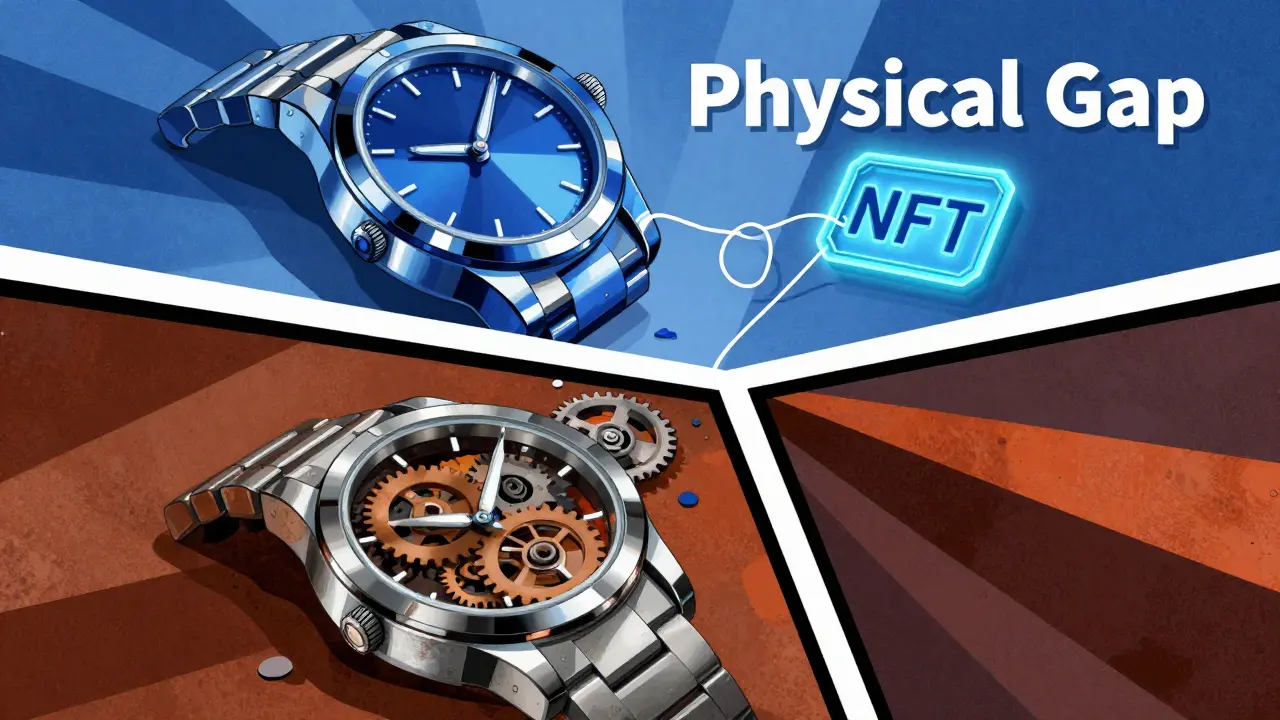
Here is where most guides get it wrong. They tell you NFTs solve everything. They don’t. Not yet. There is a massive gap between the digital world and the physical world. Let’s call it the "Physical Gap."
If I buy a real Rolex, I get the watch and the NFT. Now, I decide to sell the NFT online. I keep the watch. Then, I take the watch to a skilled repair shop, swap the movement for a fake one, and resell the watch. The NFT still says "Authentic." The blockchain doesn’t know I swapped the guts of the watch. The blockchain only knows who owns the token, not what state the physical object is in.
This is why experts like those at AlpVision argue that blockchain must be combined with physical authentication technologies. You need a hybrid approach. Think of it like this: the NFT is the driver’s license, but you still need a physical inspection to ensure the car hasn’t been totaled and rebuilt. Technologies like surface texture fingerprinting or chemical analysis provide that physical layer. The NFT provides the historical layer. You need both.
| Feature | Traditional Methods (QR/Holograms) | NFT + Blockchain |
|---|---|---|
| Tamper Resistance | Low. Databases can be hacked; stickers can be cloned. | High. Blockchain records are immutable and decentralized. |
| Traceability | Limited. Often stops at point of sale. | Complete. Every transfer is recorded permanently. |
| Cost of Verification | Medium. Requires manual checks or proprietary apps. | Low. Automated via smart contracts once set up. |
| Physical Security | Dependent on physical marker quality. | None. NFTs do not prevent physical swapping. |
| User Experience | Familiar but prone to fraud. | New learning curve; requires crypto wallet knowledge. |
Real-World Applications Beyond Sneakers
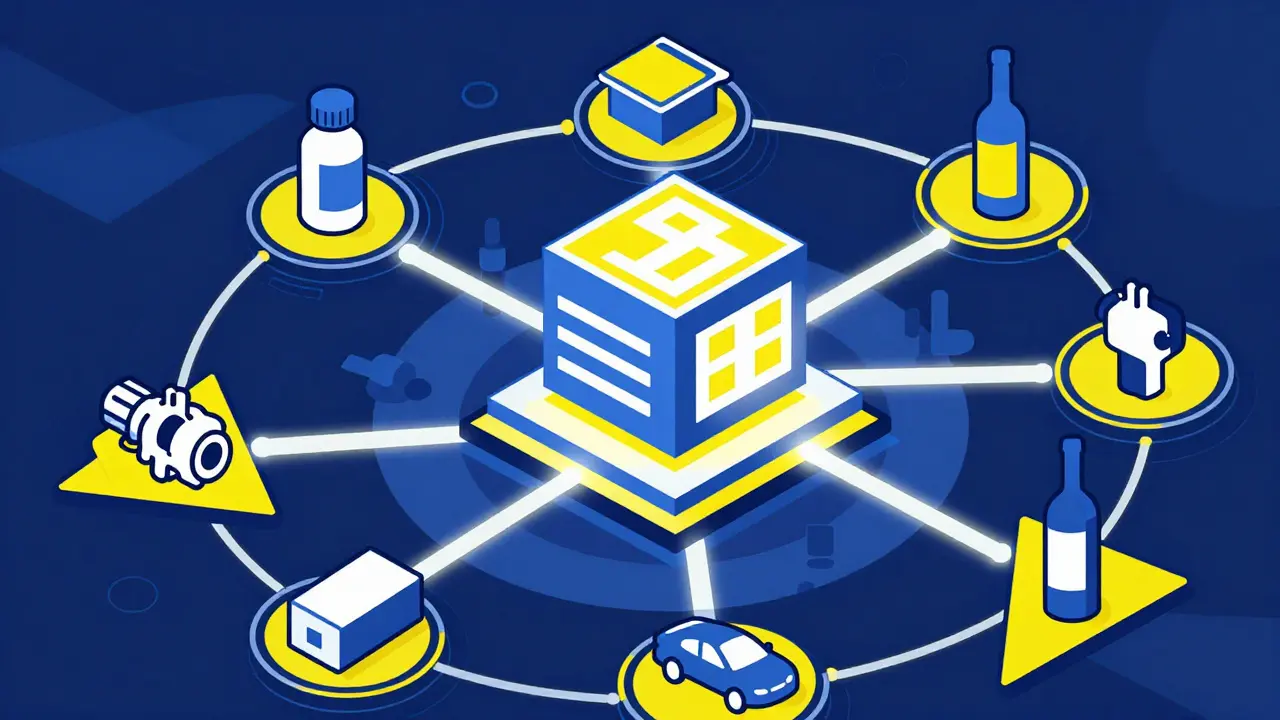
While luxury fashion gets all the press, the utility of NFT anti-counterfeiting extends far beyond Gucci bags and Nike Air Jordans. Consider these sectors:
- Pharmaceuticals: Fake drugs kill people. By assigning an NFT to each batch of medicine, hospitals and pharmacies can verify the entire supply chain. If a pill bottle’s NFT shows it was last held by a distributor in a different country than expected, it triggers an alert. This saves lives, not just reputations.
- Automotive Parts: Aftermarket parts are often inferior or dangerous. Car manufacturers can issue NFTs for critical components like brakes or airbags. Mechanics can scan the part before installation to ensure it’s OEM (Original Equipment Manufacturer) grade.
- Art and Collectibles: This is the easiest use case. Provenance is everything in art. An NFT provides an indisputable history of ownership, protecting artists from forgery and collectors from scams.
- Government Documents: Diplomas, licenses, and IDs can be tokenized. This reduces administrative fraud and makes verification instant for employers or border control.
Challenges and Risks for Early Adopters
It’s not all smooth sailing. Implementing this technology comes with significant hurdles. First, there’s the user experience problem. Asking a grandmother to check her wallet balance to verify her new handbag is a recipe for failure. Brands must build seamless interfaces that hide the complexity of blockchain transactions. The user should just scan and see a green checkmark, not a string of hexadecimal code.
Second, there’s the risk of platform fragmentation. If Brand A uses Ethereum and Brand B uses Solana, and Brand C uses a private blockchain, consumers need ten different apps to verify their purchases. Interoperability standards are still developing. Without them, the ecosystem remains siloed and confusing.
Third, legal gray areas persist. Who owns the NFT? Does owning the NFT give you rights to the physical product? What happens if the company that issued the NFT goes bankrupt? These questions are being litigated now. Michigan State University legal experts warn that virtual reality NFTs pose new trademark risks, suggesting that as metaverse environments grow, the line between digital and physical infringement will blur further.
How to Get Started: A Checklist for Brands
If you’re a business leader considering this tech, don’t rush in blindly. Follow this framework:
- Audit Your Supply Chain: Identify where counterfeiting enters your pipeline. Is it at manufacturing, distribution, or retail? Focus your NFT implementation there.
- Choose the Right Blockchain: Public blockchains offer maximum transparency but higher costs and environmental concerns. Private blockchains offer speed and control but less trust from the public. Hybrid models are often best.
- Integrate Physical Markers: Don’t rely solely on the NFT. Use NFC chips, RFID tags, or unique material signatures to bridge the physical-digital gap.
- Design for the End User: Build a simple mobile app. Hide the crypto complexity. Make verification one tap away.
- Plan for Lifecycle Management: What happens when the product is recycled? The NFT should reflect this status to prevent resale of hazardous waste as new goods.
The Future: Dynamic NFTs and AI Integration
The next evolution is Dynamic NFTs. Unlike static tokens, these can update based on real-world data. Imagine a wine bottle whose NFT updates its value and storage conditions based on IoT sensors in the cellar. If the temperature spikes, the NFT flags the wine as potentially spoiled. This adds a layer of quality assurance that static certificates can’t match.
Additionally, AI is beginning to play a role in analyzing the metadata within NFTs to detect anomalies in supply chains. If a product moves from Factory A to Retailer B in two days, but the average transit time is two weeks, the AI flags it for human review. This proactive defense makes the system smarter over time.
We are moving toward a world where authenticity is digitally certified and unquestionable. But remember: technology is only as strong as its weakest link. The link between the screen and the shelf must be fortified with physical safeguards. NFTs are not a silver bullet, but they are the sharpest tool we have yet built for trust in commerce.
Can NFTs completely stop physical counterfeiting?
No, not on their own. NFTs provide a secure digital record of ownership and history, but they cannot physically prevent someone from copying a product. To effectively stop counterfeiting, NFTs must be combined with physical authentication methods like NFC chips, unique serial numbers, or material fingerprinting. This hybrid approach ensures that the digital token corresponds to the genuine physical item.
What is the cost of implementing NFT anti-counterfeiting?
The cost varies significantly based on scale and complexity. Initial setup involves blockchain infrastructure development, smart contract creation, and integration with existing ERP systems. Minting individual NFTs incurs gas fees (on public chains) or network costs. However, long-term savings come from reduced fraud losses, lower manual verification costs, and increased consumer trust. Small businesses might start with pilot programs on low-cost Layer 2 solutions to minimize expenses.
Do customers need to understand cryptocurrency to use NFT verification?
Ideally, no. Successful implementations abstract away the technical details. Users interact with a brand’s mobile app, scanning a QR code or NFC tag. The app handles the blockchain communication in the background and displays a simple "Authentic" or "Fake" result. Requiring customers to manage private keys or wallets creates friction and limits adoption. The technology should be invisible to the end-user.
Which industries benefit most from NFT authentication?
Industries with high-value items and significant counterfeit risks benefit most. These include luxury fashion (handbags, watches), pharmaceuticals (life-saving drugs), automotive parts (safety-critical components), fine art, and collectibles. Sectors where provenance and history add value, such as wine or vintage electronics, also see strong benefits from the traceability NFTs provide.
What happens if the company issuing the NFT goes out of business?
This is a key concern. If the NFT relies on a centralized server for metadata storage, the data could become inaccessible. Best practice is to store critical metadata on decentralized storage networks like IPFS (InterPlanetary File System). This ensures that the authenticity record remains accessible even if the original issuer disappears. Smart contracts should also be designed to continue functioning independently of the issuing company’s active management.
Are there environmental concerns with using NFTs for products?
Early blockchains like Bitcoin used energy-intensive Proof-of-Work consensus. However, most modern NFT platforms, including Ethereum (post-Merge), use Proof-of-Stake, which reduces energy consumption by over 99%. Brands concerned about sustainability should choose eco-friendly blockchains or Layer 2 scaling solutions that offer minimal carbon footprint per transaction.