How Social Media Drives Memecoin Prices: The Viral Mechanics Explained
 Aug, 12 2026
Imagine a token with no utility, no whitepaper, and zero technological innovation. Now imagine that same token jumping 500% in value within hours because a popular creator posted a funny video about it. This isn't a glitch; it's the new normal for memecoins are cryptocurrencies inspired by internet memes or jokes, deriving their value primarily from community engagement and social media hype rather than intrinsic utility. In traditional finance, stock prices reflect earnings, revenue, and economic fundamentals. In the memecoin sector, price discovery happens on Twitter, X, TikTok, and Reddit. By mid-2024, the total market capitalization of memecoins surged past $100 billion, up more than 50% year-over-year. Daily trading volumes jumped by 45%. These numbers prove one thing: social media is not just a marketing channel for crypto; it is the engine driving valuation.
The Psychology of Viral Valuation
Why do people buy tokens based on a meme? It comes down to two powerful psychological triggers: FOMO (Fear Of Missing Out) and community belonging. When you see a hashtag trending or a friend celebrating gains, your brain registers an opportunity cost if you don't act. Gate Research analysts note that this FOMO behavior intensifies short-term price swings significantly more than in traditional assets.
Unlike Bitcoin, which has a fixed supply and clear scarcity mechanics, most memecoins have massive supplies. Their value is purely speculative. This makes them hyper-sensitive to sentiment shifts. A single tweet from a high-profile influencer can trigger a buying frenzy, while a critical comment can cause a crash. The correlation coefficient between Bitcoin and major memecoins like Dogecoin ($DOGE), Shiba Inu ($SHIB), and Pepe ($PEPE) is around 0.85. However, social media amplifies these movements, causing memecoins to swing much harder and faster than the broader market.
Platform-Specific Impact Mechanisms
Not all social media platforms drive prices in the same way. Each platform serves a distinct role in the memecoin ecosystem, influencing different timeframes and investor behaviors.
| Platform | Primary Role | Prediction Horizon | Key Metric |
|---|---|---|---|
| TikTok | Viral entertainment & mass awareness | Short-term (hours/days) | Improves short-term Dogecoin predictions by 35% |
| Twitter / X | Technical analysis & influencer commentary | Long-term trends | Receives 4.65% volatility shocks; aligns with long-term dynamics |
| Community building & detailed discussion | Momentum generation | Subreddits like WallStreetBets generate initial market momentum | |
| YouTube | In-depth analysis & educational content | Medium-term conviction | Influencer content significantly affects market sentiment |
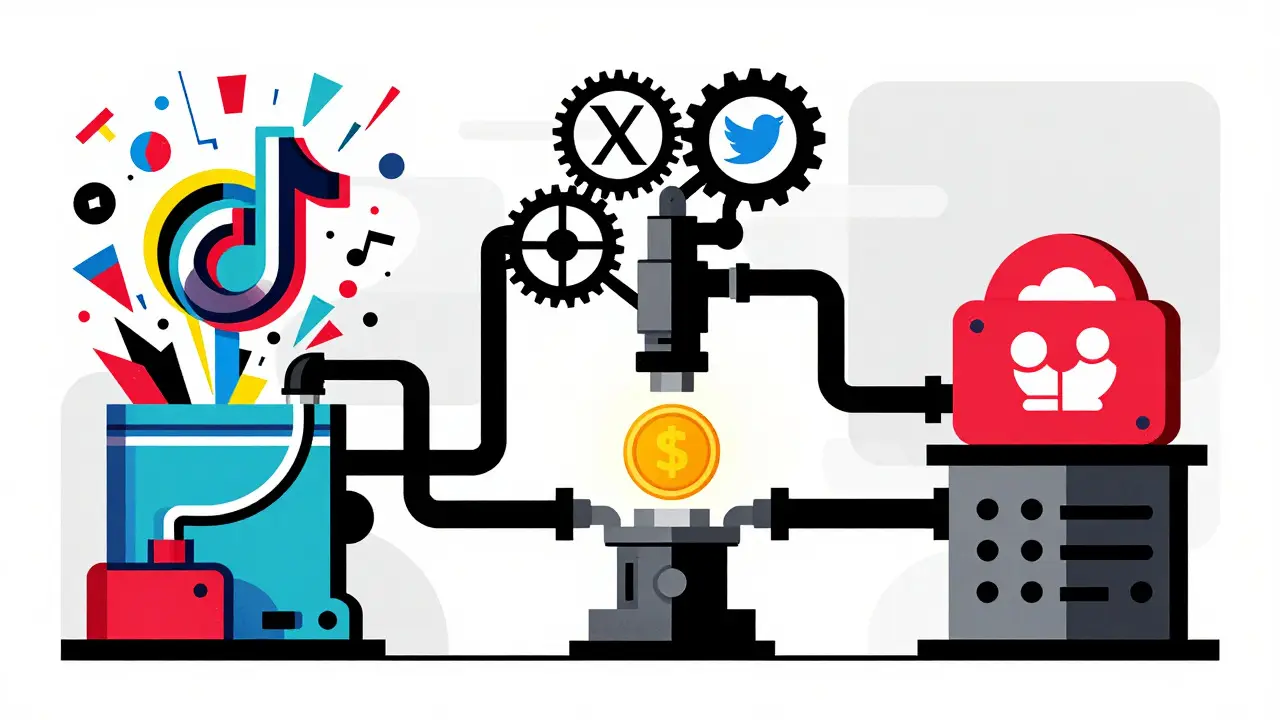
TikTok stands out for its ability to drive immediate speculation. Research using multimodal sentiment analysis shows that TikTok data alone improves short-term predictions for Dogecoin by 35%. The platform’s algorithm favors visual, entertaining content, making it perfect for quick, impulsive buys. Younger demographics often treat TikTok as their primary news source, leading to rapid influxes of retail capital.
Twitter, now rebranded as X, remains the hub for real-time market chatter. It receives the highest volatility shocks at 4.65%, meaning negative or positive news here causes immediate price reactions. Traders use Twitter to track "powertags"-mentions of ticker symbols like $BTC or $PEPE. Academic studies analyzing 1.36 million tweets found that engagement patterns on Twitter are strong indicators of upcoming volume spikes.
Reddit functions differently. It’s where communities form and sustain themselves. Subreddits like r/WallStreetBets have historically demonstrated the power of coordinated retail action. While TikTok might spark interest, Reddit provides the narrative depth that keeps investors holding during dips. It’s the place where "diamond hands" mentality is reinforced through shared stories and memes.
Sentiment Analysis as a Trading Tool
Professional traders and institutions are no longer guessing. They are using data. Sentiment analysis tools scrape millions of posts across platforms to gauge market mood. Combining signals from TikTok and Twitter enhances return and volume forecasts by up to 20%.
Here is how it works in practice:
- Data Collection: Algorithms monitor hashtags, mentions, and keyword associations related to specific tokens.
- Sentiment Scoring: Natural language processing (NLP) assigns a positive, negative, or neutral score to each post.
- Correlation Mapping: The system compares sentiment scores with historical price data to identify predictive patterns.
- Execution: Traders enter positions when sentiment crosses a threshold indicating rising bullishness.
This approach turns subjective hype into quantifiable metrics. For example, if TikTok sentiment for a new memecoin spikes while Twitter remains neutral, it might indicate early-stage viral potential before mainstream adoption. Conversely, if Twitter sentiment turns negative while prices remain high, it could signal an impending correction.
The Dark Side: Manipulation and Rug Pulls
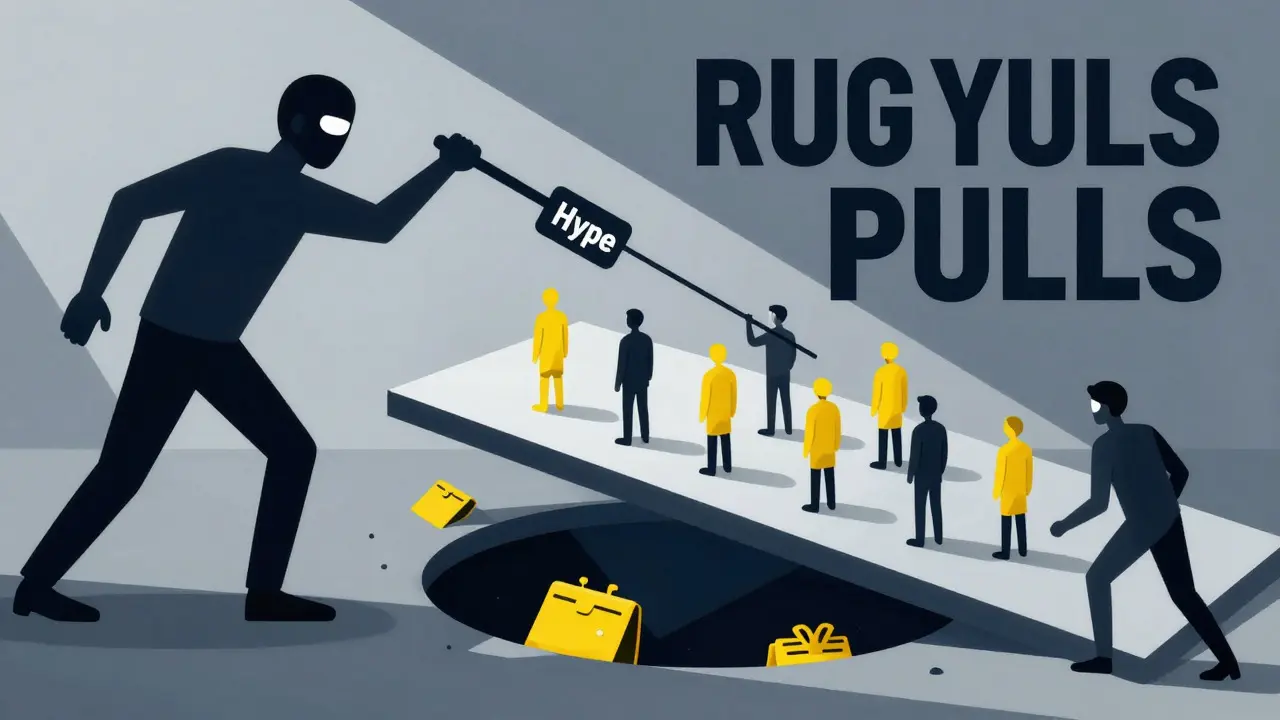
Social media’s double-edged sword is its susceptibility to manipulation. Because memecoins lack fundamental anchors, they are easy targets for bad actors. The case of $WOLF illustrates this perfectly. Initial hype from the WallStreetBets community drove the token’s market cap to $40 million. However, on-chain analysis later revealed that 82% of the total supply was held in just a few wallets. Once the insiders sold, the price collapsed.
Common red flags include:
- Coordinated Pump Schemes: Groups using Telegram or Discord to simultaneously promote a token, creating artificial demand.
- Influencer Shilling: Paid promotions disguised as organic enthusiasm. Many influencers hold large bags of the tokens they promote.
- Concentrated Ownership: If a small number of wallets control a significant portion of the supply, the risk of a dump is high.
Users frequently report feeling addicted to the chase for the next viral coin. The psychological pressure of FOMO leads many to make impulsive decisions without checking on-chain data. Always verify wallet distributions using blockchain explorers before investing based on social media hype.
Regulatory Scrutiny and Future Trends
As memecoin markets mature, regulators are taking notice. Authorities are increasingly scrutinizing social media influence on financial markets, particularly regarding misleading promotional content. Platforms like Twitter and TikTok are updating their policies to restrict unverified crypto advertisements and label sponsored content more clearly.
Looking ahead, we expect to see:
- AI-Driven Sentiment Tools: More sophisticated algorithms will become standard for serious investors, offering real-time risk assessments.
- Hybrid Evaluation Models: Investors will combine social media metrics with traditional financial analysis, looking for projects with both community support and actual utility.
- Reduced Volatility: As regulations tighten and institutional players adopt sentiment indexes, extreme price swings may decrease, though likely not disappear entirely.
The era of blind speculation is fading. The future belongs to those who can read the room-and the data.
Which social media platform has the biggest impact on memecoin prices?
TikTok currently has the strongest impact on short-term price movements, improving prediction accuracy for coins like Dogecoin by 35%. Twitter/X drives long-term trends and technical discussions, while Reddit builds sustained community momentum. Each platform influences different phases of the trading cycle.
How do influencers manipulate memecoin prices?
Influencers often buy large amounts of a low-cap memecoin before promoting it to their followers. This creates artificial demand (a "pump"). Once retail investors buy in and drive up the price, the influencer sells their holdings (the "dump"), causing the price to crash. Always check if an influencer holds the token they are promoting.
What is sentiment analysis in cryptocurrency trading?
Sentiment analysis uses AI to scan social media posts, news articles, and forums to determine whether public opinion about a cryptocurrency is positive, negative, or neutral. Traders use this data to predict price movements, as high positive sentiment often precedes price increases.
Are memecoins a good investment?
Memecoins are highly speculative and risky. Unlike traditional assets, they lack fundamental value drivers like earnings or utility. Their prices are driven almost entirely by social media hype and community sentiment. While some traders make significant profits, many lose money due to extreme volatility and manipulation. Treat memecoin investments as gambling, not long-term saving.
How can I spot a memecoin rug pull?
A rug pull occurs when developers abandon a project and sell their holdings, crashing the price. Warning signs include: concentrated ownership (few wallets holding most tokens), anonymous development teams, locked liquidity that is unlocked soon, and excessive hype with little substance. Use blockchain explorers to check wallet distributions before buying.
Ed Wallace
August 13, 2026 AT 00:41It is fascinating how we have transitioned from valuing assets based on tangible utility to valuing them based on collective hallucination. The article touches on the mechanics, but it misses the deeper philosophical shift in how we perceive value itself. We are essentially trading attention for currency, and attention is the scarcest resource of our time.
Ed Mitchell
August 14, 2026 AT 04:20This entire narrative is a carefully constructed illusion designed to keep the masses distracted while the elites liquidate their positions. They want you to believe that sentiment analysis is a legitimate tool when in reality it is just another algorithmic trap set by the central banking consortium to harvest your liquidity. Wake up sheeple.
Billy Cunningham
August 14, 2026 AT 07:33So true. I lost my shirt on PEPE because some random guy with 10k followers said it was going to the moon. 📉💔
Subhash Kashyap Dm
August 15, 2026 AT 02:14The correlation coefficient mentioned is statistically insignificant without controlling for macroeconomic variables like interest rate hikes and global liquidity injections. Most retail traders ignore the on-chain metrics which clearly show whale accumulation patterns preceding these so-called viral spikes. It is not hype it is coordinated market manipulation via dark pool derivatives.
amy miranda
August 15, 2026 AT 10:56I simply cannot comprehend why anyone would invest in something with zero intrinsic value. It is morally bankrupt to encourage such speculative behavior among young people who should be saving for retirement or investing in index funds. The lack of due diligence displayed by these communities is truly alarming and reflects a broader societal decay in financial literacy.
Erica Johnson
August 17, 2026 AT 03:37Actually, you are missing the point entirely. Memecoins are not investments; they are social tokens. You are paying for the community experience and the memes, not the technology. It is like buying a ticket to a concert. The music might not be good, but the vibe is worth it. 😊
Joshua Hofford
August 18, 2026 AT 08:28Hey everyone, let's keep the vibes positive! While the risks are real, there is also an incredible sense of community here. I've made some friends through crypto discussions that I never would have met otherwise. Let's support each other and remember to DYOR (Do Your Own Research) before jumping in. Good luck out there! 🚀
Emma Smith
August 19, 2026 AT 22:51the problem is that institutional investors are now using AI to scrape our emotional responses and front run us. they know we are weak. they know we buy when we see green candles. it is a psychological warfare operation disguised as finance. we need to stop engaging on twitter if we want to survive.
Amor Jordan
August 21, 2026 AT 04:08I appreciate the detailed breakdown of platform roles. It really helps to understand where the initial spark comes from versus where the sustained momentum is built. As someone who prefers to observe rather than jump in immediately, seeing the data behind TikTok's short-term impact versus Reddit's long-term community building makes me feel more confident in my approach. Thank you for sharing this perspective.
Matthew Smith
August 23, 2026 AT 01:39morality has no place in free markets yet here we are judging speculation as if it were theft. the market is pure. it reflects truth. if you lose money it is because you lacked conviction. simple as that.
Phil Babb
August 24, 2026 AT 12:28Let's get one thing straight!! Social media is NOT just a marketing channel!!! It is the primary driver of modern economic behavior!!! If you are not leveraging TikTok and Twitter for your portfolio strategy you are already obsolete!!! Wake up and smell the digital coffee!!!
Qolbina Islami
August 25, 2026 AT 21:32This is exactly what happens when we allow foreign algorithms to dictate our domestic financial stability. American jobs are being replaced by bots and influencers. We need to bring back real manufacturing and real value creation instead of this virtual nonsense. Make America Invest Again!
SUBHAM CHOUDHURY
August 27, 2026 AT 20:01Great read! I think many people underestimate the power of community. In India, we see similar trends with local meme coins gaining traction through WhatsApp groups. It is all about trust and shared belief. Keep learning and stay positive!
Joy Kwant
August 29, 2026 AT 04:52I feel like nobody listens to me anymore. I told everyone last year that $WOLF was a scam. I warned them about the wallet concentrations. And what did they do? They laughed at me. Now look at them crying over their losses. I just want someone to acknowledge that I saw it coming. Why is it so hard to be heard?
Pernelia Wahkan
August 29, 2026 AT 06:17The jargon-heavy nature of crypto often alienates newcomers, but tools like sentiment analysis are bridging that gap. By quantifying the 'vibe,' we can make more informed decisions. However, always remember that data is only as good as its source. Garbage in, garbage out. Use blockchain explorers to verify claims before trusting the hype.
Michael Mostyn
August 29, 2026 AT 23:12One must consider the regulatory implications carefully. As governments begin to scrutinize social media influence, the landscape will shift dramatically. The era of unregulated shilling is ending. Investors should prepare for a more transparent, albeit potentially less volatile, market environment.
Marcia Albert
August 30, 2026 AT 00:36Just watching the chaos unfold from the sidelines. It is like a circus but with more zeros in the bank account. Some people are lucky, most are not. I prefer my tea quiet and my investments boring.