How to Buy Crypto with Rubles in Russia (2026 Guide)
 Jun, 17 2026
Buying cryptocurrency with Russian Rubles (RUB) is no longer a simple click-and-buy process. Since the regulatory shifts that began in 2022 and solidified by early 2025, the landscape has transformed into a complex ecosystem of peer-to-peer networks, specialized exchanges, and strict banking protocols. If you are trying to convert fiat currency into Bitcoin or USDT today, you need to understand not just which platform to use, but how the banking system identifies your transactions.
The Central Bank of Russia’s 2024 Financial Stability Report highlights a massive shift: cryptocurrency transactions grew by 37.2% year-over-year, with nearly 18.7 million citizens now holding digital assets. This isn't just speculation; it's a survival mechanism for many navigating inflation and cross-border payment restrictions. However, this growth comes with hurdles. You cannot simply swipe a Sberbank card on Binance anymore. The rules have changed, and ignoring them can lead to frozen accounts.
Understanding the Current Regulatory Landscape
To buy crypto safely, you must first understand the ground rules. As of 2025, Russia operates under Federal Law No. 115-FZ, updated in January 2025. This law mandates strict Know Your Customer (KYC) procedures for any platform facilitating fiat-to-crypto transactions. While you can trade crypto-for-crypto anonymously, bringing real money (RUB) into the equation requires identity verification.
Key regulatory constraints include:
- Mandatory KYC: You will need a valid Russian passport and INN (Individual Taxpayer Number). Some platforms may also request SNILS (insurance number) and proof of address.
- Transaction Limits: Non-verified accounts are capped at 600,000 RUB per day. Verified accounts can handle up to 5,000,000 RUB daily, provided they comply with anti-money laundering checks.
- Travel Rule Compliance: Transactions exceeding $1,000 USD equivalent trigger additional reporting requirements between exchanges, affecting about 37% of all RUB conversions.
A major development to watch is the Digital Ruble, which the Central Bank launched for public use in July 2025. Contrary to fears that it would ban private cryptocurrencies, the Digital Ruble is designed to coexist with them. It aims to streamline domestic payments while private cryptos like Bitcoin and USDT continue to serve cross-border needs. For now, however, buying private crypto still relies on traditional banking rails and P2P networks.
Choosing the Right Method: P2P vs. Instant Exchange
There are two primary ways to buy crypto with Rubles today: Peer-to-Peer (P2P) marketplaces and instant non-custodial exchanges. Each serves a different purpose depending on your volume, speed needs, and privacy preferences.
| Feature | P2P Marketplaces (e.g., Bybit) | Instant Exchanges (e.g., ChangeNOW) | Local Exchanges (e.g., Bitbanker) |
|---|---|---|---|
| Speed | 10-30 minutes | 5-10 minutes | 15-60 minutes (or instant via cash) |
| Fees | 0.5% - 2.0% | 1.5% - 3.9% | ~1.8% average |
| KYC Required? | Yes (for fiat on-ramp) | No (for small amounts) | Yes (strict) |
| Best For | Large volumes, best rates | Small, quick purchases | Cash deposits, local support |
| Bank Compatibility | High (color-coded filters) | Medium (depends on processor) | Very High (direct integrations) |
Navigating the "Bank Color Code" System
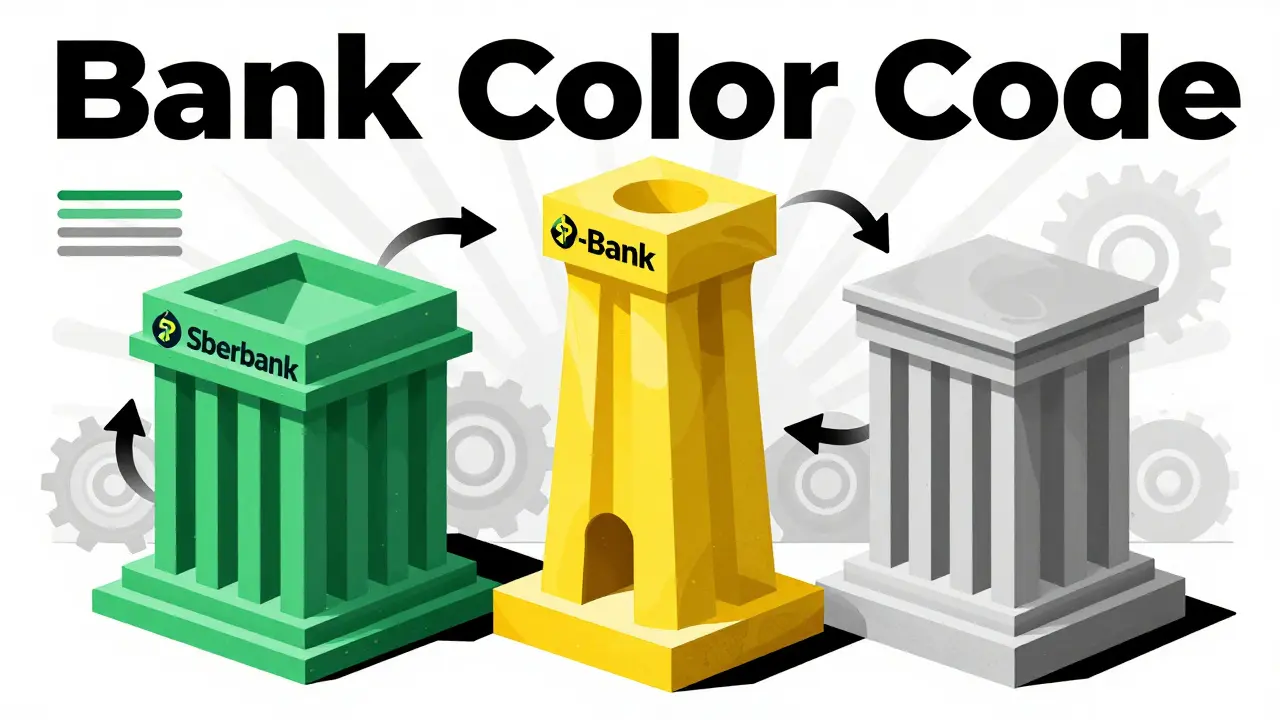
If you are new to Russian crypto trading, you might be confused by terms like "Green Card" or "Yellow Card." This informal color-coding system emerged after sanctions restricted certain banks from international transfers. Platforms like Bybit and community guides from Russiable use these codes to help buyers find sellers who accept their specific bank.
Here is what you need to know:
- Green Card: Typically refers to Sberbank. While it has the largest user base, its transaction success rate for crypto P2P is lower (around 87%) due to stricter automated fraud detection algorithms.
- Yellow Card: Refers to Tinkoff Bank (now rebranded as T-Bank). This is widely considered the most reliable option for crypto transactions, boasting a 92% successful transaction rate according to community data from late 2025.
- Other Banks: Alfa-Bank and VTB are also common, but availability varies by seller preference.
When selecting a seller on a P2P platform, always filter by your bank's color code. Attempting to pay a Sberbank-only seller with a Tinkoff card will result in an immediate cancellation and potential account flagging.
Step-by-Step: How to Buy USDT via P2P on Bybit
Bybit dominates the Russian P2P market with over 247,000 active liquidity providers. Here is the safest way to execute a trade:
- Create and Verify Account: Sign up on Bybit and complete KYC using your Russian passport. This usually takes 12-48 hours.
- Navigate to P2P Trading: Go to "Buy Crypto" > "P2P Trading". Select the "Buy" tab (note: some interfaces label this "Sell" if you are selling RUB to buy USDT, ensure you are on the correct side).
- Select Currency and Asset: Choose RUB as the fiat currency and USDT as the cryptocurrency. USDT is preferred because it holds value against the dollar and has high liquidity.
- Filter Sellers: Apply filters for your bank (e.g., T-Bank/Yellow) and look for sellers with:
- Completion rate above 95%
- Minimum 50 completed orders
- Positive recent reviews
- Initiate Trade: Enter the amount of RUB you wish to spend. The platform will lock the seller's USDT in escrow.
- Make Payment: Transfer the exact RUB amount to the seller's specified bank account. Do not add comments like "crypto" or "USDT" in the payment memo. Use generic descriptions like "services" or leave it blank.
- Confirm Payment: Click "Transferred, Notify Seller" in the app. Wait for the seller to release the USDT. Never release funds before seeing the crypto in your wallet.
Alternative Options: Instant Exchanges and Local Offices
If P2P feels too risky or time-consuming, other options exist. ChangeNOW allows instant swaps without account creation for smaller amounts. They report an average settlement time of 5 minutes. However, fees are higher (up to 3.9%), and you are limited to 17 cryptocurrencies.
For those who prefer physical interaction or large cash transactions, Bitbanker offers offices in Moscow, Dubai, and Bishkek. You can walk in with cash and receive crypto instantly. While this avoids online banking blocks, it requires full KYC and carries the risk of withdrawal delays, which were reported by 327 users in Q3 2025.

Safety Tips and Common Pitfalls
The biggest risk in Russian crypto trading is not the technology, but human error and fraud. Scammers often pose as buyers/sellers on P2P platforms, attempting to reverse bank transfers after receiving crypto. To protect yourself:
- Never communicate outside the platform: Keep all chats within the exchange's interface. This provides evidence if a dispute arises.
- Check the recipient name: Ensure the bank account name matches the seller's verified profile name exactly.
- Avoid "overpayment" scams: If a buyer claims they sent extra money by mistake, ignore them. Check your actual bank balance, not just the notification.
- Use price locks: On volatile days, prices can swing during the 10-minute payment window. Most platforms offer a price lock feature to prevent slippage.
Additionally, be aware of tax implications. The Blockchain Association of Russia notes that 78% of users are confused about declaring crypto assets. While clear federal tax guidelines for crypto profits are still evolving, failing to declare significant gains could lead to audits. Consult a local tax professional familiar with Federal Bill No. 45877-8, which is under review to clarify these rules.
Future Outlook: What Comes Next?
The Russian crypto market is adapting rapidly. Deloitte Russia projects a 22% annual growth in crypto-to-fiat transactions through 2027, driven by remittance needs and inflation hedging. The integration of the Digital Ruble infrastructure with private crypto networks could reduce conversion costs by 35-50% in the coming years.
However, regulatory uncertainty remains. Gartner rates Russia's ecosystem sustainability at 3.7/5, citing strong adoption but significant legislative risks. As long as direct banking channels remain restricted, P2P and localized exchanges will remain the backbone of crypto access in Russia. Stay informed, verify every transaction, and prioritize security over speed.
Is it legal to buy cryptocurrency in Russia in 2026?
Yes, owning cryptocurrency is legal in Russia. However, using it for domestic payments is restricted. You must comply with KYC regulations and report taxable income derived from crypto trades. The government distinguishes between holding assets and using them as currency.
Can I use Sberbank to buy crypto directly?
Directly purchasing crypto via Sberbank's app is generally blocked. However, you can use Sberbank cards for P2P trades on platforms like Bybit. Be aware that Sberbank has stricter fraud filters, so transactions may be delayed or require manual verification compared to T-Bank.
What is the safest way to avoid frozen bank accounts?
Avoid sending large sums to multiple unknown individuals frequently. Use established P2P platforms with escrow services. Do not mention "crypto" or "Bitcoin" in payment memos. Stick to trusted sellers with high completion rates (>95%) and substantial trade history.
Does the Digital Ruble replace Bitcoin?
No. The Central Bank of Russia has stated that the Digital Ruble will coexist with private cryptocurrencies. The Digital Ruble is intended for domestic settlements and state transactions, while private cryptos like Bitcoin and USDT continue to be used for savings and cross-border transfers.
Which bank is best for crypto transactions in Russia?
Tinkoff Bank (now T-Bank) is widely regarded as the most crypto-friendly, with a 92% successful transaction rate in P2P markets. Sberbank is second but has more frequent blocks. Alfa-Bank is also a viable alternative for many users.