How Venezuelans Use Crypto to Survive Hyperinflation and Restrictions
 Jun, 12 2026
Imagine waking up to find that the money in your pocket buys half of what it bought yesterday. For millions of Venezuelans, this isn't a hypothetical nightmare; it is their daily reality. With annual inflation hitting 229% as of May 2025, the Venezuelan bolívar has effectively ceased to function as a store of value. In this environment, cryptocurrency has stopped being a speculative investment for tech enthusiasts and has become a vital tool for basic survival.
The economic collapse under President Nicolás Maduro’s tenure has forced citizens to innovate. They have turned to Bitcoin (BTC) and, more importantly, stablecoins like Tether (USDT) to preserve their purchasing power, pay for groceries, and receive remittances from family abroad. This shift represents one of the most rapid and widespread adoptions of digital assets in modern history, driven not by greed, but by necessity.
The Collapse of Trust in Traditional Currency
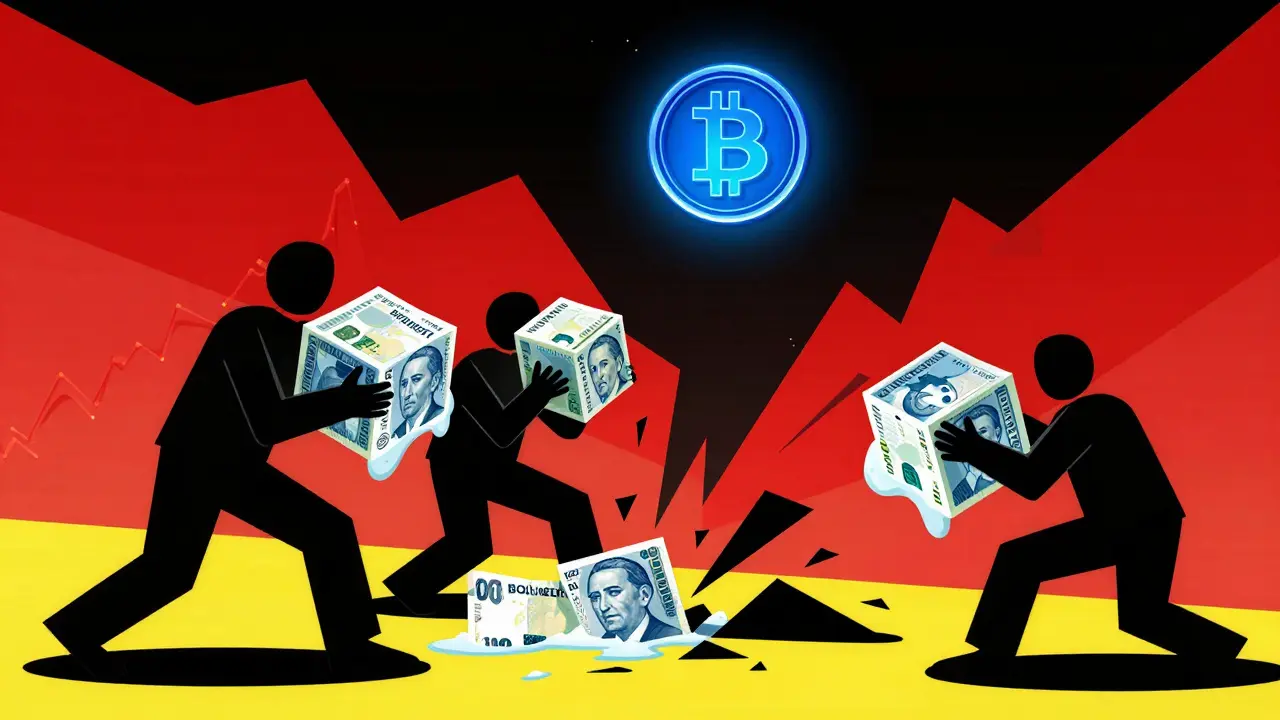
To understand why crypto is so prevalent in Venezuela, you first have to look at the failure of the traditional banking system. The Venezuelan bolívar has lost over 70% of its value since early 2025 alone. When currency depreciates this fast, holding cash is akin to holding ice in the sun-it disappears before you can use it.
This hyperinflation creates a unique psychological barrier. People are terrified to earn salaries in bolívares because the money loses value between payday and grocery day. Consequently, a parallel economy emerged long before crypto became mainstream. Citizens began using the US dollar physically. However, physical dollars come with their own set of problems: scarcity of small bills, counterfeiting risks, and the sheer inconvenience of carrying large amounts of cash.
Cryptocurrency solved these friction points. It offered a way to hold value digitally without relying on the local bank or finding physical foreign currency. According to Chainalysis data from 2024, Venezuela ranks 13th globally in cryptocurrency adoption. This ranking is staggering when you consider that global crypto adoption surged by 110% overall during the same period. In Venezuela, the driver wasn't technological curiosity; it was economic desperation.
Why did Venezuelans turn to crypto instead of just using US Dollars?
While many Venezuelans do use physical US dollars, there is often a shortage of small-denomination bills, making everyday transactions difficult. Additionally, carrying large amounts of cash poses security risks. Cryptocurrencies like USDT offer a digital alternative that is easier to transfer, store securely on a smartphone, and use for online payments without the physical limitations of paper money.
USDT and the Rise of "Binance Dollars"
If Bitcoin is the gold standard of crypto, USDT (Tether) is the workhorse of the Venezuelan economy. A stablecoin pegged to the US dollar, USDT allows users to transact in a stable currency while utilizing blockchain technology. But how does the average person in Caracas actually use it?
The answer lies in the TRC-20 network. Most small transfers happen on the Tron blockchain because the transaction fees are fractions of a cent, compared to higher costs on other networks like Ethereum. This low cost makes it viable for buying a loaf of bread or paying for a bus ride.
A fascinating cultural shift has occurred in terminology. Many Venezuelans refer to USDT as "Binance Dollars." This nickname highlights the dominance of the Binance exchange platform in the region. Binance became the de facto bank for millions who were shut out of traditional finance. Its Peer-to-Peer (P2P) marketplace allows users to buy and sell crypto directly with each other, bypassing banks entirely.
In markets across Caracas and other major cities, receipts now frequently display totals in "Binance dollars." Merchants have migrated their pricing models from the volatile bolívar to blockchain-based systems. This isn't just informal barter; it's a structured commercial ecosystem. Private sector records showed $119 million in cryptocurrency transactions in July 2025 alone, proving that businesses rely on this infrastructure for revenue.
Navigating Restrictions and Government Crackdowns
You might wonder if the government allows this. The relationship between the Venezuelan state and cryptocurrency is complex and contradictory. On one hand, the government launched its own state-backed cryptocurrency, the Petro, in 2018. It failed miserably due to public distrust and lack of utility, leading to its discontinuation in 2024.
On the other hand, the regime tolerates the use of dollar-backed cryptocurrencies like USDT because it helps stabilize the informal economy and reduces pressure on the official banking sector. However, this tolerance comes with strings attached. The government periodically conducts crackdowns on mining operations and restricts access to certain exchanges.
These restrictions create a cat-and-mouse game. When an exchange is blocked, users quickly migrate to alternatives or use Virtual Private Networks (VPNs) to regain access. The resilience of the user base is remarkable. Despite internet connectivity issues, power grid instability, and regulatory uncertainty, the demand for decentralized financial tools remains high.
The government maintains three distinct exchange rates simultaneously:
- The Official Rate: Set by the Central Bank of Venezuela (BCV), used for state transactions.
- The Black Market Rate: Known as "dólar negro," reflecting the true street value of physical dollars.
- The USDT P2P Rate: The rate determined by supply and demand on platforms like Binance, which merchants increasingly use for actual pricing decisions.
This tripartite system illustrates the complete breakdown of centralized monetary control. The market has spoken, and it prefers the transparency and stability of the P2P crypto rate over government mandates.
Remittances: Lifelines Across Borders
One of the most critical functions of crypto in Venezuela is facilitating remittances. In 2023, remittances totaled $5.4 billion, serving as a primary source of income for many families. Traditionally, sending money home involved high fees through Western Union or banks, along with significant delays and bureaucratic hurdles.
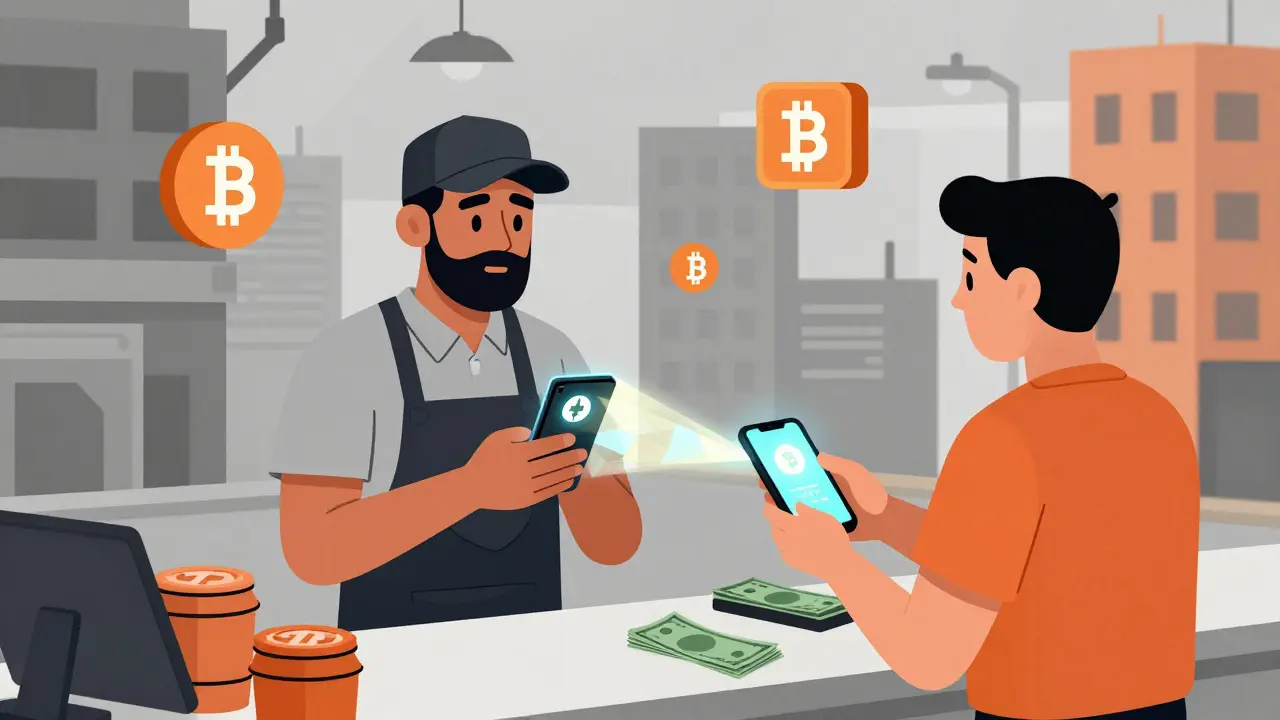
Cryptocurrency has revolutionized this process. Approximately 9% of all remittances in 2023 were processed through cryptocurrency channels. For a family member living in Spain or the United States, sending USDT via a wallet app takes minutes and costs less than a dollar. The recipient can then instantly convert those tokens into bolívares via P2P platforms or spend them directly if they have a merchant who accepts crypto.
This speed is crucial in a hyperinflationary environment. Every hour that passes, the value of fiat currency drops. By cutting out intermediaries, crypto ensures that the full amount sent arrives intact and immediately usable. It transforms remittances from a monthly administrative task into a real-time support mechanism.

Daily Life and Technical Challenges
Living with crypto as your primary financial tool is not without its difficulties. It requires a level of technical literacy that previous generations never needed. Carlos, a resident of Caracas, explains, "I use USDT for everything - buying food, paying rent. It is much more reliable than the bolívar." But getting to that point involves overcoming significant barriers.
First, there is the hardware requirement. You need a smartphone and a reliable internet connection. In a country plagued by blackouts and spotty mobile data, this is a constant struggle. Users often keep multiple devices charged or rely on community Wi-Fi spots to execute trades.
Second, there is the learning curve. New users typically take 2-3 weeks to feel comfortable with basic transactions. They learn through community knowledge sharing rather than formal education. Social media groups and WhatsApp chats serve as informal support networks where veterans help newcomers navigate private keys, seed phrases, and gas fees.
Security is another major concern. Unlike a bank, there is no customer service to call if you lose your password. If you lose your private key, your money is gone forever. This reality forces users to develop rigorous security habits, such as writing down recovery phrases on paper and storing them in safe places, away from digital threats.
| Method | Speed | Cost | Accessibility | Risk Level |
|---|---|---|---|---|
| Bolívar (Fiat) | Instant | Low | High | Extreme (Inflation) |
| Physical USD | Instant | Medium (Transport/Security) | Medium (Bill Scarcity) | Medium (Theft/Counterfeit) |
| Bank Transfer | Slow (Days) | High (Fees) | Low (Restrictions) | High (Freezing/Capital Controls) |
| USDT (Crypto) | Fast (Minutes) | Very Low (TRC-20) | High (Smartphone Required) | Medium (User Error/Hacking) |
The Future of Digital Survival
As we move through 2026, the trend toward blockchain-based dollarization in Venezuela appears irreversible. The confidence in traditional monetary systems has completely broken. Even if political situations change following the contested elections of 2024, the economic fundamentals driving crypto adoption remain unchanged.
Experts warn that while crypto provides tactical financial stability, it cannot resolve structural economic problems like political instability and sanctions. However, for the individual citizen, it offers a lifeline. The integration of digital assets into daily business practices-from street vendors to universities-suggests that this is not a temporary workaround but a permanent shift in how the economy functions.
Venezuela serves as a testing ground for crisis-responsive financial technologies. What starts here often influences broader Latin American trends. While neighbors like Brazil pursue institutional adoption and regulatory frameworks, Venezuela demonstrates the power of grassroots, decentralized solutions. The lesson is clear: when traditional systems fail, people will find ways to trade, save, and survive, even if it means building a new financial layer on top of the old one.
Is it legal to use cryptocurrency in Venezuela?
The legal status is ambiguous. The government has not officially legalized dollarization but tolerates the use of dollar-backed cryptocurrencies like USDT in exchanges. However, there are periodic crackdowns on mining operations and specific exchanges. Users operate in a gray area where practical necessity often outweighs strict regulatory enforcement.
What is the safest way to store crypto in Venezuela?
For daily transactions, keeping funds on reputable P2P platforms like Binance is common. However, for larger amounts, experts recommend using non-custodial wallets where you control the private keys. Writing down the seed phrase on paper and storing it securely is essential, as losing access means losing the funds permanently.
How do Venezuelans convert crypto back to cash?
Most conversions happen through Peer-to-Peer (P2P) platforms. Users sell their USDT or BTC directly to other individuals in exchange for bolívares via bank transfer or cash meetups. Some also use prepaid cards or gift card exchanges to convert digital assets into usable physical goods or services.
Why is TRC-20 preferred over other networks?
TRC-20, based on the Tron blockchain, is preferred because of its extremely low transaction fees and fast confirmation times. In a low-income environment, saving fractions of a cent on every transaction adds up significantly compared to networks like Ethereum which may have higher gas fees.
Can foreigners send crypto to Venezuela easily?
Yes, sending crypto like USDT is one of the easiest ways to send money to Venezuela. It bypasses traditional banking restrictions and high fees associated with services like Western Union. The recipient can receive the funds instantly in their digital wallet and convert them as needed.