Iranian Central Bank Mandatory Crypto Sales: How Miners Must Sell to the State
 Aug, 31 2026
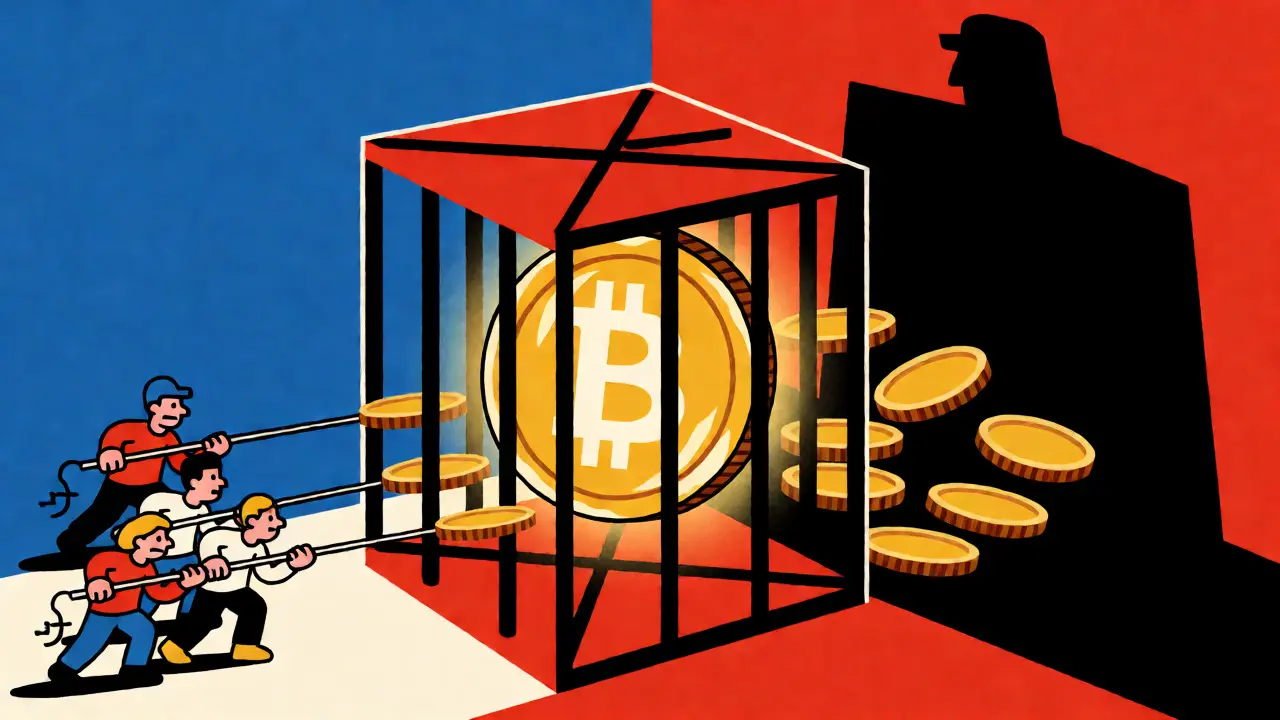
Imagine producing a valuable commodity like gold, but instead of selling it on the open market to whoever pays the most, you are legally forced to sell every ounce to one specific buyer at a government-set price. That is effectively what happens to cryptocurrency miners in Iran under the current regulatory regime enforced by the Central Bank of Iran (CBI). While the term "mandatory sales" might sound like a new invention, it is the practical reality of a system where the state controls both the license to mine and the channel through which mined assets enter the economy.
As of August 2026, the landscape for Iranian miners has shifted from a wild west of unregulated farms to a tightly controlled industrial sector. The core issue isn't just that mining is legal-it is-but that the output cannot freely circulate. If you run a mining rig in Tehran or Kerman, you aren't just generating digital currency; you are generating a state-controlled asset. This article breaks down how this mechanism works, why the CBI enforces it, and what it means for your bottom line if you're operating in or trading with Iranian hash power.
The Reality Behind "Mandatory Sales"
Let's clear up a common misconception. There isn't always a single law titled "Mandatory Sales Act." Instead, the mandate emerges from a combination of licensing requirements, foreign exchange controls, and energy subsidies. In Iran, electricity for licensed miners is heavily subsidized-often costing a fraction of global rates. In exchange for this cheap power, the state demands control over the resulting Bitcoin or other cryptocurrencies.
Under the directives formalized by President Masoud Pezeshkian in early 2025, the CBI was designated as the sole authority for regulating digital assets. This gave them the teeth to enforce strict compliance. For miners, this translates into a de facto requirement to sell their mined coins through approved channels, often directly to the central bank or state-affiliated entities. Why? Because the government needs hard currency (or digital equivalents) to bypass US sanctions and stabilize the rial.
If you try to hold onto your mined Bitcoin and trade it on an international exchange, you face significant hurdles. The CBI requires full transparency. They want to see where every satoshi goes. If you don't route your sales through the approved infrastructure, you risk losing your mining license, having your equipment confiscated, or facing fines for unauthorized capital flight.
How the Licensing and Sales Loop Works
To understand the sales obligation, you have to look at the lifecycle of an Iranian mining operation. It starts with the license. You can't just plug in a rig and start mining profitably. You need approval from the Ministry of Industry, Mine and Trade, and crucially, clearance from the CBI.
- Application: You submit details about your hardware, location, and projected energy consumption.
- Inspection: Officials verify that your setup meets efficiency standards to prevent grid overload.
- Licensing: Once approved, you receive a permit that ties your identity to your mining activity.
- Production: You mine Bitcoin or other supported assets.
- Sales Mandate: Before you can cash out, you must report your production. The state often requires you to sell a portion-or sometimes all-of your mined output to the CBI or authorized exchanges at rates they determine.
This loop ensures that the value generated by Iran's cheap energy stays within the national economic sphere. It prevents miners from quietly moving wealth abroad via offshore wallets without oversight. For the average miner, this means less autonomy but more predictability regarding energy costs.
The Role of the IRGC and State-Linked Farms
You can't talk about Iranian mining without mentioning the Islamic Revolutionary Guard Corps (IRGC). Since roughly 2019, the IRGC has become a dominant player in the sector. They operate massive facilities, such as the 175-megawatt farm in Rafsanjan, often in partnership with Chinese investors. These aren't typical commercial operations; they are strategic assets.
For these large-scale entities, "mandatory sales" is less of a burden and more of a feature. They use mined Bitcoin to facilitate international trade settlements, buying goods from countries that don't accept dollars due to sanctions. By controlling the sale of these assets, the state ensures that the profits flow back into key industries rather than disappearing into private pockets. Small independent miners, however, often feel squeezed between the high compliance costs and the fixed sale prices set by the state.
Impact on Global Hash Rate and Market Dynamics
Iran accounts for approximately 4.5% of the global Bitcoin hash rate. That’s a non-trivial chunk of the network's security. When the CBI tightens rules on sales and exports, it affects global liquidity. If Iranian miners are forced to sell domestically at discounted rates, it reduces the supply of Bitcoin hitting international markets from that region. Conversely, if the state decides to liquidate reserves to prop up the rial, you might see sudden spikes in selling pressure.
Moreover, the ban on domestic payments using cryptocurrency means that mined coins rarely stay in circulation within Iran for long. They are either sold to the state or exported. This creates a unique dynamic where Iran acts more like a producer-exporter of Bitcoin than a consumer-market. For traders watching global flows, keeping an eye on CBI announcements is crucial. A change in the mandatory purchase price or export quotas can ripple through regional exchanges in Turkey and the UAE.
Compliance Challenges and Data Privacy
The biggest friction point for miners today is data privacy. To maintain their licenses, operators must provide the CBI with unrestricted access to their transaction records and user data. The Iran Fintech Association has pushed back against this, calling it a "red line," but for many miners, compliance is non-negotiable.
Here is what you need to watch out for:
- API Integration: Exchanges and miners must integrate with government APIs. If your systems don't sync correctly, your transactions get flagged.
- AML Checks: Anti-Money Laundering protocols are strictly enforced. Large movements of funds trigger automatic reviews.
- Energy Caps: During winter months, when the grid strains, the CBI may order temporary shutdowns. Your ability to sell depends on whether you were actually allowed to mine during those periods.
Failing to comply doesn't just mean a fine. In recent years, authorities have seized thousands of illegal rigs. The message is clear: if you want the subsidy, you follow the rules.
| Feature | Independent Licensed Miner | State/IRGC Linked Farm | Illegal/Unlicensed Miner |
|---|---|---|---|
| Electricity Cost | Subsidized (Low) | Dedicated Feed (Very Low) | Residential/Commercial (High) |
| Sales Channel | Mandatory via CBI/Approved Exchanges | Direct State Settlement | Black Market/P2P |
| Data Transparency | Full API Access Required | Internal Reporting | None |
| Risk Level | Medium (Regulatory Changes) | Low (Political Protection) | High (Seizure/Fines) |
Why the Rial Matters More Than Bitcoin
It sounds counterintuitive, but the primary driver behind these mandatory sales isn't necessarily to accumulate Bitcoin for its own sake. It's about the Iranian rial. The currency has faced significant devaluation pressures. By forcing miners to sell their output to the central bank, the government injects digital assets into its reserves. These reserves can then be used to intervene in forex markets or settle international debts.
When the rial falls, demand for stablecoins and Bitcoin rises among ordinary Iranians looking to hedge their savings. But they can't easily buy these assets because of the restrictions on domestic payments. So, the state acts as the intermediary. They buy from miners, and they sell to the public (or use the assets externally). This circular flow keeps the dollar dependency lower than it would otherwise be.
What This Means for Investors and Traders
If you are outside Iran, you might wonder why this matters. Here’s the takeaway: Iranian policy creates artificial constraints on supply. When the CBI changes the terms of mandatory sales-say, by offering a lower price for mined Bitcoin-it discourages small miners, potentially lowering the overall hash rate contribution from the region. Conversely, if they offer competitive rates, hash rate stabilizes.
Traders should monitor news from the Ministry of Economic Affairs and Finance. Announcements about new pilot programs, like the digital rial on Kish Island, often signal shifts in how crypto is valued and exchanged. Also, keep an eye on energy crisis reports. If rolling blackouts hit major mining hubs like Kerman, expect immediate drops in daily production, which could subtly impact global difficulty adjustments.
Future Outlook: Will Restrictions Ease?
Given the geopolitical climate, a rapid liberalization of crypto laws in Iran seems unlikely. The state views digital assets as a tool for sanctions evasion, not just a speculative investment. Therefore, mandatory sales will likely remain a cornerstone of policy. However, we might see refinements. Perhaps the list of approved exchanges expands, or the pricing model becomes more dynamic, pegging closer to global spot prices to encourage compliance.
For now, if you are dealing with Iranian hash power, assume that every coin mined comes with strings attached. The era of anonymous, free-market mining in Iran is over. It is now a regulated industry where the government takes its cut, quite literally, before the coins ever reach your wallet.
Is cryptocurrency mining legal in Iran?
Yes, mining is legal, but only for licensed operators. Unlicensed mining is considered illegal and subject to penalties, including equipment seizure.
Do miners have to sell all their Bitcoin to the Central Bank?
Not necessarily all, but a significant portion must be sold through approved channels. The exact percentage can vary based on current regulations and the type of license held. The goal is to ensure state control over the flow of assets.
Can I use Bitcoin to pay for groceries in Iran?
No. Domestic payments using cryptocurrency are prohibited. You must convert your crypto to rials through authorized exchanges before making everyday purchases.
Why does the Iranian government restrict crypto advertising?
To control speculation and prevent capital flight. By banning ads, the state limits public exposure to volatile assets, encouraging people to stick with the rial unless they are part of the regulated mining or trading ecosystem.
How do US sanctions affect Iranian crypto mining?
Sanctions limit access to Western financial systems. Mining allows Iran to generate revenue in a neutral asset (Bitcoin) that can be traded with partners who are willing to overlook US restrictions, helping to bypass the dollar-centric banking system.
liam & the bees
September 1, 2026 AT 17:01It is fascinating how this mirrors the old gold standard dynamics but with digital scarcity. The state effectively becomes the sole market maker for domestic production, which stabilizes their forex reserves while capping miner upside. Great breakdown of the regulatory loop.
Edward Ogunfolaju
September 1, 2026 AT 21:46This is exactly what happens when you mix cheap energy with authoritarian control! You get massive hash rate but zero freedom for the individual operator. It’s a power play, plain and simple. They want that hard currency flow to keep the sanctions at bay. Small miners are getting crushed here, no doubt about it.
Liam Grimes
September 2, 2026 AT 22:18yeah i think its kinda smart from a macro econ perspective tho... they need the dollars (or btc equiv) more than they care about miner profits. its basically a tax on energy usage in disguise. if u dont like it, dont take the subsidy. simple as that imo
Matthew O'Neill
September 4, 2026 AT 17:36The author glosses over the sheer inefficiency of this model. By forcing sales at government-set prices, you create artificial price discovery distortions that ripple through the global market. It is not just about 'control'; it is about the centralization of liquidity in a way that contradicts the very ethos of decentralized finance. This is regulatory arbitrage gone wrong, where the state extracts rent from innovation without fostering true technological sovereignty. The IRGC's involvement further muddies the waters, turning what should be a neutral commodity into a geopolitical tool. We are seeing the fragmentation of Bitcoin's network security into political blocs, and Iran is leading that charge into irrelevance for independent actors.
Emmanuel Ogbomo
September 5, 2026 AT 08:21Interesting perspective. It reminds me of how some nations treat natural resources. The value is extracted, but the local ecosystem suffers. Peaceful coexistence between state goals and individual liberty seems difficult here.
Laine Van Sickle
September 7, 2026 AT 07:22ugh so complicated. why cant they just let people sell where they want? seems like too much hassle for everyone involved. poor miners.
Ashwin Bhandurge
September 8, 2026 AT 02:33Keep pushing forward! Understanding these nuances helps us all navigate the global crypto landscape better. Every regulation teaches us something about human behavior and economic necessity. Stay curious!
Teresa Watson
September 8, 2026 AT 03:28boring article really. everyone knows states try to control money. nothing new here. just more bureaucracy suffocating the real pioneers. whatever.
J Shepherd
September 8, 2026 AT 05:06The API integration requirement is the killer here. It turns mining into a surveillance-heavy industry. Compliance costs will likely drive out the smaller rigs entirely, leaving only industrial-scale farms or state entities. That consolidation is inevitable.
Alan Hawkins
September 8, 2026 AT 16:03Agreed. The data privacy aspect is often overlooked but crucial for long-term sustainability of any tech sector.
Steve Sulley
September 9, 2026 AT 06:30actually its deeper then that. its about bypassing the swift system entirely. iran isnt trying to make profit for miners, they are trying to create a parallel trade route. its genius actually. most ppl miss the strategic angle.
Matt Reckdenwald
September 9, 2026 AT 15:23I feel for the small operators caught in the middle. It must be incredibly stressful to have your livelihood tied to political whims and sudden grid shutdowns. The emotional toll of constant compliance checks is heavy.
nic c
September 10, 2026 AT 13:57While the article presents a compelling narrative regarding the Central Bank's stranglehold on Iranian mining operations, one must consider the broader historical context of resource nationalism which has plagued developing economies for decades; by treating Bitcoin merely as a commodity akin to oil or copper rather than a monetary instrument, the Iranian state inadvertently reinforces the very fiat dependency they claim to escape, creating a paradoxical situation where the adoption of decentralized technology serves to strengthen centralized authoritarian control over the populace's financial agency, ultimately rendering the 'freedom' promised by crypto moot in the face of such rigid state interventionism.
Kevin Payette
September 10, 2026 AT 16:17Nonsense. It’s theft. Plain and simple. The state takes the risk? No. The miner takes the risk. The state takes the reward. Typical.
Rebecca Springer
September 11, 2026 AT 04:28Respectfully disagree with the harsh tone above. It is a complex geopolitical strategy. Different cultures approach wealth preservation differently. We should observe before judging.
Carey Thornton
September 11, 2026 AT 19:01The aesthetic of this regulation is purely brutalist. Function over form. The state demands efficiency and transparency, stripping away the romantic chaos of early crypto days. It is cold, calculated, and utterly devoid of soul. A machine eating another machine.
David Powell
September 13, 2026 AT 03:45Oh please. Another article telling us how 'special' foreign regulations are. Spoiler alert: Governments everywhere do this. It's called taxes, but with extra steps and fewer rights. Groundbreaking stuff.
Ellie Brooks
September 14, 2026 AT 01:07This is such an important read for anyone interested in the intersection of geopolitics and blockchain technology! I am particularly intrigued by the mention of the Kish Island pilot program because it suggests that there might be experimental zones where rules could differ slightly from the mainland, potentially offering a glimpse into a future where regulated DeFi exists within national borders. It raises so many questions about how other nations might adopt similar hybrid models to balance sovereignty with innovation. Do you think we will see more countries adopting mandatory sale laws for strategic commodities in the next decade?