NFT Use Cases Beyond Digital Art: Real-World Applications in 2026
 Jun, 4 2026
Remember the days when you couldn't scroll through social media without seeing a monkey wearing a gold chain? The NFT hype cycle of 2021 was loud, messy, and dominated by pixelated art. But while the headlines chased record-breaking sales of JPEGs, developers and enterprises were quietly building something far more substantial underneath that noise. By 2026, the conversation has shifted entirely from "what is an NFT worth?" to "what can an NFT actually do?".
The truth is, non-fungible tokens (NFTs) are just a data structure-a unique digital receipt stored on a blockchain. That simple capability solves a massive problem: proving ownership and authenticity in a world where copying files is free and easy. When you strip away the speculation, you find a technology that is reshaping how we handle identity, assets, and trust across industries that have nothing to do with galleries or auction houses.
Supply Chains and Luxury Goods Authentication
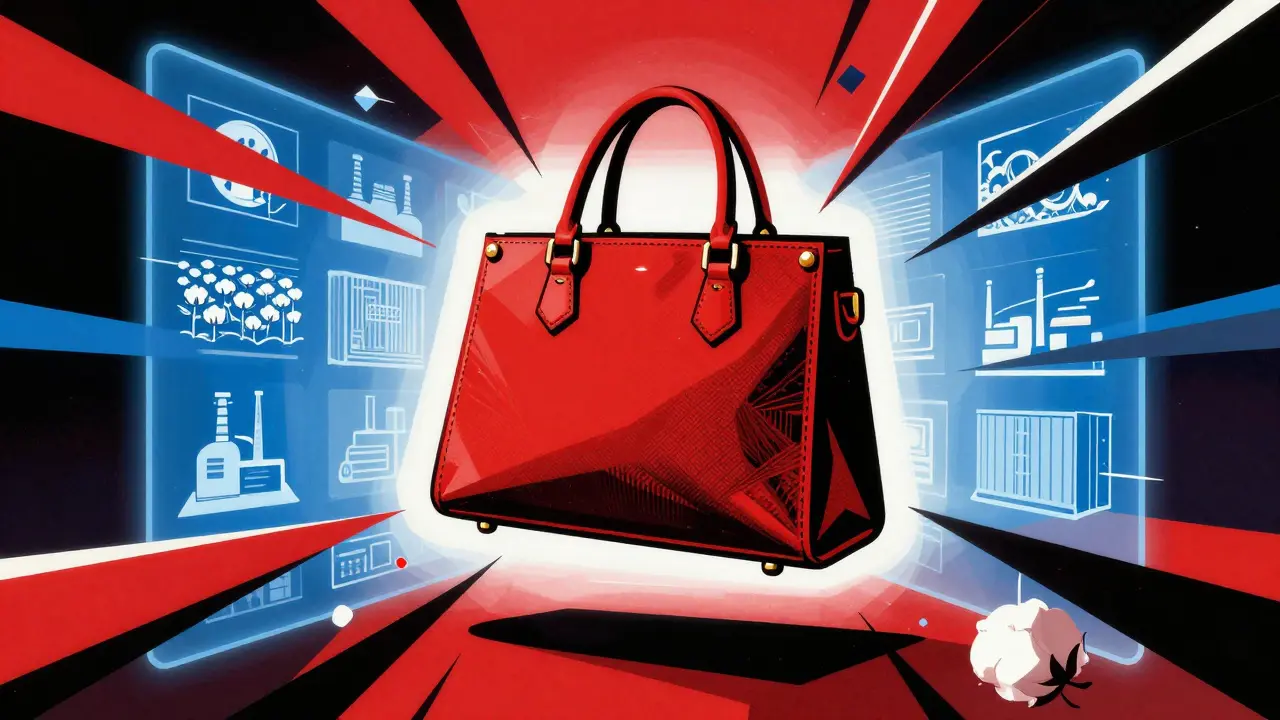
If you've ever bought a high-end handbag or sneakers, you know the anxiety of wondering if it's genuine. Counterfeiting costs the global luxury industry billions annually. Traditional serial numbers and paper certificates are easily forged. This is where supply chain tracking via blockchain-based tokens changes the game.
Imagine buying a designer jacket. Inside the tag is a QR code linked to an NFT. That token isn't just a picture; it's a digital passport. It contains the history of every step the garment took: where the cotton was grown, which factory stitched it, and its journey through customs. Because this data lives on an immutable ledger, no one can fake the origin story. If you sell the jacket later, you transfer the NFT to the new owner, instantly updating the provenance record.
This system does two things at once:
- Verifies Authenticity: Buyers scan the code to confirm the item is real, reducing the gray market.
- Enables Circular Economy: Brands can track products for repair or recycling, ensuring materials are reused rather than dumped.
Companies like LVMH and Prada have already experimented with this using platforms like AURA. It’s not about selling the bag as a crypto asset; it’s about using the token to guarantee the physical product’s integrity.
Digital Identity and Academic Credentials
Think about the last time you had to prove who you were. You probably filled out a form, uploaded a PDF of your ID, and waited for a human to check it. Now imagine if your university degree, driver’s license, or professional certification lived as an NFT in your digital wallet.
Digital credentials issued as verifiable NFTs solve the friction of background checks. Here’s how it works: Your university mints a token representing your degree. You hold this token in your wallet. When applying for a job, you don’t send a resume hoping they believe it. You grant the employer temporary permission to view the specific metadata on that token-the fact that you graduated, the date, and the grade. The employer verifies it directly against the university’s public key on the blockchain.
This approach offers several clear advantages over traditional methods:
- Instant Verification: No waiting weeks for transcripts or HR calls.
- Fraud Prevention: Diplomas cannot be forged because the issuer’s signature is cryptographic.
- User Control: You decide who sees your data and for how long, rather than storing sensitive info on corporate servers vulnerable to breaches.
In the UK and EU, frameworks like GDPR make data privacy critical. NFT-based identity systems often store only a hash (a digital fingerprint) of the document on-chain, keeping the actual personal details off-chain but still verifiable. It’s a balance between transparency and privacy that centralized databases struggle to achieve.
Real Estate and Fractional Ownership
Buying property is slow, expensive, and illiquid. You need lawyers, notaries, banks, and government registries. Transactions take months. What if you could buy a slice of a commercial building in London or a vacation home in Bali in minutes?
Real estate tokenization uses NFTs to represent fractional ownership shares of physical assets. Instead of one person owning 100% of a £5 million office block, the property rights are split into 5,000 NFTs, each worth £1,000. Each token represents a legal claim to a portion of the rental income and eventual sale proceeds.
This democratizes investment. Previously, only wealthy individuals or institutions could afford commercial real estate. Now, retail investors can diversify their portfolios with tangible assets. Smart contracts automate the distribution of rent payments to token holders’ wallets, removing the need for complex accounting firms.
However, there’s a catch: regulation. Real-world assets (RWA) are heavily regulated. In 2026, jurisdictions like the US SEC and UK FCA are still refining rules around security tokens. While the technology works, the legal wrapper must ensure that token holders have enforceable rights under local law. Successful projects partner with established legal entities to bridge the gap between code and court.
Gaming and Virtual Economies
In traditional online games, you don’t own your sword, skin, or character. The game publisher does. If the server shuts down, your years of grinding vanish. NFTs change this dynamic by giving players true ownership of in-game assets.
When you earn or buy an item as an in-game NFT, you hold the private key to that asset. You can trade it on open marketplaces, sell it for cryptocurrency, or even use it in other compatible games (interoperability). This creates a player-driven economy where effort has real-world value.
Consider a strategy game where rare land plots are NFTs. Players can build structures, host events, or lease the land to others. The value isn’t just speculative; it’s utility-based. Developers benefit too-they can charge fees for transactions, creating a sustainable revenue model beyond initial sales. However, the "play-to-earn" boom of 2021 taught us a lesson: if the game isn’t fun, the economy collapses. The most successful Web3 games in 2026 focus first on gameplay, using NFTs as a backend feature for ownership, not the main hook.
Ticketing and Event Access
Scalping ruins live music and sports for fans. Secondary markets inflate prices, and counterfeit tickets leave people locked outside venues. NFT ticketing solves this by embedding rules directly into the ticket itself.
An NFT ticket is a programmable access pass. The event organizer sets parameters in the smart contract:
- Price Caps: Resale price cannot exceed face value plus a small fee.
- Royalties: A percentage of resale goes back to the artist or venue.
- Expiration: The token becomes useless after the event ends, preventing future fraud.
Because the ticket is tied to a digital wallet, not a name on a piece of paper, verification is instant and secure. Venues scan a QR code generated by the wallet, confirming the user holds the valid token. This eliminates bots buying up thousands of tickets seconds after release. Fans get fair access, artists get paid fairly, and organizers retain control over their pricing strategy.

Intellectual Property and Creator Royalties
Musicians, writers, and filmmakers often see most of their earnings swallowed by labels, publishers, and distributors. NFTs allow creators to connect directly with their audience and automate royalty payments.
When a musician releases an album as an NFT, they can program the smart contract to pay them 10% every time that token is resold. In traditional copyright law, collecting secondary royalties is notoriously difficult and inefficient. On-chain, it’s automatic. Additionally, NFTs can unlock exclusive content-behind-the-scenes footage, early demos, or VIP meet-and-greets-creating a direct monetization channel that doesn’t rely on streaming algorithms.
This model extends to patents and designs. Companies can mint NFTs representing intellectual property rights, making licensing agreements transparent and auditable. If a brand wants to use a design, they interact with the token’s smart contract, which handles payment and usage terms automatically.
Environmental Credits and Conservation
Carbon credits are supposed to help fight climate change, but the market is plagued by double-counting and lack of transparency. An offset might be sold twice, or a tree planting project might never happen. NFTs provide a solution through unique, traceable records.
Each carbon credit NFT represents one verified ton of CO2 removed or avoided. When a company buys a credit to offset emissions, the token is transferred to them and then "retired"-sent to a burn address where it can never be used again. This ensures one credit equals one unit of impact, with full public auditability. Environmental organizations also use NFTs to fund conservation efforts, selling limited-edition tokens linked to protected wildlife or forests, with proceeds going directly to preservation work.
| Feature | Traditional System | NFT-Based System |
|---|---|---|
| Ownership Proof | Paper documents, centralized databases | Cryptographic keys, public ledger |
| Transfer Speed | Days to weeks (legal processing) | Minutes to hours (on-chain transaction) |
| Authenticity Check | Manual verification, prone to forgery | Instant, algorithmic verification |
| Secondary Market | Limited liquidity, high fees | Global, 24/7 trading, programmable royalties |
| Data Privacy | Centralized risk (data breaches) | User-controlled, selective disclosure |
Challenges and Future Outlook
Despite the potential, hurdles remain. User experience is still clunky for non-tech users. Managing private keys feels risky to the average person. Regulatory uncertainty varies wildly by country, complicating cross-border use cases like real estate or securities. And let’s not forget energy consumption-though many modern blockchains (like Ethereum post-Merge or Hedera) are carbon-neutral or negative, the stigma persists.
Yet, the trajectory is clear. As infrastructure improves-with custodial wallets, seamless fiat on-ramps, and clearer laws-NFTs will fade into the background. They won’t be called "NFTs" anymore; they’ll just be the standard way we prove ownership, verify identity, and transfer value digitally. The art phase was the tutorial level. The real game is just beginning.
Are NFTs only useful for digital art?
No. While digital art popularized NFTs, the underlying technology is a general-purpose tool for proving ownership and authenticity. It is now widely applied in supply chains, real estate, gaming, identity verification, and ticketing.
How do NFTs prevent counterfeiting in luxury goods?
Each physical item is linked to a unique NFT containing its provenance history. Since blockchain records are immutable and publicly verifiable, buyers can scan a QR code to confirm the item’s origin and ownership trail, making fakes easily detectable.
Can I use an NFT to prove my university degree?
Yes. Universities can issue degrees as NFTs. Employers can instantly verify the credential on the blockchain without contacting the school, speeding up hiring and eliminating diploma fraud.
What is fractional real estate ownership via NFTs?
It involves splitting a property’s title into multiple NFT tokens. Investors buy these tokens to gain partial ownership and share in rental income or appreciation, lowering the barrier to entry for real estate investment.
Do NFT tickets stop scalping?
They can significantly reduce it. Organizers can embed resale price caps and royalty rules into the NFT’s smart contract, ensuring tickets stay affordable and creators benefit from secondary sales.