Nigeria's Crypto Ban Reversal: The 2021-2025 Timeline Explained
 Jun, 7 2026
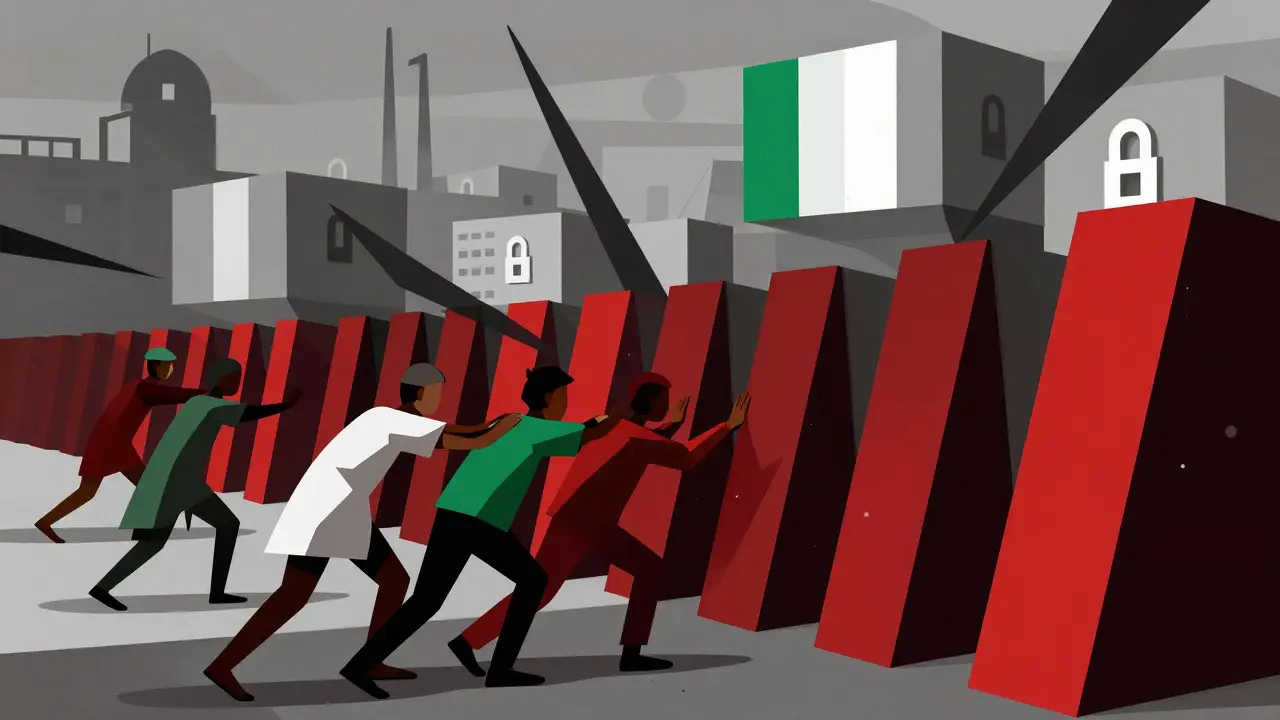
It feels like just yesterday that Nigerian banks were terrified to touch a single bitcoin transaction. If you tried to buy crypto in 2021, your bank account could get frozen overnight. But by 2025, the landscape had flipped completely. Banks are now working with licensed exchanges, and the government has passed laws recognizing digital assets as securities. This isn't just a policy tweak; it’s a complete reversal of one of Africa’s most aggressive financial crackdowns.
If you’ve been watching Nigeria’s crypto scene, you know it’s volatile. One day, the Central Bank is threatening jail time for traders; the next, they’re issuing guidelines for how banks can serve crypto firms. For investors, developers, and everyday users, understanding this timeline is crucial. It explains why things work the way they do today and what risks might still be lurking around the corner. Let’s walk through the four-year journey from total prohibition to structured regulation.
The Crash Landing: February 2021
To understand where we are in 2025, we have to look back at the shockwave that hit in early 2021. On February 5, 2021, the Central Bank of Nigeria (CBN) issued a circular that effectively banned all cryptocurrency transactions in the banking system. Governor Godwin Emefiele didn’t mince words. He told the Senate that these "opaque activities" threatened the safety of the entire financial system.
This wasn’t entirely out of nowhere. The CBN had already warned banks in January 2017 not to facilitate bitcoin trades. But the 2021 directive was different. It was comprehensive. Commercial banks, payment service providers, and microfinance institutions were all barred from processing any crypto-related payments. If a bank found even a hint of crypto activity in an account, they were instructed to close it immediately.
The intent was clear: cut off the oxygen supply to the crypto ecosystem. Without access to traditional banking rails, exchanges couldn’t easily accept naira deposits or withdrawals. The CBN believed this would crush adoption. Instead, it forced innovation underground.
| Date | Action | Impact |
|---|---|---|
| Feb 2021 | CBN Circular bans crypto transactions | Banks freeze accounts; P2P trading surges |
| Dec 2023 | New CBN Governor lifts ban | Banks allowed to serve licensed VASPs |
| Mid-2024 | Binance Executives Detained | Highlighting ongoing enforcement risks |
| 2025 | Investments and Securities Act (ISA) Passed | Crypto recognized as securities under SEC |
The Underground Boom: 2022-2023
You’d think a total ban would stop people from using crypto. In Nigeria, it did the opposite. By 2022, Nigeria was ranking second globally for peer-to-peer (P2P) trading volume. Why? Because when you take away the easy, legal on-ramps, people find other ways. Exchanges like Binance, Luno, and Yellow Card ramped up their P2P marketplaces. Buyers and sellers connected directly, transferring naira via bank transfers that looked like ordinary payments, while the crypto moved on-chain.
This period highlighted a fundamental truth: you cannot regulate demand by banning supply channels. The naira was facing significant pressure, inflation was rising, and Nigerians needed a hedge. Crypto provided that escape valve. Despite the CBN’s warnings, adoption kept climbing. The country consistently ranked in the top five worldwide for crypto adoption rates.
Behind the scenes, however, the pressure was mounting on regulators. The informal nature of P2P trading made it difficult to track capital flight, which worried the CBN even more. They were losing visibility into foreign exchange flows. This tension set the stage for a pivot. You can’t fight a trend that serves millions of citizens, especially when the economy is struggling.

The Pivot: December 2023
The turning point came in December 2023. A new governor took over at the CBN, bringing a fresh perspective. Citing "current global trends," the central bank officially reversed the February 2021 ban. Banks were once again permitted to open accounts for cryptocurrency businesses. But there was a catch.
This wasn’t a free-for-all. The CBN introduced strict conditions. Banks could only serve firms that held valid licenses from the Nigerian Securities and Exchange Commission (SEC). This shifted the regulatory burden from the banks to the exchanges. The CBN also issued Virtual Asset Service Provider (VASP) Guidelines. These rules required crypto firms to implement robust anti-money laundering (AML) and know-your-customer (KYC) procedures.
For the industry, this was a massive win. It meant legitimacy. No longer did exchanges have to operate in the shadows, relying on sketchy payment processors. They could now apply for proper banking relationships. However, the CBN maintained some controls. Cash withdrawals from crypto accounts were prohibited, and banks were told to set "prudent" transaction limits. This showed that while the door was open, it was still guarded.
The Legal Framework: ISA 2025
If 2023 was about opening the door, 2025 was about building the house. The passage of the Investments and Securities Act (ISA) 2025 marked the completion of Nigeria’s regulatory transformation. This legislation provided comprehensive legal recognition for digital assets as securities.
Before the ISA 2025, owning crypto wasn’t illegal, but it existed in a gray area. There was no clear law defining what a token was or who regulated it. The ISA 2025 changed that. It placed digital assets squarely under the authority of the SEC. All cryptocurrency firms, now formally defined as Virtual Asset Service Providers (VASPs), must obtain proper licensing and adhere to Digital Assets Rules.
This clarity is vital for institutional investment. Foreign companies and local enterprises need to know the rules of the game before they commit capital. With the ISA 2025, Nigeria signaled that it is serious about integrating crypto into its formal financial system, rather than treating it as a nuisance.

Friction Remains: The 2024 Tensions
Even with new laws, the transition hasn’t been smooth. Throughout 2024, tensions flared between authorities and major players. In mid-March 2024, two executives from Binance, the world’s largest crypto exchange, were detained by Nigerian authorities. The issue centered on allegedly untraceable funds and compliance failures. This incident sent a chill through the industry.
It reminded everyone that while the policy direction had shifted toward regulation, enforcement remained aggressive. Later in May 2024, reports emerged that the national security advisor was considering declaring crypto trading a national security threat. This potential crackdown targeted P2P trading, which remains the primary access method for many Nigerians who don’t use licensed exchanges.
Why the mixed signals? Partly because of foreign exchange volatility. Authorities often blame crypto traders for draining dollars from the economy. While the CBN and SEC push for regulation, other parts of the government remain skeptical. This dual dynamic creates uncertainty. Companies like Yellow Card moved quickly to apply for licenses and partner with U.S. firms like Coinbase, but insiders warn that licenses won’t be handed out freely. "There aren’t going to be as many exchanges as I don’t think they’ll be giving so many licenses out," one CEO noted. This scarcity could create bottlenecks for users.
Why This Matters for Investors and Users
So, what does this mean for you if you’re looking to invest or trade in Nigeria? First, safety. Operating within a regulated framework means your funds are less likely to be lost to scams or rogue operators. Licensed VASPs must adhere to strict KYC and AML standards. This helps protect your identity and ensures that the platform you’re using is vetted by the SEC.
Second, accessibility. With banks allowed to serve crypto firms, onboarding should become smoother. You shouldn’t face the same hurdles of account freezes that plagued 2021. However, keep an eye on transaction limits. Banks may still impose caps on how much you can move in and out of crypto accounts.
Third, awareness of risks. The detention of Binance executives shows that compliance is non-negotiable. If you’re running a business, ensure you have your SEC license. If you’re a user, stick to licensed platforms. Avoid unregulated P2P deals if possible, as these remain a target for enforcement actions.
Nigeria’s journey from ban to regulation is a model for other emerging markets. It proves that outright prohibition doesn’t work. Instead, structured oversight that balances innovation with stability is the way forward. As the ISA 2025 takes effect, watch for how the SEC issues licenses and how banks adapt to serving this new sector. The next few months will define whether this regulatory framework truly delivers on its promise.
Is cryptocurrency legal in Nigeria in 2025?
Yes, cryptocurrency is legal in Nigeria as of 2025. The passage of the Investments and Securities Act (ISA) 2025 recognizes digital assets as securities. However, trading must occur through licensed Virtual Asset Service Providers (VASPs) regulated by the Nigerian Securities and Exchange Commission (SEC).
Can I use my bank account to buy crypto in Nigeria?
Yes, since December 2023, the Central Bank of Nigeria (CBN) has allowed banks to serve licensed crypto firms. You can use your bank account to deposit and withdraw funds from licensed exchanges. However, cash withdrawals from crypto accounts are prohibited, and banks may impose transaction limits.
What happened to the 2021 crypto ban?
The 2021 ban imposed by the CBN was reversed in December 2023. The new leadership at the CBN lifted the restrictions on banks facilitating crypto transactions, provided the exchanges were licensed by the SEC. This shift acknowledged the unsustainability of the ban due to high adoption rates via peer-to-peer trading.
Who regulates cryptocurrency in Nigeria?
Regulation is shared between two main bodies. The Nigerian Securities and Exchange Commission (SEC) licenses and oversees Virtual Asset Service Providers (VASPs). The Central Bank of Nigeria (CBN) regulates the banking relationships and sets parameters for how banks interact with crypto firms.
Are peer-to-peer (P2P) crypto trades safe?
P2P trades carry higher risks. While widely used, they remain outside the direct oversight of licensed platforms. Authorities have shown interest in cracking down on untraceable P2P activities, as seen with the detention of Binance executives in 2024. Using licensed exchanges offers better protection and compliance with AML/KYC rules.
Matthew Malone
June 9, 2026 AT 04:46Another African nation playing catch-up with the West while their currency crumbles. Typical.
Madhu Menon
June 9, 2026 AT 06:40The irony is palpable when one considers that prohibition often breeds the very chaos it seeks to eliminate. The underground boom was not a failure of will, but a triumph of human ingenuity against bureaucratic rigidity. 🧠
Karthikeyan S
June 10, 2026 AT 19:43you guys are so naive thinking this is actually safe now lol 😂 the government just wants your money and control. they will freeze accounts whenever they want. its a trap for suckers who think regulation equals safety. typical crypto bro delusion. 📉💀
Dinesh Pattigilli
June 11, 2026 AT 01:27Indeed, the notion that 'regulation' brings security is a bourgeois fantasy. The state’s primary interest remains extraction, not protection. Those who believe in the benevolence of the SEC are merely displaying a lack of historical literacy regarding financial repression. It is quite pathetic really.
Kelly Tenney
June 12, 2026 AT 23:19I think we should focus on how this opens doors for everyday people to save their money from inflation. It’s really inspiring to see communities find ways to thrive despite heavy restrictions. Let’s support those who are navigating this new landscape with care and patience.
Caitlin Donahue
June 14, 2026 AT 13:17i mean its cool that they lifted the ban but like... why did it take so long? feels like they were just waiting for the tech to become too big to ignore. kinda lazy tbh but hey progress is progress i guess. no biggie.
Greg Lewis
June 15, 2026 AT 06:30so you're telling me my bank can finally talk to binance without getting shut down? interesting. makes me wonder if they'll start asking all sorts of personal questions about where i got the coins though. privacy is dead anyway so might as well roll with it right?
Narendra Kulkarni
June 16, 2026 AT 02:02hey everyone! just wanted to say this is great news for the community. its good to see things getting clearer. hope everyone stays safe and follows the rules so we dont have any more issues. lets keep supporting each other!
verna kennedy
June 18, 2026 AT 01:23You need to understand that compliance is not optional if you want to survive in this market. The detention of Binance executives was a clear warning shot. If you are operating outside the SEC framework, you are essentially volunteering for asset seizure. Do not mistake leniency for permission to be reckless.
Caralee Robertson
June 18, 2026 AT 14:52i feel like people forget how scary it was back in 2021 having your account frozen for no reason. its such a relief to know there's some structure now even if its still a bit confusing. hopefully it gets easier for regular folks to use without needing a law degree.
JEVON HALL
June 19, 2026 AT 07:36folks here is the deal: licensed VASPs are your best bet right now. dont go doing p2p unless you really know what you are doing because the authorities are still watching those transactions closely. stick to the exchanges that have their SEC licenses and you should be fine. stay smart out there 👍🚀
Dr Lynea LaVoy
June 19, 2026 AT 17:10It is crucial to recognize that the shift from prohibition to regulation represents a significant maturation of the Nigerian financial sector. For investors, this means enhanced due diligence requirements but also greater legal recourse in case of disputes. I encourage everyone to familiarize themselves with the Digital Assets Rules before engaging further.
aaliyah zahid
June 21, 2026 AT 04:04sarcastically speaking, i suppose we should thank the central bank for realizing that banning something doesn't make it disappear. classic move. but seriously, it's good to see them trying to adapt instead of just crushing innovation underfoot like they did for four years.
Erik Kirana
June 22, 2026 AT 22:23This article is utterly lacking in depth. It fails to address the geopolitical implications of Nigeria aligning with Western regulatory standards while ignoring the internal corruption that likely spurred the initial ban. A superficial overview at best. One would expect more rigor from such a publication. 🙄
dan kaffeman
June 24, 2026 AT 12:36Why should we care about Nigeria's crypto laws? It's irrelevant noise. Their economy is a mess and this won't fix it. Stop wasting time on third-world financial experiments and focus on real markets. This is just another distraction for people who don't understand actual value.
Meg Gran
June 25, 2026 AT 02:47oh look, another country pretending to regulate crypto while secretly hoping it crashes so they can blame the poor. how original. the 'security' angle is just code for 'we want to tax you'. enjoy your new 'safety' while they pick your pockets through fees and limits. what a joke.
Alexander DeVries
June 25, 2026 AT 22:51Let us remain optimistic but vigilant. The transition period will undoubtedly present challenges, particularly regarding transaction limits and licensing bottlenecks. However, the establishment of a clear legal framework via the ISA 2025 is a monumental step forward for institutional adoption. Stay disciplined and informed.