OFAC Cryptocurrency Sanctions and Compliance: A Practical Guide for 2026
 Jul, 13 2026
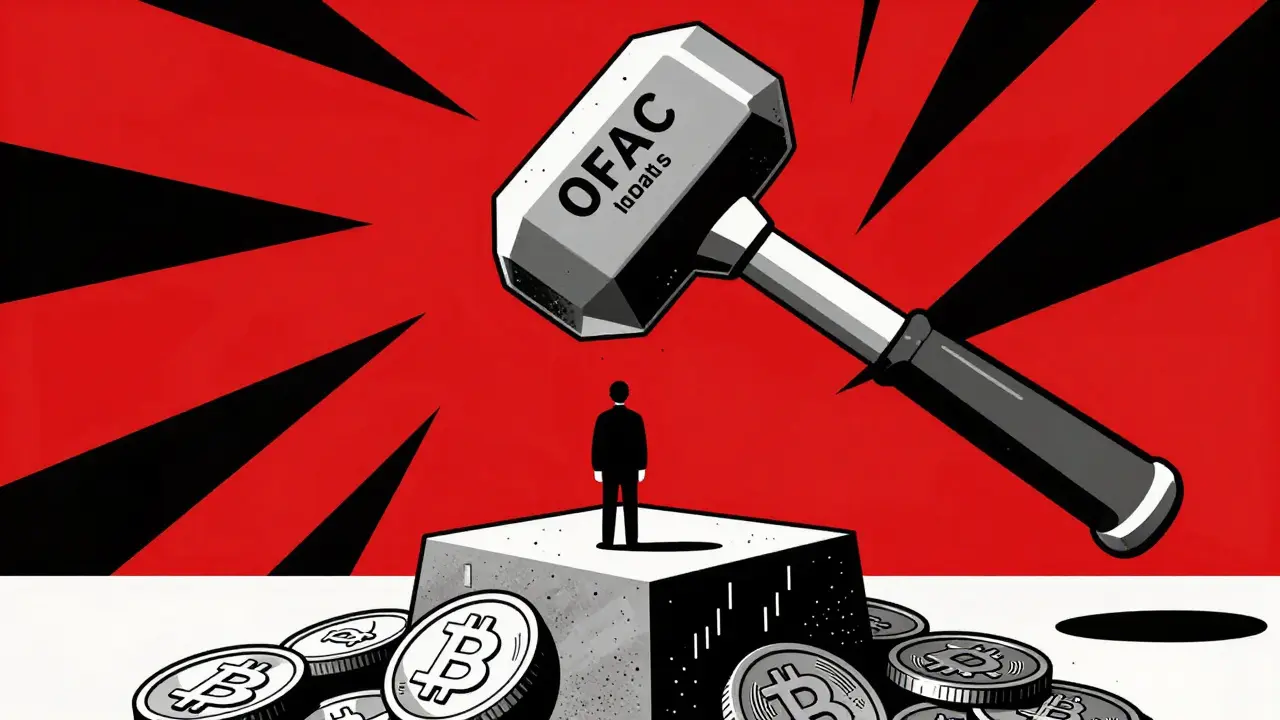
Imagine this: you run a legitimate crypto exchange. You have customers from all over the world. One day, your system processes a transaction from a wallet linked to a sanctioned entity in Iran or Russia. You didn’t know it was sanctioned. You didn’t intend to break any laws. But under U.S. law, that doesn’t matter. The Office of Foreign Assets Control (OFAC) operates on strict liability. That means if you touch blocked assets, you are liable-period.
This is the reality for anyone dealing with digital assets today. OFAC, a bureau within the U.U.S. Department of the Treasury, has made it clear since its October 2021 Sanctions Compliance Guidance for the Virtual Currency Industry (VC Compliance Guidance) that sanctions apply fully to cryptocurrency. Whether you are a centralized exchange, a DeFi protocol, or just a business holding crypto, if you involve U.S. persons or the U.S. financial system, you are in OFAC’s jurisdiction. In 2025 and 2026, enforcement has only gotten stricter. The question isn’t whether you need compliance-it’s how fast you can build it before a penalty hits.
Understanding the Core Rules: Strict Liability and Blocked Assets
To navigate OFAC rules, you first need to understand what they actually prohibit. OFAC maintains the Specially Designated Nationals (SDN) List. This is not just a list of names anymore. As of October 2025, the SDN List includes over 27,500 entries, including 1,247 specific cryptocurrency addresses. If your wallet interacts with an address on this list, you have likely violated sanctions.
The key concept here is "blocking." When OFAC sanctions a person or entity, their assets are frozen. For traditional banks, this means freezing bank accounts. For crypto, it means preventing transactions involving those wallets. According to OFAC FAQ 646, institutions holding blocked digital assets must implement procedures to prevent transactions. You have two main options:
- Block individual wallets: Identify each sanctioned wallet and freeze it individually.
- Consolidate into a "Blocked SDN Digital Currency" wallet: Move all blocked assets into a single designated wallet. Crucially, OFAC states you do not need to convert these assets into fiat currency. They can remain in digital form, but they must be completely inaccessible until legal prohibitions end.
Why does this matter? Because many businesses assume they can just ignore small transactions or privacy coins. They can’t. In September 2025, OFAC settled with ShapeShift AG for $750,000. Why? Because ShapeShift allowed users in Cuba, Iran, Sudan, and Syria to exchange roughly $12.5 million in crypto over two years. They lacked geolocation controls. There was no proof of intent to evade sanctions. It didn’t matter. Strict liability applied.
Building Your Compliance Program: The Five Essential Components
You cannot rely on good intentions. You need a structured Sanctions Compliance Program (SCP). OFAC’s guidance outlines five pillars that every crypto business should adopt. Let’s break them down practically.
- Management Commitment: This isn’t just HR paperwork. Your board needs documented oversight. If regulators ask who is responsible for sanctions compliance, you need a name and a policy. OFAC Director Andrew E. Hallman emphasized in May 2025 that there is no such thing as a crypto business outside OFAC’s jurisdiction if it touches the U.S. system.
- Risk Assessment: You must assess your risk quarterly. What jurisdictions do your users come from? Do you support privacy coins like Monero or Zcash? Are you involved in DeFi liquidity pools? Document your methodology. A static assessment from 2023 is useless in 2026.
- Internal Controls: This is where technology comes in. You need automated screening tools. Manual checks don’t scale. You need systems that screen wallets in real-time against the SDN list before a transaction settles.
- Testing and Auditing: An independent third party should audit your program annually. Self-audits lack credibility. Regulators want to see that someone else verified your controls work.
- Training: Staff training is mandatory. The Association of Certified Anti-Money Laundering Specialists (ACAMS) found in 2025 that compliance officers need an average of 147 hours of specialized training to handle crypto sanctions effectively. Aim for a 92% completion rate across relevant staff.
Technology Stack: Blockchain Analytics and Screening Tools
Compliance in crypto is impossible without the right tech stack. You need blockchain analytics tools that can trace funds, identify wallet owners, and flag suspicious activity. The market leaders include Chainalysis, Elliptic, and TRM Labs.
| Provider | Key Strength | Documentation Rating (G2 2025) | Typical Implementation Cost |
|---|---|---|---|
| Chainalysis | Industry standard, high accuracy, extensive SDN database | 4.7/5 | $150k - $500k+ |
| TRM Labs | Strong API integration, good for developers | 3.2/5 | $100k - $300k+ |
| Crystal Intelligence | Real-time screening, custom risk rules | 4.5/5 | $80k - $250k+ |
Here is the hard truth about implementation: it takes time and money. A 2025 Steptoe & Johnson study showed that full implementation takes 22-36 weeks. This includes risk assessment, tool selection, integration, and training. Costs range from $150,000 to $2 million annually depending on your transaction volume. Smaller exchanges often struggle here. Only 42% of exchanges processing under $100 million monthly have dedicated screening tools, compared to 98% of larger players.
One major pain point is false positives. A Coinbase compliance officer noted in 2025 that OFAC added 37 new crypto addresses in Q2 alone, leading to 12-15% false positive rates. However, firms like Kraken reported dropping false positives from 18% to 4.3% by using Chainalysis Reactor with custom risk rules. The lesson? Don’t just buy the tool; tune it.
The DeFi Challenge: Can You Comply Without Knowing Who Is Trading?
Decentralized Finance (DeFi) poses the biggest headache for OFAC compliance. In traditional finance, you know your customer. In DeFi, you interact with smart contracts and anonymous wallets. How do you screen a liquidity pool?
OFAC’s October 2025 update to FAQ 646 clarified that even if counterparty identification is technically challenging, you must take "reasonable measures" to prevent transactions with blocked persons. This is vague, but enforcement shows they mean it. In August 2025, OFAC re-designated Garantex Europe OU and its successor Grinex, targeting their entire ecosystem. This signals that OFAC will pursue "network sanctions" against entities supporting illicit operations, even if they claim decentralization.
Professor Sarah Bloom Raskin argued in February 2025 that strict liability for decentralized protocols creates "impossible compliance burdens." She has a point. If you run a non-custodial wallet, you don’t control the transaction routing. Yet, former OFAC Director John E. Smith countered in March 2025 that "the technology exists to implement effective screening, and willful blindness... will be met with maximum penalties."
Practical steps for DeFi projects:
- Front-end blocking: Block known sanctioned IPs and domains from accessing your interface.
- Smart contract filters: Integrate allowlists/blocklists directly into the code where possible.
- Post-transaction monitoring: Use blockchain analytics to detect interactions with SDN addresses after the fact and report them.
Expect resistance. Ethereum’s proposed EIP-7594 for on-chain sanction compliance faced backlash in late 2025, with over 1,200 comments criticizing it. But regulatory pressure is rising. By 2027, Forrester predicts 65% of crypto transactions will undergo real-time screening. Adapt or face penalties.
Enforcement Trends: What to Watch in 2026
OFAC is not slowing down. In September 2025, Director Hallman announced a new "Digital Asset Sanctions Task Force" with 35 specialists. The Treasury’s 2026 budget requests $28 million for crypto enforcement-a 40% increase. Here is what this means for you:
- Network Sanctions: Expect actions against entire ecosystems, not just one exchange. If you partner with a sanctioned entity, you are at risk.
- Privacy Coins: Screening Monero and Zcash remains difficult. 68% of compliance professionals cite this as a top challenge. OFAC expects "reasonable measures," which may mean simply not supporting these coins.
- Secondary Sanctions: Non-U.S. entities facilitating transactions for sanctioned parties are increasingly targeted. The Garantex case showed OFAC’s reach extends globally.
Compare this to other jurisdictions. The UK’s OFSI has issued only three crypto-related enforcement actions since 2018. Singapore’s Monetary Authority has issued five. OFAC has issued 17, totaling $48.7 million in penalties. The U.S. is the aggressive leader. If you operate globally, U.S. standards are your baseline.
Next Steps: Getting Started Today
If you are starting from zero, here is your roadmap:
- Conduct a Risk Assessment (Weeks 1-8): Map your user base, supported chains, and transaction types. Identify high-risk areas like privacy coins or DeFi integrations.
- Select a Vendor (Weeks 9-12): Test APIs from Chainalysis, TRM Labs, or Crystal Intelligence. Look for low false-positive rates and good documentation.
- Integrate Screening (Weeks 13-22): Embed screening into your onboarding and transaction processing flows. Ensure real-time checks against the SDN list.
- Train Staff and Audit (Weeks 23-36): Train your team. Hire or certify Blockchain Intelligence Analysts (BIAs)-they command 35% higher salaries in 2025 because demand is high. Then, get an independent audit.
Don’t wait for a penalty. The cost of compliance is high, but the cost of violation is higher. ShapeShift paid $750,000 for negligence. Imagine the reputational damage. Build your program now, document everything, and stay updated. OFAC adds new addresses daily. Your system must too.
Does OFAC apply to non-U.S. crypto businesses?
Yes, if they involve U.S. persons, U.S. dollars, or the U.S. financial system. OFAC has extraterritorial reach. Even if you are based in Europe or Asia, if your platform serves U.S. customers or uses U.S. infrastructure, you are subject to U.S. sanctions laws.
What happens if I accidentally process a transaction with a sanctioned wallet?
You must immediately block the assets and report the incident to OFAC. You do not need to convert the crypto to fiat. Keep the assets in a designated "Blocked SDN Digital Currency" wallet. Failure to report can lead to additional penalties. Intent does not matter due to strict liability.
How often should I update my SDN list screening?
Daily, ideally in real-time. OFAC updates the SDN list frequently, adding dozens of new crypto addresses each quarter. Relying on weekly or monthly updates leaves you exposed. Automated tools via API connections are essential for keeping up.
Is it legal to hold sanctioned cryptocurrency?
No, unless it is properly blocked. Holding sanctioned assets without blocking them is a violation. You must freeze the assets and report them to OFAC. You cannot trade, transfer, or use them. They must remain inert until OFAC lifts the sanctions.
Can I use privacy coins like Monero for compliant transactions?
It is extremely risky. Most compliance experts advise against supporting privacy coins because screening is nearly impossible. OFAC requires "reasonable measures" to prevent transactions with blocked persons. If you cannot screen the transaction, you likely cannot meet this requirement. Many exchanges have delisted privacy coins for this reason.
What is the difference between OFAC and FATF Travel Rule?
The FATF Travel Rule requires sharing sender/receiver info for transactions over $1,000. OFAC sanctions apply to all transactions involving sanctioned entities, regardless of amount. OFAC also enforces strict liability, while FATF focuses more on information sharing and anti-money laundering frameworks.
Curtis Johnson
July 13, 2026 AT 18:01Man this whole strict liability thing is just terrifying to think about... like you could be doing everything right and still get crushed by a mistake you didnt even know you made. it feels like the government is setting up traps for people who just want to run a business honestly. i mean imagine working your tail off building an exchange only to have one random transaction wipe you out. its not fair but thats how the game is played now i guess
Brad Semp
July 14, 2026 AT 13:23The notion that decentralized protocols can simply ignore these regulations is, frankly, intellectually bankrupt. One must understand that the legal framework does not care for your philosophical objections to surveillance. If you operate within the sphere of influence of the United States financial system, compliance is not optional; it is existential. Those who cling to the myth of absolute anonymity in DeFi are merely delaying the inevitable reckoning with regulatory reality.
Michelle Walker
July 15, 2026 AT 04:52Stop whining about fairness. You broke the law. End of story. The ShapeShift fine was cheap compared to what they could have faced. Strict liability exists because criminals exploit loopholes. If you cant handle basic screening then dont run a financial platform. Its that simple.
Kat Barr
July 16, 2026 AT 03:57Oh my gosh!!! This is so scary but also kinda makes sense?? 😱 I never thought about how hard it would be to check every single wallet address in real time! It’s wild that they have to spend millions on tools just to stay legal 🤯 Hope everyone stays safe and doesn’t get fined!! 💖✨
Kristy Morrow
July 17, 2026 AT 22:27the irony is palpable here. we built a system designed to escape state control and now we are begging for permission from the very states we sought to evade. it is a tragedy of our own making. the blockchain promised freedom but delivered a leash wrapped in code. do not expect mercy from the regulators they see you as a threat to their monopoly on value
Korn Arrieta
July 18, 2026 AT 02:01This entire article reeks of corporate fear-mongering designed to sell expensive compliance software. The author conveniently ignores the fact that OFAC’s enforcement is often arbitrary and politically motivated. By framing compliance as a technical necessity rather than a political choice, they obscure the fundamental incompatibility between censorship-resistant technology and authoritarian oversight. The real issue isn't 'how to comply' but 'why should we?'
Sophie Nakasako
July 19, 2026 AT 06:39I find myself pondering the ethical implications of these measures. While the intent behind sanctions is often noble, the mechanism of strict liability casts a wide net that ensnares innocent actors. Is it truly justice when a small business owner faces ruin due to a technical glitch? We must consider whether the current approach serves the greater good or merely consolidates power among those who can afford the compliance overhead. The tension between security and liberty remains unresolved.
Steven Briggs
July 20, 2026 AT 04:07i hear you all. it is tough. i look at the costs and feel overwhelmed. maybe we need better open source tools instead of paying chainalysis huge fees. silence speaks volumes sometimes.
Kim Kay
July 20, 2026 AT 08:25its really sad that privacy coins are basically dead now. i loved monero so much but yeah if you cant screen it then you cant use it legally. hope people find other ways to protect their data though. its a lose lose situation for users i think
John Harman
July 21, 2026 AT 11:13Look, I've been in this space since 2013. The smart money moved to stablecoins and regulated exchanges years ago. Anyone still trying to run a shadow bank on DeFi is either stupid or malicious. Chainalysis is the industry standard for a reason. If you can't afford $150k a year for compliance, you shouldn't be in the crypto business. It's not rocket science.
Jackie D
July 22, 2026 AT 09:39wow this is intense stuff. i wonder if there is any way to use zero knowledge proofs to hide the transaction details while still proving you are not sanctioned? seems like a cool tech puzzle to solve. maybe someone smarter than me can figure it out lol
Ruth Williams
July 24, 2026 AT 04:51It is quite amusing to observe the collective groaning from the libertarian contingent. The reality is that no jurisdiction operates without rules. The United States has established the gold standard for financial integrity. Those who cannot adapt to these rigorous standards should perhaps reconsider their career choices. Compliance is not a burden; it is a badge of honor for serious market participants.
Antony Lopez
July 25, 2026 AT 05:56About damn time. These foreign entities have been using our infrastructure to fund terrorism and drug cartels for years. Let them deal with the consequences. If you're running a legitimate business, you'll follow the rules. If you're hiding something, stay away. America leads the world in protecting its citizens from financial threats.
Logan Edmison
July 27, 2026 AT 01:44so basically the end of crypto as we knew it? i mean sure you can trade btc on coinbase but thats not really decentralization anymore is it. feels like we are just going back to banks but with worse UX and higher fees. sad times ahead for the dreamers
Shay Thomson
July 27, 2026 AT 09:41What a dramatic turn of events for the industry! It feels like we are watching the death of the wild west era in real time. The sheer scale of the SDN list expansion is mind-boggling. I hope we can find a middle ground where innovation thrives alongside security, but right now it looks like security is winning big time!
DJ Maleko
July 29, 2026 AT 02:24You guys are missing the point entirely. The real issue is that OFAC is targeting specific addresses which means they are tracking wallets anyway. So the privacy argument is moot. Plus, why are you even worried about Iran if you're not laundering money? Just pay the fee and move on. Stop making excuses. 🚀💸
Erika Pozzetto
July 30, 2026 AT 11:36In light of the aforementioned regulatory developments, it becomes imperative for organizations to adopt a comprehensive and multifaceted approach to sanctions compliance. The integration of advanced blockchain analytics tools, such as those provided by Chainalysis or TRM Labs, is not merely advisable but essential for maintaining operational continuity. Furthermore, regular risk assessments and staff training programs must be institutionalized to ensure that all personnel are adequately prepared to identify and mitigate potential compliance risks in a dynamic and evolving regulatory landscape.
Nick Wengel
August 1, 2026 AT 01:18Just wanted to say thanks for breaking this down. It helps to see the steps clearly. Good luck to everyone dealing with this.
Hamza k
August 1, 2026 AT 07:06Holy smokes, did you see the ShapeShift fine? That is a bloody disaster waiting to happen for anyone slacking off. The whole ecosystem is shaking in its boots right now. It’s like walking through a minefield blindfolded. You either get rich quick or go to jail, there is no middle ground left in this digital casino.