Pakistan Crypto Tax: The Truth Behind the 15% Rate and 0% Myths
 Nov, 23 2026
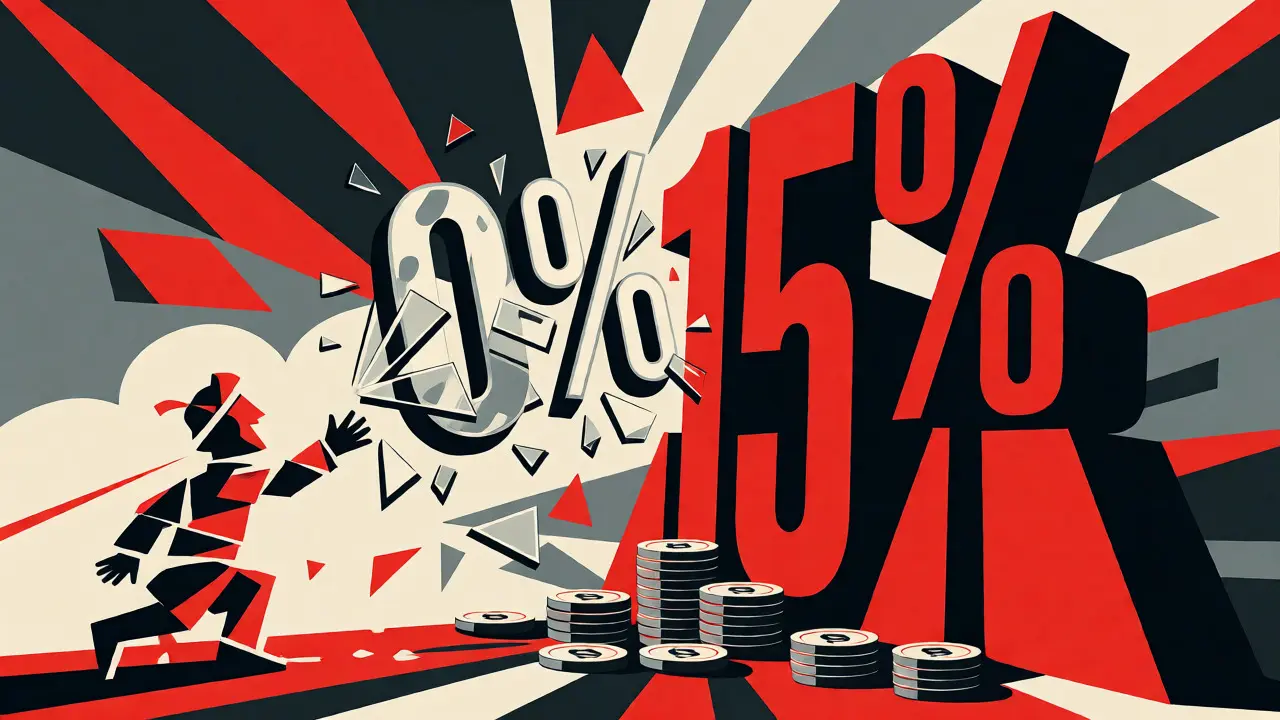
You’ve probably seen the headlines floating around social media groups in Lahore and Karachi: "Pakistan’s crypto tax is dropping to zero!" It sounds like a dream scenario for any trader who has been sweating over their profit reports. But here is the hard truth that might save you from a nasty surprise during your next filing season: as of late 2026, there is no official policy confirming a drop to 0%. Instead, Pakistan maintains a flat 15% Capital Gains Tax (CGT) on cryptocurrency profits, established under the Virtual Assets Ordinance of 2025.
The confusion likely stems from early political promises or misinterpreted proposals about long-term holding incentives. While the government is indeed exploring ways to reward patience with lower rates, the current reality for most traders remains a strict 15% hit on profits when you convert digital assets back into Pakistani Rupees (PKR). If you are planning your exit strategy or calculating your net gains, you need to look past the hype and understand exactly how the Federal Board of Revenue (FBR)
Why the 0% Myth Persists
Where did this idea come from? It wasn’t pulled out of thin air. When the Pakistan Digital Assets Authority (PDAA)
However, the International Monetary Fund (IMF) had other plans. To stabilize the economy, they recommended a pragmatic middle ground: a flat rate that generates revenue without stifling the market completely. Consequently, the Finance Minister’s meetings with global advisors solidified the 15% figure rather than abolishing it. So, if you are waiting for a legislative change that drops this to zero overnight, you are likely waiting for something that hasn't been written into law yet. The PDAA announced draft regulations in October 2025 regarding "long-term holding incentives," but details remain vague, and nothing suggests a total elimination of the tax.
How the 15% Flat Rate Actually Works
Let’s break down the mechanics because this isn’t just about selling Bitcoin. The 15% CGT applies specifically when you sell cryptocurrencies for fiat currency at a profit. This is a crucial distinction. If you trade Bitcoin for Ethereum, you generally don’t trigger this specific capital gains event in the same way you do when cashing out to PKR. However, the lack of differentiation between short-term and long-term holdings is a major pain point for investors.
In many developed markets, holding an asset for more than a year reduces your tax burden significantly. In Pakistan, whether you held your Solana for three days or three years, the rate stays at 15%. This uniformity simplifies compliance but discourages long-term "HODLing" strategies. Experts like Dr. Ayesha Siddiqa have noted that while this approach addresses IMF concerns about revenue leakage, it fails to incentivize the kind of stable, long-term capital inflow that serious institutional players prefer.
It’s also important to note what this tax does *not* cover. Income from mining, staking rewards, or receiving payments in crypto is treated differently. These earnings fall under regular income tax brackets, which range progressively from 5% to 35% depending on your total annual income. So, if you are running a mining rig in Islamabad, your tax calculation is far more complex than simply applying 15% to your sales.

Pakistan vs. Global Competitors: Is 15% Good?
To understand if you are getting a raw deal, compare Pakistan’s stance with its neighbors and rivals. The table below illustrates where Pakistan sits in the global landscape as of 2026.
| Jurisdiction | Capital Gains Tax Rate | Holding Period Benefit | Regulatory Body |
|---|---|---|---|
| Pakistan | 15% Flat | None currently proposed | PDAA / FBR |
| India | 30% + 1% TDS | None | Income Tax Dept |
| UAE (Dubai) | 0% | N/A | VARA |
| El Salvador | 0% (Bitcoin only) | N/A | CNAD |
| Germany | Personal Income Tax Rate | Exempt after 1 year | BaFin |
Compared to India’s steep 30% tax plus Tax Deducted at Source (TDS), Pakistan’s 15% looks attractive. Traders fleeing India’s aggressive enforcement often view Pakistan as a friendlier alternative. However, compared to Dubai’s zero-tax environment, Pakistan clearly lags behind. The strategic goal here isn’t necessarily to be the cheapest place to trade, but to create a regulated, taxable environment that legitimizes the sector. For casual traders, 15% is manageable. For high-frequency algorithmic traders, the lack of short-term exemptions can eat into margins quickly.
Implementation Challenges You Will Face
Knowing the rate is one thing; proving your gains to the FBR is another. The biggest headache for Pakistani crypto users right now is documentation. There is no standardized, government-approved form specifically for crypto transactions yet. Most taxpayers use Form IT-1, manually converting every transaction to PKR using exchange rates from the date of purchase and sale.
This process is tedious. A survey by the Pakistan Fintech Association revealed that 72% of users struggle with calculating the cost basis for assets bought before 2025. Without clear guidance on acceptable valuation methods, you are essentially guessing. Tools like Koinly and CoinTracker have stepped in to fill this gap, processing thousands of accounts for Pakistani users, but they are third-party solutions, not official integrations.
Furthermore, the exemption threshold of ₨50,000 for small transactions is widely criticized as too low. Many international jurisdictions set thresholds much higher to exclude casual hobbyists. Here, even modest traders find themselves needing to file detailed reports, increasing the administrative burden. If you are trading through foreign exchanges that don’t automatically share data with the FBR, you must ensure you keep meticulous records. The FBR began requiring exchanges to share transaction data in mid-2025, but reconciliation between local platforms like Rain and global giants like Binance remains inconsistent.
What Happens Next? Future Outlook
Will the tax ever drop to 0%? Probably not soon. The government needs the revenue. PwC predicts that crypto tax revenue could reach ₨28.5 billion ($102 million) in the fiscal year 2025-26. Abolishing the tax would mean giving up significant funds that help service national debt.
However, a tiered system is highly likely. Deloitte Pakistan analysts predict that by 2026, we might see reduced rates for longer holdings-perhaps 10% for assets held over one year and 5% for those held over two years. This would align Pakistan more closely with markets like Germany, rewarding patience. Until then, assume the 15% flat rate is here to stay. Keep an eye on announcements from the PDAA, particularly regarding the "long-term holding incentives" drafted in late 2025. If these pass, you might see a gradual decline, but a sudden jump to zero remains a myth.
Frequently Asked Questions
Is the capital gains tax on crypto in Pakistan really going to 0%?
No, as of November 2026, there is no official law reducing the tax to 0%. The current rate is a flat 15% on profits from selling crypto for fiat currency. Rumors of a 0% rate often stem from comparisons with Dubai or unconfirmed proposals for long-term holding incentives.
Do I pay tax if I swap Bitcoin for Ethereum?
Generally, the 15% Capital Gains Tax triggers when you convert crypto to fiat (like PKR or USD). Swapping one crypto for another is typically not taxed immediately in the same way, though the cost basis carries over. Always consult a tax professional for specific swap scenarios, as regulations are still evolving.
How are mining and staking rewards taxed?
Mining and staking rewards are taxed as regular income, not capital gains. They fall under Pakistan's progressive income tax brackets, ranging from 5% to 35%, depending on your total annual income level.
Is there a minimum threshold for paying crypto tax?
Yes, there is a proposed exemption for small transactions under ₨50,000. However, this threshold is considered low by many traders, meaning most active participants will still need to report their gains and pay the 15% tax on profits exceeding this amount.
Which body regulates crypto taxes in Pakistan?
The Pakistan Digital Assets Authority (PDAA) oversees the regulatory framework, while the Federal Board of Revenue (FBR) handles tax collection and enforcement. Exchanges are required to share transaction data with the FBR.