Pakistan's 2,000 MW Crypto Mining Plan: Energy Surplus vs. IMF Restrictions
 Jul, 15 2026
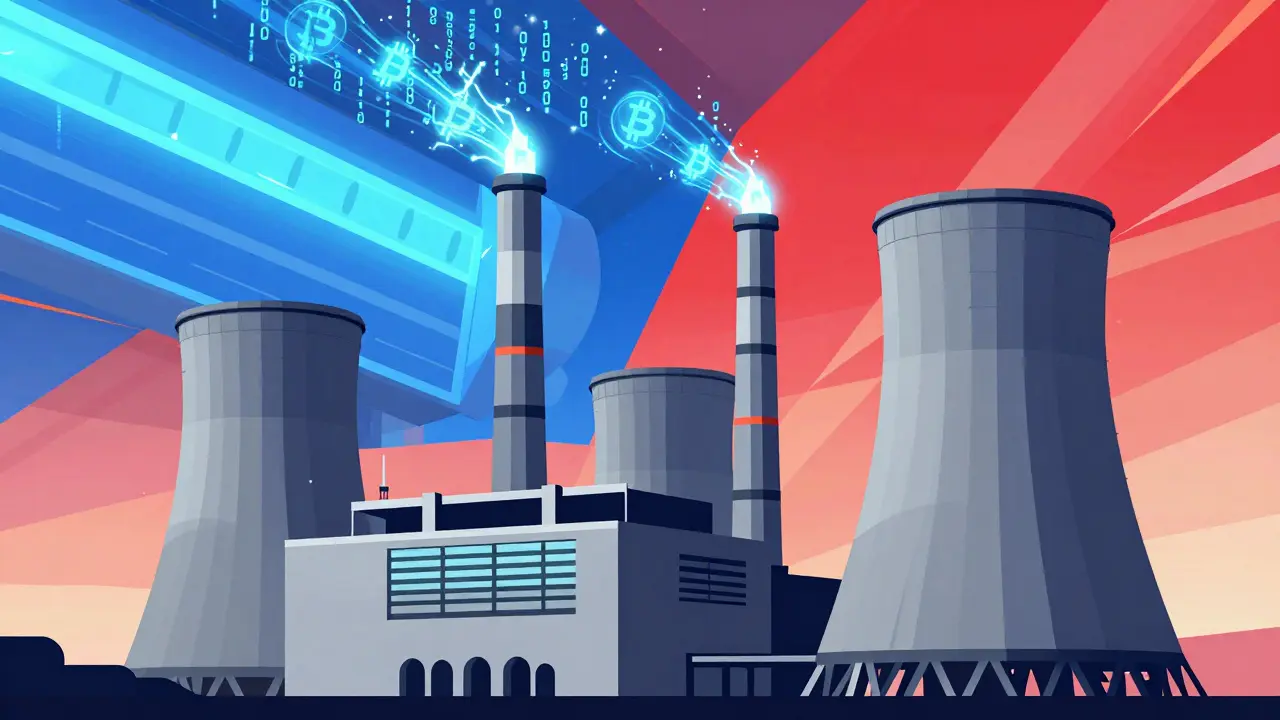
Imagine a country with enough extra electricity to power millions of homes, but instead of letting it go to waste, the government decides to use it to mine Bitcoin. That is exactly what Pakistan is attempting with its controversial 2,000 MW electricity allocation for crypto mining. Announced in May 2025 at the Bitcoin conference in Las Vegas, this initiative aims to turn idle power plants into a source of foreign currency and technological growth. However, the plan has hit a major roadblock: the International Monetary Fund (IMF) is pushing back hard against the subsidized rates required to make the project profitable.
This isn't just about buying mining rigs. It’s a high-stakes gamble on Pakistan’s economic future. The government sees an opportunity to monetize surplus energy that currently costs the state billions in maintenance fees. But critics, including top financial institutions, argue that subsidizing electricity for one industry creates an unfair playing field and risks destabilizing the national grid. As we move through mid-2026, the question remains: will this bold experiment transform Pakistan into a global mining hub, or will regulatory pressure force a retreat?
The Core Problem: Idle Power and Economic Pressure
To understand why Pakistan would allocate such a massive amount of energy to cryptocurrency, you have to look at its energy paradox. The country generates more electricity than it consumes during certain periods, resulting in approximately 7,000 MW of surplus capacity. This sounds like a good problem to have, but it’s actually a financial drain. Much of this surplus comes from coal-fired power plants that are operating at only 15% capacity. Keeping these plants online costs the government roughly 2.8 trillion Pakistani rupees annually in fixed charges.
Muhammad Aurangzeb, the Finance Minister, along with Bilal Bin Saqib, Special Assistant to the Prime Minister on Blockchain, saw a solution. Instead of paying to keep idle plants running, they proposed leasing that excess power to Bitcoin miners. The logic is straightforward: if the electricity is going to be generated anyway, selling it to miners at a low rate generates revenue rather than incurring losses. This approach aligns with a broader trend where countries with renewable or stranded energy assets pivot toward data-intensive industries.
The scale of this proposal is unprecedented for a developing nation. By dedicating 2,000 MW-about 28.5% of the total surplus-to crypto mining and AI data centers, Pakistan is signaling a serious commitment to the digital economy. For context, most individual mining farms operate on a fraction of this capacity. The government’s goal is not just to mine coins but to establish Pakistan as a "digital bridge" connecting Asia, Europe, and the Middle East, leveraging its geographic position to attract international tech investment.
How the Initiative Works: Subsidies and Scale
The mechanics of the plan rely heavily on price incentives. To attract global mining operators, the Pakistan Crypto Council (PCC) proposed electricity rates between 23-24 Pakistani rupees per kilowatt-hour (kWh), which translates to roughly $0.08 per kWh. This rate is significantly lower than standard commercial tariffs in the country and competitive with global mining hubs like parts of Canada or Kazakhstan, where rates typically range from $0.03 to $0.15 per kWh depending on local infrastructure.
At this price point, the economics become compelling. According to estimates by Bitcoin researcher Daniel Batten, the 2,000 MW allocation could produce up to 17,000 BTC annually. At current market prices, this output represents approximately $1.8 billion in potential value. Even if the government takes a cut or imposes taxes, the influx of hard currency could help stabilize Pakistan’s balance of payments, which has historically been vulnerable to external shocks.
The infrastructure is already partially in place. Pakistan has 22 existing data centers spread across Lahore, Karachi, and Islamabad, operated by major telecom players like PTCL, Multinet, and Chapal. These facilities provide the cooling, security, and connectivity needed for large-scale operations. Additionally, recent projects like the University of Turbat’s new data center, paired with a 1MW solar deployment, show that the technical foundation for expanding into green-energy-backed mining exists.
| Metric | Value | Context |
|---|---|---|
| Total Surplus Capacity | 7,000 MW | Nationwide excess generation |
| Allocated for Crypto/AI | 2,000 MW | ~28.5% of total surplus |
| Proposed Electricity Rate | $0.08 / kWh | Subsidized for miners |
| Estimated Annual Output | 17,000 BTC | Based on current hash rate projections |
| Idle Plant Costs | 2.8 Trillion PKR/year | Cost of maintaining unused capacity |

The IMF Pushback: Why Restrictions Matter
If the numbers look so good, why is there controversy? The primary obstacle is the International Monetary Fund (IMF). Pakistan is currently engaged in complex negotiations with the IMF to secure financial support and maintain macroeconomic stability. The IMF has expressed significant reservations about the subsidy structure inherent in the mining plan.
Dr. Fakhray Alam Irfan, Secretary of Power, revealed that IMF staff questioned how the government plans to transition these subsidized rates back to market levels once the initial phase ends. More importantly, the IMF argues that providing cheap electricity exclusively to crypto miners violates the principle of a "level playing field." Other private sector participants, such as manufacturing or textile industries, do not receive similar discounts. From the IMF’s perspective, this looks like a distortion of market forces that could encourage inefficient resource allocation.
This tension highlights a classic conflict between innovation-driven policy and traditional fiscal conservatism. The IMF’s concern is rooted in past experiences where similar concessions failed to deliver sustainable results, often leading to increased debt burdens without proportional economic growth. They fear that if the Bitcoin price crashes or network difficulty spikes, the government will be left holding the bag for underutilized infrastructure and continued subsidies.
Despite the pushback, both sides claim to remain in dialogue. Reports indicate that negotiations are ongoing, with the IMF stating it will "continue to engage with authorities as plans develop further." This suggests that the project hasn’t been killed, but it may need significant restructuring to satisfy international lenders. The appointment of Binance co-founder Changpeng Zhao as a strategic adviser adds weight to the government’s argument that this is a serious, professionally managed initiative rather than a speculative venture.

Regulatory Framework and Future Phases
Beyond the energy debate, Pakistan is also building the legal scaffolding necessary for a crypto-friendly environment. In April 2025, the country introduced its first-ever policy framework for cryptocurrency operations and digital asset companies. This was a crucial step, moving from ambiguity to regulated acceptance. The establishment of the Pakistan Crypto Council (PCC) in March 2025 provided a dedicated body to oversee compliance, coordinate with power companies, and manage international partnerships.
The regulatory approach is cautious but progressive. Unlike China, which banned mining entirely in 2021, Pakistan is embracing it as an economic tool. However, this embrace comes with strings attached. Operators must comply with Financial Action Task Force (FATF) requirements, ensuring that money laundering and terrorist financing risks are mitigated. This is particularly important as Pakistan works to exit the FATF grey list, a status that hinders international banking relationships.
The initiative is structured in phases. Phase 1 focuses on the initial 2,000 MW allocation and testing the grid’s ability to handle the load. Success here could pave the way for expansion into additional surplus capacity or integration with renewable sources like solar and wind. The long-term vision includes creating thousands of tech jobs, attracting foreign direct investment, and positioning Pakistan as a leader in emerging markets’ adoption of blockchain technology.
Global Context: How Pakistan Compares
To appreciate the boldness of Pakistan’s move, consider the global landscape. After China’s ban, many miners fled to the United States, Canada, and Kazakhstan. These regions offer stable grids and clear regulations but often come with higher operational costs or political uncertainty. Pakistan offers a different value proposition: extreme cost efficiency due to stranded assets.
In Kazakhstan, mining operations have frequently been curtailed during winter months when domestic heating demand spikes, causing blackouts. Russia offers cheap energy but carries geopolitical risks that deter Western investors. Pakistan’s model attempts to avoid these pitfalls by using only *surplus* power, theoretically leaving domestic consumption unaffected. If executed correctly, this could make Pakistan a preferred destination for cost-sensitive mining pools.
However, the risk lies in execution. Grid management in Pakistan has historically struggled with consistency. Adding 2,000 MW of variable load requires sophisticated monitoring and control systems to prevent disruptions. The PCC must demonstrate technical competence alongside regulatory clarity to win over skeptical international partners.
Is Bitcoin mining legal in Pakistan?
Yes, as of 2025, Pakistan has established a regulatory framework for cryptocurrency operations. While the State Bank previously restricted crypto transactions, the government now actively promotes mining as part of its digital economy strategy, provided operators comply with new laws overseen by the Pakistan Crypto Council.
Why is the IMF opposing the mining initiative?
The IMF opposes the subsidized electricity rates offered to miners, arguing they create an unfair advantage over other industries. They are concerned about market distortion and the long-term sustainability of these subsidies, fearing they could strain public finances if Bitcoin revenues decline.
How much electricity is allocated for crypto mining?
Pakistan has allocated 2,000 megawatts (MW) of surplus electricity specifically for Bitcoin mining and AI data centers. This represents approximately 28.5% of the country's total 7,000 MW surplus capacity.
What is the proposed electricity rate for miners?
The government proposed a subsidized rate of 23-24 Pakistani rupees per kWh, equivalent to about $0.08 per kWh. This rate is designed to be competitive with global mining hubs while utilizing otherwise idle power generation assets.
Who leads the Pakistan Crypto Council?
The Pakistan Crypto Council is spearheaded by Finance Minister Muhammad Aurangzeb and Bilal Bin Saqib, the Special Assistant to the Prime Minister on Blockchain and Crypto. Notably, Binance co-founder Changpeng Zhao serves as a strategic adviser to the council.