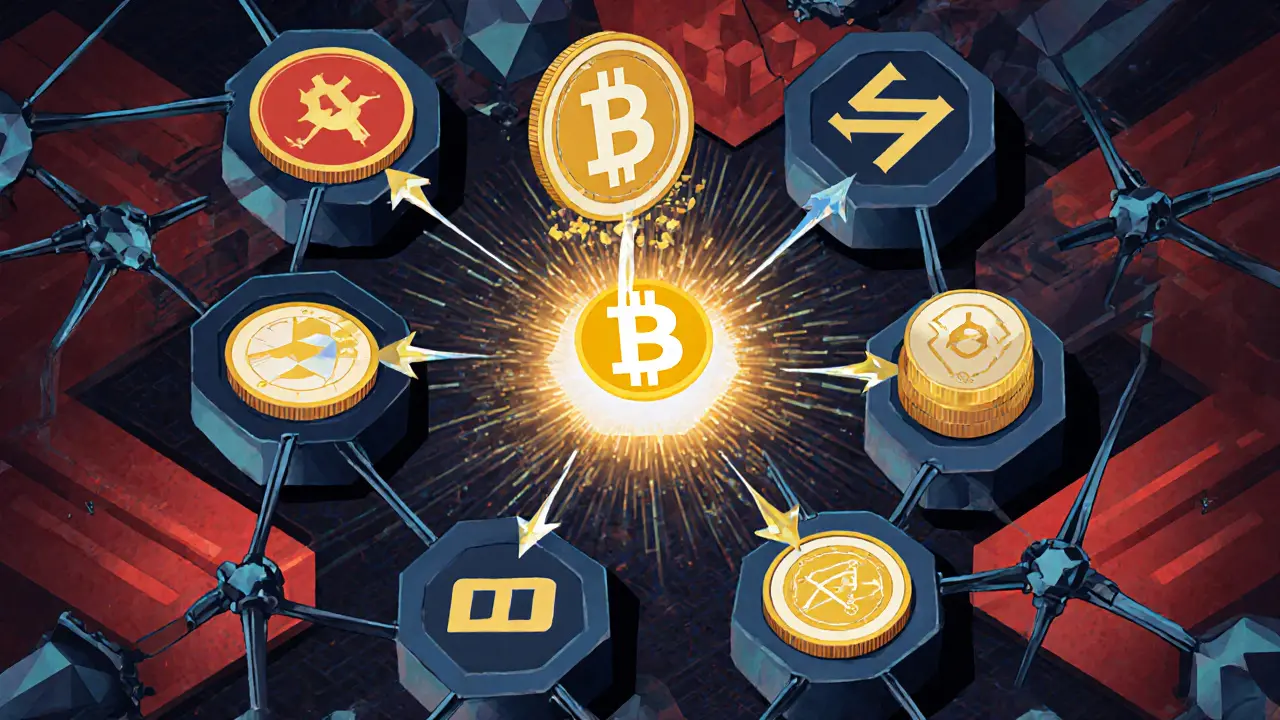
Bancor Network is a decentralized exchange offering unique single-sided liquidity and impermanent loss protection. Learn how it works, how it compares to Uniswap, and whether it's right for your crypto trading strategy.
When you hear Bancor Network, a decentralized finance protocol that lets tokens trade directly without order books. Also known as Bancor Protocol, it was one of the first to use automated market maker technology to keep crypto assets liquid without relying on traders to place bids and asks. Unlike traditional exchanges, Bancor doesn’t need buyers and sellers to match up. Instead, it uses liquidity pools—smart contracts that hold pairs of tokens—and a formula to automatically set prices as trades happen. This made it possible for small, low-volume tokens to stay tradable, something most DeFi platforms struggled with back in 2017 and 2018.
Bancor’s core innovation was the BNT token, which acted as a universal connector. Instead of pairing every token with ETH or USDT, Bancor tokens could trade directly with BNT, which then linked to other assets. This reduced fragmentation and lowered the barrier for new tokens to enter the market. But here’s the catch: Bancor’s model worked best when liquidity was deep. When users pulled out, or when prices swung hard, the system could become unstable. That’s why many of the posts in this collection focus on projects that tried to copy Bancor’s approach—and ended up with empty pools, zero volume, or fake liquidity.
You’ll find real stories here about exchanges that promised seamless swaps but had no users, tokens that claimed to be "Bancor-style" but were just memes with no backing, and airdrops that promised free tokens but vanished after launch. Bancor itself still exists, but its influence lives on in how every DeFi project thinks about liquidity today. Whether you’re holding a token that uses its model, or just trying to avoid scams that borrow its name, this collection gives you the facts—not the hype.
Bancor Network is a decentralized exchange offering unique single-sided liquidity and impermanent loss protection. Learn how it works, how it compares to Uniswap, and whether it's right for your crypto trading strategy.