Learn why banks freeze accounts for crypto activity in 2026, how the GENIUS Act affects your funds, and practical steps to prevent and resolve account blocks.
When you trade, stake, or even hold crypto, you're already part of crypto compliance, the set of legal and operational rules that govern how digital assets are used, reported, and exchanged. Also known as crypto regulation, it’s not a backroom policy—it’s the reason your exchange asks for ID, why you file taxes on every trade, and why some platforms vanish overnight. This isn’t about slowing down innovation. It’s about keeping the system from being used for fraud, money laundering, or tax evasion. And if you’re trading in 2025, you’re already under its rules—whether you realize it or not.
Take the Crypto Asset Service Provider, a legal term for any company offering crypto services like trading, custody, or staking. Also known as CASP, it’s a license that platforms in the EU must now earn under MiCA licensing, the EU’s first full crypto rulebook that sets capital, transparency, and consumer protection standards. Without it, exchanges like FreiExchange or Core Dao Swap can’t legally operate in Europe. But compliance isn’t just about platforms. The IRS crypto tax, the U.S. government’s requirement to report every crypto sale, trade, or disposal means you need to track wallet addresses, dates, and values—no exceptions. Form 8949 isn’t optional. The IRS now demands wallet-by-wallet records and 1099-DA forms. Ignoring it risks penalties, audits, or worse.
It’s not just the U.S. and EU. Countries like China have banned all crypto payments outright, while Russia lets only the wealthy hold it. Iraq’s central bank blocks transactions, and Cyprus forces banks to follow strict Travel Rule checks—even though trading is legal. These aren’t random policies. They’re all pieces of the same puzzle: governments are trying to control digital money without killing it. And that means your choices are shrinking. Exchanges with no regulation? They’re disappearing. Airdrops that ask for your private key? They’re scams. Even projects like Mintlayer or Aleo, built on privacy tech, now face scrutiny because regulators can’t see what’s happening inside.
What you’ll find here isn’t theory. It’s real cases. You’ll see why a zero-fee exchange like Swych or 1BCH.com might be a trap. You’ll learn how the Ariva x CoinMarketCap airdrop was fake, and why the APENFT one actually paid out. You’ll understand why Russia’s crypto ban doesn’t stop people from holding—but makes spending impossible. And you’ll see how slashing penalties, staking risks, and tax forms are all connected to the same thing: crypto compliance. This isn’t about getting rich quick. It’s about staying legal, safe, and informed while the rules keep changing.
Learn why banks freeze accounts for crypto activity in 2026, how the GENIUS Act affects your funds, and practical steps to prevent and resolve account blocks.

Learn the latest crypto regulations under the Payment Services Act across Singapore, Japan, the EU, and the U.S. with deadlines, compliance rules, and what you must do by 2026.
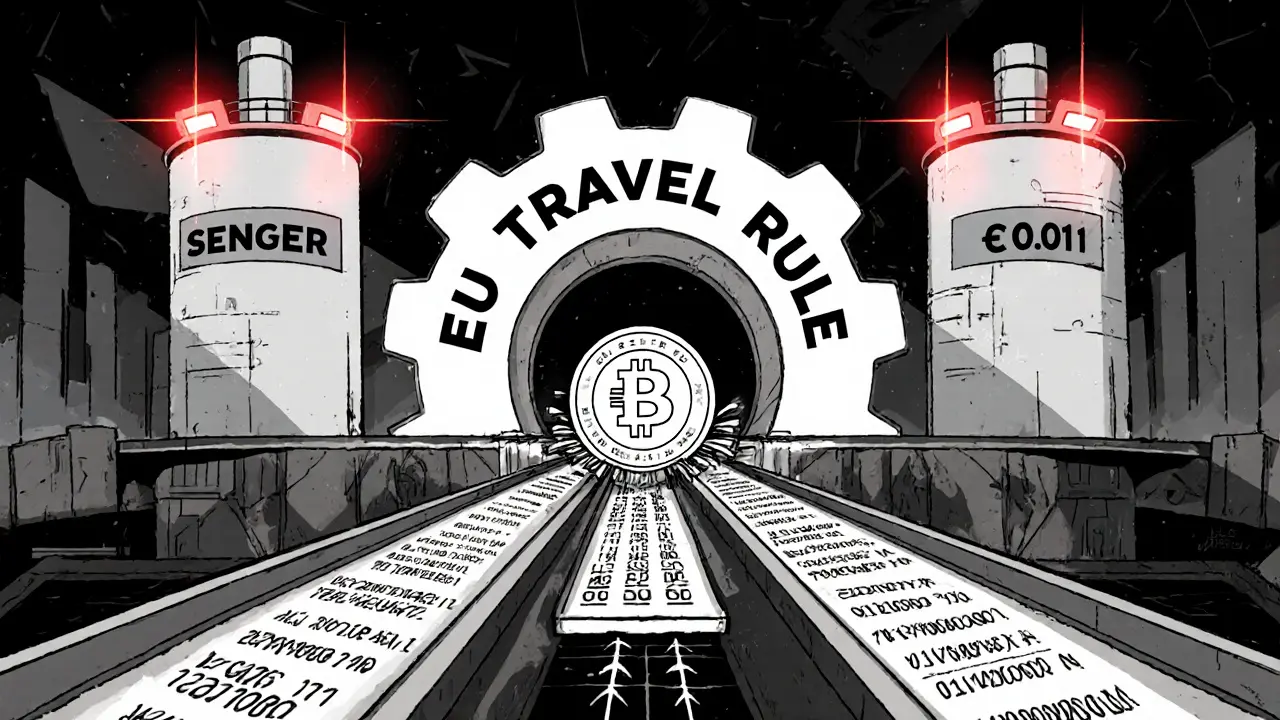
The EU's zero-threshold Travel Rule now requires full identity data for every crypto transaction, no matter how small. Here's what businesses need to know to stay compliant after December 30, 2024.