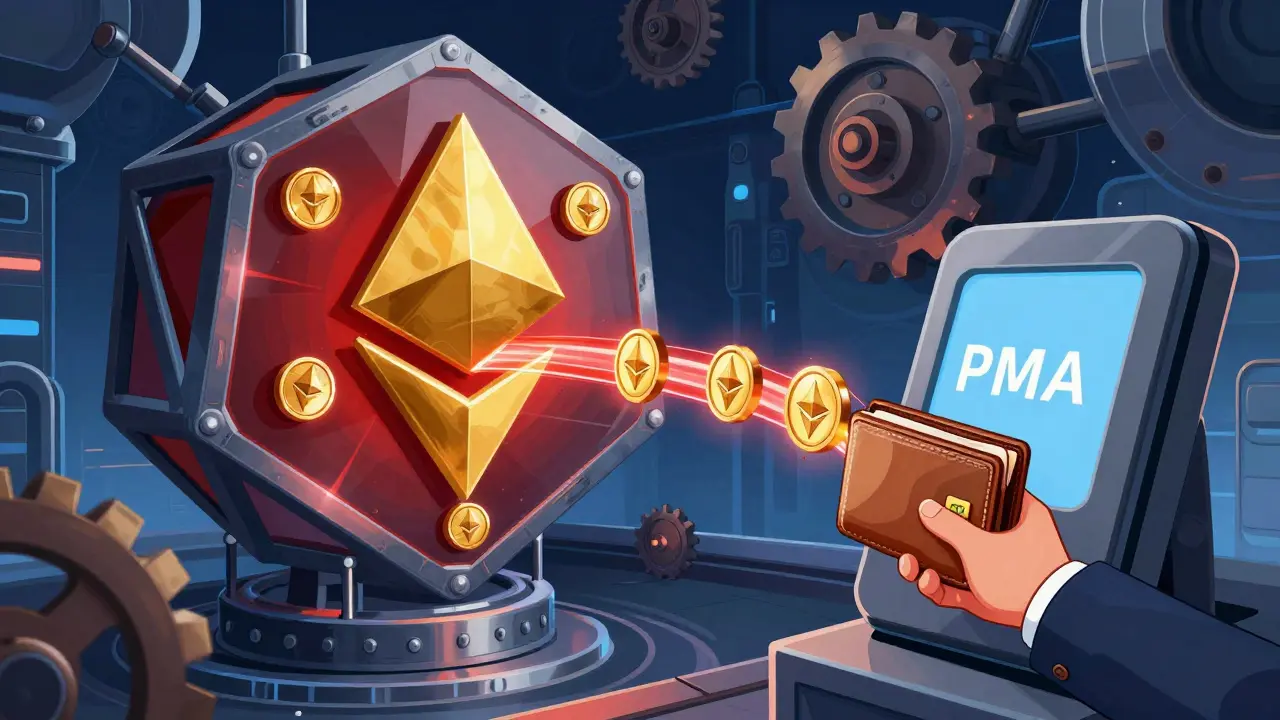
PumaPay (PMA) was a pioneering crypto payment protocol designed for recurring payments using a unique pull-based system. Despite its innovative tech, it failed to gain adoption and has lost over 99% of its value since its 2018 peak.
When you hear about a new crypto coin like NEVER, WAG, or CWS, chances are it’s an ERC20 token, a standardized digital asset built on the Ethereum blockchain that follows a set of rules for how it’s created, transferred, and tracked. Also known as Ethereum token, it’s not a coin like Bitcoin—it’s a program that runs on Ethereum and lets projects issue their own currency without building a whole new blockchain. This standard, created in 2015, became the default because it made everything simpler: wallets could read any ERC20 token the same way, exchanges could list them without custom code, and developers could focus on building features instead of reinventing the wheel.
What makes ERC20 so powerful is what it doesn’t do. It doesn’t handle payments directly like Bitcoin. Instead, it defines how tokens behave: how many exist, who owns them, how they’re moved, and how others can check balances. This is all done through smart contracts, self-executing code on the Ethereum network that automatically enforces rules without needing a middleman. That’s why projects like Neversol or WagyuSwap could launch in days—they just wrote a contract that followed the ERC20 rules. But here’s the catch: just because something is an ERC20 token doesn’t mean it’s safe, useful, or even real. Many are scams, dead projects, or experiments with zero trading volume. The standard doesn’t guarantee value—it just makes it easier to move tokens around.
Most of the tokens you see in the posts below—whether it’s BNT, CORE, ELK, or CWS—are ERC20 tokens. They all live on Ethereum, use the same basic code structure, and can be stored in any wallet that supports Ethereum. But their stories are wildly different. Some have real users and trading volume. Others are ghost tokens with no liquidity, no team, and no future. Some were part of airdrops that ended years ago. Others are tied to exchanges that barely have any traffic. The common thread? They all ride on the ERC20 standard. That’s why understanding this one thing helps you cut through the noise. You don’t need to know every coin’s price. You need to know if it’s built on a solid foundation—or just a flashy wrapper around nothing.
What you’ll find here isn’t a list of winners. It’s a collection of real cases—some failed, some obscure, some surprisingly clever—showing how the ERC20 standard is used, abused, and sometimes ignored. You’ll see how a token can be listed on an exchange with zero users, how an airdrop can vanish overnight, and why a project might have a whitepaper but no code. These aren’t theoretical lessons. They’re the messy reality of crypto built on Ethereum’s most popular standard. If you’re holding any token that’s not Bitcoin or Ethereum itself, chances are it’s an ERC20 token. And now you know what that really means.
PumaPay (PMA) was a pioneering crypto payment protocol designed for recurring payments using a unique pull-based system. Despite its innovative tech, it failed to gain adoption and has lost over 99% of its value since its 2018 peak.
Kabosu Inu (KABOSU) is a meme coin inspired by the original Dogecoin dog, but it has almost no liquidity, no verifiable charity work, and minimal adoption. Learn why it's not a real investment - just a nostalgic symbol.