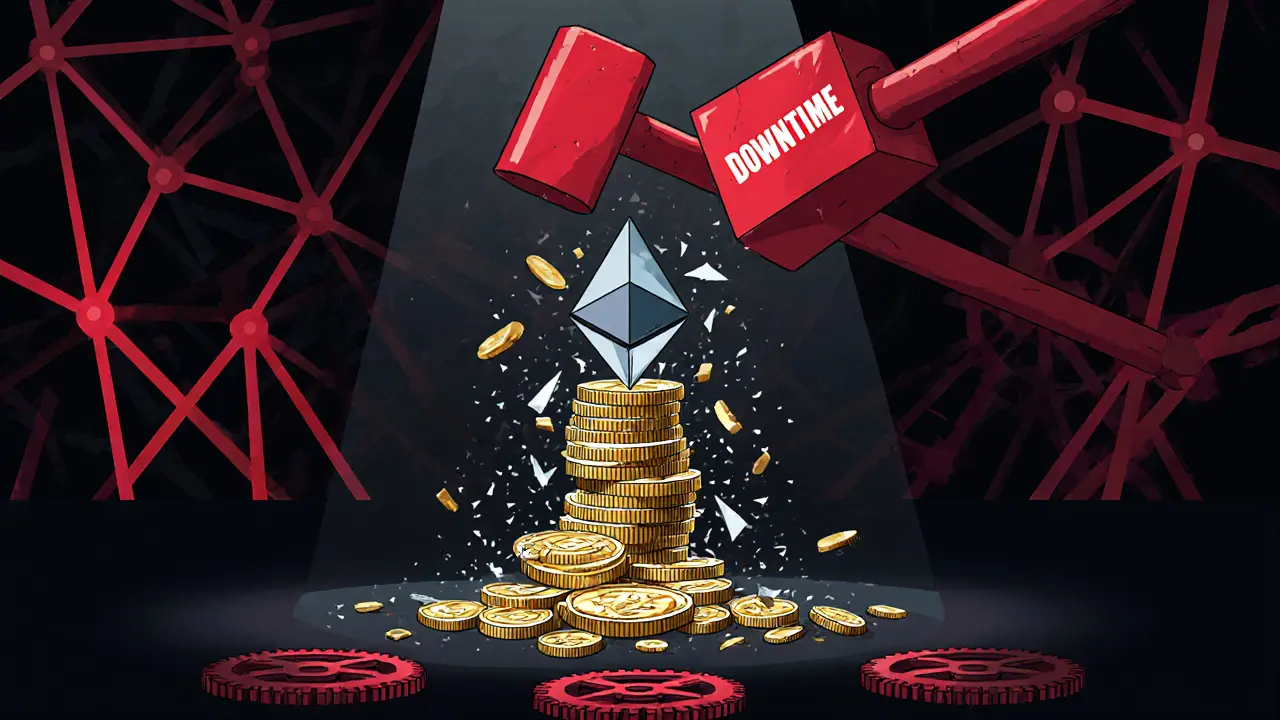
Slashing can erase your crypto staking rewards overnight. Learn how it works, why it happens, and the real steps you need to take to protect your stake-whether you're a retail user or running your own validator.
When you stake crypto, you're not just holding coins—you're helping keep a blockchain running, and in return, you get staking returns. This isn't like a bank savings account. It's a direct trade: lock up your tokens, help verify transactions, and earn more tokens as payment. Think of it as being a volunteer node operator for a digital economy. The system rewards you for participating, not just for sitting on your coins. This is the core idea behind Proof of Stake, a consensus mechanism where validators are chosen based on how many coins they hold and are willing to lock up. Unlike Bitcoin’s energy-heavy mining, Proof of Stake is efficient, scalable, and built for everyday users who want to earn without buying expensive hardware.
But not all staking returns are created equal. Some projects offer 5% a year. Others promise 20%—but those high numbers often come with big risks: low liquidity, untested networks, or tokens that can’t be sold easily. The real question isn’t just how much you earn—it’s whether you can actually get your money out when you need it. That’s why so many of the posts here focus on platforms like Mintlayer, a Bitcoin Layer 2 that lets you stake ML tokens without wrapping BTC, or Bancor Network, a DEX that protects against impermanent loss while letting you stake single-sided liquidity. These aren’t just yield farms—they’re systems designed to make staking safer and more predictable. Meanwhile, others like Core Dao Swap, a zero-fee exchange with almost no users, show how even smart tech can fail if no one’s using it. Staking returns mean nothing if the network dies.
What you’ll find in these posts isn’t hype. It’s real talk about what’s working and what’s not. You’ll see how staking returns on Neversol or Elk Finance look on paper versus in practice. You’ll learn why some airdrops tied to staking turned into dead ends, and why others—like the BIT token distribution—still have value years later. You’ll also see how regulation, like the EU’s MiCA, a set of rules that now governs how crypto assets are issued and staked across Europe, is changing the game. This isn’t about chasing the highest APY. It’s about understanding the trade-offs: security vs. liquidity, simplicity vs. complexity, reward vs. risk. If you’re serious about earning from staking, you need to know which projects are built to last—and which are just temporary fireworks.
Slashing can erase your crypto staking rewards overnight. Learn how it works, why it happens, and the real steps you need to take to protect your stake-whether you're a retail user or running your own validator.